
Cutting the cord on your guitar setup brings incredible freedom, but choosing the right guitar wireless transmitter requires cutting through a dense forest of technical specifications. To make an informed choice, you must focus on three critical pillars: latency, frequency stability, and battery reliability. Understanding how these specifications translate from the spec sheet to your actual playing environment ensures you avoid dropouts, tone loss, and frustrating delays.
Decoding Latency: How Delay Affects Your Playing Feel
Latency is the tiny delay between the moment your pick strikes the string and the moment the sound exits your amplifier. On manufacturer spec sheets, this is measured in milliseconds (ms). When browsing options, you will typically see latency figures ranging from under 2 ms to over 12 ms.
However, advertised latency is often a theoretical minimum calculated under ideal laboratory conditions. In the real world, digital-to-analog conversion, signal processing, and environmental interference can add subtle delays. While a few extra milliseconds might seem negligible, they accumulate quickly if you also use digital multi-effects processors or wireless in-ear monitors.
Products mentioned in this guide
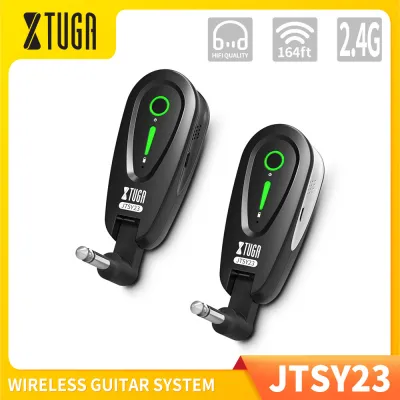
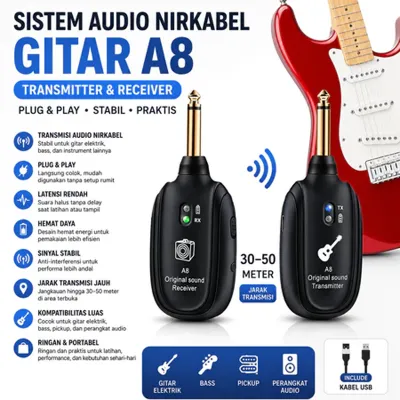
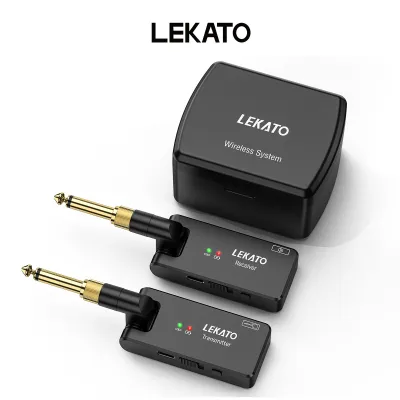
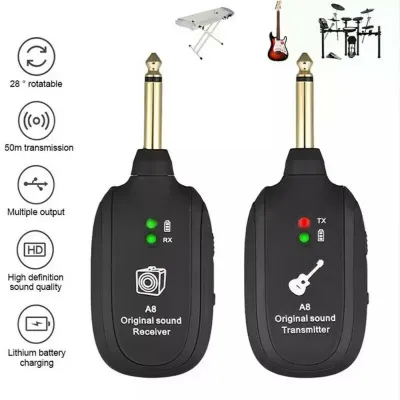
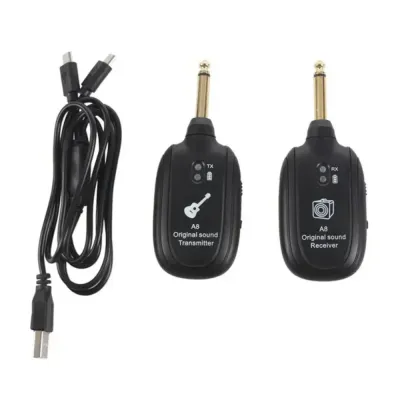
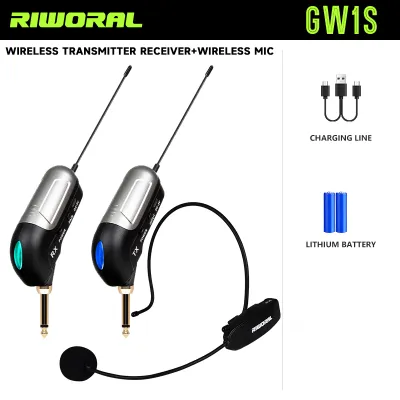
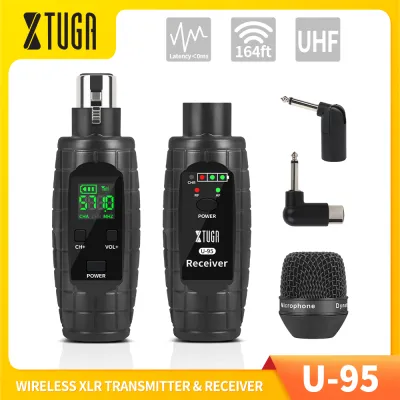
Prices are valid at publication and may change. Please refer to the product page for the latest price.
Your playing style dictates how low this number needs to be. For fast, intricate genres like metal solos, jazz fusion, or precise flamenco on an acoustic-electric guitar, ultra-low latency (ideally under 5 ms) is essential to maintain your physical playing feel. For casual bedroom practice, strumming chords, or slow ambient soundscapes, a standard delay of 6 ms to 10 ms is perfectly acceptable and often comes at a more accessible price point.
Evaluating Wireless Range and Signal Frequency Bands
Wireless range claims on product packaging almost always refer to “line-of-sight” distance, meaning a completely unobstructed path between the transmitter and receiver. In a typical home or venue, physical obstacles like concrete walls, wooden doors, and even human bodies will significantly reduce this effective range. In humid tropical environments, dense air and moisture can also subtly impact high-frequency signal propagation over longer distances.

The frequency band your system uses determines how well it cuts through interference. Most modern budget-friendly transmitters operate on the 2.4 GHz or 5.8 GHz digital bands. While 2.4 GHz offers excellent global compatibility, it is highly crowded because home Wi-Fi routers, Bluetooth speakers, and smartphones share the same space. If you frequently play in crowded residential areas or venues with active guest Wi-Fi, a 5.8 GHz system or a dedicated UHF (Ultra High Frequency) system will offer a much cleaner path with fewer dropouts.
Before finalizing your purchase, always check the regulatory compliance labels on the device. Different countries regulate wireless frequencies strictly to prevent interference with emergency services or telecommunications. Ensure the transmitter is certified for use in your region so you do not accidentally operate on restricted public frequencies.
Assessing Audio Resolution, Dynamic Range, and Battery Life
To preserve the natural tone of your instrument, you must look at audio resolution and dynamic range. Audio resolution is defined by bit depth and sampling rate, with 24-bit/44.1 kHz or 24-bit/48 kHz being the modern standard for high-fidelity digital transmission. High-resolution systems ensure that the subtle nuances of your playing, from soft fingerpicking to aggressive strumming, are captured accurately without digital harshness.
Dynamic range, measured in decibels (dB), indicates the system’s ability to handle both quiet whispers and loud peaks without distorting. A wider dynamic range (typically 100 dB or higher) is crucial if you rely on high-gain distortion pedals or active pickups, as it prevents the transmitter from clipping and muddying your signal. For clean, acoustic tones, a wide dynamic range preserves the natural resonance and sparkle of your guitar.
Battery life is another critical factor that determines whether a transmitter is ready for real-world use. Manufacturers usually advertise battery runtimes based on continuous play at moderate temperatures. Look for devices that offer at least 5 to 8 hours of continuous battery life, and prioritize those with modern USB-C charging ports or dedicated charging cases. Features like automatic sleep or standby modes are highly valuable, as they preserve battery power during set breaks when you forget to turn the transmitter off.
Matching Transmitter Specs to Your Actual Playing Environment
Choosing the right transmitter is ultimately about matching these technical specifications to where you play most. If your primary setup is a bedroom practice space, you do not need to pay a premium for a 100-meter range or heavy-duty metal housing; a simple, compact 2.4 GHz plug-and-play system will serve you perfectly. Conversely, if you are performing on outdoor stages or in busy local venues, prioritizing a robust UHF or 5.8 GHz system with a metal chassis and long battery life is a much smarter investment.
When comparing shortlisted models, balance your technical requirements with your budget. While premium systems can cost several thousand pesos (₱), entry-level digital transmitters offer incredible value for hobbyists. Avoid overpaying for secondary marketing features, such as built-in cable tone simulators or complex digital screens, unless your specific performance setup absolutely demands them.
Before checking out, build a quick compatibility checklist for your existing gear. Verify whether the transmitter plug fits comfortably into your guitar’s output jack, especially if you play a guitar with a recessed jack like a Stratocaster or an active acoustic-electric with an endpin preamp. Additionally, confirm that the receiver fits neatly onto your pedalboard and can be powered by your existing multi-output power supply without introducing ground loop hum.
Frequently Asked Questions (FAQ)
Do I need a different wireless transmitter for acoustic and electric guitars?
Not necessarily, but you must verify the transmitter’s input specifications against your guitar’s pickup system. Electric guitars with passive pickups require a transmitter with high input impedance (typically 1 Megohm) to avoid sucking your high-end tone. Acoustic-electric guitars with active onboard preamps or electrics with active pickups output a much stronger signal, which can easily overload a transmitter designed only for passive instruments. Check the manufacturer’s documentation to ensure the transmitter can handle both active and passive signals.
Can multiple wireless transmitters operate simultaneously on the same stage?
Yes, but only if they are configured correctly to avoid signal collisions. If multiple band members use wireless systems, each device must operate on a distinct frequency channel. Many modern digital transmitters feature automatic pairing and multi-channel switching, allowing you to select an open channel with the press of a button. Always verify the maximum number of simultaneous channels supported by the system in the manufacturer’s specifications before attempting to run multiple units together on stage.
Community discussion
Share your experience or ask a question. Comments are reviewed before publication.