
Finding the right guitar wall mount in the Philippines requires balancing space-saving convenience with absolute instrument safety. Whether you are displaying a prized acoustic in a humid tropical climate or keeping an electric guitar within arm’s reach in a compact condominium, your choice of hanger determines how well your instrument is preserved. A secure mount not only clears up valuable floor space but also protects your guitar from accidental bumps, pet activity, and household traffic. To make an informed purchase, you must evaluate the mounting mechanism, the structural integrity of your walls, and the specific material compatibility of the hanger’s padding with your guitar’s finish.
Understanding Guitar Wall Mount Types
Auto-grip mechanisms offer an advanced level of security by using the weight of the instrument to lock it in place. When you place the guitar neck into the yoke, the downward force triggers two protective barriers or gates that rotate closed across the front of the headstock. This gravity-activated system is highly effective for preventing accidental slips, especially for asymmetrical headstocks that might sit unevenly in a standard fixed hanger. Before purchasing, verify the manufacturer’s specified neck width compatibility, as exceptionally narrow ukulele necks or wide classical guitar necks may not trigger the auto-grip mechanism correctly.
Locking mounts provide physical security in high-traffic areas, commercial studios, or homes with active pets and children. These hangers feature manual locking gates, latches, or even key-operated locks that physically prevent the guitar from being lifted out of the yoke without authorization. While slightly less convenient for quick access during a practice session, they offer peace of mind by ensuring the instrument cannot be knocked down by a passing shoulder or an accidental bump.
Products mentioned in this guide
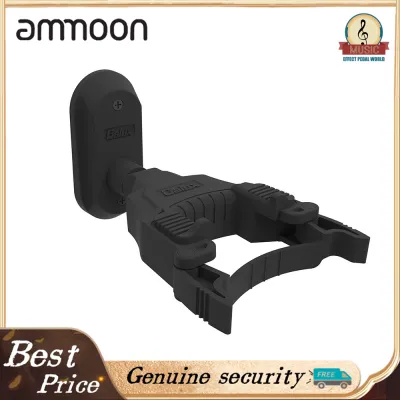
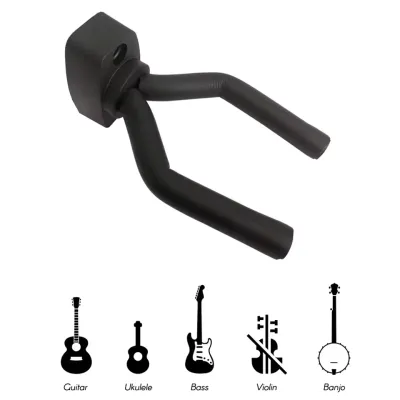
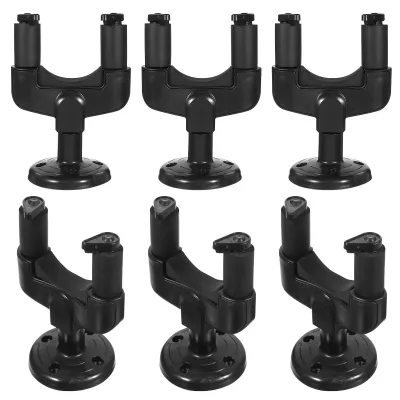
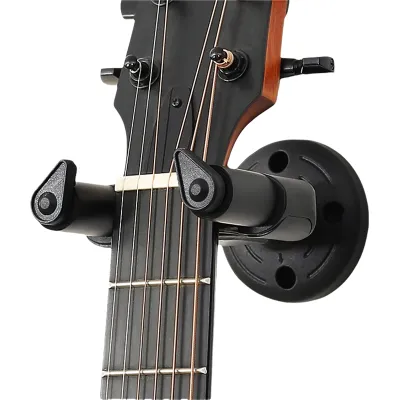
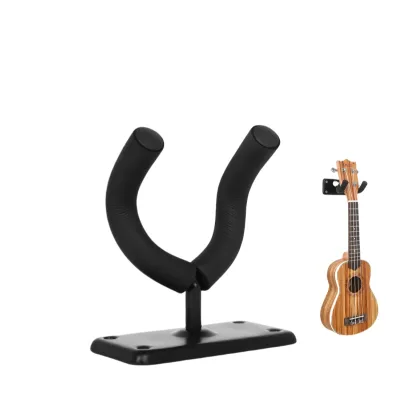
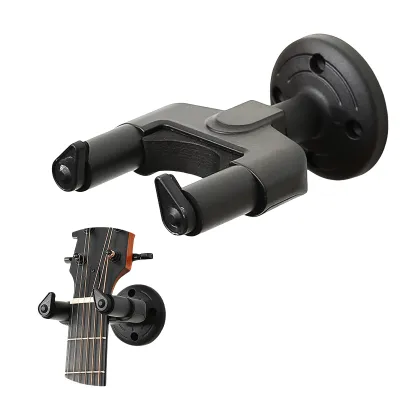
Prices are valid at publication and may change. Please refer to the product page for the latest price.
Padded and foam-covered hangers are the most common and budget-friendly options available. These designs rely on a layer of cushioning material—such as high-density foam, neoprene, or silicone—to protect the guitar’s neck from scratches and finish wear. However, the quality of this padding varies significantly. Low-grade foam can degrade rapidly in warm, humid environments, becoming sticky or crumbling over time, which can leave stubborn residues on your instrument’s neck.
Modular and multi-guitar systems are ideal for collectors and musicians with limited wall space. Instead of mounting individual hangers, these systems utilize a heavy-duty metal rail or track secured horizontally across multiple wall studs. Individual adjustable hangers slide along the rail, allowing you to customize the spacing and angle of each instrument. This setup distributes the total weight more evenly across the wall and allows you to display guitars at an angle, overlapping the bodies slightly to maximize horizontal space.
Key Features to Evaluate Before Buying
Weight capacity limits are the most critical safety specification to check before purchasing any wall mount. While a standard electric guitar weighs between 3 to 4.5 kilograms, and acoustic guitars are generally lighter, you should always select a mount with a rated capacity that far exceeds your instrument’s weight. Look for clear manufacturer specifications regarding load limits, and avoid unbranded hangers that do not provide verified weight ratings.

Padding materials must be carefully evaluated, particularly if you own a guitar with a nitrocellulose lacquer finish. Nitrocellulose is highly chemically reactive and can bond with the plasticizers found in standard synthetic rubber, polyurethane foam, or cheap plastics. This reaction causes the finish to melt, cloud, or discolor permanently. Always verify if the padding material is explicitly certified as safe for nitrocellulose finishes, or plan to use protective fabric covers over the hanger arms.
Baseplate design and build quality determine how securely the mount anchors to your wall. Baseplates are typically constructed from hardwood, reinforced plastics, or heavy-duty steel. Steel and solid wood plates offer the highest structural integrity. Pay close attention to the screw hole placement; baseplates with widely spaced, triangularly arranged screw holes distribute the pulling force more effectively than those with closely spaced vertical holes, reducing the risk of the mount pulling out under constant tension.
Adjustability features are essential for instruments with non-traditional shapes. Guitars with inline tuners or tilted headstocks do not hang straight in a rigid, fixed yoke. Look for wall mounts featuring auto-swivel yokes that pivot horizontally to accommodate the natural angle of the headstock. This ensures the guitar hangs vertically and prevents the body from twisting and knocking against the wall.
Safety and Installation Considerations
Identifying your wall type is the first and most crucial step of the installation process. In the Philippines, residential walls are commonly constructed from solid concrete, hollow concrete blocks, or drywall over light metal framing. The standard plastic expansion anchors included in retail packaging are often designed solely for drywall and will quickly fail if installed in masonry. For concrete or hollow block walls, you must use heavy-duty masonry wall plugs or sleeve anchors, which require a hammer drill and masonry drill bits for proper installation. If mounting on drywall, always locate the wooden or metal studs using a stud finder, or use specialized toggle bolts if mounting directly to the drywall sheet is unavoidable.
Load distribution principles dictate that a hanging guitar exerts a constant downward and outward pulling force on the top screws of the mount. If the fasteners are inadequate or installed in a weak substrate, the mount will slowly loosen over time, eventually pulling out of the wall entirely. Ensure that your mounting screws penetrate at least 1.5 to 2 inches into solid wood studs or masonry to guarantee a secure, long-term hold.
Environmental placement is critical for preserving your instrument’s structural health in a tropical climate. Avoid installing guitar wall mounts on exterior-facing walls that absorb direct afternoon sunlight, as this can cause localized heating and finish damage. Keep your instruments away from the direct airflow of air conditioning units, which can cause rapid temperature and humidity fluctuations, leading to wood cracking, warping, or tuning instability. Likewise, avoid placing mounts near open windows where rain splatter or high outdoor humidity can corrode metal hardware.
Consulting a professional is highly recommended if you are mounting exceptionally heavy instruments, such as double-neck electric guitars, heavy vintage basses, or highly valuable collector items. If you are unsure about the load-bearing capacity of your walls or lack the proper tools for masonry installation, hiring a qualified carpenter or contractor ensures the job is done safely, protecting both your home and your investment.
Matching the Mount to Your Guitar and Space
Different guitar types require specific mounting configurations to ensure adequate clearance and support. Acoustic guitars have deep bodies, meaning they require a wall mount with a longer arm extension to prevent the back of the guitar from rubbing against the wall. Electric guitars and basses are much thinner but significantly heavier, demanding a sturdier baseplate and stronger wall anchors. Bass guitars also have narrower, longer necks, so ensure the yoke width is narrow enough to hold the headstock securely without letting it slip through.
Classical guitars feature wide, flat fingerboards and slotted headstocks. Standard yokes designed for electric guitars are often too narrow, causing the tuners to rest directly on the hanger arms, which can damage the tuning pegs or knock the instrument out of tune. Look for wide-yoke hangers specifically designed for classical or six-string acoustic instruments to ensure proper clearance for the wider neck.
Space-saving and angled mounts are excellent solutions for small rooms, narrow hallways, or tight studio spaces. These mounts hold the guitar at an angle relative to the wall, allowing you to display the instrument flat against the wall surface or overlap multiple guitars to maximize vertical and horizontal space. This is a highly efficient way to store multiple instruments without cluttering the floor with traditional multi-guitar stands.
Aesthetic choices allow you to integrate your instruments into your room’s decor. Wooden baseplates made of walnut, oak, or cherry complement acoustic instruments and traditional home interiors. Minimalist metal or matte black plastic designs offer a modern, industrial look that suits contemporary spaces and electric guitars. Choose a style that matches both your instrument and your room’s interior design to create an appealing visual display.
Purchasing and Verifying Your Order
When ordering a guitar wall mount from an online marketplace or purchasing from a local music store in the Philippines, immediately inspect the package contents upon arrival. Ensure all mounting screws, wall anchors, and assembly instructions are included. Do not rely on the generic plastic anchors provided if they do not match your specific wall type; instead, purchase high-quality masonry plugs or toggle bolts separately from a local hardware store.
Evaluating sellers and platforms is essential to avoid counterfeit products that may use inferior plastics or weak springs. Read customer reviews on ecommerce platforms, focusing on feedback regarding the durability of the plastic parts and the reliability of the auto-grip mechanism. Look for authorized distributors or reputable local music retail stores to ensure you are purchasing genuine, high-quality hardware.
Before mounting your valuable instrument, physically inspect the hanger for any manufacturing defects. Check the welding joints on metal mounts for any cracks or weak spots. Squeeze the auto-grip arms to ensure the internal springs operate smoothly without sticking. Examine the padding for any tears, uneven thickness, or strong chemical odors that might indicate low-grade materials.
Prices for reliable guitar wall mounts in the Philippines generally range from ₱300 for basic padded hangers to ₱1,500 or more for premium auto-grip systems. Keep your physical or digital purchase receipts in a safe place. This documentation is essential for processing warranty claims if a mechanical component fails within the manufacturer’s covered period.
Frequently Asked Questions (FAQ)
Can I hang a guitar by its headstock without damaging the neck?
Yes, hanging a guitar by its headstock is a safe and widely accepted method of storage. The downward force exerted by gravity is significantly less than the constant tension created by the guitar strings themselves, which pulls the neck forward with dozens of kilograms of force. Therefore, hanging the instrument does not warp the neck or damage the truss rod. However, you must ensure the hanger supports the headstock evenly at the strongest point of the neck joint, and maintain proper truss rod adjustments and environmental humidity levels to prevent natural wood movement.
Do I need a special wall mount for a nitrocellulose finish?
Yes, if your guitar has a nitrocellulose lacquer finish, you must use a wall mount specifically designated as nitro-safe, or take precautionary measures. Nitrocellulose is an organic compound that chemically reacts with the plasticizers found in standard foam and rubber padding. This reaction can melt the finish, leaving permanent, unsightly scars on your guitar’s neck. If you cannot verify if a mount is nitro-safe, wrap the hanger’s contact points with a soft, 100% cotton cloth or a velvet sleeve to create a safe physical barrier between the lacquer and the padding.
How do I remove a guitar wall mount without damaging the wall?
To remove a wall mount with minimal damage, first unscrew the mounting screws using a manual screwdriver to avoid stripping the heads. If the mount was installed in drywall with plastic anchors, gently pull the anchors out using needle-nose pliers, or push them slightly past the drywall surface if they are toggle bolts. For masonry walls, tap the plastic plugs slightly deeper or carefully extract them. Use a high-quality spackling compound or wall putty to fill the remaining holes, smooth the surface with a putty knife, let it dry, sand it flat, and apply matching touch-up paint to restore the wall’s original appearance.
Community discussion
Share your experience or ask a question. Comments are reviewed before publication.