
Choosing your first guitar amplifier is just as important as selecting the guitar itself. To find the right match, beginners should focus on manageable wattage (typically 10 to 40 watts for solid-state), a speaker size that balances clarity and footprint (8 to 12 inches), versatile channels or basic built-in effects, and essential practice connections like a headphone jack.
While professional rigs boast complex specifications, a beginner’s priority is a reliable, easy-to-use tool that fits their immediate practice space and budget. Understanding how these specifications translate to real-world use will help you avoid overpaying for features you do not need.
Wattage and Volume: Matching Power to Your Practice Space
Wattage is a measure of an amplifier’s electrical power, but it does not translate directly to perceived volume in a simple linear fashion. For example, a 50-watt amplifier is not twice as loud as a 25-watt amplifier. Additionally, tube (or valve) amplifiers sound significantly louder than solid-state amplifiers of the same wattage rating due to how they handle signal distortion and compression.
Products mentioned in this guide
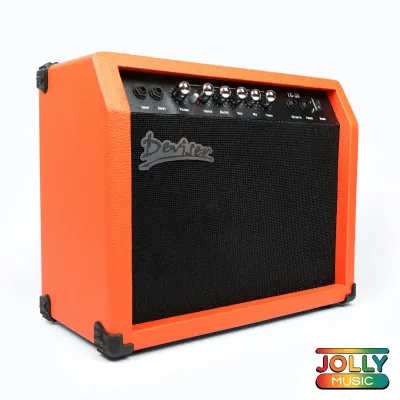
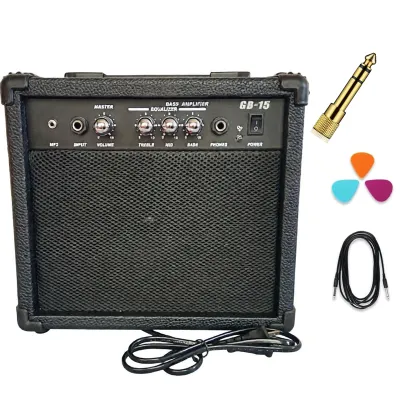
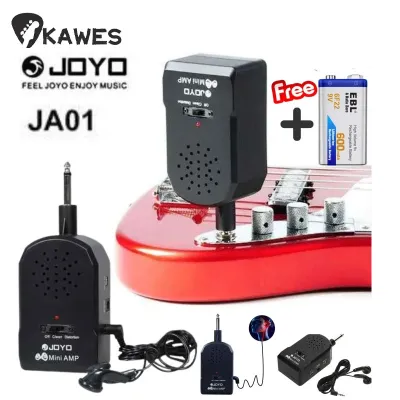
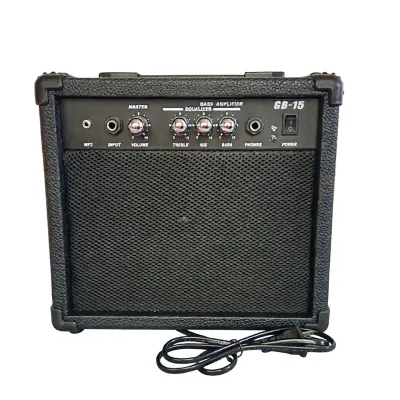
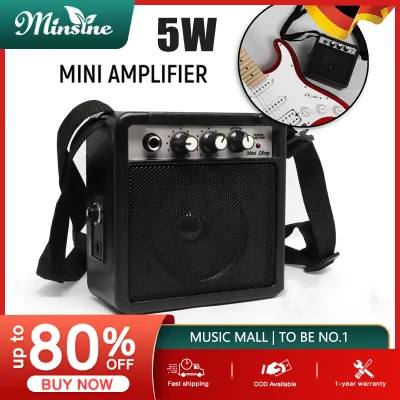
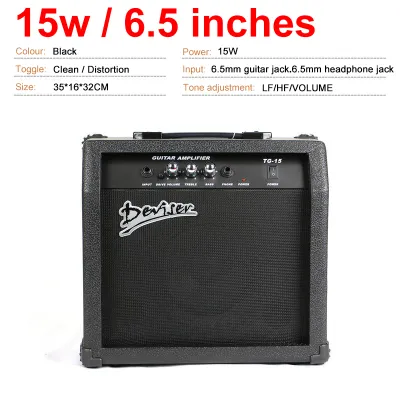
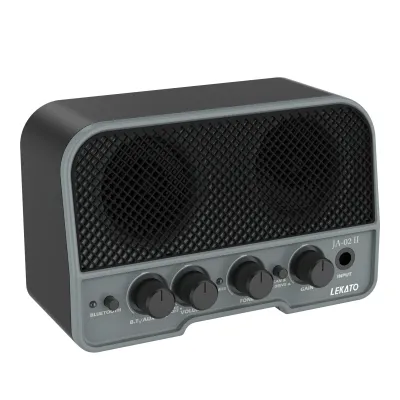
Prices are valid at publication and may change. Please refer to the product page for the latest price.
When evaluating your playing environment, consider where you will practice most often. In a typical home or apartment, space is limited and neighbors are close. A solid-state amplifier rated between 10 and 20 watts provides more than enough volume for bedroom practice without causing noise complaints. If you plan to join small jam sessions or play alongside a drummer, you will likely need a solid-state amplifier of at least 40 to 100 watts, or a tube amplifier rated between 15 and 30 watts, to remain audible.
Before browsing online marketplaces or local music stores, set a clear budget in ₱. When comparing options within your price range, pay close attention to how manufacturers list power ratings. Look for the RMS (Root Mean Square) power rating, which indicates the continuous, clean power output the amplifier can safely deliver. Avoid basing your decision on “peak power” or “max power” figures, which only represent short bursts of energy and do not reflect the amplifier’s actual performance during regular use.
Speaker Size and Configuration: How It Shapes Your Tone
An amplifier’s speaker size directly influences the frequency response and overall fullness of your guitar tone. Beginner amplifiers commonly feature speaker sizes ranging from 6 inches to 12 inches. Smaller speakers, such as 6-inch or 8-inch models, allow for a highly compact and lightweight cabinet that is easy to move around a room. However, these smaller cones struggle to reproduce low-end frequencies, which can make your guitar sound thin or boxy.

Larger speakers, particularly 10-inch and 12-inch models, move more air and provide a much richer, warmer sound with satisfying bass response. While a 12-inch speaker is the industry standard for full-bodied guitar tones, it also increases the physical footprint and weight of the amplifier. For most beginners practicing at home, an 8-inch or 10-inch speaker offers an excellent balance between space-saving portability and satisfying sound quality.
Most beginner amplifiers use a single-speaker configuration, often designated as 1×8 or 1×10. Multi-speaker setups, such as 2×12 cabinets, are designed to project sound across larger stages and are generally too heavy and bulky for home practice. Before making a purchase, check the physical cabinet dimensions listed in the specifications to ensure the unit fits comfortably in your dedicated practice area. Additionally, verify that the speaker’s power handling capacity matches or exceeds the amplifier’s output wattage to prevent damage to the speaker cone.
Channels and Built-In Effects: Simplifying Your Initial Setup
Guitar amplifiers process signals through distinct channels, which alter the character of your sound. A standard beginner amplifier typically features at least two channels: a clean channel and a dirty (overdrive or distortion) channel. The clean channel reproduces the natural, undistorted sound of your guitar, which is ideal for pop, jazz, and fingerpicking. The overdrive channel adds grit and saturation, which is essential for rock, blues, and metal.
Having a dedicated two-channel setup allows you to switch between clean and distorted tones easily, often via a simple button on the control panel or an external footswitch. Some modern amplifiers also include built-in digital effects, such as reverb, delay, chorus, and tremolo. Built-in reverb is particularly useful because it simulates the natural acoustics of a larger room, preventing your guitar from sounding dry and lifeless. Onboard effects save you the immediate expense of buying external effect pedals, though too many options can sometimes become a distraction from actual practice.
To find the right balance, match the amplifier’s built-in features with your preferred music genres. You can use this quick checklist to guide your choice:
- Pop and Jazz: Prioritize an amplifier with a clean channel that stays clear at higher volumes, along with a quality built-in reverb.
- Rock and Blues: Look for an amplifier with a responsive overdrive channel that lets you adjust the gain (distortion level) gradually.
- Heavy Metal: Ensure the amplifier features a high-gain distortion channel or a dedicated "metal" voicing to achieve tight, heavy tones.
- Ambient and Indie: Seek out amplifiers that include built-in delay and modulation effects like chorus to create spacious soundscapes.
Connectivity and Extras: Future-Proofing Your First Amp
As you progress, your practice habits and recording needs will evolve, making specific input and output connections highly valuable. A headphone jack is an absolute must-have feature for beginners, allowing you to practice silently at any hour without disturbing others. An auxiliary input (Aux In) or Bluetooth connectivity is also highly beneficial, enabling you to plug in a smartphone or tablet to play along with backing tracks, metronomes, or instructional videos.
If you plan to record your playing or connect to a computer, look for an amplifier with a USB audio output. This feature allows you to send a digital signal directly to recording software without needing a separate audio interface. Another useful connection for future expansion is an effects loop, which consists of “Send” and “Return” jacks on the back of the amplifier. An effects loop allows you to insert time-based pedals, like delay and modulation, after the amplifier’s preamp stage, keeping your tone clear and preventing muddy sound when using high-gain settings.
Finally, always verify the local power voltage requirements before purchasing an amplifier. In the Philippines, the standard electrical supply is 220V at 60Hz. Many imported amplifiers, particularly those sourced from the United States or Japan, are designed for 110V or 100V systems. Plugging a 110V amplifier directly into a 220V outlet will cause severe, permanent damage to the electronics. If you purchase an imported unit, ensure you use a compatible step-down transformer, or look for a model specifically rated for 220V. Additionally, because the tropical climate in the Philippines brings high humidity, store your amplifier in a well-ventilated room away from damp walls to protect the internal circuitry and speaker cone from moisture damage.
Frequently Asked Questions (FAQ)
Do I need a specific amplifier for an acoustic-electric guitar?
Yes, acoustic-electric guitars generally require a dedicated acoustic amplifier or a full-range PA system to sound their best. Electric guitar amplifiers are designed to color the sound by boosting mid-range frequencies and rolling off high frequencies, which can make an acoustic guitar sound harsh, muddy, and unnatural. Acoustic amplifiers are engineered with a flat, wide frequency response and often include a tweeter to preserve the bright, natural resonance of the acoustic instrument. While you can plug an acoustic guitar into an electric amp for low-volume home practice, a dedicated acoustic amplifier is necessary for accurate tone reproduction.
Is a modeling amplifier better for a beginner than a traditional solid-state amp?
It depends on your learning style and musical goals. Modeling amplifiers use digital processors to emulate the sound of various classic amplifiers and effects cabinets, offering incredible versatility and a wide array of presets. This variety is excellent for beginners who want to explore different genres and experiment with diverse sounds. However, the abundance of menus, buttons, and smartphone app integrations can sometimes lead to decision fatigue and distract you from practicing. Traditional solid-state amplifiers feature straightforward, physical knobs for bass, treble, and volume, offering a simple plug-and-play experience that allows you to focus entirely on your playing technique.
Community discussion
Share your experience or ask a question. Comments are reviewed before publication.