
Choosing a guitar slide is one of the most direct ways to alter your instrument’s voice and physical response. The material you slide across your strings acts as both a temporary nut and a fret, meaning its weight, hardness, and texture dictate your overall sustain, tone, and playing comfort. While glass offers a warm, classic glide, brass delivers heavy sustain, steel provides a bright and cutting attack, and ceramic strikes a unique balance with a highly secure grip.
Understanding these physical differences helps you avoid the frustration of a slide that feels too heavy to control or sounds too harsh on your amplifier setup. By matching the material’s density and surface characteristics to your guitar’s setup and your personal playing style, you can find a tool that feels like a natural extension of your hand.
How Slide Material Shapes Your Tone and Playability
The physics of slide guitar rely on how a material dampens or preserves string vibration. When you press a slide against a vibrating string, its mass determines how much energy is transferred back into the guitar body. Heavier materials with high density generally yield longer sustain because their mass resists the dampening effect of your finger. However, this added weight requires precise physical control; using a heavy slide on a guitar with low action risks fretting out, causing the strings to clatter against the frets.
Products mentioned in this guide
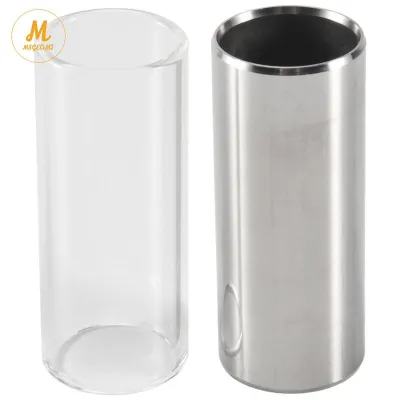







Prices are valid at publication and may change. Please refer to the product page for the latest price.
Surface texture also shapes your performance. A highly polished, smooth surface glides effortlessly over the strings, minimizing handling noise and allowing for rapid positional shifts. Conversely, a slightly textured or porous surface introduces a subtle friction that adds a pleasing, vocal-like rasp to your notes. This texture also affects how securely the slide sits on your finger, especially during long, warm playing sessions where perspiration can make smooth interiors slippery.
Wall thickness represents the relationship between a material’s density and the slide’s overall dimensions. A low-density material like glass must be cast with thick walls to achieve the same physical weight as a thin-walled brass slide. This choice directly influences how bulky the slide feels on your finger, affecting your ability to bend your knuckles or transition between slide playing and traditional fretting.
Comparing the Four Core Guitar Slide Materials
While guitar slides can be fashioned from almost any hard cylinder, the modern player’s toolkit centers on four primary materials: glass, brass, steel, and ceramic. Each of these options presents a distinct physical profile that alters the balance of weight, durability, and tonal warmth.

The ideal choice depends entirely on your physical technique, your guitar’s setup, and the specific sonic texture you want to project.
Glass Slides: Smooth Glide and Warm Sustain
Glass slides are celebrated for their smooth, polished exterior, which offers incredibly low friction against guitar strings. This slick surface allows you to glide across the fretboard with minimal string drag, making it excellent for fast, fluid positional shifts. Sonically, glass tends to damp high-frequency overtones slightly, producing a warm, round, and classic tone highly favored in blues and classic rock.
When selecting a glass slide, you will encounter significant variations in weight based on wall thickness. Standard-wall glass slides are lightweight and highly agile, making them easy to control on electric guitars with lower action. Heavy-wall glass slides provide the extra mass needed to drive acoustic guitar strings without requiring excessive downward pressure.
The primary trade-off with glass is its inherent fragility. A single drop onto a tiled floor can shatter or chip the slide instantly. It is essential to inspect your glass slide for micro-cracks or chips before every playing session, as any surface imperfection can snag your strings or cause painful cuts.
Brass Slides: Heavy Mass and Gritty Resonance
Brass is a dense, heavy metal that offers outstanding sustain and a powerful, commanding presence. Because of its high mass, a brass slide requires very little downward pressure to keep the strings vibrating, allowing the weight of the metal to do most of the work. This makes it highly effective for players wanting maximum sustain, though it demands adequate finger strength to control.
The surface of brass is softer than steel, which influences how it interacts with your strings over time. As you play, the metal will gradually develop a natural patina from exposure to air and skin oils. While many players appreciate this vintage look, you must regularly check the surface for tiny burrs that can develop from contact with wound strings.
Tonally, brass is widely recognized for producing a darker, more resonant low-end and midrange response. It tames the harsh, piercing highs that can sometimes plague electric guitars, replacing them with a gritty, throatier growl that cuts through a band mix.
Steel Slides: Bright Attack and Sharp Sustain
Steel slides, often made from chrome-plated steel or stainless steel, are the go-to choice for players seeking maximum brightness and durability. Steel is incredibly hard, making it highly resistant to dents, scratches, and accidental drops. This ruggedness ensures that the playing surface remains perfectly smooth over years of heavy use, providing a consistent feel.
In terms of weight, steel is generally lighter than brass for the same physical volume. This lighter profile allows for faster, more agile movements across the fretboard, making it easier to execute rapid licks and complex slide patterns. The compromise is a slightly shorter sustain compared to heavy brass, though it still easily outperforms lightweight glass.
Because steel slides are susceptible to oxidation, they require mindful care, particularly in humid tropical environments like the Philippines. If left damp with sweat after a long practice session, steel can develop pitting or rust. Regularly inspecting the surface and wiping it down after use is crucial to prevent friction-inducing corrosion.
Ceramic Slides: Porous Grip and Midrange Focus
Ceramic and clay slides offer a fascinating middle ground, combining the warmth of glass with the weight and presence of metal. One of their most unique features is the surface texture, particularly on the interior. Many ceramic slides feature an unfinished, porous interior that naturally absorbs moisture. In hot, humid climates, this design provides an exceptionally secure grip, preventing the slide from slipping.
To maintain structural integrity, ceramic slides are typically manufactured with thick walls. This design gives them a substantial, grounded feel on your finger without the extreme weight of solid brass. The exterior is finished with a smooth glaze that offers a quiet, low-friction glide over the strings, though it retains a subtle organic texture.
Like glass, ceramic is a brittle material that requires careful handling. Dropping a ceramic slide on a hard surface can easily crack or shatter it. To protect your investment, always store your ceramic slide in a padded case or a dedicated compartment in your gig bag when it is not in use.
Matching the Slide to Your Guitar and Technique
Finding the right slide material requires looking closely at the instrument you play and how it is set up. Acoustic guitars, with their heavier string gauges and higher action, generally perform best with heavier slides like brass or thick-walled glass. The high mass of these slides is necessary to fully drive the acoustic soundboard, yielding a rich, full-bodied tone. If you use a slide that is too light, the sound can turn thin and weak.
Electric guitars, which typically feature lighter strings and lower action, are much more sensitive to slide weight. A heavy brass slide can easily push light electric strings down to the frets, causing constant buzzing and clattering. For electric playing, lighter steel or standard-wall glass slides are often preferred, as they allow you to glide over the strings with minimal downward pressure, preserving your clean, singing sustain.
Your choice of finger placement also dictates the ideal weight and material of your slide. Wearing the slide on your pinky finger preserves your index, middle, and ring fingers for playing traditional chords, but the pinky is naturally weaker and may struggle to control a heavy brass slide. If you prefer using your pinky, a lighter glass or steel slide is often the most comfortable choice. If you wear the slide on your ring or middle finger, you gain much more physical control and strength, allowing you to comfortably wield heavier, high-mass slides.
Sizing and Fit: The Missing Half of the Decision
Even the most premium slide material will feel unusable if the fit is incorrect. To find your ideal inner diameter, you must measure the specific finger and joint where the slide will rest. The slide should fit snugly over your knuckle without restricting blood flow or causing discomfort, yet it must remain loose enough to slide on and off easily. If the slide is too loose, it will wobble during play, making it incredibly difficult to maintain proper pitch and control.
The length of the slide is another critical dimension to consider. A full-length slide covers all six strings of the guitar simultaneously, which is essential for open-tuning chord work and sweeping arrangements. However, a shorter slide—often called a knuckle slide or shorty—covers only three or four strings. Shorter slides leave your finger joints free to bend, making it much easier to combine slide licks with standard fretted notes during a performance.
Because finger shapes vary wildly, testing the fit in person at a local music store is highly recommended. If you are purchasing online through an ecommerce platform, carefully review the manufacturer’s sizing charts, which typically list the inner diameter in millimeters. Always check the seller’s return and exchange policies before buying, ensuring you can swap the slide if the fit is not perfect.
Frequently Asked Questions (FAQ)
Can I use the same slide for both acoustic and electric guitars?
Yes, you can use the same slide for both instruments, but you will face physical trade-offs. A medium-weight slide, such as a medium-wall glass or a lightweight steel slide, offers the best compromise. However, if your electric guitar has very low action and your acoustic has heavy strings, you may find that a single slide is either too heavy for the electric or too light to drive the acoustic. In these cases, owning two different slides is highly beneficial.
How do I clean and maintain a brass or steel slide?
To clean a metal slide, wipe it down with a soft, damp microfiber cloth using mild soap and water to remove sweat and skin oils. It is absolutely critical to dry the slide completely immediately afterward to prevent rust or tarnish, especially in humid climates. Avoid using harsh abrasive cleaners, steel wool, or rough scrubbing pads, as these can scratch the polished playing surface and permanently increase string friction.
Community discussion
Share your experience or ask a question. Comments are reviewed before publication.