
Choosing the right piano bag for 61 keys is a critical decision that directly impacts the lifespan of your instrument. Whether you are a student commuting to lessons, a gigging keyboardist navigating busy city streets, or a touring musician loading gear into cargo holds, your transport method dictates the level of protection your keyboard requires. The ideal bag must balance physical defense against drops and pressure with the practical realities of weight, carrying comfort, and storage space.
To find the correct match, you must evaluate how you travel and the environment your gear will encounter. A lightweight gig bag is excellent for low-risk, local transit where you retain constant control over the instrument. A structured soft case offers a balanced middle ground with dense foam padding, making it suitable for moderate travel, public transport, or motorcycle commutes. For high-risk scenarios, such as commercial flights or loading gear into shared band vehicles, a rigid hard case is necessary to prevent crush damage and severe impacts.
Regardless of the style you select, a 61-key keyboard requires a precise internal fit. If the bag is too loose, the instrument will shift during transit, putting unnecessary stress on the keys, knobs, and jacks. Before making a purchase, you must verify your keyboard’s exact physical dimensions against the bag’s internal measurements to ensure a secure fit.
Products mentioned in this guide
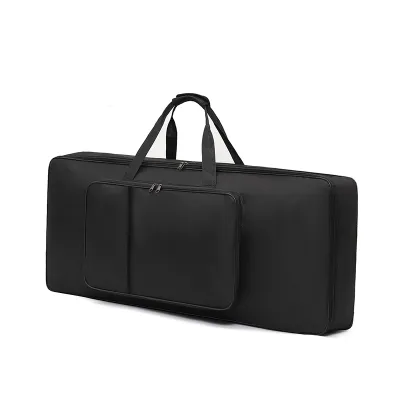
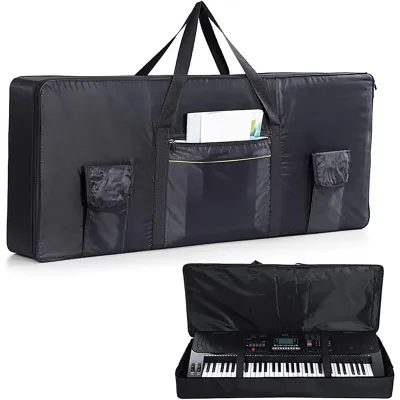
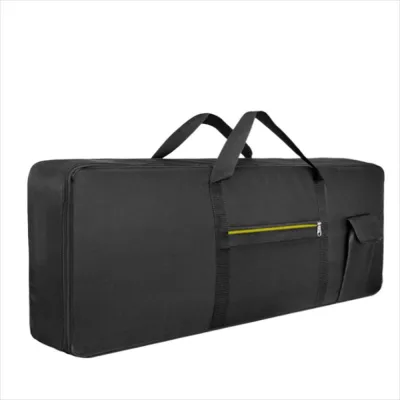
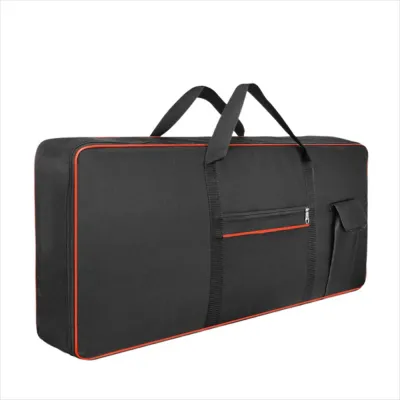
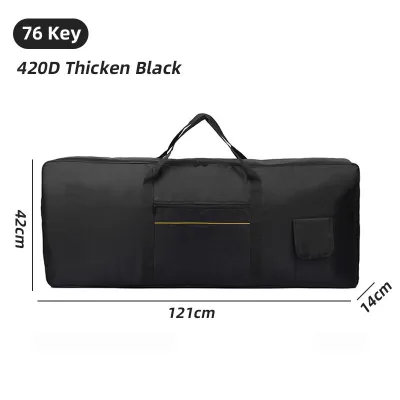
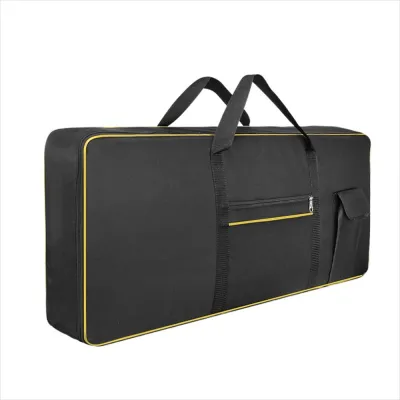
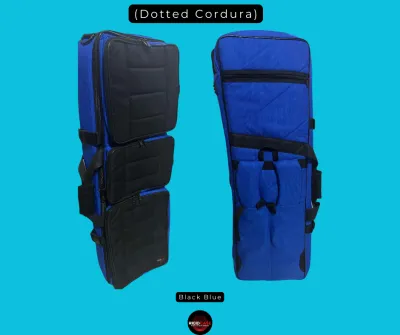
Prices are valid at publication and may change. Please refer to the product page for the latest price.
Understanding the Contenders: Gig Bag vs. Soft Case vs. Hard Case
To make an informed decision, you must first understand the structural differences, material compositions, and primary design purposes of the three main categories of keyboard bags. Each type is engineered for distinct transport scenarios and offers varying levels of structural integrity.
Gig Bags (Lightweight Padded Covers)
Gig bags are lightweight, flexible covers designed primarily for basic scratch prevention, dust protection, and minor bump mitigation. They typically feature thin foam padding, ranging from 5mm to 10mm in thickness, wrapped in a basic synthetic fabric shell. Because they lack rigid internal structures, gig bags can be easily folded or rolled up when empty, making them highly convenient to store at home or on stage.
These bags are designed for musicians who handle their instruments with extreme care and do not subject them to stacked gear or rough transit environments. They serve as an excellent barrier against light drizzle, dust accumulation, and superficial scuffs during quick trips in a private vehicle. However, they offer virtually no defense against crushing forces or significant drops.
Soft Cases (Heavily Padded Transport Bags)
Soft cases represent a substantial upgrade in protection, featuring thick, high-density foam padding that typically ranges from 15mm to 30mm. Unlike basic gig bags, quality soft cases often incorporate rigid or semi-rigid plastic boards sewn into the walls, giving the bag a defined shape even when empty. This structured design helps distribute impact forces and prevents the bag from collapsing inward onto the keys.
These cases are engineered for the active, mobile musician who frequently navigates public transportation, crowded streets, or outdoor venues. They provide a robust defense against moderate drops, bumps, and localized pressure while remaining light enough to carry comfortably over long distances. The combination of dense foam and reinforced outer fabrics makes them the most versatile option for daily use.
Hard Cases (Rigid Molded Shells)
Hard cases are heavy-duty, rigid containers built to withstand extreme physical abuse, heavy stacking, and rough handling by third-party baggage handlers. Constructed from tough materials such as molded ABS plastic, fiberglass, or heavy plywood reinforced with aluminum edges, these cases do not flex or compress under pressure. The interior is typically lined with dense, custom-cut foam or plush fabric that cradles the keyboard and prevents any internal movement.
These cases are the industry standard for touring professionals, rental companies, and anyone who must check their instrument as cargo on flights. They are designed to absorb and deflect high-velocity impacts, drop forces from significant heights, and the crushing weight of other heavy equipment stacked on top of them. While they offer unmatched protection, they are heavy, bulky, and significantly more expensive than fabric alternatives.
Protection vs. Portability: Managing Weight and Shock Absorption
When choosing a piano bag for 61 keys, you will face a direct trade-off between physical protection and carrying convenience. A typical 61-key keyboard weighs anywhere from 4 kg to 10 kg, depending on whether it is a lightweight MIDI controller or a heavy workstation synthesizer. Adding the weight of a heavy case can dramatically affect your mobility and physical comfort during transport.

Shock absorption is determined by how a bag reacts to sudden impact. Soft cases utilize thick, open-cell or closed-cell foam to absorb and dissipate kinetic energy, slowing down the deceleration of the instrument during a fall. Hard cases, on the other hand, rely on a rigid outer shell to deflect the initial impact force across the entire surface of the case, while the soft inner lining cushions the keyboard from the residual vibration.
For musicians navigating tropical environments or urban areas on foot, portability features are just as important as padding. Backpack straps are highly desirable for distributing weight evenly across your shoulders, keeping your hands free to carry other gear or hold onto handrails. Padded side handles and shoulder straps must be securely anchored to the bag’s frame to prevent tearing under load. Some heavy soft cases and most hard cases include inline wheels, which are invaluable for moving heavy gear through long corridors, airports, or paved pathways without straining your back.
To help you visualize these trade-offs, the table below summarizes the key protection and portability features of each bag style:
Comparison of Protection and Portability Features
| Feature | Gig Bag | Soft Case | Hard Case |
|---|---|---|---|
| Typical Padding Thickness | 5mm to 10mm | 15mm to 30mm | Dense custom foam / plush lining |
| Weight Added to Instrument | Very light (0.5 kg to 1.2 kg) | Moderate (1.5 kg to 3.5 kg) | Heavy (4.0 kg to 10.0+ kg) |
| Crush Resistance | None; easily collapses | Moderate; resists light pressure | High; withstands heavy stacking |
| Primary Transport Mode | Private car, hand-carrying | Public transit, motorcycle, walking | Flight cargo, touring vans, trucks |
| Portability Features | Basic shoulder strap, light handles | Backpack straps, padded handles | Heavy-duty spring handles, inline wheels |
Evaluating Materials, Durability, and Weather Resistance
The longevity of your keyboard bag depends heavily on the quality of its exterior materials and construction hardware. In humid, tropical climates, gear is frequently exposed to intense heat, moisture, and sudden torrential downpours. These environmental factors can quickly degrade cheap materials, leading to seam failures, rusted hardware, or mold growth inside the bag.
Most fabric bags are made from woven synthetic materials like nylon or polyester, with durability measured in Denier (D). A higher denier rating indicates thicker, stronger threads and better tear resistance. For daily transport, look for exterior fabrics with a rating of at least 600D, while premium soft cases often utilize 1200D or higher ballistic nylon. Hard cases bypass fabric wear entirely, using impact-resistant ABS plastic or flight-grade plywood that resists punctures and abrasions but can suffer from surface scratches over time.
Water and moisture resistance are critical for protecting sensitive electronic components, key contacts, and internal circuit boards. When evaluating a bag’s weather protection, do not assume a fabric is completely waterproof based solely on its name. You should check the manufacturer’s product labels and tags for specific water-repellent coatings, polyurethane backings, or waterproof zipper designs. While high-grade nylon naturally sheds water, heavy rain can still penetrate standard stitched seams and zipper teeth unless the bag features sealed seams or includes a dedicated rain cover.
Zippers, buckles, and strap attachments are the most common points of failure on soft bags. Heavy-duty, self-repairing nylon coil zippers (such as YKK brand sizes 8 or 10) are highly recommended because they resist splitting when the bag is packed tightly. Metal D-rings, clips, and buckle attachments are far superior to plastic alternatives, which can become brittle and snap when exposed to heat and weight over time. Finally, ensure the interior lining is made of a soft, non-abrasive material like tricot or microfiber to prevent the keyboard’s plastic chassis and screen from scratching during repeated loading and unloading.
Storage, Pockets, and Accessory Management
A keyboard is rarely transported alone; you will almost always need to carry essential accessories such as power adapters, sustain pedals, patch cables, sheet music, or a tablet. How a bag manages these extra items can significantly impact your setup speed and organization at a venue.
Gig bags and soft cases typically feature large external pockets on the front panel. These pockets are highly convenient, allowing quick access to cables and sheet music. However, you must exercise caution when packing bulky, hard items like metal sustain pedals or heavy power bricks. If the external pocket lacks its own depth or internal padding, these hard objects can press directly against the keyboard’s delicate control knobs, sliders, or keys when the bag is zipped shut, potentially causing physical damage under external pressure.
In contrast, most hard cases do not feature external pockets due to their rigid, molded design. Instead, they rely on specialized internal compartments or dedicated spaces beneath or beside the keyboard bed to store accessories. While this keeps your accessories highly secure and protected from the elements, it reduces the overall space available inside the case and may require you to carry a separate accessory bag for larger items like folding music stands or multiple expression pedals.
When evaluating any bag, look for pockets with internal dividers, mesh organizers, or zippered sub-compartments. These features keep small adapters and cables from tangling or sliding around. Before purchasing, verify that the pocket dimensions are sufficient to accommodate your specific power supply and pedal cables without forcing the zippers or creating a bulging pressure point against the keyboard face.
Decision Framework: Which Bag Should You Buy?
To finalize your decision, you must assess your personal transport habits, your budget, and the specific environment in which you operate. Use the structured framework below to match your lifestyle to the correct category of 61-key keyboard bag.
Choose a Gig Bag if:
- Your Transport is Low-Risk: You transport your keyboard exclusively in your own private car, keeping it on the back seat or in a clean trunk without other heavy items sliding around.
- Weight is Your Primary Concern: You have physical limitations or simply prefer the lightest possible setup for short walks from the parking lot to your rehearsal space.
- You Need Quick Storage: You primarily need a dust cover at home that can double as a light carrying bag for occasional, low-risk outings.
- Your Budget is Limited: You want an affordable solution, typically ranging from ₱800 to ₱1,800, and do not require heavy-duty drop protection.
Choose a Soft Case if:
- You Commute via Public Transport or Motorcycles: You regularly ride a motorcycle, take tricycles, or navigate crowded jeepneys and trains where bumps and tight spaces are unavoidable.
- You Need Hands-Free Mobility: You require robust, padded backpack straps to carry your instrument comfortably over long distances while keeping your hands free.
- You Want Balanced Protection: You want peace of mind against accidental drops from carrying height and need thick foam to absorb road vibrations.
- Your Budget is Mid-Range: You are willing to invest between ₱2,000 and ₱6,000 for high-quality fabrics, heavy-duty zippers, and long-term durability.
Choose a Hard Case if:
- You Travel by Air: You frequently check your instrument as baggage on commercial flights, where baggage handlers and cargo holds subject gear to severe drops and shifting loads.
- You Tour in Shared Vehicles: Your keyboard is regularly loaded into the back of a band van, truck, or utility vehicle alongside heavy amplifiers, drum hardware, and speaker cabinets.
- You Require Absolute Crush Protection: You cannot afford any risk of structural damage to a high-end, expensive synthesizer or workstation keyboard.
- Your Budget Accommodates Professional Gear: You are prepared to spend ₱7,000 to ₱15,000 or more to secure the ultimate level of physical defense for your investment.
Before finalizing your purchase of any piano bag for 61 keys, always measure the length, width, and height of your specific keyboard model. Do not rely solely on the “61-key” label, as keyboard chassis dimensions vary widely between manufacturers and models. Compare your measurements against the bag’s listed internal dimensions, leaving a small margin for padding compression to guarantee a snug, secure fit.
Frequently Asked Questions (FAQ)
Can I use a 61-key bag for a 76-key keyboard?
No, you should not attempt to use a 61-key bag for a 76-key keyboard. A 76-key instrument is significantly longer and often wider than a standard 61-key model. Forcing a larger keyboard into a smaller bag will overstretch the fabric, place immense structural strain on the zippers, and compromise the seams, leading to sudden zipper failure during transport. Furthermore, the corners of the keyboard will press tightly against the unpadded edges of the bag, leaving the most vulnerable parts of your instrument completely unprotected against bumps and drops. Always purchase a bag specifically sized for your keyboard’s key count and physical dimensions.
Do hard cases fit in the overhead compartment of an airplane?
Generally, no. Most commercial airlines enforce strict carry-on size limitations, typically restricting bags to maximum dimensions of approximately 56 cm x 36 cm x 23 cm. Because a standard 61-key keyboard is already between 90 cm and 105 cm in length, any hard case designed to fit it will far exceed these carry-on limits. You will almost certainly be required to check your 61-key hard case as fragile cargo or oversized baggage. If you must travel by air, verify your airline’s specific musical instrument policies in advance, and ensure your hard case is flight-certified with heavy-duty latches and TSA-approved locks to protect your gear in the cargo hold.
How do I clean and maintain my keyboard bag?
To maximize the lifespan of your keyboard bag, you should perform regular, low-risk maintenance based on its construction materials. Always check the manufacturer’s care label first for specific cleaning instructions. For fabric gig bags and soft cases, spot-clean dirt and stains using a soft brush or microfiber cloth dipped in warm water and mild, diluted soap; never submerge the bag in water or put it in a washing machine, as this can destroy the internal foam structure. For hard cases, wipe down the exterior shell with a damp cloth to remove dust and road grime. Keep all zippers running smoothly by clearing debris from the teeth with a dry toothbrush, and occasionally apply a small amount of zipper lubricant or paraffin wax to prevent binding.

Community discussion
Share your experience or ask a question. Comments are reviewed before publication.