
Quick Answer: Gig Bag or Hard Case?
Choosing between a soft gig bag and a rigid hard case is one of the most practical decisions you will make as a guitarist. There is no single superior option that fits every player. Instead, the right choice depends entirely on your daily transport frequency, your primary mode of travel, and your local storage environment.
If your routine involves heavy travel, touring in shared vehicles, shipping your instrument, or checking it as baggage on a flight, a hard case is an absolute necessity. Hard cases provide maximum structural protection against crush forces, heavy impacts, and sharp drops. They act as an armored shell, keeping your guitar safe when stacked under heavy amplifiers or luggage.
Conversely, if you are a local commuter who travels by foot, public transit, or motorcycle, a lightweight guitar bag is usually the more practical choice. These bags prioritize ergonomic comfort, featuring backpack straps and external storage pockets that keep your hands free. They protect your instrument from everyday scuffs, dust, and light rain while navigating tight spaces.
Products mentioned in this guide
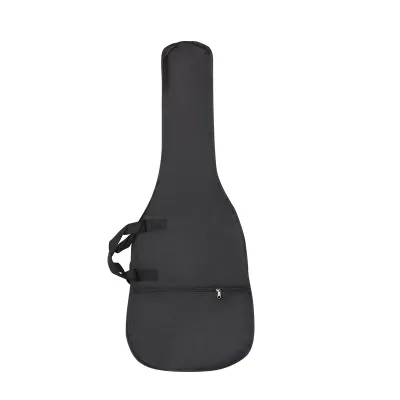
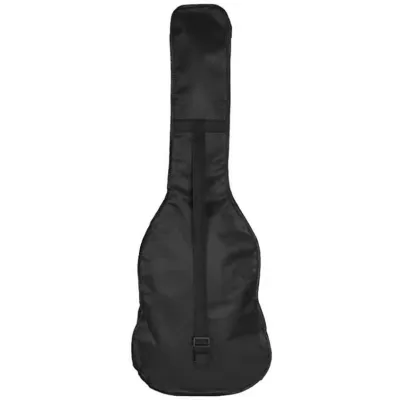
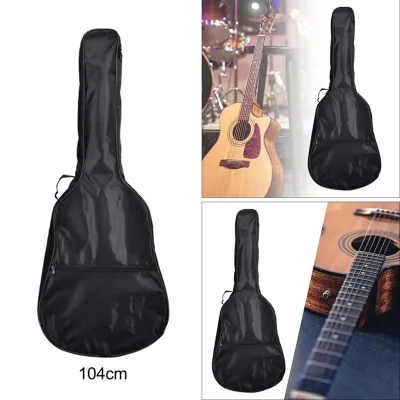
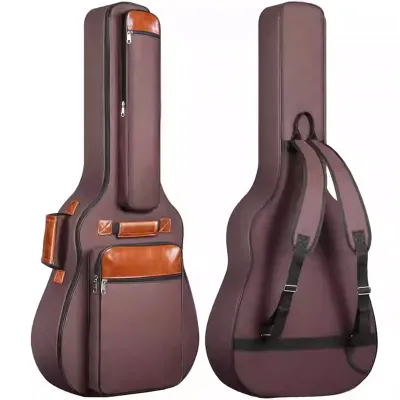
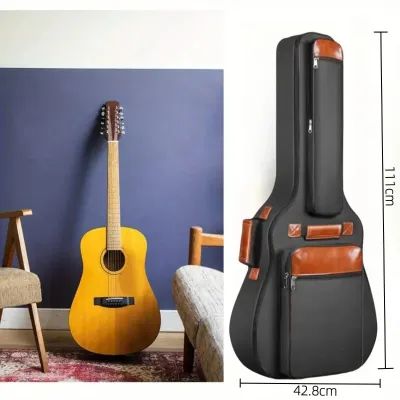
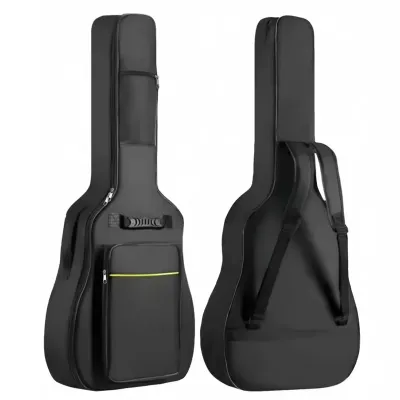
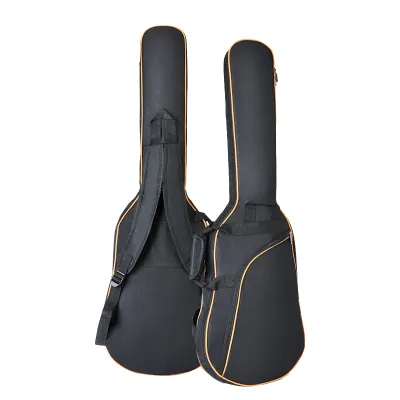
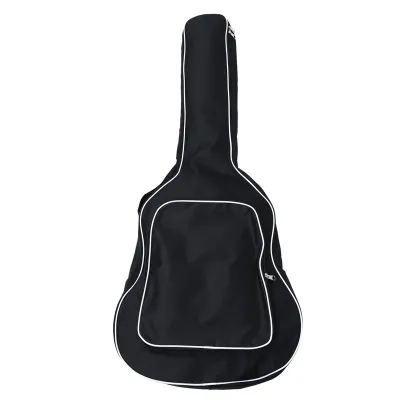
Prices are valid at publication and may change. Please refer to the product page for the latest price.
By evaluating how you transport and store your instrument, you can easily determine which level of protection matches your lifestyle. The following sections break down these differences in detail to help you make an informed investment.
Core Differences Between a Soft Guitar Bag and a Hard Case
Understanding the fundamental construction of these two protective options is essential before making a purchase. While many players use the term “guitar bag” to refer to any carrying sleeve, the structural engineering of a soft bag is entirely different from a rigid hard case. These structural differences dictate how each product handles physical stress.

Standard gig bags are constructed using flexible fabrics such as padded nylon, canvas, or heavy-duty polyester. The exterior fabric resists tearing and light moisture, while the interior is lined with varying thicknesses of soft foam. Because they lack a rigid internal skeleton, these bags can bend, fold, and compress when empty. This flexibility makes them incredibly lightweight but leaves them vulnerable to external crushing forces.
In contrast, a hard case is built around a solid, non-yielding frame. The outer shell is typically made from molded ABS plastic, plywood covered in vinyl (often called tolex), or lightweight fiberglass. Inside, a rigid foam core is molded to match the specific contours of a guitar shape, covered with a thick, plush fabric lining. This rigid construction prevents the case from bending or compressing, ensuring that any external pressure is absorbed by the outer shell rather than the instrument.
It is important to remember that material names alone do not guarantee safety. A thick polyester bag with minimal padding will not protect a guitar from a fall, just as a cheap plastic case with loose latches can fail under pressure. The defining factor is structural rigidity, which determines how well the enclosure can redirect impact forces away from the delicate wood of your guitar.
Key Comparison Dimensions for Guitar Protection
To choose the right gear, you must compare how soft bags and hard cases perform across several practical dimensions. Each option offers distinct trade-offs in safety, comfort, storage, and cost.
Impact Resistance and Structural Protection
When it comes to absorbing severe physical impacts, hard cases are vastly superior to soft bags. A hard case is engineered to distribute point impacts across its entire outer shell. If a heavy speaker cabinet falls onto a hard case in the back of a van, the rigid frame prevents the weight from pressing down on the guitar face. Furthermore, high-quality hard cases feature extensive neck cradles that support the guitar neck, preventing it from flexing during a drop.
Soft gig bags offer excellent protection against superficial damage, such as scratches, dust, and minor bumps against door frames. However, they offer very little defense against crushing or sharp, concentrated impacts. If a gig bag is dropped flat on its back, the impact force can cause the guitar neck to whip forward, resulting in a fractured headstock. This is a common and expensive repair that soft padding alone cannot prevent.
For premium instruments, especially those with angled headstocks like Gibson-style electrics or traditional acoustic guitars, structural support is critical. A rigid case holds the headstock in a suspended position, preventing it from making contact with the outer walls. A soft bag cannot guarantee this suspension, making any drop a high-risk event for fragile wood joints.
Portability, Weight, and Transit Comfort
While hard cases win on structural safety, soft bags are the clear winners for portability and daily comfort. A standard electric guitar hard case can easily weigh between 4 and 6 kilograms when empty. When you add the weight of the instrument, carrying a hard case over long distances becomes physically exhausting. Because hard cases rely on a single side handle, they force you to carry all the weight on one side of your body, which can strain your shoulder and back.
Gig bags are designed for active movement. They are exceptionally light, often weighing less than 2 kilograms. Most modern bags feature thick, padded backpack straps that distribute the weight evenly across both shoulders. This hands-free design is incredibly beneficial if you need to walk through crowded city streets, ride a motorcycle, or navigate public transit systems like the LRT or MRT in Manila.
Navigating tight spaces is also much easier with a soft bag. The flexible material can squeeze past obstacles without scratching walls or bumping into other commuters. Carrying a bulky, rigid hard case through narrow stairwells, turnstiles, or crowded venues often results in accidental collisions that can damage both the case and surrounding property.
Storage Space and Climate Considerations
Your living environment and local climate should heavily influence your choice of guitar protection. In tropical regions like the Philippines, high relative humidity (often exceeding 80%) poses a constant threat to wooden instruments. Excess moisture can cause guitar tops to swell, bridges to lift, and mold to grow inside the body.
Hard cases provide a semi-sealed environment that slows down rapid temperature and humidity fluctuations. However, this sealing can be a double-edged sword. If you place a damp guitar inside a hard case and close it, the moisture becomes trapped, creating a perfect breeding ground for mold and mildew. If you use a hard case in a humid climate, you must monitor the interior environment and use specialized dehumidifying packets or silica gel to maintain a safe relative humidity level of around 45% to 55%.
Soft gig bags are highly breathable, which allows air to circulate freely around the instrument. While this prevents moisture from trapping, it also means the guitar is constantly exposed to the ambient humidity of the room. Neither a soft bag nor a hard case can replace proper room climate control. If you store your guitars in a non-air-conditioned room during the wet season, you must take active steps to control the humidity of the space.
Physical storage space is another major consideration. Hard cases have a large, unyielding footprint. They cannot be folded or compressed, meaning they require dedicated closet or floor space when not in use. For those living in compact apartments or condominiums, storing multiple hard cases can quickly become a logistical headache. Soft bags, on the other hand, can be easily folded, slid under a bed, or hung on a sturdy wall hook when empty.
Cost, Accessories, and Practicality
From a practical standpoint, gig bags offer unmatched convenience for carrying extra gear. Most bags feature large exterior pockets designed to hold cables, guitar straps, sheet music, tablets, and small pedalboards. This allows you to consolidate all your performance gear into a single backpack, leaving your hands completely free to carry an amplifier or open doors.
Hard cases offer very limited storage. Most have a small internal compartment located directly under the neck support, which is only large enough for a pack of strings, a capo, and a few picks. If you need to carry cables, pedals, or music stands, you will have to carry a separate accessory bag, adding to the bulk of your gear.
When comparing costs, it is important to look beyond basic product categories. A basic, unpadded gig bag can be purchased for under ₱1,000, but it offers almost no protection. A premium, highly padded gig bag can cost between ₱4,000 and ₱8,000. At this price point, the cost of a high-end bag overlaps with that of an entry-level hard case. Rather than choosing based on price alone, you should evaluate whether your money is better spent on the structural rigidity of a hard case or the premium materials and ergonomic convenience of a high-end bag.
Decision Framework: Which Option Fits Your Routine?
To finalize your decision, analyze your weekly routine and how you interact with your instrument. Matching your gear to your specific lifestyle ensures that your guitar remains safe without causing unnecessary daily inconvenience.
Choose a Hard Case If…
You should invest in a high-quality hard case if your guitar routine involves any of the following high-risk scenarios:
- Frequent Vehicle Loading: If you play in a band and your gear is regularly loaded into the trunk of a car, a shared van, or a jeepney alongside heavy amplifiers, drum hardware, and speaker cabinets.
- Air Travel: If you plan to travel by air and there is any chance your instrument will be checked into the cargo hold. Standard baggage handling involves severe drops and heavy stacking that only a rigid shell can survive.
- Long-Term Storage: If you need to store a high-value, vintage, or highly fragile instrument for extended periods in a household with active pets, young children, or limited supervision.
- Shipping and Courier Services: If you are selling a guitar or sending it to a professional luthier via a courier service. Shipping companies require rigid packaging to honor insurance claims in the event of damage.
Choose a Gig Bag If…
A lightweight, flexible soft bag is the superior choice if your musical activities align with these daily patterns:
- Active Commuting: If you walk long distances, ride a bicycle or motorcycle, or rely on public transportation to get to your rehearsals, music lessons, or local gigs.
- Tight Performance Spaces: If you perform in small cafes, bars, or intimate acoustic venues where stage space is highly limited. Bulky hard cases can easily block walkways and create tripping hazards for patrons and staff.
- Hands-Free Requirements: If you need to carry other equipment simultaneously, such as a portable amplifier, a microphone stand, or a keyboard, making backpack straps essential.
- Frequent, Low-Risk Movement: If your guitar rarely leaves your home except for occasional visits to a friend's house or a climate-controlled local studio where you maintain complete control over the instrument at all times.
Verify First If You Need a Hybrid Solution
If your needs fall somewhere in the middle, you should consider a hybrid solution. Often referred to as semi-rigid cases or lightweight polyfoam cases, these products combine the best features of both worlds. They feature a tough, weather-resistant fabric exterior with backpack straps, but use dense, rigid EPS foam panels inside to provide structural integrity.
When evaluating a hybrid bag, look closely at the interior construction. Ensure it features a dedicated neck-support block with a security strap to keep the neck immobilized. Check that the padding thickness is at least 20mm and that the bottom of the bag has a thick, rubberized pad to protect the strap button from vertical impacts. These hybrid options offer excellent protection that approaches the safety of a hard case while remaining highly portable.
Essential Features to Verify Before You Buy
Before purchasing any protective gear for your guitar, you must verify several key technical specifications. Do not rely solely on generic product labels like “acoustic guitar bag” or “universal electric case,” as these do not guarantee a proper fit or adequate protection.
First, check the neck support system. A high-quality enclosure must have a raised, contoured cradle that supports the neck of the guitar, keeping the headstock suspended. If the headstock rests directly against the bottom or back of the case, it is highly vulnerable to breaking during an impact. Ensure there is a velcro strap to lock the neck securely into the cradle.
Second, inspect the interior lining. The fabric must be soft, non-abrasive, and free of rough stitching. If you own a guitar with a nitrocellulose lacquer finish (common on high-end and vintage models), you must verify that the interior materials are chemically stable. Some synthetic materials can react with nitrocellulose, causing the finish to melt, discolor, or become sticky. Always check the manufacturer’s care instructions for compatibility.
Third, examine the hardware quality. For soft bags, look for heavy-duty, self-healing nylon zippers (such as YKK brand) with large, robust metal pulls. Broken zippers are the most common reason gig bags are discarded. For hard cases, inspect the latches and hinges. They should be made of thick, chrome-plated or powder-coated steel, and should snap shut with a firm, positive click. Lockable latches are a valuable extra feature for added security.
Fourth, verify the exact physical dimensions. Measure your guitar’s overall length, upper bout width, lower bout width, and body depth. Compare these measurements against the manufacturer’s internal dimensions of the bag or case. A guitar that is too loose will slide around inside, leading to finish wear and structural damage, while a guitar that is too tight will experience constant, dangerous pressure on its joints.
Finally, consider water resistance. While very few soft bags are fully waterproof, many offer water-resistant nylon exteriors and rubber-coated zippers. This is incredibly important if you live in a region prone to sudden tropical downpours. Check the product specifications for weather-resistance ratings or the inclusion of a dedicated rain cover that can be pulled over the bag during storms.
Frequently Asked Questions (FAQ)
Can I use a standard gig bag for checking a guitar on a flight?
No, you should never check a standard soft gig bag as airline baggage. Commercial baggage handling systems subject luggage to severe drops, heavy impacts, and extreme stacking forces. A soft bag cannot protect an instrument from being crushed under hundreds of kilograms of other luggage. If you must check your guitar, you should use a heavy-duty, ATA-rated flight case designed specifically to withstand airline transport. If possible, contact your airline in advance to see if you can carry your guitar on board as cabin baggage in a premium gig bag.
Do hard cases completely prevent humidity and temperature damage?
No, hard cases do not actively control temperature or humidity; they only slow down the rate of change. If you leave a hard case inside a hot car trunk or in a damp room, the interior environment will eventually match the external conditions. To protect your guitar from climate damage, you must store the case in a climate-controlled room. Additionally, you should place specialized two-way humidity control packets or silica gel packs inside the case to maintain a stable relative humidity level between 45% and 55%.
Community discussion
Share your experience or ask a question. Comments are reviewed before publication.