
Choosing between a padded gig bag and a traditional hard case comes down to how you travel, where you store your instrument, and the specific environmental risks your acoustic guitar faces daily. A padded gig bag is the practical choice for local commutes, lightweight travel, and controlled environments, offering convenience and accessory storage. A hard case is essential for air travel, rough handling, and long-term storage where crush resistance and climate buffering are critical. Your decision should hinge on your transport frequency, handling risks, and storage conditions rather than just the guitar’s price tag.
Every guitar owner has unique habits. A musician who walks to local rehearsals requires a different setup than a touring artist whose gear is packed into the back of a shared van. By understanding the structural differences and protective limits of each option, you can safeguard your instrument without carrying unnecessary weight or spending more than required.
Protection Levels and Impact Resistance
The primary job of any guitar enclosure is to absorb or deflect physical force before it reaches the delicate wooden body of your acoustic guitar. Acoustic guitars are particularly vulnerable to damage because their tops, backs, and sides are made of thin, resonant wood panels held together by light internal bracing. A sudden drop or a heavy object leaning against the instrument can easily cause structural cracks or joint separation.
Products mentioned in this guide
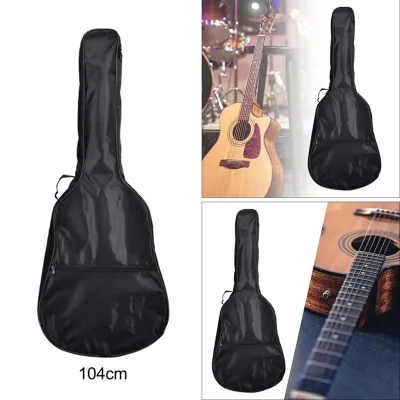
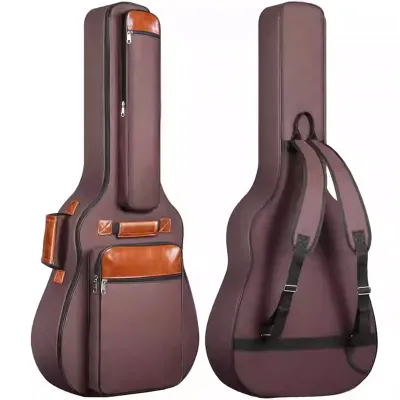
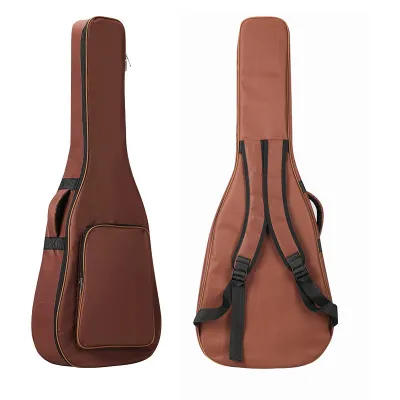
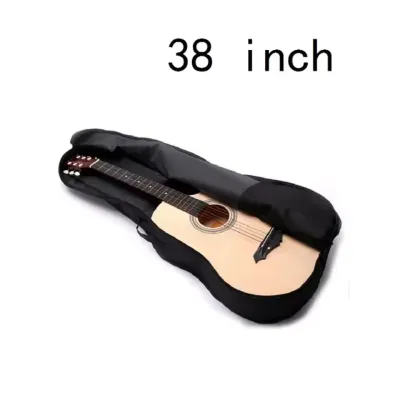
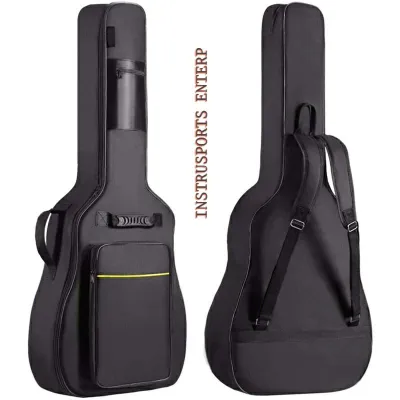
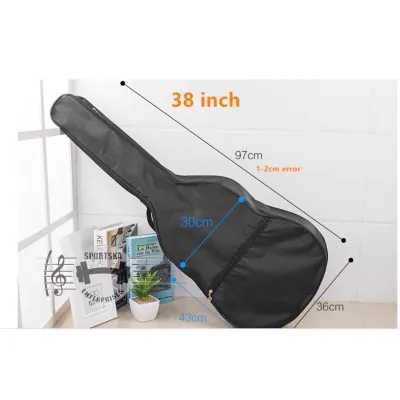
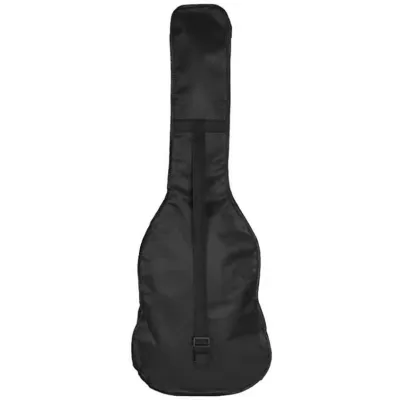
Prices are valid at publication and may change. Please refer to the product page for the latest price.
Hard cases offer the highest level of physical protection through a rigid outer shell, typically constructed from multi-ply wood covered in vinyl, molded ABS plastic, or fiberglass. This hard exterior acts as an arch, distributing crushing forces around the instrument rather than transferring them to the guitar itself. Inside, a dense foam core molded to the shape of an acoustic guitar prevents the instrument from shifting, while a dedicated neck rest supports the weakest point of the guitar: the headstock joint.
Padded gig bags rely on layers of soft, high-density foam wrapped in a heavy-duty fabric exterior, such as ballistic nylon or polyester. While premium gig bags feature thick padding and rigid internal panels, they cannot match the crush resistance of a hard shell. They excel at absorbing shock from minor bumps, scrapes, and light drops, but they will flex under heavy weight. If another heavy piece of equipment falls onto a gig bag, the force will pass directly to the guitar.
To evaluate a case’s protection level before purchase, perform a few simple checks. Press firmly on the center of a hard case’s lid; it should resist flexing and not touch the guitar inside. For a gig bag, squeeze the padding between your fingers to feel its density; cheap, spongy foam offers little protection compared to firm, high-density foam. Ensure the interior features a padded block that cradles the neck and keeps the headstock suspended so it never impacts the bottom of the bag during a fall.
Portability, Weight, and Daily Commuting
While protection is vital, a case that is too heavy or awkward to carry can quickly become a burden, especially if you travel frequently. The physical effort required to transport your guitar to lessons, rehearsals, or local gigs should play a major role in your decision.

Weight is the most obvious difference between the two styles. A standard wooden hard case can easily weigh between 4 and 6 kilograms empty, and when you add the weight of an acoustic guitar, carrying it by a single side handle over long distances becomes exhausting. Gig bags are significantly lighter, often weighing less than 2 kilograms. They feature adjustable, padded backpack straps that distribute the weight evenly across both shoulders, leaving your hands free to carry other gear or navigate your commute.
Storage capacity is another area where gig bags hold a clear advantage. Most gig bags are designed with large exterior pockets that can accommodate sheet music, tablets, spare strings, capos, tuners, and cables. Hard cases, by contrast, offer very limited storage, usually confined to a small internal compartment under the neck rest that can barely hold a strap and a few picks. If you use a hard case, you will almost certainly need to carry an additional backpack for your accessories.
Your daily commuting environment should dictate your choice. Navigating public transit, such as crowded trains, buses, jeepneys, or tricycles, is incredibly challenging with a bulky, rigid hard case. A hard case takes up significant physical space, often requiring you to pay for an extra seat or hold a heavy, awkward box on your lap. A lightweight gig bag can be worn on your back or held vertically between your knees, making it much easier to maneuver through tight spaces and crowded venues. However, if you must squeeze into highly congested spaces where other commuters might lean heavily against your bag, the soft padding of a gig bag may not prevent pressure damage.
Storage, Climate Buffering, and Long-Term Care
Acoustic guitars are highly sensitive to environmental conditions, particularly relative humidity and temperature. Because wood is a natural, porous material, it expands when it absorbs moisture and contracts when it dries out. Rapid changes in humidity can lead to warped necks, lifting bridges, fret buzzing, or devastating cracks in the soundboard.
Hard cases excel at creating a stable microclimate for your instrument. When closed and latched, a high-quality hard case provides a relatively tight seal that slows down the exchange of air between the inside of the case and the outside environment. This buffering effect is crucial in tropical climates where you might transition quickly from a hot, humid outdoor environment to a dry, air-conditioned room. The slow rate of change inside a hard case gives the wood time to adjust gradually, preventing sudden structural stress.
Gig bags offer very little climate protection. The fabric and foam construction is breathable, meaning moisture and temperature fluctuations pass through the walls of the bag almost instantly. If you store your guitar in a gig bag in a highly humid room, the instrument will quickly absorb that moisture. Conversely, in an air-conditioned space, the dry air will rapidly draw moisture out of the guitar, increasing the risk of wood shrinkage and cracking.
To protect your investment, always check the quality of the seals on a hard case. Look for a tongue-and-groove valance along the opening edge that fits together tightly without gaps. Regardless of which case you choose, place a small digital hygrometer inside to monitor the relative humidity. If you live in an area with extreme humidity swings, a hard case allows you to use specialized humidity control packs or desiccants effectively, as the sealed environment prevents the packs from exhausting themselves trying to dehumidify the entire room.
Budget and Value Considerations
Aligning your choice of protection with your budget requires looking beyond the initial purchase price. You must weigh the cost of the case against the financial and sentimental value of your acoustic guitar, as well as the potential cost of professional repairs.
Entry-level gig bags are highly affordable, often costing under ₱1,000, but they offer minimal protection, consisting of thin nylon fabric with little to no foam padding. Premium, highly padded gig bags and hybrid cases can range from ₱3,000 to over ₱8,000, offering excellent shock absorption and durable materials. Standard wooden hard cases generally start around ₱4,000, while heavy-duty molded flight cases designed for extreme travel can cost ₱12,000 or more.
A helpful rule of thumb is to allocate roughly 15% to 20% of your guitar’s value toward its protection. If you own a budget acoustic guitar worth ₱5,000, spending ₱6,000 on a premium hard case is hard to justify; a well-padded gig bag costing ₱1,500 provides a sensible balance of safety and economy. However, if you own a solid-wood instrument worth ₱30,000 or more, a sturdy hard case is a mandatory investment. The cost of repairing a cracked top or a broken neck joint at a professional luthier shop can easily exceed the price of a high-quality hard case.
When shopping, inspect the build quality indicators carefully rather than relying on brand names alone. For gig bags, check that the zippers are heavy-duty, smooth-gliding, and double-stitched to the fabric, as zipper failure is the most common reason gig bags become unusable. For hard cases, inspect the metal latches to ensure they align perfectly and snap shut with a reassuring click. The interior lining should be plush and non-abrasive to protect your guitar’s finish from scratches during transport.
Decision Framework: Match the Case to Your Routine
To make your final decision, evaluate your typical weekly routine and identify the primary risks your guitar will face. Use this straightforward checklist to determine which style of protection fits your lifestyle.
Choose a padded gig bag if you meet the following conditions:
- You primarily commute on foot, use public utility vehicles, or travel in personal cars where you handle the instrument yourself.
- You need to carry sheet music, cables, and personal items without bringing an extra backpack.
- You have limited storage space at home and need a case that can be folded or hung up when empty.
- Your guitar is a laminate-wood model that is less sensitive to minor humidity changes.
Choose a hard case if you meet the following conditions:
- You travel by air, tour with a band, or pack your gear into shared cargo spaces where other heavy items might shift.
- You store your guitar long-term in rooms without active climate control, exposing it to seasonal humidity swings.
- You own a high-value, solid-wood acoustic guitar that requires strict humidity management.
- You want maximum peace of mind against accidental falls, household pets, or heavy objects leaning against the case.
Before finalizing your purchase, verify a few practical details. If you plan to travel by air, check your preferred airline’s specific carry-on policies for musical instruments, as some carriers have strict size limits that may force you to gate-check your guitar regardless of the case type. Measure your vehicle’s trunk space to ensure a rigid hard case can lie flat without forcing the lid closed. Finally, check the storage options at your regular rehearsal spaces or venues; if there is no secure room to leave a bulky hard case, a compact gig bag that stays by your side might be the safer option.
Frequently Asked Questions (FAQ)
Can I use a padded gig bag for checked luggage on a flight?
No, you should never check an acoustic guitar in a padded gig bag. The cargo hold of a commercial airplane is a high-risk environment where baggage is stacked tightly and subjected to intense physical pressure, shifting forces, and extreme temperature drops. A soft gig bag offers no structural resistance against crushing, and your guitar is highly likely to suffer catastrophic damage, such as a snapped neck or a crushed body. Furthermore, most airlines have strict liability limitations for musical instruments packed in soft cases, meaning they will not compensate you for damage if you choose to check a gig bag. Always use a high-quality, molded hard case or a dedicated flight case for checked baggage.
Do I need to use a humidifier inside my acoustic guitar case?
Whether you need a humidifier depends on your local climate and where you store your guitar. Acoustic guitars thrive in a relative humidity range of 45% to 55%. In tropical regions, high humidity is often the primary concern, but if you regularly keep your guitar in an air-conditioned room, the air can become exceptionally dry, dropping below 35% humidity. This dry air causes the wood to shrink, leading to cracks, sharp fret ends, and low action that causes fret buzz. Use a digital hygrometer to monitor the humidity inside your case. If the level consistently drops below 40%, use an in-case humidifier to protect the wood. Hard cases are far more effective for this, as their tight seals retain moisture much better than breathable gig bags.
Community discussion
Share your experience or ask a question. Comments are reviewed before publication.