
Choosing between a free digital copy and a paid eBook of the Revised Penal Code depends entirely on your specific need for expert annotations, recent legislative updates, and reliable offline accessibility. While a basic, unannotated text is perfectly sufficient for general civic awareness or quick, casual lookups, legal professionals and law students require verified, annotated editions to ensure absolute accuracy in research, academic preparation, and courtroom practice. Deciding which version to use requires balancing the convenience of zero-cost public databases against the rigorous, structured utility of professional legal publications.
Evaluating Free Digital Versions of the Revised Penal Code
Free digital versions of the Revised Penal Code are widely accessible across various online platforms, making them the most convenient starting point for quick inquiries. These texts are typically hosted on government portals, official legislative archives, and open-access legal databases. For a citizen wanting to understand the basic definition of a felony or a business owner checking general liabilities, these public repositories offer an invaluable service. They provide immediate access to the raw letter of the law without any financial barrier, allowing anyone with an internet connection to review the statutory language.
However, relying solely on free online texts carries distinct limitations that can pose risks in professional or academic settings. Most free databases present the law exactly as it was originally enacted or in a piecemeal fashion, often failing to integrate subsequent amendments directly into the main text. This means a reader might unknowingly consult an outdated article that has since been modified or repealed by a more recent Republic Act. Furthermore, free versions lack expert commentary, explanatory notes, and cross-references to relevant jurisprudence. The formatting on public websites can also be challenging to navigate on mobile devices, often requiring constant scrolling through unindexed, plain-text pages that lack robust search functions.
Products mentioned in this guide
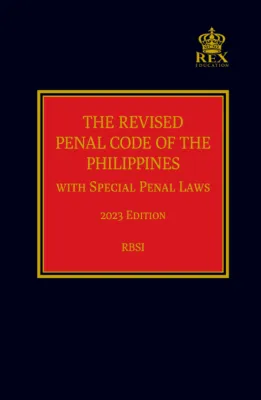
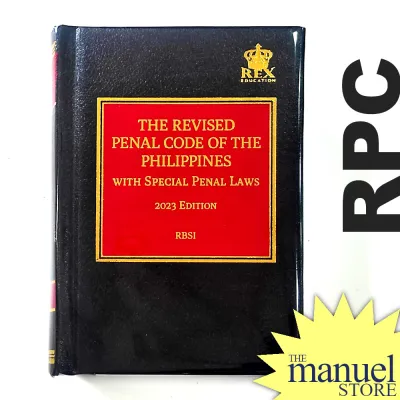
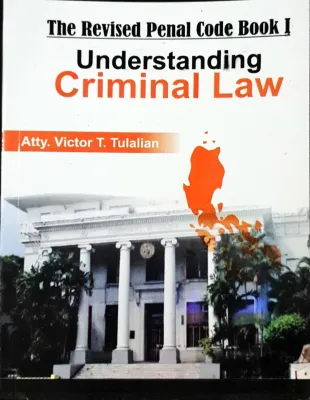
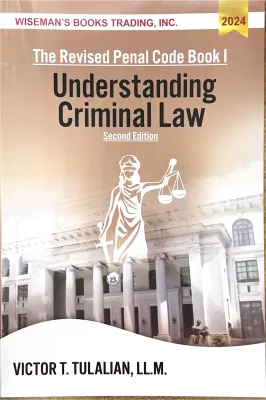

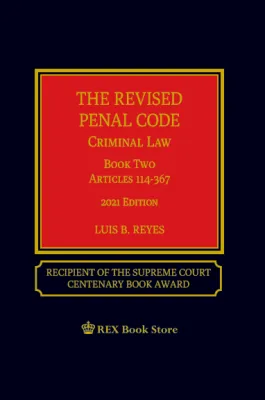
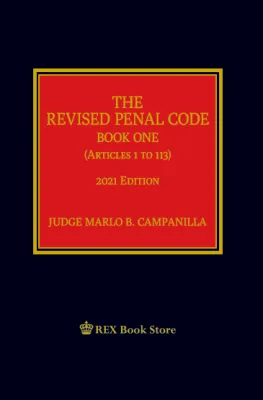
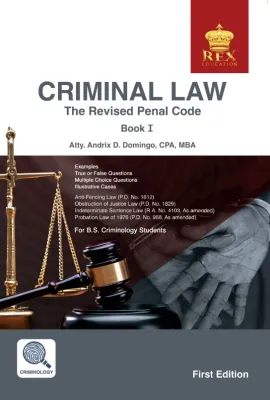
Prices are valid at publication and may change. Please refer to the product page for the latest price.
Consequently, free digital copies are best reserved for preliminary reading, general civic education, or situations where you only need to verify a specific, unchanged article on the fly. If your goal is simply to grasp the basic structure of criminal liabilities in the Philippines, a public portal is a highly practical tool. But if your work or studies demand a deeper understanding of how these laws are applied, interpreted, and modified by the courts, a basic text will quickly prove insufficient.
What Justifies the Cost of Paid eBook Editions
Paid eBook editions of the Revised Penal Code justify their price by transforming a dry, static statutory text into an active, comprehensive research tool. The primary value of a premium digital edition lies in its expert annotations. Renowned legal scholars and commentators compile these editions, appending crucial explanations, historical context, and analysis to each article. Instead of reading a law in isolation, you receive immediate guidance on how the provisions operate in real-world scenarios, which is indispensable for navigating complex legal issues.

In addition to expert commentary, paid eBooks frequently integrate relevant jurisprudence, case digests, and cross-references directly beneath the statutory text. When an article of the Revised Penal Code is cited in a landmark Supreme Court decision, a high-quality eBook will reference or summarize that ruling. This integration saves hours of manual research, allowing you to see exactly how the judiciary interprets specific elements of a crime. Furthermore, reputable publishers ensure that their paid editions are meticulously updated to reflect the latest legislative amendments, ensuring you are not relying on obsolete provisions.
The technical features of paid digital editions also offer a vastly superior reading experience compared to free web pages. Premium eBooks are typically optimized for eReaders, tablets, and smartphones, featuring advanced search capabilities that allow you to locate specific terms, articles, or case citations instantly. They also support interactive features such as digital bookmarking, color-coded highlighting, and personal note-taking, which remain saved across your devices. Crucially, these eBooks provide reliable offline access, meaning you can study or reference the law even during power outages, transit, or in areas with poor internet connectivity.
How to Match the Edition to Your Legal Needs
Selecting the right digital edition of the Revised Penal Code requires a clear assessment of your daily activities and the level of legal precision your role demands. For law students and bar examinees, annotated digital editions are practically mandatory. The rigorous demands of law school require not just memorizing the codal provisions, but understanding the underlying principles and the corresponding case law. An eBook that features integrated case digests and clear breakdowns of elements of felonies helps streamline study sessions, making it much easier to prepare for recitations and exams.
For practicing lawyers, prosecutors, and legal researchers, the stakes are even higher. In a professional environment, relying on an outdated or unverified text can compromise a case or lead to faulty advice. Legal practitioners require paid editions that offer guaranteed citation accuracy, up-to-date jurisprudence, and reliable indexing. The ability to quickly search through a well-structured digital table of contents and jump directly to cross-referenced articles or Supreme Court rulings is essential when drafting pleadings under tight deadlines or preparing for oral arguments.
Conversely, the general public, community leaders, and business owners rarely need to invest in expensive, highly technical annotated volumes. If your primary objective is to understand basic civic duties, general liabilities, or standard business regulations, a free, unannotated version from an official government source is usually sufficient. For non-professionals, the raw text provides a solid foundation of legal literacy, and any complex situations that arise should be referred to qualified legal counsel rather than resolved through self-study of annotated texts.
Essential Checks Before Buying a Paid Digital Copy
Before purchasing a paid digital copy of the Revised Penal Code, it is essential to perform several quality and compatibility checks to ensure you get the best value for your money. First, verify the publication year and carefully read the product description to confirm which recent amendments and supplementary laws are included. Because penal laws are subject to constant revision by Congress, buying an outdated edition—even one that is only a few years old—can leave you without critical updates on penalties, modified elements of crimes, or newly enacted special penal laws.
Second, examine the available file formats and device compatibility before completing your purchase. Digital legal texts are offered in various formats, such as EPUB, PDF, or proprietary formats tied to specific reading applications. If you prefer reading on a dedicated eReader, ensure the file format is compatible with your device and allows for text reflow, which adjusts the text size to fit your screen comfortably. Some PDFs are merely scanned images of printed pages, which can be incredibly difficult to read, search, or highlight on smaller tablet or smartphone screens.
Finally, review the publisher’s update policy and digital rights management (DRM) restrictions. Some digital platforms lock the eBook to a single application or device, preventing you from exporting your notes or reading the text on an alternative app. Additionally, check whether the publisher offers free or discounted updates when new laws are passed, or if you will be required to purchase an entirely new edition. Understanding these terms beforehand prevents frustration and ensures your digital library remains a flexible, long-term asset.
Frequently Asked Questions (FAQ)
Can I use a free online version for court pleadings or formal legal research?
While free online versions are useful for quick reference, they are generally not recommended as primary sources for formal legal research or court pleadings. Public websites may contain typographical errors, formatting discrepancies, or outdated text that does not reflect recent amendments. For formal submissions, practitioners must verify the text against the official gazette or use certified, professionally published editions to ensure absolute citation accuracy and compliance with court standards.
Do paid eBooks automatically update when new laws or jurisprudence are released?
Paid eBooks do not always update automatically when new laws or jurisprudence are released. While some digital publishers and subscription-based legal platforms offer periodic updates or push notifications for amendments, many standard eBooks are sold as static editions representing the law at a specific point in time. It is crucial to check the publisher’s specific update policy and product details before purchasing to understand if future revisions are included or if a new edition must be bought.
Community discussion
Share your experience or ask a question. Comments are reviewed before publication.