
Quick Answer: Foldable or Regular Digital Piano?
Choosing between a foldable piano and a regular digital piano depends on your space, portability needs, and long-term musical goals. If your primary objective is serious piano study, classical training, or achieving an authentic acoustic playing experience, a regular digital piano is the superior choice. These instruments feature fully weighted keys that simulate the physical hammer action of an acoustic piano, which is essential for building finger strength, hand technique, and dynamic expression.
Conversely, a foldable piano is a specialized utility tool designed for convenience. It is the ideal option if you face severe space constraints, travel frequently, or need a highly portable secondary keyboard for casual practice and basic song writing. While foldable models offer unmatched portability and easy storage, they compromise on tactile realism and sound quality. Your decision should align with your daily living environment and how seriously you intend to develop your piano skills.
Core Differences at a Glance
Before exploring the specific features of each instrument, it is helpful to understand how their physical designs and intended use cases differ. Foldable pianos and regular digital pianos are engineered for entirely different lifestyles.
Products mentioned in this guide
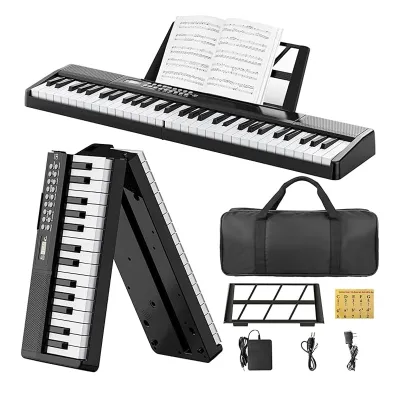
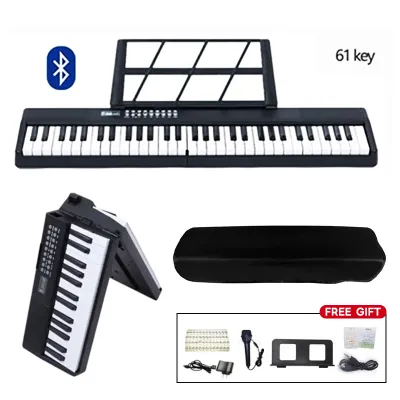
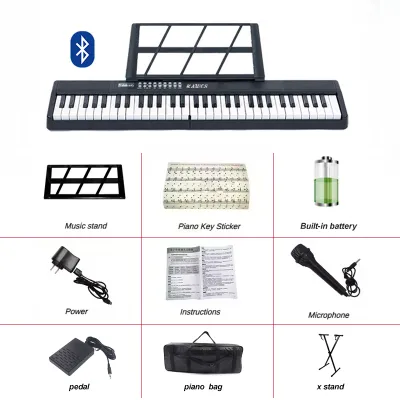
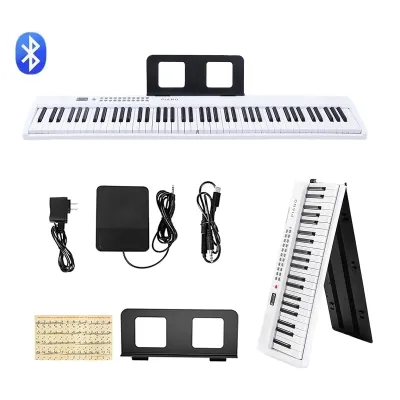
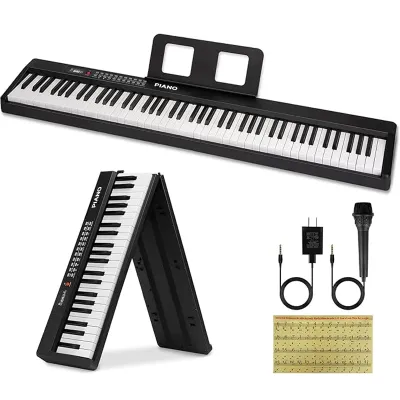
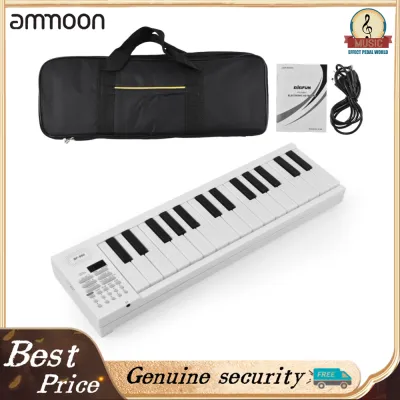
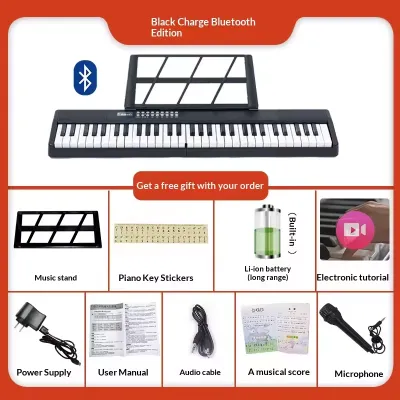
Prices are valid at publication and may change. Please refer to the product page for the latest price.

Foldable pianos feature a hinged chassis that allows the keyboard to fold in half or in quarters. To keep the instrument light enough for travel, manufacturers construct these keyboards using lightweight plastics and unweighted or semi-weighted key mechanisms. They are designed to fit into backpacks or small gig bags, making them highly portable but structurally flexible.
Regular digital pianos are built with a rigid, one-piece frame. Whether you choose a portable “slab” style or a stationary cabinet model, these instruments prioritize structural stability and musical authenticity. They use heavier materials, including dense plastics and wooden components, to house complex hammer-action keybeds and larger speaker systems. This solid construction prevents the keyboard from flexing or shifting while you play.
| Feature | Foldable Piano | Regular Digital Piano |
|---|---|---|
| Typical Weight Range | Under 5 kg | 10 kg to over 50 kg |
| Key Action Type | Unweighted or semi-weighted (synth-action) | Fully weighted (graded hammer action) |
| Speaker Configuration | Small, low-wattage, often downward-firing | Multi-directional, high-wattage, cabinet-resonant |
| Power Source | Rechargeable lithium battery or USB/AC power | AC adapter only (mains electricity) |
| Primary Use Case | Travel, casual practice, space-restricted storage | Dedicated home practice, formal lessons, performance |
Space, Portability, and Your Living Situation
Your physical environment is often the deciding factor when choosing a keyboard. How much space you can dedicate to an instrument determines which form factor will integrate smoothly into your daily routine.
Foldable Pianos for Small Spaces and Travel
Foldable pianos excel in environments where space is at a premium. In dense urban areas where studio apartments and shared condominiums are common, finding room for a full-sized, 88-key instrument can be incredibly difficult. A foldable piano solves this problem by collapsing to a fraction of its fully extended length. Depending on whether the design is a bi-fold or quad-fold system, you can easily slide the collapsed keyboard under a bed, place it on a closet shelf, or tuck it behind a door when it is not in use.
Portability is another major benefit for musicians who travel frequently, perform at outdoor events, or practice on the go. Weighing very little, these instruments are easy to carry on public transportation or pack into a car trunk.
However, operating a folding instrument in tropical and highly humid climates, such as in the Philippines, requires careful maintenance. High relative humidity can cause moisture to build up inside the folding joints, potentially damaging the internal flexible ribbon cables that connect the two halves of the keyboard. Dust and atmospheric salt in coastal regions can also accumulate in the hinges, leading to physical stiffness or electronic contact failures over time. To protect your investment, always store a foldable piano in a padded, zippered gig bag with silica gel packs when it is not in use, and avoid unfolding it in damp or dusty environments.
Regular Digital Pianos for Dedicated Spaces
Regular digital pianos require a more permanent commitment of floor space. Even portable slab-style digital pianos, which can be detached from their stands, still require a sturdy X-stand or Z-stand that occupies a noticeable footprint in a room. Cabinet-style digital pianos feature integrated wooden stands and pedal boards, making them permanent pieces of household furniture.
The physical presence of a regular digital piano provides a distinct psychological benefit. Having a dedicated music corner with a permanently set-up instrument encourages more frequent, spontaneous practice sessions. You do not have to go through the process of retrieving, unfolding, and plugging in your keyboard every time inspiration strikes.
Furthermore, the weight and solid construction of a regular digital piano ensure absolute stability. When you play energetic or heavy passages, a regular digital piano remains completely stationary. Foldable pianos, due to their lightweight frames and central hinge points, can wobble, flex, or slide on a table or stand when subjected to vigorous playing. This movement can disrupt your hand positioning and break your concentration.
Key Action, Sound, and Playing Experience
The physical sensation of pressing a key and the acoustic response that follows are the most critical elements of playing the piano. This is where the differences between these two form factors are most pronounced.
Touch and Key Action
To maintain a thin profile and keep weight to a minimum, nearly all foldable pianos use unweighted or semi-weighted synth-action keys. These keys rely on simple plastic leaf springs or rubber dome contacts to return the key to its resting position. As a result, the keys feel light, springy, and somewhat spongy. They lack the physical resistance and inertia of a real piano key, making it difficult to control the volume and tone of individual notes.
Regular digital pianos are designed to replicate the mechanical action of an acoustic grand piano. They utilize fully weighted keys with graded hammer action. This means the keys in the lower register feel heavier to press than those in the higher register, exactly like the hammers on an acoustic instrument. The keybed contains actual metal hammers that swing upward when a key is pressed, providing a natural resistance and a realistic key return.
Developing proper piano technique requires this mechanical resistance. Practicing on fully weighted keys builds finger independence, forearm strength, and the muscle memory needed to control dynamics, from a soft pianissimo to a powerful fortissimo. If a beginner practices exclusively on an unweighted foldable keyboard, they will struggle to play on a real acoustic piano, as their fingers will not have developed the strength and control required to depress the heavier keys.
Sound Engine and Speaker Quality
The physical size of an instrument directly limits its audio capabilities. Foldable pianos have very thin bodies, which restricts the size of their internal sound chips and speakers. These models often use basic sound-producing chips with lower-resolution audio samples. Because the built-in speakers must be small and thin, they are frequently downward-firing or side-firing, resulting in a sound that can feel thin, tinny, and lacking in bass. While they are functional for basic pitch reference, you will need to use high-quality headphones to get a satisfying sound.
Regular digital pianos feature larger cabinets that allow for sophisticated speaker placement. They often contain multi-directional speaker systems, with dedicated woofers for low frequencies and tweeters for high frequencies. This physical space allows the sound waves to resonate within the cabinet, creating a wider, more immersive soundstage that mimics the acoustic projection of a piano soundboard.
Additionally, regular digital pianos use advanced sound engines with high polyphony counts, often 128 or 256 notes. Polyphony refers to the number of individual notes or voices the piano can produce simultaneously. When you play complex classical pieces with the sustain pedal pressed down, a high polyphony count ensures that older notes do not abruptly cut off. Before buying, always check the manufacturer’s specifications for the sound sampling technology and polyphony limits to ensure the instrument meets your musical expectations.
Features, Connectivity, and Durability
Modern digital keyboards offer a variety of electronic features and connection options. Understanding how these features differ between foldable and regular models will help you choose the right tool for your specific workflow.
Foldable pianos are often designed with digital convenience in mind. Because they are targeted at casual players and tech-savvy hobbyists, they frequently include built-in Bluetooth MIDI and Bluetooth audio. This allows you to connect the keyboard wirelessly to a smartphone, tablet, or laptop. You can use educational apps to learn songs, or use the keyboard as a wireless MIDI controller in music production software. Many foldable models also include hundreds of built-in sounds, rhythm accompaniment tracks, and simple drum loops to make casual practice more entertaining.
Regular digital pianos tend to focus on a streamlined, distraction-free interface. While many modern models now include Bluetooth MIDI, their primary focus remains on delivering high-quality piano tones. They offer essential practice tools, such as a precise metronome, a basic two-track recorder to listen back to your performances, and dual-headphone jacks so a teacher and student can practice together quietly.
Pedal compatibility is another important distinction. Foldable pianos typically connect to small, plastic sustain switch pedals via a standard 3.5mm or 6.35mm jack. These simple switches only register whether the pedal is fully pressed or fully released. Regular digital pianos support more advanced pedal systems, including three-pedal lyres that offer half-pedaling capabilities. Half-pedaling allows you to control how much the dampers touch the virtual strings, giving you precise control over the sustain and resonance of your music.
In terms of long-term durability, regular digital pianos have a clear advantage. Because they are constructed as a solid, single unit, they have fewer moving parts that can wear out. Foldable pianos feature physical hinges and internal ribbon cables that must bend and unbend every time you set up or pack away the instrument. Over years of constant folding and unfolding, these joints and cables are subjected to mechanical stress, making them potential points of failure. If you plan to use your keyboard daily for several years, a solid-body regular digital piano offers significantly better long-term reliability.
Budget Allocation and Long-Term Value
When planning your purchase, it is important to look beyond the initial price tag and consider the overall value, accessory costs, and local support options.
Foldable pianos are generally positioned as budget-friendly entry-level instruments. In the Philippines, these models typically retail between ₱3,000 and ₱10,000. When purchasing a foldable piano, you are primarily paying for the engineering required to make the instrument compact and portable, rather than the quality of the key action or the realism of the sound engine.
Regular digital pianos cover a much broader price spectrum. Entry-level portable slab models with fully weighted keys start around ₱15,000 to ₱25,000. Mid-range cabinet models designed for serious home study generally range from ₱30,000 to ₱60,000, while premium digital pianos can exceed ₱100,000. While the upfront cost is higher, a regular digital piano holds its value much better over time and will not need to be replaced as your playing skills improve.
Regardless of which style you choose, you must factor the cost of essential accessories into your total budget. If you buy a foldable piano or a portable slab piano, you will likely need to purchase a sturdy keyboard stand, a comfortable bench, a padded carrying bag, and a high-quality sustain pedal. Buying these items separately can add several thousand pesos to your total expense.
Finally, always prioritize buying from authorized local music dealers in the Philippines. Purchasing from an authorized distributor ensures that your instrument is covered by an official manufacturer warranty. This is particularly important for digital keyboards, as repairing faulty mainboards, sensor strips, or folding hinges requires specialized parts and technical expertise that unauthorized sellers cannot provide.
How to Choose: Decision Framework
To finalize your decision, evaluate your personal circumstances against this straightforward selection framework.
Choose a Foldable Piano if:
- You live in a small studio apartment, dormitory, or shared room where a permanent keyboard setup is physically impossible.
- You travel constantly for work or leisure and want a lightweight, battery-powered keyboard to practice basic note reading and chord progressions on the road.
- You are a music producer who needs a portable, space-saving MIDI controller that can easily plug into a laptop via USB.
- You are a casual hobbyist who wants to learn basic pop songs and values easy storage over realistic piano touch.
Choose a Regular Digital Piano if:
- You are a beginner or intermediate student taking formal piano lessons and need to build proper finger strength and hand technique.
- You plan to study classical music, jazz, or any genre that requires precise control over dynamics and pedaling.
- You have a dedicated space in your home where you can set up a stable, permanent instrument.
- You want a reliable, long-term instrument with a rich, realistic acoustic sound and high physical durability.
Verify first if:
- You are purchasing the instrument for a child who is starting formal piano lessons. Before buying a foldable model, always consult their music teacher. Most professional piano instructors require students to practice on an instrument with fully weighted, 88-key hammer action and a progressive sustain pedal to ensure they develop proper playing habits from day one.
Frequently Asked Questions (FAQ)
Can I learn classical piano on a foldable keyboard?
While you can use a foldable keyboard to learn basic note reading, music theory, and simple melodies, it is not suitable for learning classical piano. Classical piano repertoire relies heavily on dynamic expression, rapid note repetition, and subtle variations in touch. Because foldable keyboards use unweighted or semi-weighted keys, they do not provide the mechanical resistance needed to develop these advanced techniques. Practicing classical pieces on unweighted keys can lead to poor hand posture and weak finger control, making it very difficult to transition to a real acoustic piano. For formal classical training, a regular digital piano with fully weighted keys is highly recommended.
Do foldable pianos have built-in sustain pedals?
No, foldable pianos do not have built-in mechanical sustain pedals. To maintain their slim, lightweight, and highly portable profiles, these instruments rely on external, plug-in sustain pedals. Most foldable models include a basic plastic sustain switch in the box, which connects to the back of the keyboard via a small cable. These basic switches only support simple on/off operation, meaning the sound is either fully sustained or completely dry. They do not support half-pedaling techniques, which are necessary for advanced classical and expressive playing.
Community discussion
Share your experience or ask a question. Comments are reviewed before publication.