
Choosing the right guitar stand is a balance of spatial availability, the size of your instrument collection, and how often you play. If you only have one guitar and play daily, a single floor stand offers unmatched convenience. For those with limited floor space or who want to showcase their instruments as art, wall mounts lift your gear out of harm’s way. Meanwhile, multi-guitar racks are the ultimate space-saving solution for active collectors and home studio setups. In a tropical climate, where high humidity and ambient dust can affect wood and hardware, your choice of storage also impacts how well you can monitor and maintain your instruments.
Every storage method has distinct structural requirements and trade-offs. A poorly chosen stand can lead to accidental falls, finish damage, or neck strain. By evaluating your physical environment and playing habits, you can select a setup that keeps your instruments secure, accessible, and in optimal playing condition.
Assessing Your Space, Collection Size, and Usage Patterns
Before browsing online marketplaces or visiting local music stores, take a realistic look at your room’s layout. Floor space is often at a premium in compact urban apartments and shared bedrooms. Measure the actual footprint you can dedicate to your instruments without blocking walkways, doors, or closet access. If your floor area is already crowded, looking upward to your walls might be the most logical starting point.
Products mentioned in this guide
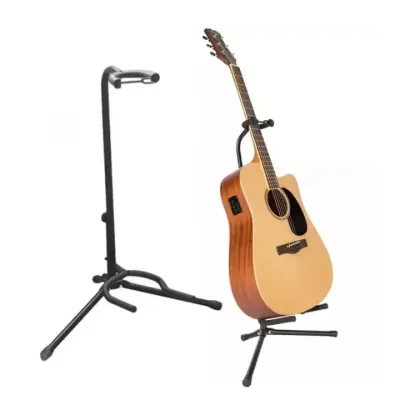
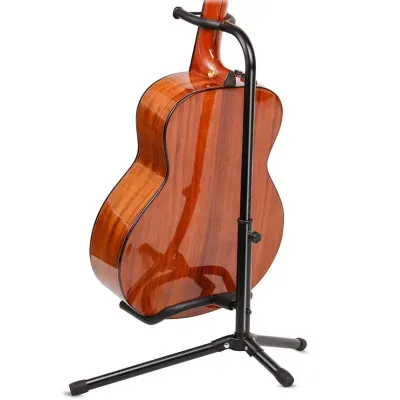
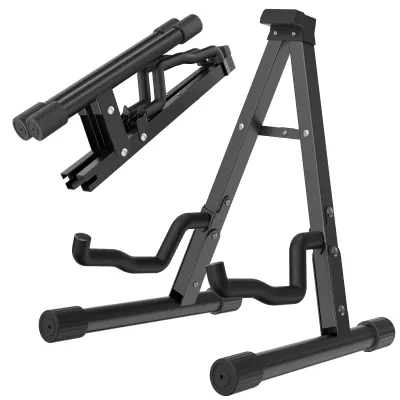
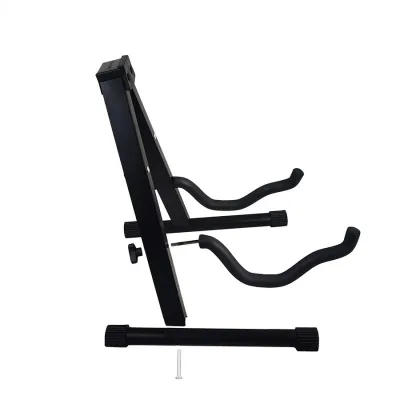
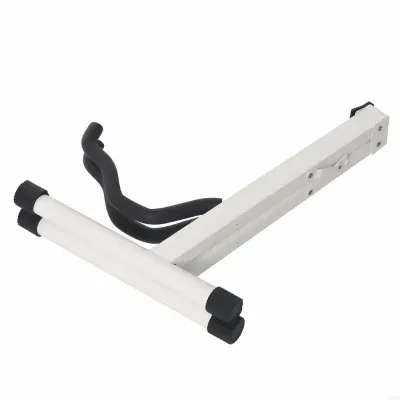
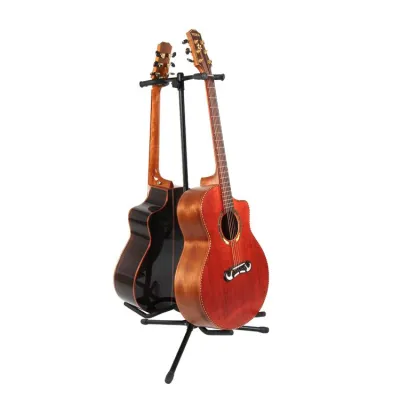
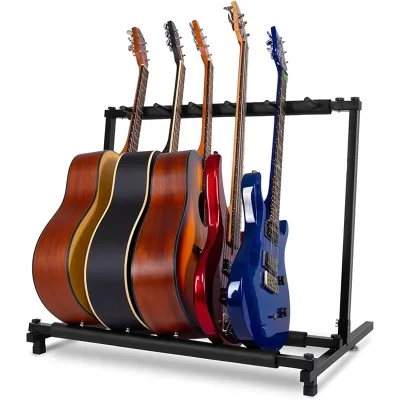

Prices are valid at publication and may change. Please refer to the product page for the latest price.
Your current instrument count and future plans should heavily influence your decision. If you own a single acoustic guitar and do not plan on expanding your collection, a simple floor stand or wall mount is perfectly adequate. However, if you find yourself regularly acquiring new gear, buying multiple single stands quickly becomes expensive and visually cluttered. Planning for near-term collection growth prevents you from having to constantly replace your storage solutions.
Household traffic is a critical safety factor that many musicians overlook. Active pets, young children, and high-traffic pathways increase the risk of a guitar being bumped or knocked over. If your music room doubles as a living space or a home office, low-profile floor stands might not offer enough protection. In these environments, elevating your instruments on wall mounts or consolidating them into a heavy-duty rack provides a much safer barrier against daily household chaos.
Finally, define your primary relationship with your instruments. If you need quick practice access to stay motivated, keeping your guitar on an open, easily reachable stand is ideal. If you are storing valuable vintage instruments that require strict humidity control, you might prefer a rack that accommodates hard cases. Balancing visual display with physical protection ensures your storage choice aligns with your lifestyle.
Floor Stands: Ideal for Daily Access and Flexibility
Floor stands are the traditional choice for a reason, offering immediate access and the flexibility to move your instrument from room to room. They generally fall into two design categories: A-frame stands and tubular neck-support stands. A-frame stands are highly compact and low-profile, making them excellent for acoustic guitars or symmetrical electric bodies. However, because they lack neck support, they are more susceptible to tipping if bumped from the side.

Tubular stands feature an extended neck cradle that secures the guitar higher up the fretboard. This secondary contact point provides significantly more stability, especially for offset electric guitars or instruments with unusual body shapes. Many tubular designs include a rubber strap or a gravity-activated gate that locks the neck in place once the guitar is seated. This extra security is highly recommended if you want peace of mind during quick practice breaks.
When evaluating a floor stand, pay close attention to the base width and weight distribution. A stand with a narrow tripod base might save a few centimeters of space, but it compromises the overall center of gravity. Look for a wide, low-slung base that keeps the weight of the guitar centered over the support legs. The cradle should also match the depth of your guitar; a deep acoustic body requires a wider bottom yoke than a slim electric guitar.
Do not overlook the feet of the stand. High-quality rubber or silicone feet prevent the stand from sliding on smooth tiled or polished wooden floors. They also act as shock absorbers, dampening vibrations from footsteps that could otherwise cause the stand to drift. Ensure the feet are securely attached to the metal frame so they do not slip off over time, exposing sharp metal edges that could scratch your flooring.
Wall Mounts: Ideal for Saving Space and Displaying Instruments
Wall mounts are an excellent way to free up floor space while turning your instruments into a striking visual display. By lifting your guitars off the ground, you completely eliminate the risk of pets, vacuum cleaners, or foot traffic knocking them over. This setup is particularly advantageous in smaller rooms where every square meter of floor space is needed for furniture or movement.
Installing a wall mount requires careful attention to structural integrity. In many residential buildings, walls are constructed from concrete or concrete hollow blocks rather than drywall. Mounting a guitar hanger onto concrete requires a hammer drill, masonry drill bits, and heavy-duty plastic wall plugs to ensure a secure hold. If you are mounting onto drywall or wooden partitions, you must locate a structural wooden stud; relying solely on standard plastic drywall anchors is a major safety risk.
Always check the manufacturer’s stated weight capacity and compare it to your heaviest instrument. A solid-body electric bass or a heavy mahogany electric guitar can weigh upwards of five kilograms, putting continuous downward stress on the mounting screws. Ensure the mounting plate has multiple screw holes to distribute this load evenly across the wall surface. Regularly inspect the mount to ensure no loosening or cracking has occurred around the anchor points.
Environmental factors are highly critical when hanging guitars on walls. In tropical climates, exterior-facing walls can absorb significant heat from the sun, creating localized temperature zones that transfer directly to your instrument. Avoid hanging your guitars on these hot exterior walls, and keep them far away from direct sunlight or the direct airflow of air conditioning units. Rapid temperature and humidity shifts can warp the neck wood and ruin your setup.
Multi-Guitar Racks: Ideal for Growing Collections and Studios
Multi-guitar racks are the gold standard for home studios, rehearsal spaces, and dedicated music rooms. By aligning multiple instruments side-by-side, a rack allows you to store three, five, or seven guitars in a footprint only slightly larger than a single standard floor stand. This consolidation makes your entire collection instantly accessible while keeping your room organized and free of clutter.
Because a fully loaded rack holds a significant amount of gear, you must calculate the total weight to ensure structural safety. A five-guitar rack loaded with solid-body electrics can easily weigh over twenty-five kilograms. Ensure the rack’s frame is constructed from heavy-duty steel or thick hardwood that will not bow or flex under a continuous load. The base must be wide and weighted to manage the high center of gravity when multiple instruments are resting on it.
Slot spacing is another critical dimension to verify before purchasing a rack. Acoustic guitars have much wider bodies than electrics, meaning they require more lateral clearance. If the slots are positioned too close together, the bodies of your instruments can knock against each other, leading to scratches, dings, or finish chips. Look for racks with adjustable dividers or generous spacing that can accommodate a mix of acoustic and electric instruments.
Some multi-guitar racks are specifically designed to hold instruments while they remain inside their protective hard cases. This is an exceptional option for players who want to keep their collection organized but still require the environmental protection that a hard case provides. If you prefer an open-access rack, look for models equipped with heavy-duty locking casters, which allow you to easily roll the entire setup out of the way when cleaning or rearranging your room.
Building Your Shortlist: Essential Features to Verify Before Buying
As you narrow down your choices, create a checklist of essential features to verify before making a purchase. First, confirm that the neck cradle is compatible with your specific instruments. Guitars with asymmetric headstocks, such as certain modern electrics or vintage designs, can slip through standard symmetrical yokes. Look for self-adjusting or pivoting cradles that automatically conform to the angle of your guitar’s headstock.
Next, carefully inspect the padding material used on all contact points. Many vintage and high-end instruments feature a nitrocellulose lacquer finish, which is highly sensitive to chemical reactions. Standard surgical rubber, neoprene, or low-grade foam can react with nitrocellulose over time, melting the finish and leaving permanent, unsightly black marks. If your guitar has a nitro finish, look for stands explicitly labeled as “nitro-safe,” or plan to wrap the contact points in clean cotton cloth.
For musicians who travel or gig regularly, portability is a major consideration. If you choose a floor stand or a small rack, check how easily it folds down and whether it features secure locking pins to prevent accidental collapse during transport. A stand that is difficult to fold or lacks robust hinges will quickly become a hassle on the road. Ensure the folding mechanism is made of metal rather than cheap plastic that can crack under pressure.
Finally, align your choice with your budget and space constraints. High-quality single floor stands typically range from ₱500 to ₱1,500, while reliable wall mounts can cost between ₱400 and ₱1,200 depending on the materials. Multi-guitar racks represent a larger upfront investment, often ranging from ₱1,800 to over ₱5,000, but they offer the lowest cost-per-guitar storage ratio for larger collections. Investing in a sturdy, well-made stand is always cheaper than repairing a damaged instrument.
Frequently Asked Questions (FAQ)
Can I hang an acoustic guitar on a wall mount safely?
Yes, you can hang an acoustic guitar on a wall mount safely, provided the hanger is securely anchored into a concrete wall or a structural wooden stud. Because acoustic guitars are relatively lightweight, they place less physical stress on the wall anchors than solid-body electric guitars. However, their thin wooden bodies are highly sensitive to environmental changes. Avoid hanging them on exterior walls that absorb heat from the sun, and keep them away from direct drafts from air conditioners to prevent the wood from drying out and cracking.
Do guitar stands damage the finish over time?
Yes, certain guitar stands can damage your instrument’s finish if the padding material is chemically incompatible. Standard polyurethane and polyester finishes are highly durable and rarely react with stand padding. However, nitrocellulose finishes, which are common on vintage and premium guitars, can chemically bond with vulcanized rubber or cheap foam padding, leading to permanent discoloration or melting of the lacquer. To prevent this, always verify that the stand is certified as safe for nitrocellulose finishes, or cover the contact points with a soft cotton cloth.
Community discussion
Share your experience or ask a question. Comments are reviewed before publication.