
Selecting the perfect junior drum set is not as simple as matching the manufacturer’s recommended age on the box. While age serves as a rough starting point, your child’s physical measurements—specifically height, arm span, and inseam—are the true indicators of a proper fit. A drum kit is a highly physical instrument requiring simultaneous coordination of all four limbs. If the drums are too large, the child will constantly struggle to reach the pedals and cymbals, leading to rapid fatigue. To set your young musician up for success, you must understand how drum specifications translate to ergonomic comfort.
Why Correct Sizing Matters for Young Drummers
When a child plays on an oversized drum kit, they must adapt their body to the instrument rather than having it support their natural posture. To reach high-mounted toms or distant cymbals, young players often shrug their shoulders, crane their necks, and lean forward. Over time, this repetitive strain causes shoulder tension and back fatigue. In tropical climates like the Philippines, where high humidity can make physical exertion more tiring, maintaining an efficient, relaxed posture is critical to prevent early exhaustion during practice sessions.
An ill-fitting kit also hinders technical progress. Overextending the arms reduces control over the drumsticks, making it difficult to develop proper striking techniques and rebound control. Instead of playing with relaxed wrists, the child relies on heavy shoulder movements, leading to bad habits that are hard to break. A properly sized junior drum set ensures every element is within easy reach, building physical stamina and boosting confidence.
Products mentioned in this guide
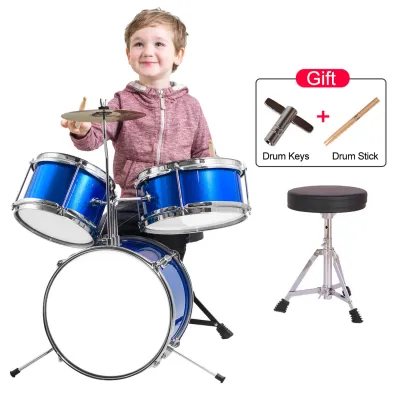
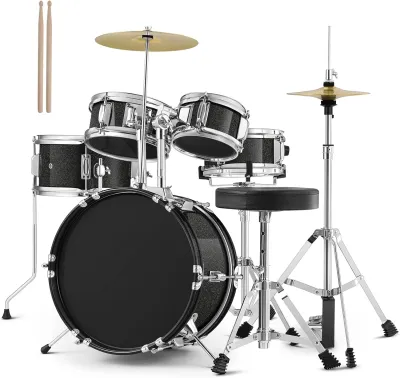
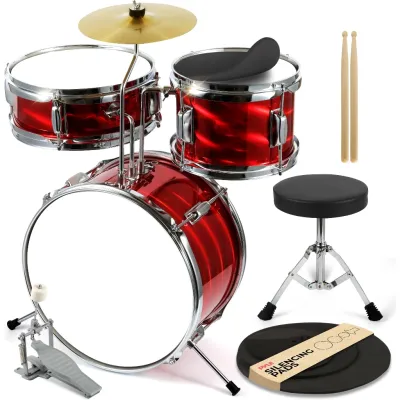



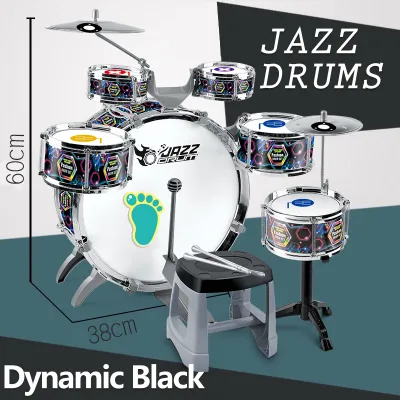
Prices are valid at publication and may change. Please refer to the product page for the latest price.
Decoding Junior Drum Set Specifications
Understanding drum specifications helps parents look past marketing labels to evaluate whether a kit will actually fit their child’s frame. Drum manufacturers measure kits based on shell diameter and depth, as well as hardware adjustability.

Drum Shell Diameters and Depths
The physical size of the drum shells directly dictates the overall footprint of the kit and how closely the components can be positioned. In a junior drum set, smaller shell diameters—such as a 16-inch bass drum compared to a standard 22-inch adult bass drum—are essential. Smaller bass drums allow the rack toms to be mounted much lower, bringing them down to a child’s natural chest level. Shallower shell depths also play a vital role; they reduce the overall weight of the kit and make the drums easier to maneuver and tune. More importantly, shallower shells prevent the child from having to reach too high or too far forward, keeping their arm movements compact and controlled.
Throne Height and Pedal Placement
The drum throne is the foundation of all drumming posture. To play effectively, a child must sit in a balanced, stable position. The ideal seated posture requires the hips to be positioned slightly above the knees, creating an angle of roughly 90 to 105 degrees. This elevation allows proper blood circulation and provides the necessary leg leverage to press the pedals without straining the hip flexors. Using a standard household chair or fixed stool is highly discouraged, as they lack the micro-adjustments needed to align the child’s feet naturally.
Cymbal Stands and Hardware Reach
Cymbals are often the hardest elements for a small child to reach because they sit higher and further out. Standard adult hardware is heavy and has limited downward adjustability, which can leave cymbals towering over a young player. Junior drum sets should feature lightweight, fully adjustable stands that can be lowered significantly. Look for hardware that allows the hi-hat and crash cymbals to be angled inward, reducing the physical reach required for small hands and preventing shoulder overextension.
General Sizing Guidelines by Age and Height
While age brackets provide a convenient reference, always prioritize your child’s height, inseam, and arm span when choosing a junior drum set. Children grow at vastly different rates, and a tall six-year-old may require a larger setup than a petite eight-year-old.
To guide your decision, junior kits generally fall into three main categories:
- Toddler and Preschool Stage (Ages 2 to 4 / Height under 90 cm): These are ultra-compact, 3-piece setups featuring a 12-inch or 14-inch bass drum, a small snare, and a single tom. They are designed for basic coordination.
- Early Elementary Stage (Ages 5 to 8 / Height 90 to 120 cm): This is the sweet spot for standard 5-piece junior drum sets. These kits typically feature a 16-inch bass drum, 8-inch and 10-inch rack toms, a 12-inch floor tom, and a 10-inch or 12-inch snare.
- Pre-Teen and Intermediate Stage (Ages 9 to 12 / Height 120 to 150 cm): Children in this range are often ready for compact or "pocket" drum kits. These kits feature an 18-inch or 20-inch bass drum and standard-sized snare drums, bridging the gap to full-sized adult kits.
Before purchasing, measure your child’s inseam. Have them sit on a flat bench and measure from their hip joint to the floor while their foot is flat on the ground. This measurement dictates the minimum seat height of the throne. If the throne cannot go low enough for their feet to rest flat on the pedals, they will have to play on their tiptoes or strain their hips, which compromises balance. Additionally, measure their arm span from fingertip to fingertip; this span represents the maximum comfortable width of the entire tom and cymbal layout.
How to Test the Fit and Observe Posture
Whether you are setting up a new kit at home or testing options in a local music store, you can evaluate the fit using a straightforward visual checklist. Observe your child from the side and front while they sit at the kit.
- 1. Seated Check: Ensure the child is sitting on the drum throne with their spine straight. Their hips should be slightly higher than their knees, and both feet must rest flat and comfortably on the bass drum and hi-hat pedals.
- 2. Snare and Toms Check: The snare drum should be positioned roughly waist-high, just below the belt line. When the child holds the drumsticks and rests them on the center of the snare, their elbows should be relaxed and bent at approximately a 90-degree angle.
- 3. Cymbal Reach Check: Position the hi-hat and crash cymbals so they are easily reachable within a natural, sweeping arm motion. The child should be able to strike the top of the cymbals without leaning their torso forward or stretching their shoulder joints.
Once the initial adjustments are made, watch your child play a basic rhythm for five to ten minutes. Look closely for signs of physical discomfort. If you notice them leaning forward, twisting their spine to reach the floor tom, or constantly sliding forward on the throne, the kit is either adjusted incorrectly or is simply too large.
Adjustable Features That Grow With Your Child
Children grow quickly, but you do not need to buy a new drum set every year if you choose a kit with highly adjustable hardware. This ensures the instrument can grow alongside your young drummer, maximizing its lifespan and value.
When comparing junior drum sets, look for stands equipped with memory locks. These small metal collars clamp onto the tension tubes to lock in height adjustments, ensuring the drums return to the exact height your child needs after disassembly.
Additionally, look for modular tom mounts—specifically those utilizing ball-and-socket joints—which offer infinite angle adjustments. These allow you to tilt and slide the toms closer together when your child is small, and then spread them wider as their arm span increases. Adjustable bass drum spurs are also valuable for stabilizing the kit. In the Philippines, where tiled floors are common and can cause drums to slide, sturdy spurs paired with a non-slip drum rug are essential. Since a quality junior drum set in the Philippines typically ranges from ₱6,000 to ₱18,000, choosing a highly adjustable kit ensures you maximize your investment before your child eventually transitions to a full-sized adult set.
Frequently Asked Questions (FAQ)
Can my child play on a standard adult drum set if I lower the throne?
Attempting to adapt a standard adult drum set by simply lowering the throne is generally ineffective and causes physical strain. An adult kit features a large 22-inch bass drum, which forces the rack toms to sit very high. If you lower the throne so the child’s feet reach the pedals, the toms and cymbals will sit far too high, forcing them to strain their shoulders. If you raise the throne so they can reach the drums, their feet will dangle, making it impossible to operate the pedals properly.
Do electronic drum kits offer better sizing options for small children?
Yes, electronic drum kits offer exceptional sizing flexibility. Because they utilize compact rack systems rather than bulky acoustic shells, the pads can be slid up, down, and angled in almost any direction. This makes it easy to configure an electronic kit for very small children or tight living spaces, such as urban apartments where noise control is a priority. However, electronic pads lack the natural physical rebound of traditional acoustic drumheads, which is an important consideration for developing classical drumming techniques.
Community discussion
Share your experience or ask a question. Comments are reviewed before publication.