
Finding a reliable heavy-duty guitar capo is a priority for musicians who require consistent clamping pressure without causing string buzz, tuning instability, or physical wear to their instrument. In the Philippines, where high relative humidity and temperature fluctuations can affect both wood and metal accessories, choosing a durable capo involves looking beyond basic marketing labels. A truly heavy-duty capo must withstand regular use, resist corrosion, and maintain its mechanical integrity over years of practice and live performances. By evaluating material density, clamping mechanisms, and neck compatibility, you can select a tool that keeps your guitar in tune and performs flawlessly under demanding conditions.
Rather than viewing a capo as a simple clamp, experienced guitarists treat it as an extension of the guitar’s nut. A poorly constructed capo can pull strings out of alignment, apply uneven pressure across the fretboard, or degrade rapidly due to weak springs and soft metals. To make an informed investment, you need to understand the structural characteristics that define heavy-duty hardware and how to inspect these accessories before purchasing them locally or online.
What Defines a Heavy-Duty Guitar Capo?
To distinguish a heavy-duty capo from standard, lightweight models, you must first look at the density and composition of the materials used in its construction. Standard capos often utilize thin stamped sheet metals, low-grade plastics, or hollow aluminum shells that can bend or warp under tension. In contrast, heavy-duty capos are manufactured from solid machined metals such as aircraft-grade aluminum, zinc alloy, stainless steel, or solid brass. These materials provide the structural rigidity required to resist bending when clamped over high-tension steel strings, ensuring that the pressure applied to the fretboard remains perfectly uniform.
Products mentioned in this guide
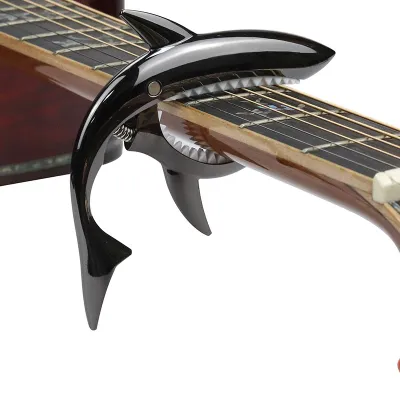

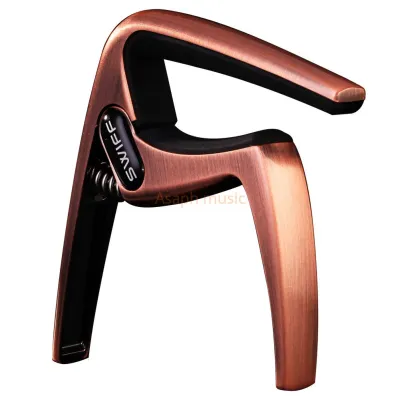
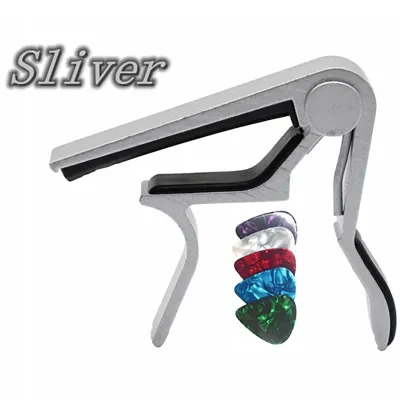
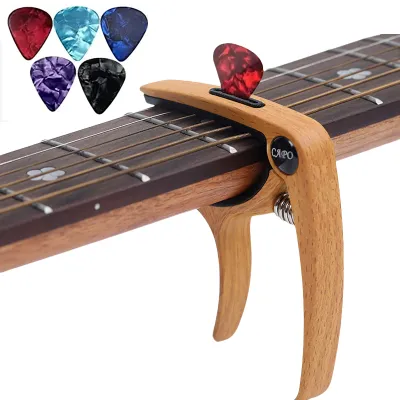

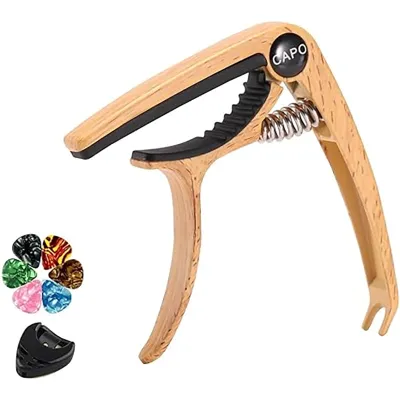
Prices are valid at publication and may change. Please refer to the product page for the latest price.
Weight distribution also plays a critical role in how a capo affects your instrument’s performance. A heavier, denser capo adds mass to the neck, which can slightly alter the instrument’s sustain and vibrational transfer. While lightweight capos are designed to minimize neck-heaviness, a heavy-duty metal capo provides a solid, unyielding anchor across the strings. This mass helps prevent energy loss at the fret, resulting in a clearer, more resonant tone that closely mimics the sound of an open string resting against a high-quality bone nut.
Beyond the metal frame, the clamping mechanism’s strength and long-term tension consistency are vital indicators of heavy-duty design. High-tensile steel springs, robust threaded rods, and precision-machined pivot joints prevent the capo from developing lateral play or wobble over time. If a capo’s joint is loose, the clamping arm will shift sideways under the tension of the guitar strings, leading to uneven pressure and immediate tuning issues. A heavy-duty model ensures that every moving part operates with minimal tolerance and maximum stability.
Finally, the quality, thickness, and composition of the protective padding separate professional-grade capos from cheap alternatives. Heavy-duty capos feature high-density silicone or vulcanized rubber padding that resists tearing and deep string indentations. Cheap foam padding degrades quickly under the sharp pressure of steel strings, eventually exposing the underlying metal frame to your guitar’s neck and frets. High-quality silicone padding maintains its elasticity, distributes clamping force evenly, and protects the delicate wood and finish of your guitar neck from scratches and pressure marks.
Key Selection Criteria for Reliable Performance
When selecting a heavy-duty capo, neck profile compatibility is the first technical specification you must verify. Guitar fingerboards are rarely completely flat; most steel-string acoustic and electric guitars feature a curved fingerboard radius, typically ranging from 7.25 inches to 16 inches. Classical guitars, on the other hand, almost always feature a completely flat fingerboard. A heavy-duty capo designed with a curved profile will fail to clamp the middle strings of a flat classical guitar, while a flat capo used on a curved electric guitar neck will crush the outer strings while leaving the inner strings loose and buzzing. Always match the capo’s pad curvature to your specific guitar’s fingerboard radius.

Adjustable tension is another critical factor that prevents tuning issues and long-term neck damage. Fixed-tension capos apply a pre-set amount of force regardless of the guitar’s action, string gauge, or neck thickness. If the tension is too high, it will pull the strings down too far behind the fret, stretching them sharp and accelerating fret wear. If the tension is too low, the strings will buzz. A heavy-duty capo with adjustable tension allows you to dial in the exact amount of pressure required to clear up any buzz, preserving your guitar’s intonation and reducing unnecessary stress on the neck joint.
Ergonomics and operational speed are equally important, especially for performing musicians who need to make quick key changes on stage. Some heavy-duty designs allow for rapid, one-handed placement and removal, which is highly convenient during live sets. However, this speed sometimes comes at the cost of precise tension adjustment. Other designs require two hands to position and screw into place, offering unmatched tuning stability and pressure control but requiring more time to adjust. You must weigh your need for on-stage speed against your preference for precise, studio-grade intonation.
Common Heavy-Duty Capo Mechanisms Compared
Understanding the mechanical designs used in heavy-duty capos helps you choose the best fit for your playing style and instrument setup. The three most common designs are spring-loaded trigger capos, screw-driven or threaded capos, and yoke-style (or wrap-around) capos. Each mechanism offers distinct advantages and trade-offs in terms of speed, precision, and physical bulk.
Spring-loaded trigger capos are highly popular due to their ease of use. They utilize a powerful internal coil or torsion spring to apply clamping force. To use them, you simply squeeze the handles, place the capo over the neck, and release. While they offer rapid, one-handed operation, their primary drawback is a lack of tension adjustability. Over years of constant compression, the spring can fatigue, leading to a loss of clamping power. Additionally, because the tension is fixed, they often apply excessive force on thinner electric guitar necks, pulling the strings sharp.
Screw-driven or threaded capos use a thumbscrew or micrometer dial to adjust the clamping pressure. This design allows you to place the capo on the neck and gradually tighten the screw until the strings are cleanly fretted without buzzing. This precise control ensures that you only apply the minimum necessary force, keeping your guitar perfectly in tune. The trade-off is speed; adjusting a screw-driven capo requires two hands and takes several seconds, making it less ideal for fast-paced live performances but highly preferred for studio recording and acoustic soloists.
Yoke-style, or wrap-around, capos feature a frame that completely encircles the guitar neck, with a clamping screw positioned directly behind the center of the neck. This design provides the most even distribution of pressure possible, as the force is applied perpendicular to the fretboard rather than from the side. Yoke capos are incredibly rigid and stable, and they can be stored behind the guitar’s nut when not in use. However, they are physically bulkier, more expensive to manufacture, and slower to move between frets than trigger-style models.
| Mechanism Type | Speed of Application | Tension Precision | Physical Bulk | Best Suited For |
|---|---|---|---|---|
| Spring-Loaded Trigger | Fast (One-handed) | Low to Moderate | Moderate | Live performances, quick key changes, multi-instrumentalists |
| Screw / Threaded | Moderate (Two-handed) | High (Adjustable) | Low | Studio recording, precise tuning, varying string gauges |
| Yoke / Wrap-Around | Slow (Two-handed) | Very High | High | Professional touring, vintage instruments, maximum stability |
How to Verify Quality When Shopping in the Philippines
Because the Philippine market features a wide variety of music accessories sourced globally, verifying the authenticity and build quality of a capo before purchasing is essential. Counterfeit hardware and low-quality imitations of popular heavy-duty designs are common on online marketplaces. These imitations often use cheap pot metals that snap under pressure and low-grade springs that lose tension within weeks. To avoid these issues, always purchase from authorized dealer stores or official brand outlets on local e-commerce platforms.
If you are shopping in a physical music store, perform a hands-on inspection of the capo before buying. Squeeze the mechanism several times to test the spring resistance; it should feel smooth and firm, without any grinding, squeaking, or sudden drops in tension. Check the hinge joints for lateral play by trying to wiggle the clamping arm from side to side. A high-quality heavy-duty capo will have tight, precise tolerances with zero side-to-side movement. Inspect the rubber or silicone padding to ensure it is firmly adhered to the metal frame, with no peeling edges or visible glue residue.
When purchasing online, protect yourself by thoroughly reviewing the seller’s ratings, customer feedback, and return policies. Look for detailed user reviews that mention long-term durability and performance on specific guitar models. Avoid listings with generic descriptions that do not specify the materials used or the fingerboard radius compatibility. Ensure the seller offers a clear return policy or warranty against manufacturing defects, so you can return the capo if you discover any mechanical flaws, uneven padding, or structural weaknesses upon delivery.
Maintenance Tips to Extend Capo Lifespan
To ensure your heavy-duty capo remains reliable for years, you must protect it from the environmental challenges of the tropical Philippine climate. High humidity and sweat from your hands can accelerate the oxidation of metal parts and degrade the adhesives used to secure the protective padding. After every playing session, use a clean, dry microfiber cloth to wipe down the metal frame and the silicone padding, removing any accumulated sweat, skin oils, or dust before storing the accessory away.
Proper storage is equally critical for preserving the life of the clamping mechanism. Never leave a spring-loaded capo clamped tightly onto a guitar headstock, stand, or hard surface when it is not in use. Keeping the spring under constant compression accelerates spring fatigue, reducing its clamping power over time. For screw-driven and yoke-style capos, back off the tension completely before storing them in your gig bag or accessory case. This prevents unnecessary stress on the threaded rods and keeps the protective rubber padding from developing permanent indentations.
Periodically inspect the moving parts of your capo for signs of wear, debris, or corrosion. If your capo features a pivot joint or threaded screw, a tiny drop of light machine oil or dry lubricant applied to the hinge can keep the mechanism operating smoothly. Be extremely careful not to get any lubricant on the silicone or rubber padding, as oils can cause these materials to soften, swell, or detach from the metal frame. If the padding does begin to show deep grooves or wear from the strings, check if the manufacturer offers replacement pads, which can extend the life of a premium heavy-duty frame indefinitely.
Frequently Asked Questions (FAQ)
Will a heavy-duty capo damage my guitar neck?
Physical damage to a guitar neck is almost never caused by the weight of a heavy-duty capo itself, but rather by improper adjustment or excessive clamping tension. If you use a fixed-tension capo that is too tight for your guitar’s neck profile, or if you over-tighten an adjustable screw capo, you risk denting the wood, wearing down the frets prematurely, or marring the finish. To prevent damage, always use a capo with adjustable tension, apply only the minimum amount of pressure needed to eliminate string buzz, and ensure the protective silicone padding is clean and intact before clamping it onto the neck.
Can I use a steel-string heavy-duty capo on a classical guitar?
Using a standard steel-string capo on a classical guitar is not recommended because of the difference in fingerboard curvature. Steel-string guitars have curved fingerboards, so their corresponding capos feature a matching curved pad. Classical guitars have completely flat, wider fingerboards. If you clamp a curved capo onto a flat classical neck, the pad will press down too hard on the outer strings while failing to make proper contact with the middle strings, resulting in severe buzzing. Always check the manufacturer’s specifications to ensure the capo’s pad profile matches your guitar’s fingerboard radius.
Community discussion
Share your experience or ask a question. Comments are reviewed before publication.