
Starting your musical journey with the right instrument can make the difference between a lifelong passion and a dusty guitar sitting in the corner of your room. For beginners exploring the market, Enya has emerged as a prominent brand known for its innovative designs, alternative materials, and player-friendly features. However, with a diverse catalog ranging from traditional wooden instruments to carbon fiber composites, finding the specific model that aligns with your physical comfort, practice environment, and musical goals requires careful evaluation.
Finding a suitable Enya acoustic guitar for a beginner involves identifying an instrument that minimizes physical barriers to playing while standing up to your local climate. In tropical regions like the Philippines, where high humidity and temperature fluctuations are constant challenges, Enya’s use of modern materials like High-Pressure Laminate (HPL) offers a distinct advantage over traditional wood. By understanding how different body shapes, scale lengths, and material compositions affect playability, you can confidently select an instrument that supports your progress from your very first chord.
Understanding Enya's Acoustic Guitar Lines
Enya’s product catalog is structured to cater to a wide variety of players, from traditionalists who prefer classic designs to modern musicians looking for highly portable, durable instruments. To make an informed decision, a beginner must first understand how the brand categorizes its instruments and which lines are designed with entry-level players in mind.
Products mentioned in this guide
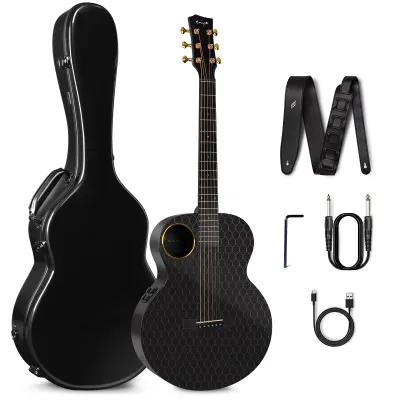
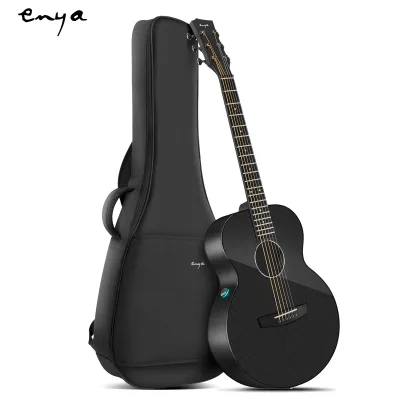
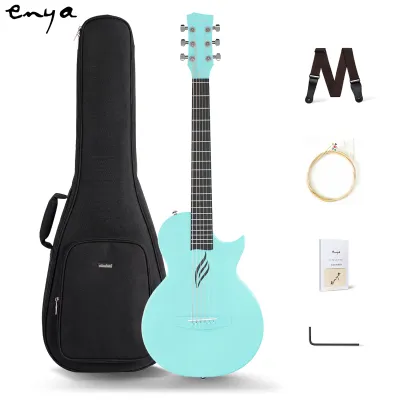
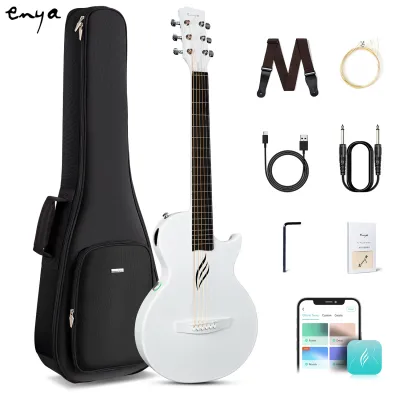
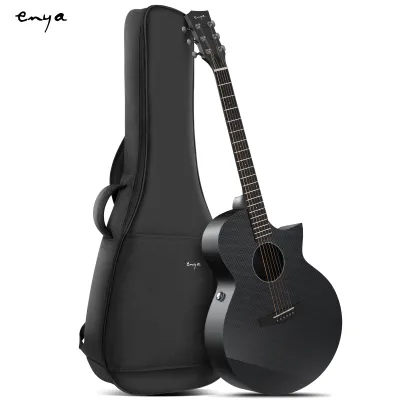
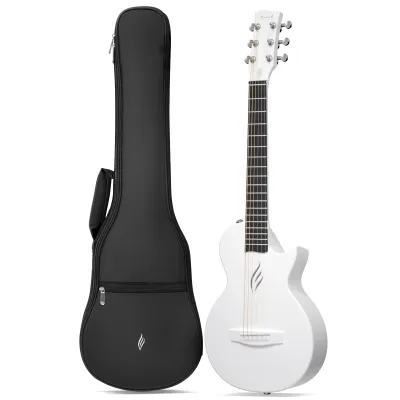
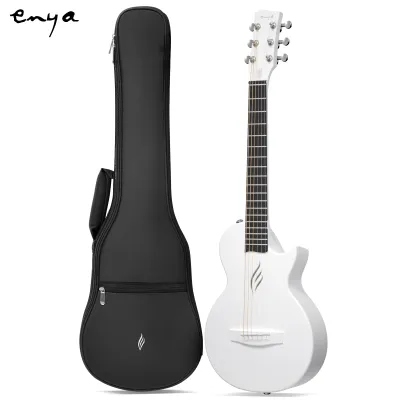
Prices are valid at publication and may change. Please refer to the product page for the latest price.
The brand’s offerings are generally divided into standard acoustic guitars, travel or mini guitars, and smart or silent guitars. Standard acoustic models feature traditional body shapes, such as dreadnoughts or auditoriums, and are built using either traditional laminated woods or solid wood tops. These instruments are designed for players who want a classic acoustic look and a warm, traditional resonance, though they require more careful environmental maintenance.
Travel and mini guitars represent a highly popular segment of Enya’s lineup. These instruments feature scaled-down bodies and shorter neck scales, making them exceptionally easy to handle, transport, and store. Because of their compact physical footprint, these models are frequently recommended for younger players, individuals with smaller frames, or anyone who wants a guitar they can easily carry to outdoor gatherings or casual jam sessions.
Smart and silent guitars represent the high-tech end of Enya’s catalog. These instruments often feature built-in digital effects, headphone outputs, and Bluetooth connectivity, allowing players to practice silently or experiment with ambient sounds without an external amplifier. While these features are highly appealing, these models generally come with a higher price tag and added electronic complexity, which may not be necessary for a beginner focusing on basic finger placement and strumming patterns.
A defining characteristic of Enya’s entry-level series is the extensive use of alternative materials, particularly High-Pressure Laminate (HPL) and carbon fiber composites. Unlike traditional tonewoods, which can warp or crack when exposed to extreme humidity or dry air, these alternative materials are engineered to be highly stable and weather-resistant. This makes them an attractive option for beginners who want a low-maintenance instrument that stays in tune and remains structurally sound in diverse environments.
Key Selection Criteria for Beginner Players
When you are learning to play the guitar, physical comfort is the single most important factor to consider. During the first few weeks of practice, your fingertips will be tender, and your hand muscles will be adapting to unfamiliar shapes and movements. Choosing an instrument with player-friendly ergonomics can significantly reduce physical discomfort and help you build consistency in your practice routine.

The string action—which refers to the height of the strings above the fretboard—is a critical specification to evaluate. If the action is too high, you will need to press down incredibly hard to get a clean sound, which leads to rapid hand fatigue, sore fingers, and frustration. A beginner-friendly guitar should have a low, comfortable action out of the box, allowing you to fret notes and transition between chords with minimal physical effort.
The neck profile, or the shape of the back of the neck, also plays a major role in playability. A neck that is too thick or wide can make it difficult for beginners, especially those with smaller hands, to wrap their fingers around the fretboard comfortably. Many of Enya’s beginner-focused models feature a slim, modern C-shaped neck profile, which provides a comfortable grip and makes it easier to reach across the strings.
Body weight and overall ergonomics are equally vital for long-term comfort. Large, heavy guitar bodies can place unnecessary strain on your shoulders, back, and arms, particularly during extended sitting sessions. Instruments with contoured body edges or bevels where your right arm rests can prevent the sharp edges of the guitar body from digging into your forearm, making your practice sessions much more enjoyable.
Finally, you must assess the quality of the fretboard material and the finishing of the fret edges. On lower-quality instruments, the metal frets can sometimes have sharp, unfinished edges that protrude past the side of the neck—a common issue known as “fret sprout.” This can cause painful scratches on your hand as you slide up and down the neck. A well-constructed beginner guitar should feature smoothly finished fret ends and a comfortable fretboard edge to ensure a safe and pleasant playing experience.
Evaluating Specific Enya Models for Beginners
To select the right Enya model, you should look past marketing descriptions and focus on verifiable technical specifications. Comparing models systematically using official manufacturer spec sheets ensures you select an instrument built for your specific physical needs and playing environment.
Every beginner has a unique physical build, and a guitar that feels perfect to one person might feel awkward or cumbersome to another. You must match the physical dimensions, scale length, and weight of the instrument to your body type and the environment where you plan to practice most.
Comparing Body Shapes and Sizes
Enya offers several distinct body shapes, each designed to balance acoustic projection with physical comfort. Standard dreadnought and auditorium shapes provide a full, robust acoustic sound with deep bass response, but their large footprints can feel overwhelming for smaller-framed players or teenagers.
In contrast, compact, parlor, or travel-sized models feature smaller bodies that are much easier to hold and wrap your arms around. These smaller shapes are highly portable and fit comfortably on your lap, making them ideal for casual living room practice or taking to outdoor gatherings.
Scale length—the distance between the nut and the bridge saddle—directly impacts the physical feel of the strings. A shorter scale length reduces the overall tension of the strings, making them softer and easier to press down. It also brings the frets closer together, which is highly beneficial for beginners who are still developing finger flexibility and reach.
Assessing Tonewoods and Build Materials
Traditional acoustic guitars are made of wood, which is highly sensitive to environmental conditions. In tropical climates like the Philippines, where relative humidity can fluctuate wildly between air-conditioned bedrooms and humid outdoor air, traditional wood guitars are prone to swelling, warping, and cracking.
High-Pressure Laminate (HPL) and carbon fiber composite materials offer an exceptionally durable alternative for beginners. Because HPL is non-porous and structurally uniform, it does not expand or contract with changes in humidity or temperature, meaning your guitar stays in tune longer and is virtually immune to humidity-induced cracking.
While these alternative materials require far less maintenance than solid wood, they are not completely indestructible. Beginners should always consult the manufacturer’s specific care instructions and structural warranties to understand how to clean, store, and adjust these modern composite instruments safely.
Deciding on Acoustic vs. Acoustic-Electric
Many Enya models are available in both purely acoustic and acoustic-electric configurations. An acoustic-electric model features a built-in pickup and preamp system, allowing you to plug the guitar into an amplifier, PA system, or computer audio interface.
If your primary goal is to practice quietly at home or learn basic chords in your bedroom, a purely acoustic model is usually the most practical and cost-effective choice. It keeps the instrument lightweight, eliminates the need for battery maintenance, and allows you to focus entirely on your playing technique.
However, if you plan to record your progress directly into a computer, perform at school or church events, or experiment with built-in digital effects (which some of Enya’s smart preamps offer without needing an external amp), investing in an acoustic-electric model may be highly beneficial. Keep in mind that these electronics add weight, require regular battery charging or replacement, and generally increase the initial purchase price.
Pre-Purchase Checklist and Verification
Before finalizing your purchase, it is crucial to perform a thorough verification process to ensure you receive a genuine instrument in perfect working condition. This is especially important when navigating online marketplaces or local music shops in the Philippines.
First, verify the exact model number and the list of included accessories on the product page. Many Enya guitars are sold as packages that include a custom gig bag, a digital tuner, a strap, spare strings, and picks. Confirming these inclusions ensures you do not have to spend extra money on essential accessories.
Next, check the seller’s authorization status and return policies. Only purchase from official brand stores or authorized local distributors to guarantee that your manufacturer warranty is valid. Ensure the listed price in Philippine Pesos (₱) fits your budget and does not include hidden shipping or import fees.
Once your guitar is delivered, perform a meticulous physical inspection before discarding the packaging. Check the body and neck for any signs of shipping damage, such as cracks, dents, or loose joints. Run your fingers along the edges of the fretboard to check for sharp fret ends, and look down the neck to ensure it is straight and not warped.
Test the tuning pegs to ensure they turn smoothly and hold tension. If you purchased an acoustic-electric model, plug it into an amplifier or test the preamp system to verify that all electronic components, buttons, and charging ports function correctly.
Frequently Asked Questions (FAQ)
Do I need to buy an acoustic-electric Enya guitar as a beginner?
No, you do not need an acoustic-electric model to start learning. Purely acoustic guitars are lighter, require no battery maintenance, and are perfectly suited for home practice and learning the fundamentals. You should only opt for an acoustic-electric model if you plan to plug into an amplifier, perform publicly, or record directly into an audio interface in the near future.
How do I maintain an Enya guitar made of alternative materials like HPL?
Although HPL and composite materials are highly resistant to humidity and temperature changes, the guitar still requires basic care. The metal frets, tuning machines, and wooden components (like the fretboard or bridge on certain models) must be kept clean and dry. Wipe down the strings and fretboard with a clean, dry microfiber cloth after every practice session, and consult the specific model’s user manual for approved cleaning agents, storage recommendations, and truss rod adjustment procedures.
Community discussion
Share your experience or ask a question. Comments are reviewed before publication.