
Selecting the ideal audiobook version of Jose Rizal’s El Filibusterismo requires a careful balance of academic alignment, narration quality, and platform reliability. As a cornerstone of Philippine literature, this complex novel features intricate subplots, intense philosophical debates, and a dark, dramatic tone that can be challenging to digest through text alone. A well-produced audiobook serves as an invaluable companion, helping you grasp the emotional depth of Simoun’s quest for vengeance while keeping pace with your school curriculum or personal reading goals. By focusing on key audio characteristics, language nuances, and edition completeness, you can transform your study sessions into an engaging and highly productive auditory experience.
Key Factors to Evaluate Before Choosing an Audiobook
When assessing different audio recordings of El Filibusterismo, the narrator’s pacing and emotional delivery should be your primary focus. Rizal’s narrative is dense with historical context, political satire, and dramatic tension, which means a rushed delivery can cause you to miss critical plot points or subtle character motivations. A skilled narrator will employ deliberate pauses and varied intonation to distinguish between characters, allowing you to follow complex dialogues—such as the intense debates between Simoun and Basilio—without confusion. The voice should carry the historical weight of the text, conveying the underlying anger, desperation, and hope that define the novel’s atmosphere.
Audio clarity and volume consistency are equally vital, especially if you plan to listen during your daily commute or in busy study environments. In the tropical climate of the Philippines, ambient noises like heavy rain, roaring jeepney engines, or the hum of a desk fan can easily obscure low-quality audio files. Look for recordings that feature clean, professional production with minimal background hiss or distracting static. While some productions incorporate background music or sound effects to enhance the atmosphere, these elements should never overshadow the narrator’s voice or make the dialogue difficult to decipher.
Products mentioned in this guide



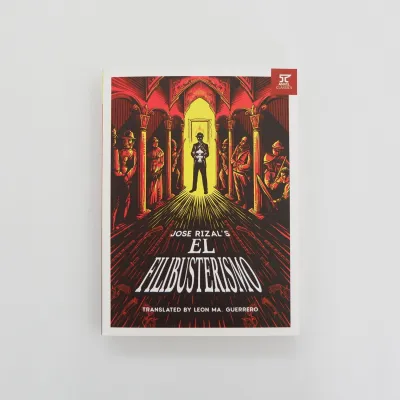


Prices are valid at publication and may change. Please refer to the product page for the latest price.
Finally, robust chapter tracking and bookmarking features are indispensable for academic study. Unlike casual listening, studying a classic novel requires you to jump back and forth between specific chapters to review key events, analyze character development, or find quotes for essays. An audiobook that is poorly formatted as a single, multi-hour file makes navigation incredibly frustrating. Opt for versions that are clearly divided into individual chapters matching the original 39 chapters of the book, allowing you to bookmark important passages and resume listening exactly where you left off.
Navigating Language Options: Filipino, English, and Bilingual Narrations
Choosing the right language version of El Filibusterismo is a decision that directly impacts both your comprehension and your academic performance. Listening to the novel in Filipino (Tagalog) offers a deep cultural resonance, preserving the specific idiomatic expressions, historical honorifics, and emotional nuances intended by the author’s translators. Because most high school curricula in the Philippines utilize Filipino translations of the text, listening to a Filipino audiobook helps you familiarize yourself with the exact vocabulary and phrasing that will likely appear on your exams and classroom quizzes.

On the other hand, English translations can be highly beneficial if you find the archaic or formal Tagalog vocabulary difficult to follow. An English audiobook can clarify complex political arguments, philosophical discussions, and colonial administrative terms, making the core themes of the novel more accessible. However, keep in mind that some of the localized humor, cultural subtleties, and raw emotional intensity of the original setting can occasionally feel diluted or altered when translated into English.
Before making a final selection, always consult your course syllabus or ask your teacher for guidance. Some literature instructors strictly require students to analyze the linguistic structure and specific vocabulary of the Filipino text, making a Filipino audiobook mandatory for your coursework. If your class allows more flexibility or focuses primarily on thematic analysis, using an English version—or even a bilingual approach where you listen to both languages—can provide a more comprehensive understanding of Rizal’s work.
Abridged vs. Unabridged: Matching the Version to Your Goal
Deciding between an unabridged and an abridged audiobook depends entirely on your specific reading objectives and timeline. An unabridged audiobook contains every single word, description, and subplot of the original novel, making it the only suitable choice for deep literary analysis, character studies, and comprehensive exam preparation. Listening to the complete text ensures you do not miss minor characters like Cabesang Tales, Señor Pasta, or Pecson, whose stories provide essential commentary on the social and political landscape of the Spanish colonial era.
Conversely, abridged versions or audio summaries can be highly effective tools for quick reviews or general plot familiarity. If you have already read the physical book and simply need to refresh your memory on the sequence of events before a major test, a condensed version can save you hours of listening time. These shorter versions are also helpful for casual readers who want to understand the core narrative of El Filibusterismo without committing to the full, multi-hour experience of the complete text.
To avoid accidentally purchasing or downloading the wrong version, always verify the audiobook’s total runtime and chapter count before committing. A complete, unabridged reading of El Filibusterismo typically requires several hours of audio; any version that claims to cover the entire novel in under three or four hours is undoubtedly abridged. Cross-reference the audiobook’s tracklist against the standard physical text to ensure all 39 chapters are present and accounted for, protecting you from incomplete study materials.
Where to Find and Verify Legitimate Audiobook Sources
Finding a high-quality, reliable recording of El Filibusterismo requires sourcing your files from authorized platforms and recognized educational repositories. Official publisher channels, university libraries, and established digital bookstores in the Philippines are the safest options for securing accurate and professionally produced audiobooks. These platforms ensure that the audio files are complete, properly indexed, and free from digital corruption, providing a seamless listening experience that respects the intellectual property of the translators and voice artists.
Before downloading or purchasing an audiobook, take the time to read user reviews and ratings on the platform. Look specifically for feedback regarding technical performance, such as sudden volume drops, missing chapters, or mislabeled tracks. Other students and readers will often point out if a file cuts off prematurely or if the audio quality degrades in later chapters, helping you avoid frustrating technical issues during a critical study session.
While free video-sharing websites and public file-hosting platforms may seem tempting, they carry significant risks. Uploads on these sites are frequently unauthorized, leading to sudden copyright takedowns that can leave you without your study materials right before an exam. Furthermore, these files often suffer from severe audio compression, distracting background noise, and incorrect chapter labeling, which can severely hinder your ability to study effectively and focus on the text.
How to Build Your Personal Shortlist
To finalize your choice and ensure a smooth listening experience, start by defining your primary use case. If you plan to use the audiobook for intensive exam preparation at your study desk, you will want a highly detailed, unabridged version that you can easily pause to take notes. If you intend to listen while commuting on public transport or walking home in the afternoon heat, you may prefer a version with a highly engaging, energetic narrator whose voice can easily cut through ambient city noise.
Next, always take advantage of the free preview or sample clips offered by most legitimate audiobook platforms. Spend two to three minutes listening to the sample to evaluate the narrator’s voice, accent, and pronunciation of historical terms. If you find the narrator’s tone monotonous, their pacing too fast, or their pronunciation distracting, it is best to move on to another version, as a mismatched narrator can quickly lead to listening fatigue and poor retention.
Finally, verify the platform’s device compatibility and offline listening capabilities before making a purchase, which may range from ₱150 to ₱500 depending on the platform and edition. In areas where mobile data connections can be unstable or expensive, the ability to download the entire audiobook directly to your device for offline playback is essential. Ensure the companion app works smoothly on your smartphone or tablet, allowing you to study seamlessly whether you are at home, in the classroom, or on the go.
Frequently Asked Questions (FAQ)
Is it better to listen to the Filipino or English version for school assignments?
You should always consult your teacher or review your course syllabus before choosing a language version. Most literature classes in the Philippines require students to analyze the specific linguistic choices, historical Tagalog vocabulary, and cultural idioms of the Filipino text, making a Filipino audiobook the most appropriate choice. However, if your class focuses primarily on broad thematic discussions or if you are permitted to write your essays in English, an English version can serve as an excellent tool to clarify complex political arguments and plot points.
Can I use an audiobook as a complete replacement for reading the physical text?
While an audiobook is an exceptional tool for improving comprehension, reinforcing plot points, and reviewing chapters, it should generally be used as a supplement rather than a complete replacement for the physical or digital text. Academic assignments, essays, and exams often require you to provide exact quotes, cite specific page numbers, and perform close readings of the text. Having a physical copy of El Filibusterismo alongside your audiobook allows you to highlight key passages, write annotations, and easily reference specific pages during class discussions.
How do I know if an audiobook version is unabridged?
To confirm that an audiobook is unabridged, look for explicit labeling on the product page or cover art indicating that the text is complete and uncut. You should also cross-reference the total runtime and chapter list against the standard structure of the novel, which consists of 39 chapters. A complete, unabridged reading of El Filibusterismo will typically span several hours, whereas abridged versions or summaries are significantly shorter and will often omit minor characters, descriptive passages, and secondary subplots.
Community discussion
Share your experience or ask a question. Comments are reviewed before publication.