
Finding a visual scripture adaptation that resonates with your personal faith journey, reading habits, and aesthetic preferences can be a deeply rewarding experience. In the Philippines, where visual storytelling has a rich history through local komiks and a modern passion for graphic novels, many readers search for “the comic bible” as a way to engage more deeply with sacred texts. However, because this term covers everything from simplified children’s stories to complex, historically accurate graphic novels, making the right choice requires a clear understanding of what is available in the market.
Selecting the perfect edition involves balancing artistic style, theological alignment, and physical durability. Because books imported to or distributed in the Philippines must withstand tropical humidity and frequent handling, buyers must look closely at production specifications alongside the illustrations. By taking a systematic approach to evaluating these visual editions, you can find a volume that serves as an engaging devotional tool, an educational resource, for yourself or as a meaningful gift.
Understanding Visual Bible Formats: Comics, Graphic Novels, and Manga
The term “the comic bible” is an umbrella phrase used by readers to describe any scripture adaptation that relies on sequential art to tell biblical stories. Within this category, however, the artistic styles, narrative structures, and target audiences vary significantly. Understanding these distinctions is the first step in narrowing down your options.
Products mentioned in this guide
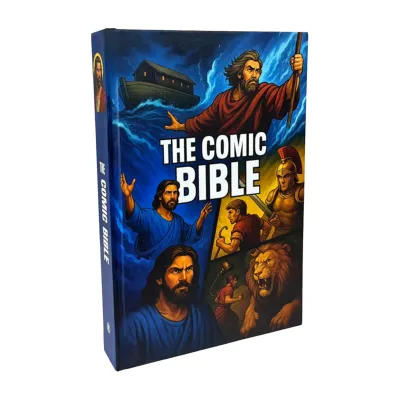
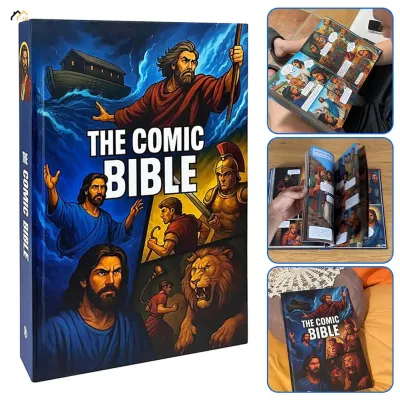
Prices are valid at publication and may change. Please refer to the product page for the latest price.
Traditional comic strip adaptations are often episodic and highly simplified. These editions typically break down major biblical events into short, self-contained pages or multi-panel segments. They are highly accessible and excellent for quick reading sessions, though they may omit complex theological transitions or historical background in favor of maintaining a fast, action-oriented pace.
Full-length graphic novel Bibles offer a more cinematic and continuous narrative experience. These volumes treat the Old and New Testaments as grand, sweeping story arcs, utilizing realistic art styles, dramatic shading, and sophisticated panel layouts. The creators of these editions often conduct extensive historical research to depict ancient clothing, architecture, and landscapes accurately, making them feel like epic historical dramas.
Manga-style editions adapt the scriptures using the conventions of Japanese comic art, featuring dynamic action lines, expressive character designs, and fast-paced visual storytelling. Because manga and anime culture is incredibly popular among Filipino readers, these editions are highly sought after. They excel at capturing the emotional intensity of biblical narratives, making ancient stories feel immediate and relatable to modern audiences.
Finally, heavily illustrated study Bibles represent a hybrid format. While they are not sequential comics with speech bubbles, they integrate detailed visual reconstructions, maps, and character portraits directly alongside standard, unaltered biblical text. This format is ideal for readers who want the rigor of a traditional study Bible but benefit from visual aids to contextualize the geography and culture of the biblical world.
Essential Checks Before You Buy a Comic Bible
Before purchasing a visual Bible, it is crucial to perform several practical checks to ensure the book aligns with your theological beliefs, reading level, and physical expectations. Because these books are significant investments, verifying these details beforehand prevents disappointment upon delivery.

First, verify the underlying Bible translation and theological alignment. Different Christian traditions use different biblical canons and translations. For instance, readers from a Catholic background will want to ensure the edition includes the Deuterocanonical books and aligns with approved translations like the New American Bible Revised Edition (NABRE). Protestant readers may prefer editions based on translations like the New International Version (NIV), English Standard Version (ESV), or New Living Translation (NLT). Always check the publisher’s notes or product description to confirm which translation base was used for the scriptural text or dialogue.
Second, evaluate the content scope of the edition. Some visual Bibles are single-volume compilations that attempt to cover the entire narrative from Genesis to Revelation. Others are multi-volume series that dedicate entire books to specific sections, such as the Pentateuch, the historical books, or the Gospels. If you are looking for a complete overview, a single-volume graphic novel is highly convenient. However, if you want deep, detailed visual depictions of specific events, a multi-volume series may offer the depth you require.
Third, pay close attention to the physical specifications of the book. Heavily illustrated books require high-quality paper to prevent ink from bleeding through the pages. In the humid climate of the Philippines, paper quality is especially important; thin, cheap paper can easily warp, absorb moisture, and cause pages to stick together over time. Look for editions that specify acid-free paper and robust binding. Smyth-sewn binding is highly recommended for thick graphic novels, as it allows the book to lay flat during reading without cracking the spine or causing pages to fall out.
Choosing the Right Edition for Your Age Group and Study Goals
Not all visual Bibles are created equal when it comes to reading comprehension and maturity. Matching the artistic tone and complexity of the text to the reader’s age group and spiritual goals is essential for a positive reading experience.
For young children, the primary goal is foundational story recognition and moral instruction. Look for editions that feature bright, friendly, and non-threatening illustrations paired with simplified, easy-to-read language. These editions should focus on key narratives—such as Noah’s Ark, David and Goliath, and the parables of Jesus—without overwhelming young minds with complex historical details or intense visual depictions of biblical warfare.
For teenagers and young adults, dynamic graphic novels and manga-style editions are highly effective. This age group appreciates sophisticated character designs, emotional depth, and cinematic pacing. Visual Bibles for teens do not need to sanitize the narrative; instead, they should present the challenges, conflicts, and triumphs of biblical figures in a way that feels honest and visually engaging. These editions help bridge the gap between childhood Bible stories and mature theological study.
For adult visual learners, artistic interpretations and visual study commentaries offer a deeper level of engagement. These editions often employ unique artistic styles, such as woodcut-inspired illustrations, classical painting aesthetics, or highly detailed pen-and-ink drawings. They frequently pair the sequential art with extensive footnotes, historical commentary, and cross-references, allowing adults to study the cultural context of the scriptures while appreciating the theological nuances conveyed through the artwork.
Regardless of the target age group, always make an effort to view sample pages before making a purchase. Most reputable publishers and online retailers provide digital previews of the interior art. Examining these samples allows you to assess whether the art style, font size, and panel flow are comfortable for your eyes and appropriate for your intended study goals.
Buying Guide: Where to Shop and What to Verify in the Philippines
Sourcing high-quality visual Bibles in the Philippines requires navigating both physical retail spaces and online marketplaces. Because these books are often imported, taking steps to verify authenticity and condition is key to a successful purchase.
To ensure you are buying a genuine, authorized edition, start your search at established local religious bookstores and official publisher storefronts. Many major Christian publishers and distributors maintain official stores on popular local ecommerce platforms. Purchasing from these official channels guarantees that the creators and publishers receive their due royalties, and it protects you from purchasing low-quality, bootlegged copies that suffer from blurry printing, missing pages, or poor binding.
When shopping on online marketplaces, compare prices in Philippine Pesos (₱) carefully. If a price seems too good to be true for a thick, full-color graphic novel, it may be an unauthorized reprint. Factor in shipping costs and look for bundle deals if you plan to purchase a multi-volume set. Additionally, check the seller’s ratings and read customer reviews specifically looking for comments on packaging quality. Because heavy books are easily damaged during transit, reputable sellers will wrap the volumes securely in bubble wrap and sturdy cardboard to protect them from the bumps and moisture of the shipping process.
Before finalizing your order, double-check the product specifications. Verify the ISBN (International Standard Book Number) to ensure you are ordering the exact edition, translation, and cover style you want. Some visual Bibles are released in both hardcover and paperback editions; while paperbacks are more budget-friendly, hardcovers offer superior durability against the wear and tear of daily reading and tropical humidity.
Upon receiving your delivery, perform a quick physical inspection. Flip through the pages to check for any printing defects, such as misaligned color plates, double-printed text, or upside-down pages. Inspect the corners and spine for any signs of water damage or denting that may have occurred during transit. If you notice any defects, contact the seller immediately to arrange for a replacement or refund under their return policy.
Frequently Asked Questions (FAQ)
Are comic Bibles considered accurate to the original scriptures?
The accuracy of a comic Bible depends heavily on the editorial approach of the publisher. Some editions use direct, word-for-word scripture text for their dialogue and narration boxes, maintaining high fidelity to traditional translations. Other editions paraphrase the text to make the dialogue flow more naturally within a visual comic format. While paraphrased editions are excellent for understanding the overall narrative arc and emotional context of a story, they should be used alongside a standard text-based Bible if your goal is precise theological study or word-for-word analysis.
Can a graphic Bible be used as a primary study tool?
A graphic Bible is an exceptional tool for engagement, memorization, and visualizing historical context, but it is best used as a companion rather than a primary study tool. The strength of a visual Bible lies in its ability to bring the cultural setting, geography, and human emotion of the scriptures to life. However, because sequential art requires condensing text to fit into panels, these editions naturally omit some of the detailed theological discourses, genealogies, and poetic nuances found in the full biblical text. For deep study, exegesis, or topical research, pairing your graphic Bible with a standard study Bible yields the best results.
Community discussion
Share your experience or ask a question. Comments are reviewed before publication.