
Choosing your first electronic drum set (e drums set) requires balancing realistic playability, space constraints, and budget. For aspiring drummers, an electronic kit offers a practical way to practice daily without disturbing family members or neighbors. However, navigating the technical specifications, pad materials, and hardware configurations can be overwhelming. By focusing on key physical characteristics, module features, and local compatibility, you can find a reliable instrument that supports your learning journey from the very first beat.
Defining Your Needs: Space, Noise, and Budget
Before browsing online catalogs or visiting local music showrooms, you must evaluate the physical environment where the drum kit will live. A standard electronic drum rack typically requires a floor footprint of approximately 1.2 meters by 1.2 meters once fully assembled and configured with a drum throne. If you are practicing in a compact bedroom or a shared apartment, measure your designated space carefully. Some entry-level kits feature folding frames that allow you to pack the instrument away when not in use, though frequent folding can wear down plastic clamps over time.
While electronic drums are significantly quieter than acoustic kits, they are not completely silent. The physical impact of wooden drumsticks hitting rubber or mesh pads produces an audible acoustic thud. More importantly, the downward force of your foot on the kick pedal creates low-frequency vibrations that travel directly through floors. In multi-story homes or concrete condominium units, this structural noise can easily disturb neighbors below. To mitigate this, consider placing a heavy, non-slip drum rug or a DIY sound-isolation platform beneath the entire setup to absorb physical vibrations.
Products mentioned in this guide
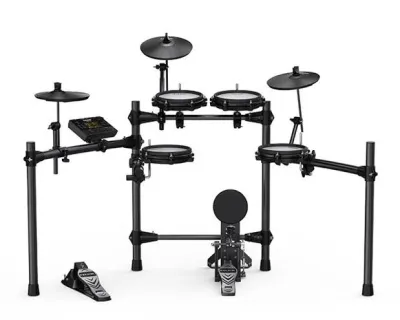
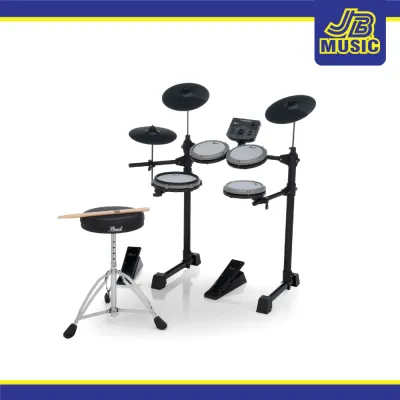
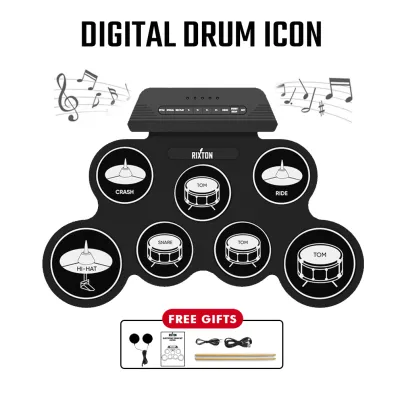
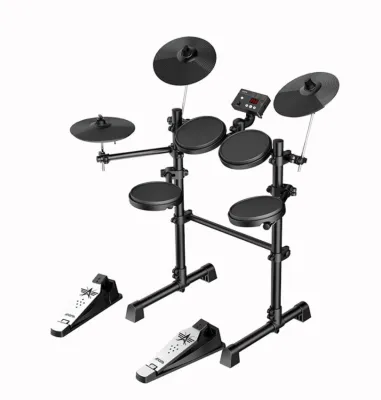
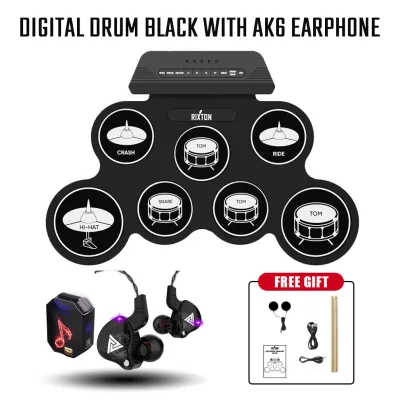
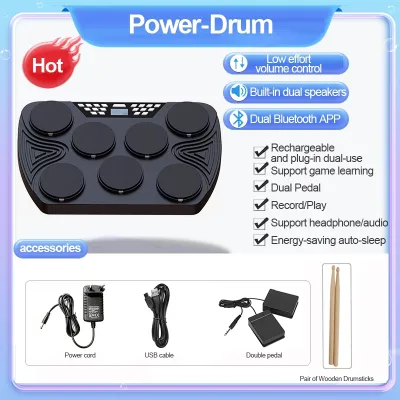
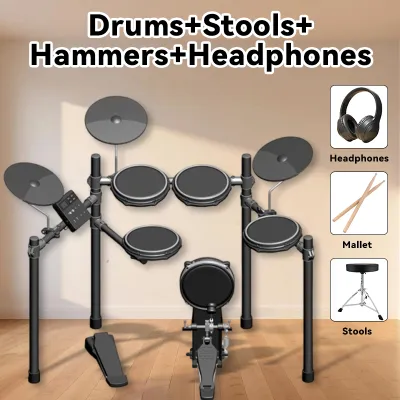
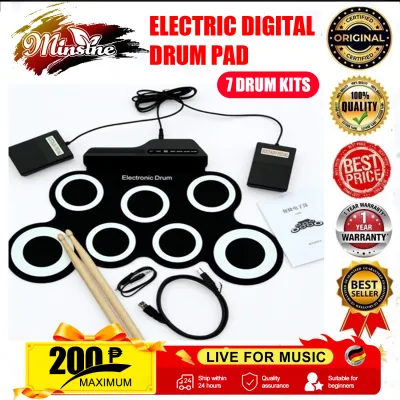
Prices are valid at publication and may change. Please refer to the product page for the latest price.
Setting a realistic budget in Philippine Pesos (₱) requires looking beyond the sticker price of the drum kit itself. Many manufacturers package their electronic drum sets as “shell packs” or basic configurations that omit essential accessories. When calculating your total investment, verify whether you need to purchase a drum throne, a pair of quality drumsticks, a dedicated kick pedal, and a pair of comfortable headphones separately. Allocating a portion of your budget to these accessories ensures you can actually play the instrument the day it arrives.
Pad Materials and Playability: Mesh vs. Rubber Heads
The material of the drum pads directly influences how the kit feels to play and how much acoustic noise it generates in your room. Traditional entry-level electronic kits often utilize solid rubber pads. While rubber is highly durable and cost-effective, it offers a stiff, bouncy rebound that does not accurately mimic the feel of an acoustic drum head. Prolonged practice on stiff rubber pads can also lead to wrist fatigue for beginners who have not yet developed proper stick technique.

Mesh drum heads, made from woven synthetic fibers, represent a significant upgrade in playability. Mesh pads allow you to adjust the physical tension of the head using a standard drum key, letting you customize the rebound to match your personal preference. They are also substantially quieter than rubber pads, absorbing stick impacts with a soft, muted sound. If your budget permits, prioritizing a kit with at least a mesh snare pad is highly recommended, as the snare is the most frequently struck pad in any drum pattern.
Beyond the material, you must consider the trigger zones of the pads. Single-zone pads produce the same sound regardless of where you strike them. Dual-zone pads, commonly found on mid-tier snares and cymbals, can differentiate between a strike on the center of the head and a strike on the rim or edge. This capability is essential for learning advanced techniques like rimshots, cross-sticks, and cymbal chokes. Additionally, check the physical diameter of the pads; larger pads (8 inches or wider) make it easier to transition to the spacious layout of an acoustic drum kit later on.
Drum Module Features: Sounds, Connectivity, and Learning Tools
The drum module, often referred to as the “brain” of the kit, translates your physical strikes into digital sounds. For beginners, the quality of the built-in learning tools is far more important than having thousands of obscure percussion samples. Look for a module that includes a highly adjustable metronome with various time signatures and rhythm subdivisions. Consistent practice with a metronome is the single most effective way to develop steady timing and rhythm.
Many modern drum modules feature built-in coaching programs designed to analyze your playing in real time. These tools can grade your timing accuracy, help you practice gradual tempo changes, and provide structured exercises to build stamina. Furthermore, check for an auxiliary input (Aux In) or Bluetooth audio connectivity. These features allow you to stream backing tracks or instructional videos directly from your smartphone or tablet into your headphones, making practice sessions much more engaging.
Digital connectivity is another crucial factor for long-term usability. A module equipped with a USB-MIDI port allows you to connect the drum set directly to a computer, laptop, or tablet. This connection enables you to trigger high-quality virtual drum libraries, record your practice sessions into digital audio workstations, or use interactive educational software. Ensure the module also features a dedicated, low-noise headphone output jack that matches the plug size of your monitoring headphones.
Hardware, Rack Stability, and Pedal Compatibility
The physical frame supporting your drum pads must be sturdy enough to withstand energetic practice sessions. A flimsy rack system will wobble, slide across the floor, or gradually sag under the weight of the pads as you play. Inspect the rack joints and clamps; heavy-duty plastic or metal clamps with secure locking mechanisms are preferred over thin, friction-based plastic clips. The rack should also offer sufficient height adjustment to accommodate your physical stature comfortably.
One of the most critical hardware distinctions in beginner kits is the design of the bass drum trigger. Some ultra-compact kits use a simple, beaterless foot controller that functions like a keyboard sustain pedal. While quiet, these controllers lack the physical resistance and rebound of a real bass drum pedal, making it difficult to develop proper foot technique. Opting for a kit with a physical kick pad tower that accommodates a standard acoustic bass drum pedal is highly beneficial for building realistic leg strength and control.
Similarly, pay close attention to the hi-hat controller pedal. The hi-hat is one of the most expressive parts of a drum kit, requiring quick transitions between open, half-open, and closed positions. Basic switch-type pedals only register fully open or fully closed sounds, which can limit your expressive capabilities as you progress. A continuous-control hi-hat pedal offers a smoother gradient of sound, allowing you to practice subtle foot-splashes and intermediate cymbal articulations.
Building Your Shortlist: Matching Specs to Your Goals
To narrow down your options, categorize potential drum kits based on your specific learning objectives and physical constraints. If you are a casual hobbyist with limited space and a strict budget, a compact kit featuring a mesh snare, rubber toms, and a folding rack may be the most practical choice. These kits provide the essential tools for learning basic coordination without requiring a permanent footprint in your living area.
If you are a serious student or a musician transitioning from another instrument, look toward mid-tier configurations. These kits typically feature all-mesh heads, a dedicated kick pad tower with a physical pedal, and multi-zone cymbals. This level of hardware ensures that the muscle memory you develop during practice will transfer seamlessly to an acoustic drum kit during rehearsals or live performances.
Use the following checklist to evaluate and compare different models when browsing local music retailers or online marketplaces:
| Feature Category | Must-Have for Beginners | Nice-to-Have Upgrades |
|---|---|---|
| Snare Pad | Mesh material, dual-zone triggering | Large diameter (10"+), tension-adjustable |
| Tom Pads | Durable rubber or single-zone mesh | Dual-zone mesh, independent mounting |
| Kick System | Responsive pedal controller | Physical kick tower, double-pedal compatibility |
| Cymbals | Choke-capable crash, stable ride | Triple-zone ride, physical moving hi-hat stand |
| Module | Metronome, Aux In, USB-MIDI | Bluetooth audio, individual pad volume sliders |
| Rack | Height-adjustable, non-slip feet | Curved steel frame, integrated cable routing |
Local Purchasing: Verification, Power Standards, and After-Sales
When purchasing an electronic drum set in the Philippines, verifying local support and technical compatibility is essential for protecting your investment. Always check if the seller is an authorized dealer capable of honoring a local distributor warranty. Electronic drum modules contain sensitive circuit boards, and trigger pads can occasionally fail over time. Having access to local repair centers and official replacement parts, such as replacement mesh heads or proprietary trigger cables, is far more convenient than dealing with international shipping for repairs.
Electrical compatibility is another critical factor that is easily overlooked. The standard electrical supply in the Philippines is 220V at 60Hz. Many electronic drum kits imported directly from overseas markets like Japan or the United States are packaged with power adapters rated only for 100V or 110V. Connecting a 110V adapter directly to a local outlet will damage the adapter and potentially ruin the drum module. Always inspect the input specifications printed on the power brick to ensure it supports 220V, or purchase a compatible, locally certified replacement adapter.
Finally, consider the logistics of delivery if you are ordering from an online marketplace. Electronic drum sets are shipped in large, heavy, and fragile boxes. Review the seller’s shipping protection policies, transit insurance options, and return procedures for items damaged during delivery. Because tropical humidity can affect electronic components over time, store your kit in a well-ventilated room away from direct sunlight and damp walls to ensure its longevity.
Frequently Asked Questions (FAQ)
Do I need an amplifier for an electronic drum set?
You do not need an amplifier to practice on an electronic drum set, as you can listen to your playing directly through a pair of headphones connected to the module’s headphone jack. This is the preferred method for silent practice. However, if you want to perform for others, jam with bandmates, or play out loud without headphones, you will need to connect the module’s line output to a dedicated electronic drum amplifier or a portable PA system. Standard guitar amplifiers are not recommended, as they cannot handle the deep low-end frequencies of a bass drum or the crisp high-end of cymbals.
Can I use an electronic drum set to learn acoustic drumming?
Yes, an electronic drum set is an excellent tool for learning the foundational skills required for acoustic drumming. The standard layout of the pads helps you build essential muscle memory, stick coordination, and limb independence. However, you should expect a brief adjustment period when transitioning to an acoustic kit. Acoustic drums offer a much wider range of physical feedback, dynamic volume control, and subtle cymbal vibrations that even advanced electronic sensors cannot fully replicate. Regular practice on an electronic kit, combined with occasional sessions on an acoustic kit, provides a highly effective learning path.
Community discussion
Share your experience or ask a question. Comments are reviewed before publication.