
Finding the right legal reference book sets in the Philippines requires balancing academic rigor with practical utility. For law students, legal practitioners, and everyday citizens seeking to understand their rights, the market offers a wide spectrum of publications. These range from dense, multi-volume codals and commentaries to accessible, simplified compilations often referred to as a “legal kit ni Juan.” Making an informed purchase decision involves evaluating the currency of the text, the authority of the author, and the physical durability of the volumes, especially given the challenges of preserving paper in a tropical climate.
Defining Your Legal Reference Needs
Before investing in a legal book set, you must clarify your primary objective. A practicing lawyer or a bar candidate requires exhaustive, annotated commentaries that dissect Supreme Court rulings, statutory history, and complex legal doctrines. These academic sets are highly technical, written in formal legal English, and structured around the specific codal provisions of Philippine law.
Conversely, if you are a business owner, a human resources professional, or a citizen looking for everyday guidance, academic commentaries may prove overwhelming and impractical. Your needs are better served by simplified reference guides. These books translate dense legal jargon into actionable advice, focusing on common scenarios like drafting basic lease agreements, understanding wage computations, or navigating local community disputes.
Products mentioned in this guide
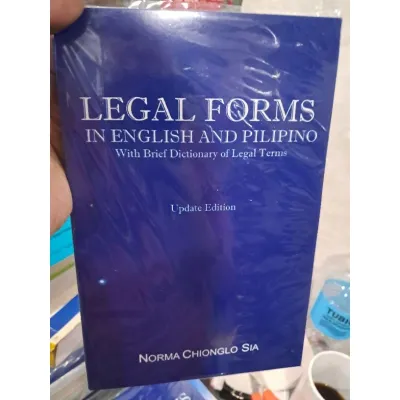
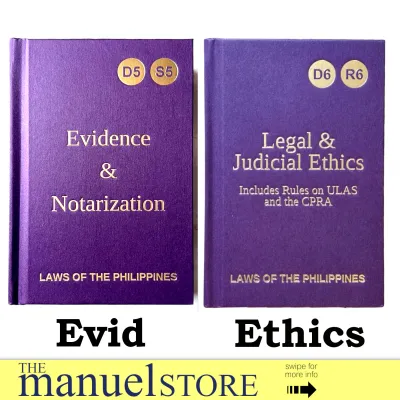
Prices are valid at publication and may change. Please refer to the product page for the latest price.
The specific legal domains you need to cover will also dictate your choice. The Philippine legal landscape is vast, but most everyday inquiries fall under civil law (such as family relations, property ownership, and contracts), labor standards (including employment termination and benefits), or criminal law. Identifying whether you need a specialized single-subject volume or a broad, multi-subject compilation prevents you from purchasing unnecessary materials.
Finally, consider the context of the purchase. A set intended for daily desk reference in a busy law office requires a different level of detail and organization than a curated educational gift meant to inspire a future law student. By aligning the depth of the content with the reader’s actual daily tasks, you ensure that the investment provides long-term utility rather than sitting unused on a shelf.
Key Criteria for Evaluating Legal Book Sets
The most critical factor when evaluating any Philippine legal reference is the publication date and edition. Laws are dynamic, and Supreme Court decisions continuously refine how statutes are applied. An outdated edition can lead to costly errors, especially in fast-evolving fields like tax law, labor relations, or family law. Always verify that the book set incorporates recent legislative amendments and the latest landmark jurisprudence.

Authoritative authorship is another cornerstone of a reliable legal reference. Look for works compiled or written by recognized legal scholars, retired justices, active practitioners, or reputable academic institutions such as the University of the Philippines Law Center. Books published by established legal printing houses carry a level of editorial oversight and peer review that self-published or unverified compilations simply cannot match.
Physical construction is a highly practical consideration that is often overlooked. Legal books are heavy, frequently consulted, and expected to last for decades. In the humid tropical climate of the Philippines, paper quality and binding durability are paramount. High-quality hardbound editions with smyth-sewn bindings resist page separation far better than glued paperbacks. Additionally, acid-free paper prevents yellowing and deterioration over years of storage in non-air-conditioned environments.
A comprehensive index and clear cross-referencing system are essential for efficient research. A beautifully bound book is of little use if you cannot quickly locate a specific rule or exception. Examine the table of contents and the index of cases to ensure the book is structured logically.
Lastly, consider the language and accessibility of the text. While the official language of Philippine courts and legislation is English, some practical guides incorporate Filipino translations or side-by-side explanations. This bilingual approach is incredibly valuable for community leaders, human resource officers, and laypersons who need to communicate legal concepts clearly to a broader audience.
Navigating the "Legal Kit ni Juan" Concept
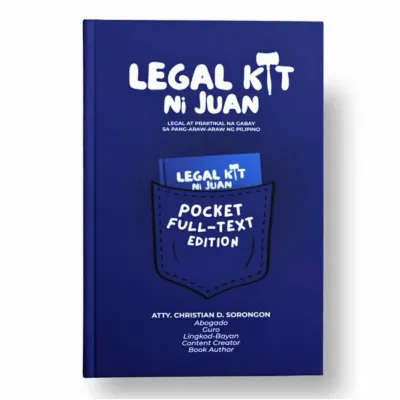
The term “legal kit ni Juan” has gained popularity as a conceptual shorthand for accessible, practical legal packages designed for the ordinary Filipino citizen. Unlike academic textbooks that prepare students for the bar exam, these kits focus on empowerment through basic legal literacy. They aim to demystify the law, making it approachable for individuals who do not have a formal legal background.
When searching for a practical legal kit, look for bundles that address the most common legal challenges faced by everyday citizens. A well-rounded kit should cover tenant and landlord relationships, basic contract templates (such as deeds of sale or lease agreements), employee rights under the Labor Code, and the procedures of the Katarungang Pambarangay, or the barangay justice system. These topics represent the vast majority of daily legal interactions in local communities.
It is vital to verify the source and authorization of any product marketed under this concept. Because the demand for accessible legal information is high, some unauthorized or poorly curated compilations circulate on online marketplaces. Ensure that the kit you choose is published by a recognized legal publisher or authored by a licensed attorney who can guarantee the accuracy of the templates and explanations.
Always keep in mind the inherent limitations of these simplified kits. Any reputable legal kit will feature a prominent disclaimer stating that the material is for educational and informational purposes only. While a kit can help you draft a basic agreement or understand your rights during a dispute, it cannot replace the personalized advice of a qualified attorney. For complex transactions, criminal matters, or formal litigation, consulting a member of the Integrated Bar of the Philippines remains irreplaceable.
Where to Buy and How to Verify Authenticity
To ensure you are purchasing genuine, up-to-date legal reference materials, you should prioritize established and authorized distribution channels. Reputable legal publishers in the Philippines maintain physical showrooms in major metropolitan areas and operate official online storefronts. Purchasing directly from these publishers or from university-affiliated bookshops guarantees that you receive authentic editions.
Counterfeit law books are a persistent issue, often sold at steep discounts on unverified third-party ecommerce platforms. These pirated copies are not only illegal but also highly risky for professional use. They frequently suffer from missing pages, illegible printing, binding failures, and, most dangerously, outdated text that does not reflect current laws.
When inspecting a physical book set to verify its authenticity, look for specific security features. Genuine legal publications often feature high-quality paper, crisp typography, and official publisher holograms or security stickers on the inside cover. Check the International Standard Book Number (ISBN) and cross-reference it with the publisher’s official catalog to confirm the edition matches the physical copy in your hands.
If you must purchase from an online marketplace, look for the official store badge or verify that the seller is an authorized distributor listed on the publisher’s main website. Avoid listings that use generic stock photos, have unusually low prices, or feature reviews complaining of poor print quality and chemical smells from cheap inks. Investing in an authentic copy ensures you are relying on accurate information while supporting the authors and publishers who do the vital work of compiling these resources.
Gifting Legal Book Sets: Packaging and Presentation
A high-quality legal reference set is one of the most prestigious and meaningful gifts you can give to an aspiring or practicing lawyer. Key milestones such as entering law school, graduating, passing the bar examinations, or opening a new private practice are traditional occasions where a premium book set is deeply appreciated. It serves as both a practical tool for their career and a lasting symbol of their professional achievement.
To elevate the collectible value of a gifted book set, consider personalizing the presentation. Custom bookplates, or ownership labels, can be placed on the inside cover to mark the recipient’s name. Accompanying the set with high-quality leather bookmarks or a protective wooden bookstand adds a touch of elegance that complements a professional office or study room.
Because legal volumes are exceptionally heavy, proper packaging is critical when gifting or shipping these sets. Ensure the books are packed tightly in a sturdy, double-walled cardboard box with ample cushioning, such as bubble wrap or foam inserts, to prevent the corners from denting during transit. In the Philippines, where sudden downpours and high humidity are common during transport, wrapping the entire book set in a waterproof plastic barrier before boxing it protects the pages from moisture damage.
Frequently Asked Questions (FAQ)
Are digital versions of Philippine legal reference books reliable?
Authorized digital versions of Philippine legal texts offer incredible convenience, allowing you to carry an entire library on a tablet or laptop. They feature powerful search functions that let you locate specific keywords, articles, or case citations in seconds, and reputable digital platforms provide regular updates to reflect new laws. However, you must ensure that the digital subscription or file is from an authorized publisher, as pirated digital copies circulating online are often outdated, incomplete, and legally non-compliant. For deep study, annotation, and situations where internet access is unreliable, many professionals still prefer physical books.
How often should I update my legal reference book set?
The frequency of updates depends heavily on the specific area of law you are referencing. Fields like taxation, labor relations, and corporate law undergo frequent changes due to administrative circulars and legislative reforms, requiring annual updates or supplements. For more stable fields like civil law, a major update is typically only necessary when the Supreme Court issues landmark rulings or when Congress passes significant amendments. To keep your library current without constantly buying new sets, you can subscribe to publisher update services, purchase annual supplementary pamphlets, or cross-reference your physical books with the official online portal of the government gazette.
Community discussion
Share your experience or ask a question. Comments are reviewed before publication.