
Finding the right digital platform for your breviary depends heavily on how you intend to pray. The official Liturgy of the Hours is a complex, structured prayer cycle that changes daily according to the liturgical calendar, requiring constant navigation between different sections like the Psalter, the Proper of Seasons, and the Commons. For those seeking the full, official prayer of the Church, a standard static ebook file on a general e-reader can be incredibly cumbersome to navigate. Conversely, if you only need a simplified daily prayer book or a selection of morning and evening prayers, a standard ebook from a mainstream digital bookstore offers a highly convenient, single-library solution. Evaluating your specific prayer goals, device preferences, and the technical limitations of different digital formats is the first step toward establishing a seamless digital prayer routine.
In the Philippines, where high humidity and sudden tropical downpours can make carrying heavy, multi-volume leather-bound books a challenge, digital options offer a highly practical alternative. Whether you are commuting on a crowded train in Manila or praying in a quiet parish chapel, having your daily prayers accessible on a lightweight screen ensures you never miss your hours. However, because the Roman Catholic liturgical calendar is dynamic, choosing between a general ebook store and a specialized application requires understanding how these platforms handle complex text structures.
Understanding Breviary Formats and Digital Needs
Before choosing a platform, you must determine the depth of prayer you want to practice. The complete Liturgy of the Hours consists of five distinct hours throughout the day: Office of Readings, Morning Prayer (Lauds), Daytime Prayer (Terce, Sext, and None), Evening Prayer (Vespers), and Night Prayer (Compline). In physical form, this requires a massive four-volume set or a substantial single-volume edition. Translating this vast library into a digital format presents unique technical challenges that standard digital book files do not always handle gracefully.
Products mentioned in this guide
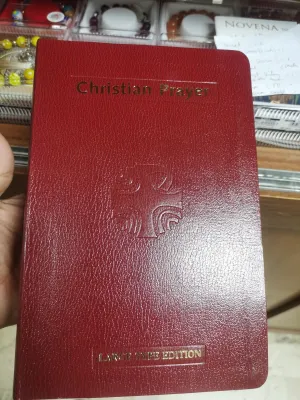



Prices are valid at publication and may change. Please refer to the product page for the latest price.
A simplified daily prayer book, often containing only abbreviated morning and evening prayers alongside daily Mass readings, is much easier to format as a static digital book. These simplified editions function perfectly well as standard EPUB or PDF files. You can read them sequentially, much like a traditional novel, without needing to jump between different sections of the text. If your prayer routine centers on these condensed devotionals, almost any mainstream ebook platform will serve your needs perfectly.
In contrast, the full official breviary requires constant cross-referencing. On any given day, a person praying the full Liturgy of the Hours must combine texts from the Ordinary (the structural framework), the Psalter (the four-week cycle of psalms), the Proper of Seasons (prayers specific to Advent, Lent, or Easter), and the Proper of Saints (prayers for specific feast days). In a physical book, this is managed using multiple ribbon bookmarks. In a standard ebook format, this requires clicking back and forth through hundreds of hyperlinks, which can quickly become frustrating and disrupt the flow of prayer.
Furthermore, standard ebook files lack the dynamic logic needed to calculate the liturgical calendar automatically. The calendar shifts every year based on the date of Easter, and feast days can displace ordinary weekdays. While a specialized application can automatically assemble the correct texts for today’s date with a single tap, a standard ebook file requires you to manually calculate the correct week of the Psalter and locate the corresponding feast day in the index. This makes standard ebook files better suited for static devotional reading rather than the dynamic daily cycle of the full breviary.
General Ebook Stores vs. Dedicated Liturgical Apps
Mainstream digital bookstores, such as those operated by major global technology companies and e-reader manufacturers, offer the ultimate convenience for consolidating your library. If you already use a specific e-ink reader or tablet for your daily reading, purchasing a digital prayer book from these stores keeps all your titles in one place. These platforms are excellent for static devotionals, spiritual classics, and simplified breviaries. However, they are fundamentally designed for linear reading, meaning they lack the specialized navigation tools required for the full, multi-volume Liturgy of the Hours.

Dedicated liturgical applications, on the other hand, are custom-built to handle the complexity of the Catholic calendar. Instead of forcing you to flip through digital pages to find the correct prayers, these apps use internal programming to automatically compile the entire liturgy for the current day. When you open the app, it checks the date and presents the exact psalms, readings, and intercessions you need, completely eliminating the need for manual navigation or ribbon-placing. Many of these services operate on a subscription model or require a one-time purchase to support ongoing software updates and licensing fees for official translations.
Another important avenue is the direct online store of official Catholic publishers. Many episcopal conferences and authorized publishing houses sell digital editions of their liturgical books directly through their own websites. These direct purchases are often the only way to acquire specific, officially sanctioned translations for your region. While these files may still be delivered in standard formats like PDF or EPUB, buying directly from the publisher ensures that you are receiving the exact text used by your local parish, while also directly supporting the liturgical work of the Church.
Key Features to Verify Before Purchasing or Subscribing
When evaluating any digital platform or application for your daily prayer, you should first verify its offline capabilities. In many areas, internet connectivity can be inconsistent, especially when traveling or attending retreats in remote areas. A reliable prayer tool must allow you to download the liturgical texts completely to your device so that you can pray without an active cellular or Wi-Fi connection. Additionally, if you switch between a smartphone during your daily commute and a larger tablet at home, ensure the platform supports seamless syncing of your reading progress and bookmarks across multiple devices.
Robust search and indexing features are also critical for a smooth prayer experience. Unlike a standard novel, you will rarely read a breviary from cover to cover. You may need to quickly find a specific psalm, look up a particular hymn, or locate the prayers for an optional memorial of a saint. A platform with a fast, intuitive search function saves valuable time and prevents frustration during your quiet prayer hours. Look for platforms that offer a detailed, multi-level table of contents that remains accessible from any page.
The physical environment of your prayer routine should also dictate your platform choice. If you prefer to pray in the early morning before sunrise or in a dimly lit chapel, customizable display settings are essential. Verify that the application or ebook reader allows you to adjust the font size, change the typeface, and switch to a dark mode or sepia background to reduce eye strain. Highlighting and note-taking features are also highly beneficial for recording personal reflections or marking passages that stand out during your meditation.
Finally, pay close attention to how the platform handles internal navigation. If you are using a standard ebook file rather than a dedicated app, test how easily you can jump between the major sections of the text. The file should contain active, reliable hyperlinks that allow you to move from the daily calendar directly to the Psalter, and then back to the Proper of Seasons. If the file lacks these internal links, or if your e-reader takes several seconds to load each jump, the disruption to your prayer flow may outweigh the convenience of a digital format.
Evaluating Versions, Languages, and Liturgical Accuracy
Liturgical prayer is, by its very nature, the public and official prayer of the Church. Therefore, maintaining accuracy and using approved translations is highly important, even for personal devotion. When browsing digital options, always check the front matter of the ebook or the information page of the application for an official Imprimatur and Concordat cum originali. These ecclesiastical approvals guarantee that the digital text is free from doctrinal error and matches the official Latin typical edition approved by the Holy See.
It is equally important to verify which translation edition the platform uses, as different English-speaking regions use different approved texts. For instance, parishes in the United States, the United Kingdom, Australia, and the Philippines do not all use the exact same translation of the Liturgy of the Hours. If you want your digital prayers to align perfectly with the communal prayer of your local parish or diocese, you must ensure the digital platform offers the specific translation approved by your national conference of bishops.
In addition to the translation of the texts, you must consider the liturgical calendar itself. The universal calendar of the Church is adapted by each country to include local feasts and solemnities. For example, the liturgical calendar in the Philippines includes specific feasts like the Santo Niño de Cebú and local Filipino saints, which will not appear in a standard North American or European liturgical calendar. Before purchasing or subscribing, check if the platform allows you to select your specific region or country to ensure that local feasts are correctly integrated into your daily prayer cycle.
Decision Framework: Which Platform Fits Your Prayer Routine?
To make the right choice, you must align the platform’s capabilities with your personal prayer habits and technical preferences. If your goal is to pray the full, official Liturgy of the Hours every day, a dedicated liturgical application is almost always the most practical choice. The automated calendar integration, dynamic page assembly, and regional calendar settings of a specialized app eliminate the logistical hurdles of manual navigation, allowing you to focus entirely on prayer rather than book management.
If you prefer a simpler, more contemplative prayer routine using condensed daily devotionals or static prayer books, a general ebook store is highly suitable. This option allows you to keep your prayer books alongside your other digital reading material in a single, unified library. It also gives you the freedom to use dedicated e-ink readers, which are often easier on the eyes and less distracting than smartphones or tablets, provided you do not mind the manual navigation required for static files.
Regardless of which path you choose, always perform a preliminary check of regional compatibility before committing to a purchase or subscription. If your local diocese or national bishops’ conference requires a specific translation that is not widely available on mainstream platforms, your best option may be to purchase a digital file directly from the official Catholic publisher’s store. By taking the time to verify these details, you can establish a digital prayer routine that is both liturgically accurate and perfectly suited to your daily life.
Frequently Asked Questions (FAQ)
Can I use a standard e-reader for the full Liturgy of the Hours?
While you can load a standard EPUB or PDF file of the full Liturgy of the Hours onto a standard e-ink reader, doing so presents significant navigation challenges. Because the full breviary requires constant jumping between the Psalter, the Proper of Seasons, and the Proper of Saints, you will spend a lot of time clicking hyperlinks or searching for page numbers. The slower refresh rates of traditional e-ink screens can make this process tedious. For the full, multi-volume liturgy, a dedicated application on a smartphone or tablet is generally much more practical, whereas standard e-readers are excellent for simplified, linear daily prayer books.
Are digital breviaries officially approved for liturgical use?
For personal private devotion, lay Catholics are entirely free to use digital breviaries on any platform or device. However, for official, public liturgical celebrations—such as a priest or deacon leading a parish community in Morning or Evening Prayer—the Church generally requires the use of approved, physical liturgical books. If you are participating in a public communal celebration, it is always best to check with your local parish guidelines, but for your private daily prayer at home or on your commute, a digital breviary is a highly beneficial and widely accepted tool.
Community discussion
Share your experience or ask a question. Comments are reviewed before publication.