
Starting your drumming journey is an exciting milestone, but setting up a practice space in a typical Philippine home often comes with space and noise constraints. Electronic drum kits, commonly known as e-drums, offer a practical solution by allowing you to practice silently with headphones. With a budget of ₱20,000, you can find several entry-level options that provide a realistic playing experience without disturbing your family or neighbors. Navigating this price bracket requires a clear understanding of what features are essential for skill development and which compromises are acceptable.
To make an informed purchase, you must look beyond promotional images and focus on the technical specifications that affect playability. A budget of ₱20,000 is highly competitive, meaning you will need to balance the cost of the core drum kit with necessary accessories like drumsticks, a throne, and headphones. By understanding what to expect, prioritizing the right features, and accounting for hidden setup costs, you can secure a reliable instrument that will support your learning journey for years to come.
What to Expect from an E Drum Kit Under ₱20,000
When shopping for e-drums under ₱20,000, managing your expectations regarding build quality and sound generation is crucial. At this price point, kits generally fall into two categories: true entry-level musical instruments and toy-grade novelties. Toy-grade kits often feature thin plastic frames, non-standard pad sizes, and lack velocity sensitivity, meaning the volume remains the same no matter how hard you strike the pad. A true musical instrument, even a budget-friendly one, must feature dynamic response, allowing you to practice accents, ghost notes, and basic volume control.
Products mentioned in this guide
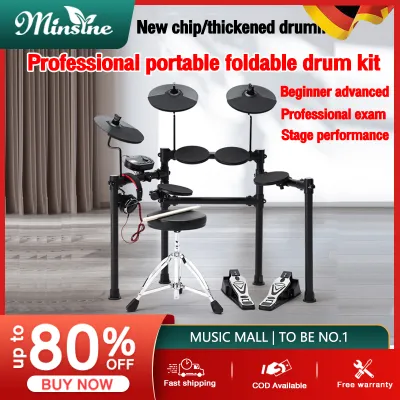
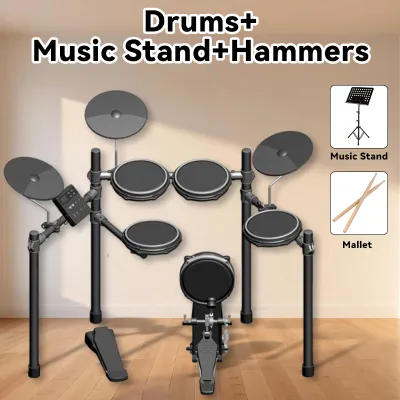
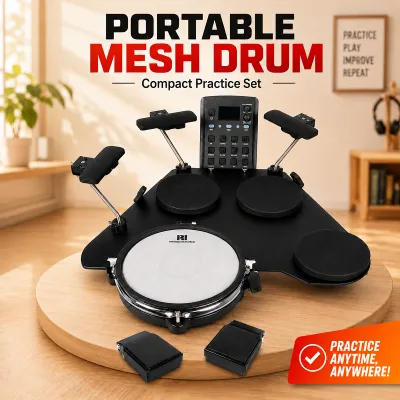
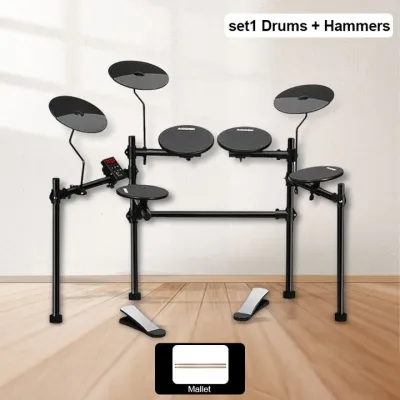
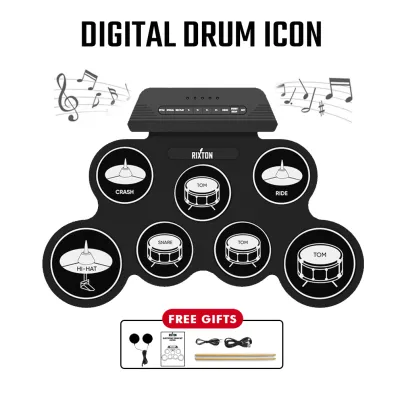
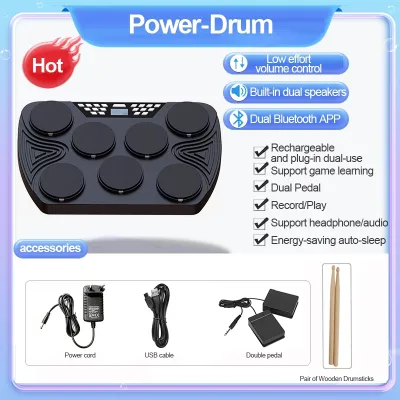
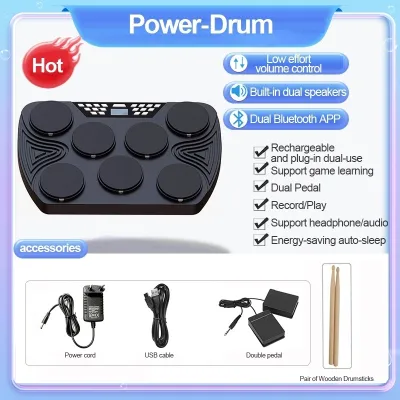
Prices are valid at publication and may change. Please refer to the product page for the latest price.
Compromises are inevitable when keeping costs low, and these typically manifest in the drum module and hardware. Budget sound modules usually feature a limited library of drum kits and simpler synthesis engines, which may sound slightly artificial compared to high-end professional modules. Additionally, the physical pads are often smaller, typically measuring 7 to 8 inches in diameter, and the hi-hat controller is usually a simple foot switch rather than a physical stand-mounted clutch system.
Despite these limitations, a viable learning kit must meet specific baseline requirements to be useful for long-term practice. The rack must be sturdy enough to withstand energetic playing without sliding or collapsing. The pads must offer consistent triggering without double-triggering or dropping notes during fast patterns. If a kit cannot reliably translate your physical strikes into accurate digital signals, it will hinder your timing and technique development, making it a poor investment.
Essential Features to Prioritize for Beginners
Choosing the right pad material is one of the most important decisions you will make when selecting an entry-level kit. Traditional rubber pads are durable and cost-effective, but they offer a stiff, highly bouncy rebound that feels very different from an acoustic drumhead. They also produce a distinct, loud “clack” when struck, which can be surprisingly noisy in a quiet household. Mesh heads, made of woven fabric, provide a much more realistic rebound, run significantly quieter, and allow you to adjust the tension of the head using a standard drum key to mimic the feel of different drum sizes.

Pedal mechanics are another critical factor that directly impacts your foot technique. Many ultra-budget e-drum kits use simple, button-like foot controllers for both the hi-hat and the bass drum. While these save space, they lack the physical resistance and rebound of a real bass drum pedal. For proper technique development, look for a kit that includes a dedicated kick pad tower and a physical bass drum pedal equipped with a moving beater. This setup trains your leg muscles and ankle joints to control a real pedal mechanism, which is essential if you ever plan to play an acoustic drum kit.
Finally, pay close attention to the connectivity options on the drum module. At a minimum, the module should feature a dedicated headphone output for silent practice and an auxiliary input (AUX IN) to let you plug in a smartphone or tablet to play along with your favorite songs. A USB MIDI port is also highly recommended, as it allows you to connect the drum kit to a computer or mobile device. This connectivity lets you use interactive learning software, practice apps, or digital audio workstations to record your progress and access high-quality virtual drum libraries.
Hidden Costs: Accessories and Setup Requirements
When planning your budget, remember that the drum kit itself is rarely a complete, plug-and-play package. Many manufacturers exclude essential accessories from the base box to keep the retail price low. To avoid exceeding your ₱20,000 limit, you must factor in the cost of a drum throne, a pair of quality drumsticks, and a reliable pair of headphones. Using a standard household chair is highly discouraged, as it lacks the height adjustability and stability needed to maintain proper playing posture, which can lead to back strain over time.
In the Philippines, residential construction and living arrangements introduce unique acoustic challenges. Many homes feature concrete walls and tiled or cement floors, which are highly reflective of sound and vibration. While headphones keep the acoustic noise of the pads quiet, the physical impact of your foot hitting the kick pedal sends low-frequency vibrations directly through the floor. If you live in a multi-story townhouse, an apartment, or a shared family home, you may need to invest in a thick, non-slip drum rug or construct a simple DIY sound-isolating platform using interlocking foam mats to absorb these vibrations.
To stay strictly under your financial limit, a smart budget allocation strategy is essential. If your total budget is ₱20,000, aim to spend approximately ₱15,000 to ₱17,000 on the core electronic drum kit. This leaves a buffer of ₱3,000 to ₱5,000 to cover a sturdy drum throne, a pair of durable hickory drumsticks, and closed-back headphones that offer good passive noise isolation. Attempting to buy a ₱19,500 kit without accounting for these accessories will leave you with an unplayable instrument or an unexpected credit card bill.
How to Verify Quality and Avoid Budget Traps
Navigating online marketplaces and local music stores requires a critical eye to avoid low-quality products marketed with exaggerated claims. A common red flag in product listings is the use of generic, unbranded drum modules that promise hundreds of sounds but lack detailed specifications regarding inputs, outputs, or trigger settings. Be cautious of listings that show a complete kit in the main image but hide the fact that the kick pedal, throne, or even the rack itself must be purchased separately in the fine print.
When purchasing electronic instruments in the Philippines, verifying the seller’s reputation and warranty terms is vital. Electronic drum components rely on delicate piezo sensors, wiring, and digital processors that can occasionally fail. Ensure the retailer offers a clear local warranty of at least six months to a year, and confirm whether they have a physical service center or store where you can bring the kit if issues arise. Additionally, verify that the included power adapter is rated for the standard Philippine electrical system of 220V and 60Hz to prevent damaging the sensitive drum module.
While buying a second-hand drum kit can seem like an attractive way to get a higher-tier model within your budget, it carries significant risks for beginners. Without experience, it is difficult to detect worn-out trigger sensors, intermittent cable connections, or failing inputs on the module. If you do choose the pre-owned route, always test the kit in person. Strike every pad at varying strengths to ensure the volume scales correctly, check that the cymbal choke functions work if advertised, and wiggle the cable jacks to ensure there are no loose connections or static noise.
Building Your Shortlist: A Step-by-Step Buying Plan
To make your final decision structured and stress-free, follow this step-by-step buying plan designed to match your living situation and budget:
- Step 1: Measure your space and assess noise limits. Find a dedicated corner in your home and measure the floor area. A typical entry-level e-drum kit requires a footprint of about 1.2 meters by 1.2 meters. Consider the proximity of your practice space to shared walls and choose a location where the physical tapping of the pads will cause the least disruption.
- Step 2: Filter options by technical specifications. Search local music retail websites and verified online stores using strict criteria. Filter out any kits that do not feature a physical kick pedal tower, mesh heads (at least for the snare drum), and a USB MIDI port. Ignore promotional bundles that include low-quality generic accessories if they push the price past your target.
- Step 3: Calculate the total landed cost. Once you have identified a few candidate kits, add the cost of any missing accessories to the price. If you are ordering online, factor in the shipping fees, as drum kits are heavy and bulky items that can incur high delivery charges. Compare the total sum against your ₱20,000 limit before finalizing your purchase.
Frequently Asked Questions (FAQ)
Do I need an amplifier for my e drums?
You do not need an amplifier to start practicing. In fact, most beginners prefer using a pair of closed-back headphones because it allows for completely silent practice, keeping your sessions private and neighbor-friendly. An amplifier is only necessary if you want to play out loud for an audience or practice alongside other musicians in the same room. If you decide to buy an amplifier later, ensure you choose a dedicated electronic drum monitor rather than a standard guitar amplifier, as drum monitors are designed to handle the deep low-end of a bass drum and the high-frequency crispness of cymbals.
Are mesh heads really necessary for beginners?
While you can learn the basics of rhythm on rubber pads, mesh heads are highly recommended for beginners. Mesh heads provide a physical rebound that closely mimics the feel of a real acoustic drum, which helps you develop proper wrist technique and muscle memory. They are also significantly quieter than rubber pads, making them much better suited for indoor practice in quiet neighborhoods or apartments. Because they allow you to adjust the tension of the head, they offer a customizable playing experience that rubber pads simply cannot match.
Community discussion
Share your experience or ask a question. Comments are reviewed before publication.