
Choosing your first electric acoustic guitar is an exciting milestone that opens up both acoustic playability and amplified performance. In the Philippines, where high humidity and temperature shifts can affect wooden instruments, finding a guitar that balances playability, durable construction, and reliable electronics is essential. The ideal beginner instrument should feel comfortable in your hands, stay in tune easily, and deliver a clear, natural sound whether unplugged or connected to an amplifier.
Navigating the local market requires understanding how different materials and designs handle tropical conditions. By focusing on key physical features, electronic components, and maintenance needs, you can select an instrument that supports your learning journey and lasts for years to come.
Quick Answer: What to Look for in Your First Acoustic-Electric Guitar
When shopping for your first electric acoustic guitar, prioritize physical comfort and structural stability over complex cosmetic features. A beginner-friendly guitar should have a body size that allows you to sit and stand comfortably without straining your shoulder, paired with a neck profile that fits naturally in your hand to reduce fatigue during long practice sessions.
Products mentioned in this guide
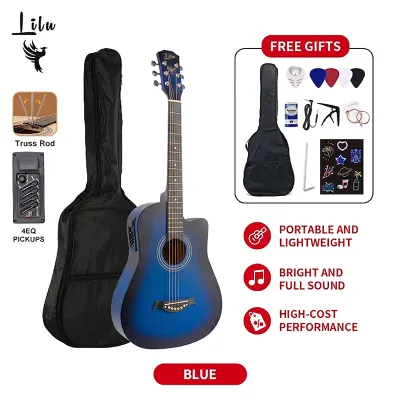
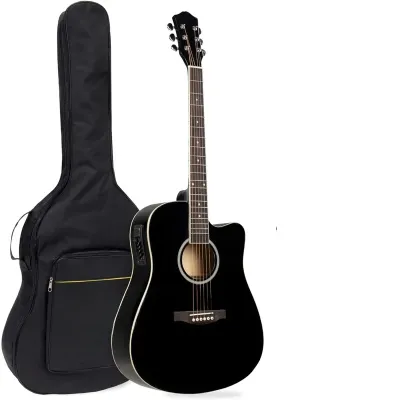
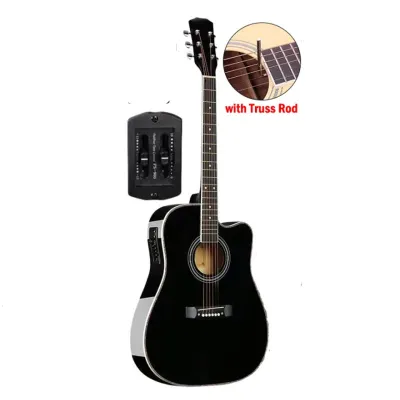
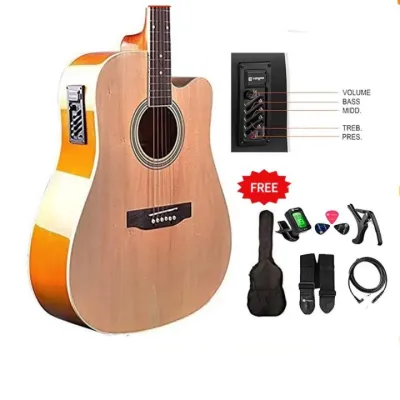
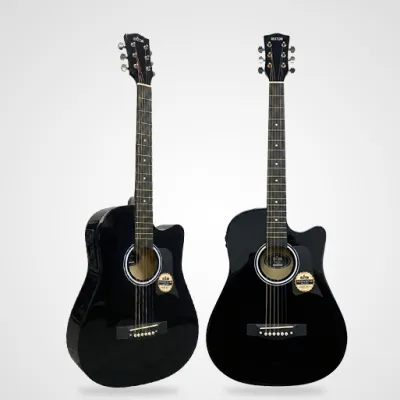
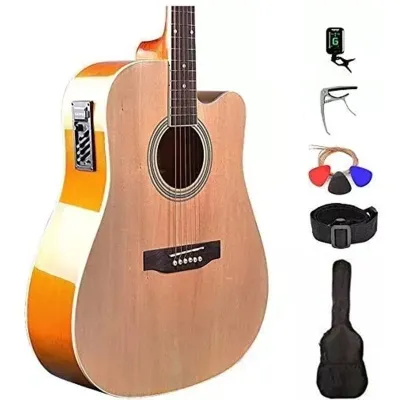
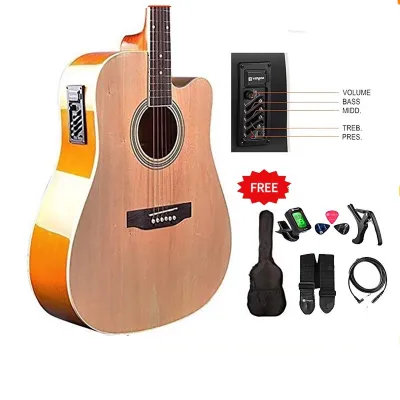
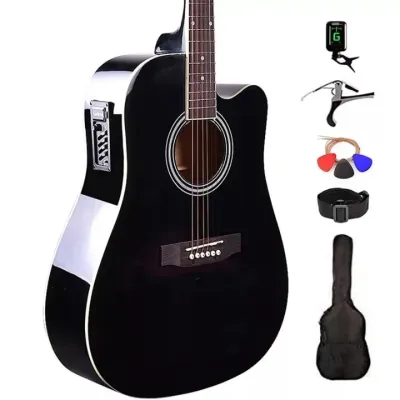
Prices are valid at publication and may change. Please refer to the product page for the latest price.
For the electronics, look for a built-in preamp system that includes an integrated chromatic tuner and a basic equalizer. Having a tuner directly on the guitar body makes regular tuning convenient and encourages you to stay in pitch, while a simple equalizer allows you to adjust the bass, middle, and treble frequencies when plugging into an amplifier.
Another critical decision is choosing between a laminate wood top and a solid wood top. Laminate tops consist of multiple thin layers of wood pressed together, making them highly resistant to the cracking and warping caused by tropical humidity. Solid wood tops, made from a single piece of seasoned timber, offer superior resonance and a tone that matures over time, but they require more careful climate control and a slightly higher initial investment.
Key Features to Evaluate Before Buying
Body Shapes and Comfort
The physical shape of a guitar determines both how it feels against your body and how it projects sound acoustically. Beginners should try different shapes to find the most comfortable fit for their playing posture.

- Dreadnought: This is the most common acoustic guitar shape, known for its large body and deep sides. It produces a loud, robust sound with strong bass projection, making it excellent for strumming. However, its bulky size can feel awkward or tiring for smaller players or younger beginners.
- Concert and Grand Concert: These bodies are smaller, shallower, and feature a more pronounced waist. They offer a focused midrange tone and are highly comfortable to hold while seated, making them excellent for fingerstyle playing and smaller body frames.
- Auditorium and Grand Auditorium: Serving as a versatile middle ground, these shapes offer a balanced tonal profile with comfortable curves. They provide enough volume for strumming while remaining easy to hold during extended practice sessions.
Tonewood Choices and Climate Durability
Tonewoods play a major role in the instrument’s voice and its ability to withstand environmental changes. In a tropical climate, the choice of wood directly impacts maintenance requirements.
- Laminate Wood: Laminate construction is highly stable and less sensitive to rapid changes in temperature and humidity. If you plan to travel frequently, play outdoors, or store your guitar in a room without constant climate control, a laminate top offers excellent durability and peace of mind.
- Solid Wood: A solid spruce, cedar, or mahogany top vibrates more freely than laminate, resulting in a richer, more dynamic sound. As the wood dries and ages over years of playing, its acoustic properties improve—a process known as maturation. However, solid wood is prone to swelling in high humidity and cracking in dry, air-conditioned environments.
Pickup and Preamp Systems
The electronics on an electric acoustic guitar translate the physical vibrations of the strings and wood into an electrical signal. Understanding the basic components helps you evaluate the plugged-in sound quality.
- Under-Saddle Piezo Pickups: Positioned directly beneath the bridge saddle, these pickups capture the direct pressure of the vibrating strings. They are highly resistant to feedback at louder volumes, making them the standard choice for beginner and intermediate guitars.
- Onboard Preamps: The preamp unit, typically mounted on the upper side of the guitar body, boosts the quiet signal from the pickup. Look for a preamp with a built-in tuner, a volume control, and at least a two-band or three-band equalizer (EQ) to shape your tone before it reaches the amplifier.
Playability Metrics
A guitar that is difficult to play can discourage a beginner quickly. Pay close attention to the setup and neck dimensions before making a purchase.
- Neck Profile: A slim "C" or "U" shape neck profile is generally easiest for beginners to wrap their hands around, allowing for easier chord transitions.
- Nut Width: A standard nut width of 43 millimeters (1.69 inches) provides comfortable string spacing for most players, preventing accidental string muting.
- Action Height: Action refers to the distance between the strings and the fretboard. If the action is too high, pressing down on the strings requires excessive finger strength; if it is too low, the strings will buzz against the frets. Ensure the guitar has an adjustable truss rod so a technician can fine-tune the action height.
Setting a Realistic Beginner Budget in the Philippines
Price Tiers
Establishing a clear budget helps narrow down your options and ensures you allocate funds for both the instrument and essential starting gear. In the local market, reliable acoustic-electric guitars generally fall into two main price brackets.
- Entry-Level (₱5,000 to ₱10,000): Guitars in this range typically feature all-laminate construction and basic piezo pickup systems. They are highly durable, budget-friendly, and perfect for beginners who want a reliable instrument to test their commitment.
- Mid-Tier (₱10,000 to ₱25,000): This bracket introduces solid wood tops (usually spruce or mahogany) paired with laminate back and sides. These instruments offer upgraded preamp systems, smoother tuning machines, and a more refined acoustic tone that will satisfy players as they progress to intermediate levels.
Hidden Costs to Consider
The purchase price of the guitar is rarely the final cost of getting started. Budgeting for a few immediate adjustments and accessories will improve your playing experience and protect your investment.
- Professional Setup: Many guitars require adjustment straight out of the box. Budgeting ₱500 to ₱1,500 for a local luthier to adjust the action, file the nut slots, and check the fret leveling can make a cheap guitar play beautifully.
- Fresh Strings: Factory strings can become corroded during shipping and storage. Replacing them with a fresh set of coated strings (costing ₱400 to ₱900) improves tone and resists rust in humid climates.
- Protective Gig Bag: A padded gig bag (ranging from ₱800 to ₱2,500) is essential for shielding your guitar from physical impacts, dust, and rapid moisture changes during travel.
Solid Top vs. High-Quality Laminate
If your budget allows you to stretch from an entry-level laminate to a mid-tier solid top, consider your primary playing environment. If you practice mostly in air-conditioned spaces and want a richer, more resonant tone that improves over time, investing in a solid top is highly rewarding. However, if you plan to take your guitar to beach trips, outdoor gatherings, or places without humidity control, a high-quality laminate model is often the more practical and durable choice.
Where to Buy and How to Verify Authenticity
Physical Stores vs. Online Marketplaces
Both purchasing methods offer distinct advantages, but they require different approaches to ensure a successful buy.
- Physical Music Stores: Visiting a local showroom allows you to hold the guitar, feel the neck profile, and listen to its acoustic voice. You can inspect the build quality firsthand and ask store staff to demonstrate the electronics. This is the safest way to ensure you like the physical feel of the instrument.
- Online Marketplaces and Web Stores: Buying online offers convenience and access to a wider inventory, especially if you live outside major metropolitan areas. When buying online, prioritize authorized brand stores or established local music retailers. Carefully read the return policies, shipping insurance terms, and customer reviews regarding packaging quality.
Verifying Authorized Dealers and Warranties
To protect yourself from counterfeit products and ensure access to customer support, always verify the seller’s credentials. Authorized dealers are typically listed on the official global website of the guitar manufacturer.
When purchasing, confirm that the guitar comes with an official distributor warranty card. In the local market, authorized warranties generally cover manufacturing defects, electronic failures, and structural issues for 6 to 12 months. Keep your official receipt in a safe place, as it is required for any warranty claims.
Red Flags for Counterfeit Instruments
Counterfeit guitars are common in online spaces and unauthorized physical shops. Watch out for these warning signs to avoid purchasing a fake instrument:
- Suspiciously Low Prices: If a highly regarded brand model is advertised at a price that seems too good to be true, it is almost certainly a counterfeit.
- Missing or Altered Serial Numbers: Check the paper label inside the soundhole and the stamp on the back of the headstock. The serial number should be clear, legible, and match the format used by the manufacturer.
- Poor Finish and Hardware Details: Inspect the guitar for sloppy glue joints, rough fret ends that scratch your fingers, misaligned brand logos, or cheap plastic tuning pegs. Authentic instruments undergo strict quality control that prevents these obvious defects.
Essential Accessories for Your First Amplified Setup
Amplification Options
To hear the amplified sound of your electric acoustic guitar, you need an appropriate output system. Standard electric guitar amplifiers are designed to distort and color the sound, which can make an acoustic guitar sound harsh and unnatural.
- Dedicated Acoustic Amplifiers: These amplifiers are designed with a flat frequency response to preserve the natural, woody tone of your instrument. They often feature built-in feedback control, chorus or reverb effects, and a dedicated microphone input for singing along.
- PA Systems: If you are performing in public or at community events, plugging your guitar directly into a PA (Public Address) system is common. This setup provides clean, uncolored amplification across a wide area.
Cables, DI Boxes, and Pedals
Connecting your guitar to an amplifier or sound system requires a few basic hardware components to maintain signal quality.
- Instrument Cables: Invest in a high-quality, shielded 1/4-inch instrument cable. Cheap, unshielded cables can introduce unwanted hum, static, and radio interference into your signal.
- DI (Direct Input) Boxes: When plugging into a PA system over long cable distances, a DI box balances the signal, reduces background noise, and helps prevent high-frequency loss.
- Acoustic Preamp Pedals: While not strictly necessary for beginners, a basic acoustic preamp or EQ pedal can help you fine-tune your tone and eliminate feedback frequencies during live performances.
Maintenance and Care Tools
Proper maintenance is crucial for preserving the playability and structural integrity of your guitar, especially in tropical environments.
- Humidity Control: The high relative humidity in the Philippines can cause guitar wood to swell, raising the action and warping the neck. Keep your guitar in its gig bag when not in use, and place silica gel packs or specialized two-way humidity control packets inside the case to absorb excess moisture.
- Capos: A capo allows you to change the key of a song easily without changing the chord fingerings, making it an essential tool for practicing a wide variety of music.
- Clip-On Tuners: While your guitar may have a built-in preamp tuner, a clip-on tuner serves as an excellent backup. It detects vibrations directly from the headstock, allowing you to tune accurately even in noisy environments.
Frequently Asked Questions (FAQ)
Do I need a special amplifier for an acoustic-electric guitar?
Yes, using a dedicated acoustic amplifier is highly recommended if you want to preserve the natural sound of your instrument. Standard electric guitar amplifiers are designed to add midrange punch, compression, and distortion, which can make an acoustic-electric guitar sound thin, metallic, and prone to feedback.
Acoustic amplifiers feature full-range, flat-response speakers that accurately reproduce both the high-frequency sparkle of the strings and the low-end warmth of the wooden body. When selecting an acoustic amplifier, look for models that offer a dedicated acoustic channel, basic equalization controls, and built-in feedback phase switches.
Can I upgrade the pickup system on a beginner guitar later?
While it is technically possible to upgrade the pickup system on a beginner guitar, it is often not cost-effective. The price of a high-quality aftermarket pickup combined with the professional luthier installation fees can easily exceed the original value of an entry-level instrument.
If you want to improve your amplified sound without permanent modifications, consider using a temporary soundhole pickup. These pickups clip directly into the soundhole of your guitar without requiring any drilling or wood cutting, providing a simple and reversible way to experiment with different plugged-in tones before upgrading to a higher-tier guitar.
Community discussion
Share your experience or ask a question. Comments are reviewed before publication.