
Law students in the Philippines face a unique set of academic challenges, from navigating intense Socratic recitations to digesting hundreds of Supreme Court cases. Carrying heavy physical codals and thick commentary textbooks under the tropical heat can add physical strain to an already demanding routine. To ease this burden, many students are turning to digital alternatives. Finding authorized digital copies of essential textbooks, particularly for foundational subjects like basic legal and judicial ethics, requires a strategic approach. Because legal publishing in the Philippines is highly specialized, these materials are not always available on standard global marketplaces. Instead, students must look to a combination of local publisher platforms, institutional university databases, and select digital storefronts. Securing the correct, legally compliant digital edition is critical to ensuring your study materials align with the current syllabus and the latest Supreme Court updates.
Key Criteria for Choosing a Legal eBook Platform
When transitioning to digital study materials, choosing the right platform involves more than simply finding the lowest price. For law students, an eBook platform serves as an active study workspace rather than a passive reading app. The first and most critical criterion is content authorization and regional availability. Because Philippine legal materials are subject to strict copyright and distribution agreements, some platforms may restrict access based on your geographical location. You must ensure that the platform you choose is legally authorized to distribute Philippine jurisdiction materials to avoid sudden service interruptions or account access issues.
Format compatibility is another essential factor that directly impacts how you study. Digital legal texts generally come in two formats: reflowable text (such as EPUB) and fixed-layout (such as PDF). Reflowable text is highly convenient for reading on smaller screens, such as smartphones or compact tablets, during a daily commute on public transit or while waiting between classes. It allows you to adjust font sizes and background colors to reduce eye strain. However, for treatises and textbooks, fixed-layout formats are often selected because they preserve the exact pagination of the printed book. This is crucial when a professor assigns specific page ranges or when you need to cite page numbers in a legal memorandum.
Products mentioned in this guide
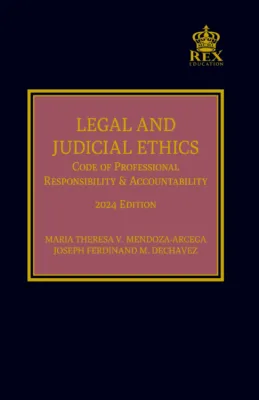
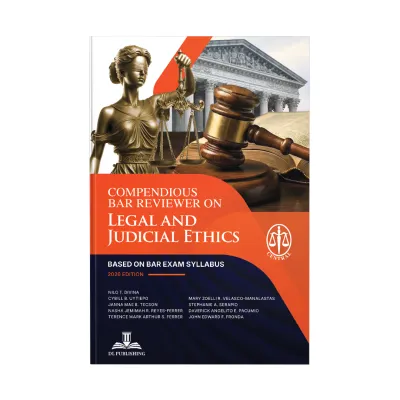
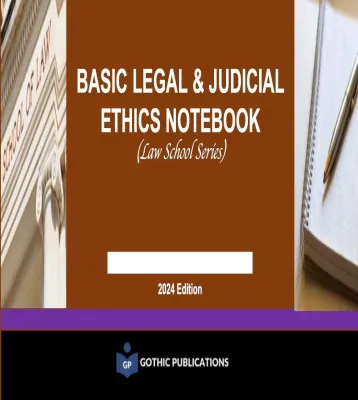
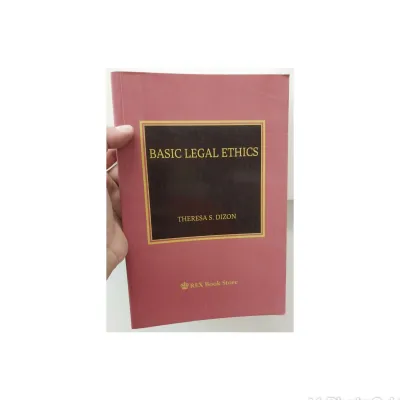
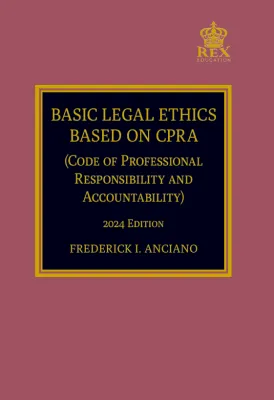
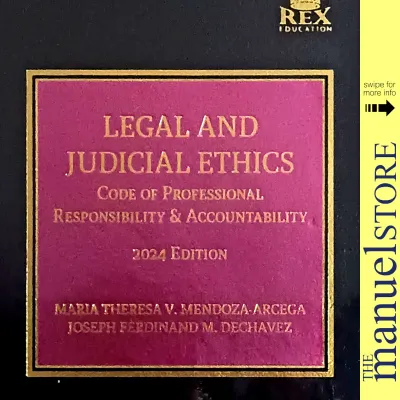
Prices are valid at publication and may change. Please refer to the product page for the latest price.
Finally, the platform must offer robust study tools designed for intensive academic workflows. Legal study is rarely a passive activity; it requires constant interaction with the text. A suitable platform must provide seamless highlighting in multiple colors, which allows you to distinguish between facts, issues, and rulings when reading case digests. It should also support margin annotations, sticky notes, and cross-referencing capabilities. These tools enable you to build case briefs directly within the eBook, making it easier to recall key ethical canons and rules during class recitations or when compiling your personal review outlines.
Primary Channels for Sourcing Digital Law Textbooks
Acquiring digital copies of textbooks on basic legal and judicial ethics requires knowing where to look, as local legal publishers manage their digital distribution tightly. The primary channel for these materials is the official digital storefronts and e-library portals operated by established Philippine legal publishers. Companies like Rex Education and Central Book Supply have developed their own digital ecosystems and proprietary e-reader applications. These platforms allow students to purchase digital versions of popular textbooks directly. While these proprietary apps protect the publishers’ intellectual property, they also ensure that you are receiving the official, unaltered text complete with all necessary tables, indices, and appendices.

Another highly valuable but often underutilized channel is your university library’s digital database. Many law schools across the Philippines subscribe to comprehensive legal databases and institutional eBook platforms to support their students’ research needs. Subscriptions to services like MyLegalWhiz, ESCRA, or other academic digital libraries are frequently included in your tuition fees. Before purchasing any digital textbook individually, it is highly recommended to consult your law school librarian or check your university’s online portal. Accessing these materials through an institutional subscription can save you thousands of Pesos (₱) while providing legal, high-quality access to the exact commentaries and codals required for your classes.
Lastly, major global eBook retailers such as Google Play Books, Apple Books, and Amazon Kindle do occasionally host Philippine legal titles. However, finding local textbooks on these platforms requires precise search strategies. Publishers sometimes list digital editions of reviewers, bar review materials, or introductory guides on global stores to reach a wider audience. When searching these platforms, always use specific keywords such as “basic legal and judicial ethics” alongside the author’s full name. Be sure to verify that the seller is the authorized local publisher or distributor, as unauthorized uploads may contain formatting errors, missing pages, or outdated legal provisions that could compromise your exam preparation.
Essential Verification Steps Before Acquisition
Before completing a transaction on any digital platform, performing a thorough verification process is essential to protect both your finances and your academic standing. The most critical step is verifying the publication year and the specific edition of the textbook. In the Philippines, legal ethics underwent a massive transformation with the promulgation of the Code of Professional Responsibility and Accountability (CPRA) by the Supreme Court in 2023. This code significantly updated and replaced the decades-old Code of Professional Responsibility (CPR). Consequently, any textbook or reviewer on basic legal and judicial ethics published prior to 2023 may contain outdated rules, obsolete disciplinary procedures, and superseded canons. Always cross-reference the book’s publication details with your course syllabus to ensure you are studying the current law.
Next, you must carefully review the Digital Rights Management (DRM) restrictions associated with the eBook. Publishers apply DRM to prevent unauthorized sharing, but these rules can significantly affect how you use the book. Some platforms restrict the number of devices you can register, which can be problematic if you switch between a desktop computer, a tablet, and a smartphone. Other platforms may completely disable the copy-and-paste function or impose strict limits on how many pages you can print. Understanding these limitations beforehand prevents frustration when you attempt to compile your study notes or print out a specific chapter for an open-book review session.
Finally, always confirm the language and the specific jurisdiction of the digital material. Because search algorithms on global platforms can sometimes group similar titles together, a search for legal ethics might return textbooks designed for the United States, Australia, or other common-law jurisdictions. Studying foreign ethical rules will not help you pass the Philippine Bar Examination. Double-check that the textbook explicitly covers Philippine jurisprudence, references the Rules of Court, and analyzes the decisions of the Supreme Court of the Philippines. Taking a few moments to verify these details ensures that your investment of both time and money yields the correct study resources.
Evaluating Platform Features for Legal Study Workflows
A digital platform is only as useful as its ability to support your daily study habits. To determine if a platform is suitable for the rigorous demands of law school, you should evaluate its technical features under realistic study conditions. First, test the efficiency of the in-app search function. Legal textbooks are dense, often spanning hundreds of pages. A high-quality search tool must be able to locate specific keywords, statutory rules, or Supreme Court administrative matters instantly. The ability to search for a specific case title or canon number during a fast-paced Socratic lecture can make a significant difference during class.
Second, examine the platform’s note-export capabilities. As you read through your basic legal and judicial ethics materials, you will likely generate extensive highlights, margin notes, and case summaries. If these annotations are locked permanently inside the e-reader app, their utility is severely limited. Look for platforms that allow you to export your notes into standard formats like PDF, TXT, or directly into note-taking applications such as Notion, Evernote, or Microsoft Word. This feature allows you to seamlessly integrate your digital reading annotations into your comprehensive bar review outlines and study guides.
Lastly, assess the reliability of the platform’s multi-device synchronization. Law students often study in varied environments, reading on a tablet while riding a bus, reviewing on a smartphone during a quick lunch break, and typing out detailed notes on a laptop in the classroom. The platform must sync your reading progress, highlights, and notes across all these devices in real-time. A failure in synchronization can lead to lost notes or wasted time spent searching for the page where you left off. Testing these features during a trial period or with a free sample book will help you confirm that the platform can keep up with your demanding academic schedule.
Frequently Asked Questions (FAQ)
Can I use international eBook platforms for Philippine legal textbooks?
Yes, you can use international platforms like Google Play Books or Amazon Kindle, but with significant caveats. Local publishers occasionally distribute their titles globally to accommodate law students and practitioners who travel or study abroad. However, you must verify that the digital file is not regionally locked, which could prevent you from downloading it once you are back in the Philippines. Always check the publisher details, the publication date, and the specific edition to ensure it is the authorized Philippine version rather than a foreign textbook with a similar title.
Are digital legal materials accepted for open-book examinations?
The acceptance of digital legal materials during open-book examinations depends entirely on the policies of your specific law school and the instructions of your professor. Many institutions prohibit the use of internet-connected devices during exams to maintain academic integrity. If digital materials are permitted, they are often restricted to offline-capable e-readers or specific secure proctoring software environments that lock down your browser. Always clarify these rules with your professor well in advance, and ensure that your digital platform allows you to access your downloaded books completely offline without requiring an active internet connection.
Community discussion
Share your experience or ask a question. Comments are reviewed before publication.