
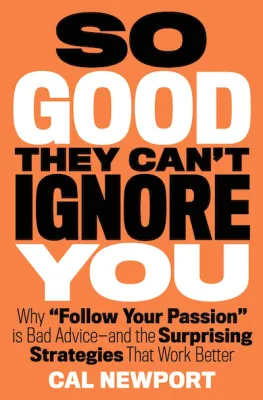
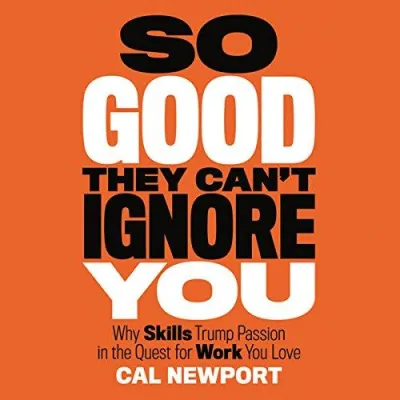
Finding career development literature that matches the pragmatic, skill-first philosophy of Cal Newport’s ‘So Good They Can’t Ignore You’ requires shifting your focus away from standard motivational guides. In a professional landscape like the Philippines, where career choices are often driven by economic stability and highly competitive job markets, relying solely on the advice to ‘follow your passion’ can lead to frustration. Instead, the most effective alternative books are those that treat career growth as an engineering problem: a process of acquiring rare, valuable skills and systematically trading them for autonomy, impact, and financial reward.
To distinguish these pragmatic guides from generic self-help, you must look at how they define success. Traditional motivational books often rely on emotional appeals, encouraging readers to leap into new ventures without a safety net or a proven skill set. In contrast, books that align with Newport’s philosophy emphasize the concept of ‘career capital’—the accumulation of specialized, hard-to-replace abilities that give you leverage in the employment market. When evaluating a book, check whether it encourages you to focus on what you can offer the world (the craftsman mindset) rather than what the world can offer you (the passion mindset).
Establishing your own selection criteria is essential before investing time and money into a new book. Begin by analyzing your current career stage, your specific industry, and the immediate skill gaps you need to bridge. If you are working in a rapidly evolving sector in the Philippines, such as technology, digital marketing, or business services, your primary need is likely structured skill acquisition rather than broad inspiration. Your reading list should reflect this by focusing on titles that offer concrete methodologies for learning complex subjects quickly and measuring your progress objectively.
Products mentioned in this guide


Prices are valid at publication and may change. Please refer to the product page for the latest price.
Pragmatic career books also share distinct structural elements that set them apart from superficial guides. They are typically built on evidence-based arguments, drawing from cognitive psychology, behavioral economics, or extensive field research rather than isolated success stories. Look for books that feature structured frameworks, diagnostic self-assessments, and actionable exercises at the end of each chapter. These elements ensure that the book serves as an active manual for professional development rather than a passive reading experience.
Defining the Core Philosophy of Skill-Building and Career Capital
To build a career that is both fulfilling and resilient, you must first understand the mechanics of skill-building. Many popular career guides suggest that the key to job satisfaction is finding a pre-existing passion and matching your job to it. However, this approach often fails because passion is rarely a reliable starting point; instead, it is usually the byproduct of mastery, control, and connection to your work. Pragmatic books focus on helping you build this mastery systematically.
When selecting books that share this philosophy, look for those that emphasize the accumulation of career capital. This capital consists of the rare and valuable skills you develop over time, which you can eventually trade for the things that make a job great, such as autonomy, creative freedom, and financial security. A good career book should provide a clear roadmap for identifying which skills are highly valued in your industry and how you can systematically acquire them.
Your selection criteria should also be tailored to your specific industry and career stage. For example, a software engineer in Manila will need different skill-building frameworks than a marketing manager in Cebu. Look for books that offer adaptable frameworks rather than rigid, one-size-fits-all rules. The best guides are those that help you analyze your local market conditions, identify high-value skill gaps, and create a structured plan to fill them.
Finally, pay attention to the structural elements of the books you choose. Pragmatic career books are characterized by their reliance on empirical evidence, case studies of diverse professionals, and actionable frameworks. They avoid vague platitudes and instead offer concrete tools, such as skill-tracking templates, deliberate practice schedules, and diagnostic questions. These structural elements help you translate the book’s concepts into daily habits that drive real professional growth.
Exploring Key Themes for Pragmatic Career Growth
To build a comprehensive reading plan that complements the principles of ‘So Good They Can’t Ignore You’, it is helpful to explore specific thematic areas that address different aspects of professional mastery. Rather than searching for a single perfect book, you can combine insights from various authors who specialize in deliberate practice, cognitive focus, and strategic career navigation. This multi-faceted approach allows you to address different challenges as your career evolves in the local market.

Deliberate Practice and Mastery
The foundation of building career capital is deliberate practice, a concept popularized by researchers like Anders Ericsson. This theme focuses on how experts across various fields acquire their skills through structured, highly focused training. Unlike casual practice, which involves repeating tasks you already know how to do, deliberate practice requires pushing yourself just beyond your current capabilities and seeking immediate feedback on your performance.
When searching for books in this category, look for resources that explain the neurological and psychological mechanisms behind skill acquisition. These guides should help you design your own training regimens, whether you are trying to master a programming language, improve your financial modeling, or refine your public speaking skills. In the Philippine corporate environment, where technical proficiency is highly valued, understanding how to accelerate your learning curve can give you a significant competitive advantage.
Focus and Cognitive Endurance
Acquiring rare and valuable skills requires long stretches of uninterrupted concentration, a challenge that is becoming increasingly difficult in the modern digital workplace. This theme addresses the mechanics of deep focus, attention management, and building the mental stamina required to tackle complex cognitive tasks.
For professionals working in busy urban centers like Metro Manila, Cebu, or Davao, distractions are not limited to digital notifications; they also include the physical and mental fatigue of long daily commutes and high-density office environments. Books that focus on cognitive endurance offer practical strategies for structuring your workday, minimizing administrative distractions, and creating physical or digital boundaries that protect your peak productive hours. By mastering your attention, you can produce higher-quality work in less time, freeing up energy for personal growth and skill development.
Strategic Career Navigation
Once you have accumulated a substantial amount of career capital, the next challenge is learning how to leverage it to gain more control over your professional life. Strategic career navigation involves understanding when and how to negotiate for greater autonomy, how to transition into high-value roles, and how to avoid the common pitfalls of seeking independence too early.
Books in this thematic area explore the dynamics of professional leverage, negotiation strategies, and the economics of career choices. They help you evaluate whether a potential promotion will actually increase your long-term career capital or simply add more administrative burdens. For local professionals aiming to transition into specialized consulting, remote freelance roles, or entrepreneurial ventures, these guides provide the strategic framework needed to make those moves safely and successfully.
Evaluating Book Relevance for Your Specific Career Stage
Not every highly recommended career book will be appropriate for your current professional situation. To avoid wasting time on advice that does not apply to you, it is important to evaluate a book’s relevance based on your specific career stage and the realities of the local job market.
Matching the complexity of a book’s framework to your current career phase is the first step in this evaluation. If you are in the early stages of your career, your primary goal should be rapid skill acquisition and establishing a reputation for reliability. Books that focus heavily on high-level strategy, delegation, or corporate politics may not be useful yet; instead, prioritize guides that teach execution, time management, and foundational technical skills. Conversely, if you are a mid-career professional who already possesses valuable expertise, you should seek out books that address leadership, strategic negotiation, and how to trade your career capital for flexibility and autonomy.
It is also crucial to evaluate the author’s credentials and the research backing their claims. A reliable career guide should be written by an established practitioner, an academic researcher, or a journalist who has conducted extensive, systematic interviews across multiple industries. Be skeptical of authors whose sole credential is their own self-proclaimed success, as their advice may be highly specific to their unique circumstances and difficult to replicate. Consider how well the author’s frameworks translate to the Philippine context, taking into account local business cultures, employment laws, and economic conditions.
Finally, learn to identify common red flags when browsing potential career books. One major red flag is survivorship bias, where an author profiles a handful of exceptionally successful individuals—such as tech founders or famous creatives—and claims that their highly risky, non-reproducible paths are a universal blueprint for everyone. Another warning sign is a lack of actionable steps; if a book spends hundreds of pages explaining why a certain trait is important but never explains how to develop it, it is likely a motivational piece rather than a practical guide. Avoid books that rely on vague, pseudo-scientific concepts or promise effortless success, as true career growth requires sustained, deliberate effort.
Sourcing and Verifying Book Formats in the Philippines
Once you have identified the themes and books that align with your career goals, the next step is sourcing and verifying these titles in the Philippines. Depending on your reading habits, daily routine, and budget, you can choose between physical copies, e-books, or audiobooks, each of which has its own practical considerations.
Comparing formats based on your lifestyle can help you make the most of your reading time. Physical books are excellent for active study, allowing you to easily flip back and forth, write notes in the margins, and highlight key passages. However, the tropical climate and high humidity in the Philippines mean that physical paperbacks require careful storage in dry, well-ventilated areas to prevent yellowing and mold. If you face long daily commutes on public transportation, e-books or audiobooks may be more practical. E-books are highly portable, can be read on lightweight e-readers or smartphones, and are immune to humidity. Audiobooks are ideal for listening during long drives or while walking, turning otherwise unproductive transit time into valuable learning opportunities.
Before purchasing, always verify the edition, language, and content completeness of the book. When shopping on local digital storefronts or online marketplaces, be cautious of unauthorized summaries, abridged versions, or poorly translated editions. Check the publisher details and the page count against official listings to ensure you are buying the complete, original text. If you are purchasing physical copies from local brick-and-mortar bookstores, inspect the cover and printing quality to confirm authenticity.
Digital formats and audiobook platforms also require careful verification regarding regional restrictions and device compatibility. Some digital storefronts restrict access to certain titles based on your geographical location, so ensure that the book is officially licensed for purchase in the Philippines. Check the compatibility of the file formats with your specific e-reader or tablet, and verify if the platform imposes limits on the number of devices you can use to access your library.
Finally, monitor prices in Philippine Pesos (₱) and factor in all associated costs. While digital books often have a lower upfront price and no shipping fees, physical books imported from international publishers may incur significant shipping charges, customs duties, or local delivery fees. Compare the total cost of importing a physical copy against the convenience and immediate availability of a digital version to determine the best option for your budget and timeline.
Frequently Asked Questions (FAQ)
What should I check before buying an international or imported edition?
When purchasing imported books, verify the publisher, publication date, and page count to ensure you are receiving the complete, unabridged text. Some international editions may use different cover art or have minor variations in spelling and formatting, but the core content should remain intact. Additionally, check the publication date to ensure that the case studies and industry examples used in the book are still relevant to the modern, technology-driven work environments of today.
How do I avoid books that just repeat the same basic advice?
To filter out derivative self-help books, read critical reviews on independent book platforms, focusing on feedback from readers who have actually attempted to apply the book’s concepts. Look for books that introduce original research, unique frameworks, or detailed case studies rather than relying on generalized anecdotes or repeating well-worn productivity clichés. A high-quality career guide should challenge your assumptions and provide a clear, structured methodology that you can immediately begin testing in your own professional life.
Community discussion
Share your experience or ask a question. Comments are reviewed before publication.