
Deciding whether Rolf Dobelli’s The Art of Thinking Clearly deserves a spot on your bookshelf depends on your personal development goals and how you prefer to process information. If you are looking for a fast-paced, highly digestible catalog of common human reasoning errors, this book serves as an engaging starting point. However, if you require deep academic explanations, rigorous scientific proofs, or step-by-step behavioral guides, you might find its rapid-fire structure somewhat superficial. For readers in the Philippines navigating complex professional landscapes, academic pressures, or personal financial decisions, building a well-rounded reading list involves looking beyond single bestsellers to find books that offer verifiable, actionable advice.
Evaluating 'The Art of Thinking Clearly' for Your Reading List
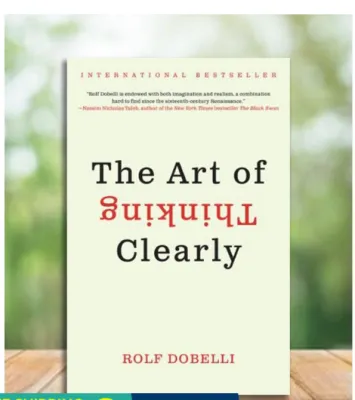
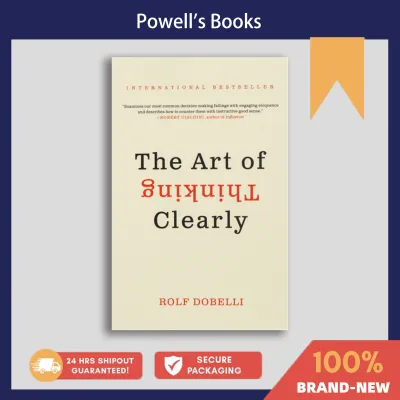
The Art of Thinking Clearly compiles 99 cognitive biases, logical fallacies, and decision-making traps into short, punchy chapters. Dobelli covers essential concepts like confirmation bias, the sunk cost fallacy, and social proof, explaining how these mental errors manifest in daily life. For instance, understanding these biases can help you recognize why you might overspend during online sales or why you might stick to a failing project simply because you have already invested time into it.
This book is highly suited for busy professionals, students, and critical thinkers who want a quick daily audit of their mental habits. Because each chapter is only two to three pages long, it fits perfectly into a fast-paced lifestyle. You can easily read a chapter during a short commute or a quick coffee break, making it an accessible entry point into cognitive psychology.
Products mentioned in this guide
Prices are valid at publication and may change. Please refer to the product page for the latest price.
However, this extreme brevity is also the book’s primary limitation. Readers seeking a deep, academic exploration of behavioral psychology might find the lack of detailed context unsatisfying. It does not offer the comprehensive, research-heavy depth found in foundational texts like Daniel Kahneman’s Thinking, Fast and Slow, from which Dobelli draws significant inspiration.
Before purchasing, it is wise to check local availability and edition variations. Look for authorized paperback or hardcover editions from reputable publishers to ensure you get a complete, high-quality text. Reading sample chapters online or checking detailed reader reviews can help you determine if Dobelli’s direct, sometimes cynical tone aligns with your personal learning style.
How to Choose the Right Self-Help Books for Personal Development
The first step in selecting any self-help book is clearly defining your personal development goals. Rather than buying a book simply because it is trending on social media, ask yourself what specific area of your life you want to improve. Identifying whether you need help with productivity, emotional regulation, or financial literacy will help you narrow down your choices to books that offer relevant solutions.

Next, evaluate the author’s credentials and professional background. Authors with academic degrees in psychology, neuroscience, or behavioral science, or those with decades of documented professional experience, are generally more reliable. Be cautious of self-proclaimed lifestyle gurus who promise instant transformation or guaranteed success without presenting empirical evidence.
Look for books that rely on evidence-based claims rather than pure anecdote. A reputable self-help book will feature a robust bibliography, endnotes, or citations referencing peer-reviewed scientific studies. If an author presents their personal success story as a universal blueprint for everyone, treat their advice with healthy skepticism.
Consider the quality of the translation or language edition if you are reading a book translated from another language. Many popular self-help books are translated from German, French, or Japanese, and a poor translation can obscure important nuances or make the text tedious to read. Reading a sample page can help you assess if the prose is clear, engaging, and easy to comprehend.
Finally, a high-quality self-help book balances theoretical concepts with practical, real-world applications. It should not only explain why a certain behavior occurs but also provide actionable strategies, exercises, or reflection prompts. Look for books that include worksheets or clear action steps you can easily integrate into your daily routine.
Building a Balanced Self-Help Library: Categories to Explore
Building a balanced personal library prevents narrow thinking and supports holistic growth. By exploring different categories of self-help, you can address various aspects of your life—such as cognitive skills, emotional well-being, and career development—ensuring a more comprehensive approach to self-improvement.
Cognitive and Decision-Making Skills
Books in this category focus on mental models, critical thinking, and logical reasoning. They help you understand how your brain processes information, makes decisions, and solves complex problems. Key topics often include behavioral economics, cognitive psychology, and problem-solving frameworks.
When selecting books on cognitive skills, verify if the content is grounded in established psychological science. Check if the author references classic experiments or modern cognitive research. Avoid books that present oversimplified brain hacks without explaining the underlying cognitive mechanisms.
Emotional Intelligence and Habit Building
This category covers behavioral psychology, daily routines, mindfulness, and stress management. These books are designed to help you understand your emotions, build positive habits, and break destructive patterns. Popular themes include atomic habit formation, emotional resilience, and mindfulness practices.
Look for books that offer adaptable strategies that can fit into diverse lifestyles and work environments. In a busy, high-pressure environment, rigid routines are often difficult to maintain. The best habit-building books provide flexible frameworks that allow you to adjust the habits to your unique daily schedule and energy levels.
Financial Literacy and Career Growth
When choosing books on wealth management and professional development, it is crucial to select materials that acknowledge local economic realities or focus on universal financial principles. While some foreign investment strategies may not apply directly to the financial systems in the Philippines, core concepts like budgeting, living below your means, and understanding compound interest remain universally valuable.
Avoid books that promote get-rich-quick schemes, speculative investing, or guaranteed financial freedom. Instead, look for authors who advocate for sustainable, long-term wealth accumulation, career skill acquisition, and practical budgeting techniques. Verify that the career advice is realistic and applicable to your professional field.
Where to Buy and Verify Authentic Books in the Philippines
To ensure you are supporting authors and receiving high-quality prints, purchase your books from authorized physical retailers or official brand stores on major e-commerce platforms. Reputable local bookstores often have physical branches in major cities and official online storefronts where you can safely browse their catalogs.
Counterfeit books and unauthorized reprints are common on online marketplaces, often sold at suspiciously low prices. You can spot these fakes by checking the print quality, paper texture, and binding. Authentic books have crisp, dark text, high-quality paper that resists yellowing, and durable binding that does not fall apart in the humid tropical climate of the Philippines.
Always verify the book’s details, such as the publisher and the ISBN, which should match the official information on the publisher’s website. If an online listing lacks clear photos of the book’s actual pages or has numerous reviews complaining about typos and blurry text, it is highly likely an unauthorized copy.
Compare the prices of different formats to find the best value for your budget. Physical paperbacks in the Philippines typically range from ₱400 to ₱900, while hardcovers can cost upwards of ₱1,200. E-books and audiobooks are often more affordable, do not require physical storage space, and are immune to the humidity and mold that can damage paper books in tropical climates.
If you want to read a book but are on a tight budget, consider utilizing local library resources, university databases, or digital subscription services. Many academic institutions and public libraries offer digital access to a wide range of self-help and educational titles, allowing you to read them legally and for free.
Frequently Asked Questions (FAQ)
How can I tell if a self-help book is based on real science?
To determine if a self-help book is scientifically grounded, look at the back of the book for a comprehensive bibliography, endnotes, or a references section. Authors who base their advice on real science will cite peer-reviewed studies from reputable academic journals in psychology, neuroscience, or sociology.
Be wary of books that rely heavily on personal anecdotes, absolute claims, or a complete lack of nuance. If an author claims their method is the only way to succeed or guarantees immediate results without acknowledging individual differences and systemic factors, it is likely based on pseudoscience rather than empirical evidence.
Are e-books or physical books better for retaining self-help concepts?
Both formats have distinct advantages for knowledge retention. Physical books offer tactile feedback, allowing you to easily flip back and forth, write notes in the margins, and highlight key passages, which can enhance spatial memory of the text. E-books, on the other hand, offer excellent searchability, portability, and the ability to export your highlights directly to a digital note-taking app.
Ultimately, active reading strategies matter far more than the format you choose. To maximize retention, summarize each chapter in your own words, discuss the concepts with others, and actively apply the actionable advice to your daily life. Keeping a dedicated reading journal can help you track your progress and reflect on how the book’s concepts are helping you grow.

Community discussion
Share your experience or ask a question. Comments are reviewed before publication.