
Adam’s Time Chart Book serves as a unique visual anchor for Catholic spiritual reading by transforming abstract historical timelines into a tangible, interconnected map of salvation history. For readers seeking to deepen their devotional life, this resource offers a panoramic view of biblical events, helping to bridge the gap between historical facts and spiritual reflection. By laying out biblical lineages, historical empires, and prophetic eras side-by-side, it allows you to visualize the unfolding of God’s covenant with humanity, making it an excellent companion for structured scripture study and personal meditation.
Using visual aids in spiritual reading is not a modern novelty but a continuation of a rich Christian tradition that engages both the intellect and the imagination. When you can physically trace the lineage from Abraham to the Nativity, the stories of the Old Testament cease to be isolated moral tales and instead reveal themselves as a continuous, divinely ordered narrative. This guide explores how to effectively integrate this classic chronological resource into your Catholic devotional routine, what to look for when choosing an edition, and how to navigate its unique structure.
Core Value: Why Consider Adam's Time Chart Book?
At its core, Adam’s Time Chart Book is a massive, multi-panel chronological timeline that maps out human history from biblical accounts of creation up to the late nineteenth century. Originally designed in the nineteenth century by Sebastian Adams, this chart is famous for its parallel layout, which displays the histories of various ancient civilizations, biblical figures, and world empires simultaneously. For a Catholic reader, the primary appeal of this book lies in its ability to contextualize salvation history, showing how God’s plan unfolded within the actual timeline of human events.
Products mentioned in this guide
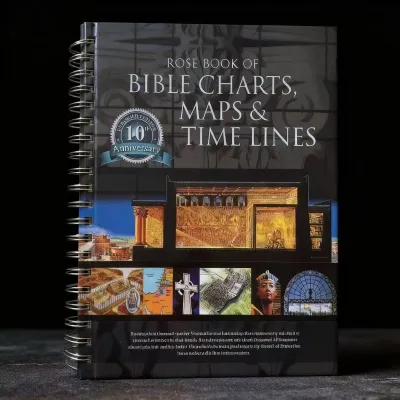
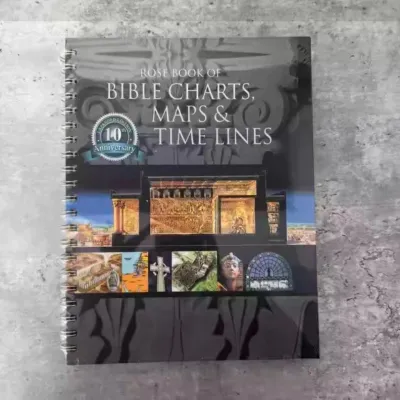

Prices are valid at publication and may change. Please refer to the product page for the latest price.
Using visual aids like chronological charts provides a powerful cognitive anchor for spiritual study. In the Catholic tradition, where the historical reality of the Incarnation is central to the faith, understanding the historical context of scripture is deeply valuable. The chart helps you visualize the vast gaps of time, the rise and fall of empires that oppressed or sheltered the chosen people, and the precise moments when prophets arose to guide Israel. It turns abstract historical data into a vivid landscape, making the historical books of the Bible far more accessible and engaging.
However, this visual format is most effective under specific study conditions. Because the chart is incredibly detailed and often requires a large physical space to unfold, it is best suited for structured, stationary study rather than casual reading on a daily commute. It is an ideal resource when you have a dedicated study space, such as a quiet desk or a dining table, where you can spread out the pages alongside your Bible, notebook, and commentary. Under these conditions, the chart becomes a map that guides your journey through the scriptures.
Content Structure and Learning Approach
To use Adam’s Time Chart Book effectively, it is helpful to understand how it balances visual information with textual explanation. The book is not a narrative history or a theological treatise; rather, it is a graphic representation of time. It uses colored lines, hand-drawn illustrations, and parallel columns to show what was happening in different parts of the world at any given moment. Brief textual annotations, historical notes, and genealogical links are scattered throughout the timeline, providing essential context without overwhelming the visual flow.

This chronological and thematic layout is particularly useful for connecting different parts of Catholic teaching and biblical history. For example, when studying the prophets of the Old Testament, it can be difficult to remember which prophets were contemporaries and which world powers they were addressing. By looking at the vertical columns of the chart, you can instantly see that the Prophet Daniel lived during the Babylonian exile, while Ezra and Nehemiah worked during the subsequent Persian period. This visual stacking helps you connect the historical events of the Old Testament with the theological developments that prepared the world for the coming of Christ.
Because this chart has been printed in various formats and editions over the years, checking the specific edition for content completeness and usability is essential. Some editions are published as giant, hardbound books where the pages fold out like an accordion, allowing you to view the entire timeline as a single, continuous sheet. Other editions are bound as standard books, splitting the chart into individual double-page spreads. While the accordion-style fold-out offers the most seamless visual experience, it requires careful handling. You should also verify if the edition you are considering includes a comprehensive index, as navigating the dense sea of names and dates can be challenging without a reliable reference tool.
Spiritual Application in Daily Catholic Life
Integrating Adam’s Time Chart Book into your daily spiritual routine can bring a fresh perspective to your prayers and scripture study. One practical approach is to use the chart alongside the daily Mass readings or the Liturgy of the Hours. When you encounter a historical figure, a king, or a prophet in the daily readings, take a moment to locate them on the chart. This simple practice helps ground your daily prayer in the historical reality of salvation history, reminding you that the God who acted in history is the same God who acts in your life today.
For those who pray the Rosary, the chart can serve as a beautiful visual aid for meditating on the mysteries, particularly the Joyful and Luminous Mysteries. Tracing the lineage of Jesus through the generations of David, Abraham, and Judah on the chart provides a profound visual representation of the fulfillment of messianic prophecies. It allows you to see the long line of ancestors and historical events that led up to the Annunciation and the Nativity, deepening your appreciation for the patience and precision of divine providence.
Visual mapping also helps deepen your understanding of Catholic tradition by showing the continuity between the Old Covenant and the New Covenant. In Catholic theology, the concept of ‘typology’—how Old Testament events and figures prefigure New Testament realities—is central to interpreting scripture. While the chart itself is a historical tool, seeing the physical progression from the patriarchs to the prophets, and finally to Christ and the early Church, helps solidify this theological concept. It makes the grand narrative of salvation history visible and tangible.
However, it is important to recognize the limitations of this resource. Adam’s Time Chart Book is a historical and chronological map, not a theological commentary. It does not explain the spiritual meaning of scripture, the dogmatic teachings of the Church, or the sacramental life. To avoid a purely academic or historical approach to your faith, you must pair the chart with supplementary texts. Essential companions include the Catechism of the Catholic Church, a reliable Catholic study Bible, and spiritual commentaries from the Church Fathers or trusted Catholic theologians. These resources ensure that your historical study always feeds back into a deeper, more contemplative relationship with God.
Target Audience: Is This Book Right for You?
Determining whether Adam’s Time Chart Book aligns with your spiritual needs depends largely on your preferred learning style and study goals. This resource is highly recommended for visual learners who find it easier to retain information when it is presented graphically rather than through dense blocks of text. It is also an invaluable tool for catechists, parish Bible study leaders, and Catholic educators who want to provide their students with a clear, engaging overview of biblical history. Homeschooling parents will find it to be an excellent centerpiece for history and religious education lessons.
Conversely, if your spiritual reading preferences lean toward deep, meditative, text-heavy theological treatises, this chart may not be the right fit. Readers who prefer the contemplative writings of saints like Saint Therese of Lisieux or the detailed theological arguments of Saint Thomas Aquinas may find the information-dense, date-focused layout of the chart to be distracting rather than spiritually enriching. Similarly, if your devotional style is purely focused on quiet, unstructured prayer, the busy pages of the chart might feel more like an academic exercise than a spiritual aid.
To fully benefit from the chart, a basic level of prerequisite knowledge is helpful. While you do not need a degree in theology, having a general familiarity with the books of the Bible and the major eras of biblical history will prevent you from feeling overwhelmed by the sheer volume of information. The chart is best approached not as a book to be read from cover to cover, but as a reference tool to be consulted slowly and systematically over time. A spirit of curiosity and a willingness to study the details patiently are key to unlocking its value.
Pre-Purchase Verification Checklist
Before purchasing Adam’s Time Chart Book from an online marketplace or a local bookstore, it is important to run through a verification checklist to ensure you select the right version for your needs. First, verify the publisher, edition year, and language. Because the original chart was created in the nineteenth century from a specific historical perspective, some modern editions may include supplementary notes, updates, or corrections. Catholic readers should look for editions that focus on historical accuracy and, where possible, verify that any added commentary or historical summaries are compatible with Catholic historical understanding.
Second, carefully consider the physical specifications of the book, especially in relation to your local environment. In tropical climates like the Philippines, where high humidity can cause paper to warp, mold, or deteriorate over time, the physical quality of the book is a crucial consideration. If you are purchasing a large-format, fold-out accordion edition, look for heavy-duty paper, sturdy binding, and a protective slipcase to shield the pages from moisture and dust. If you choose a standard bound edition, ensure the binding allows the book to lay flat on your study table so that details near the center crease are easily readable.
Finally, confirm the authenticity of the seller and the pricing when shopping on e-commerce platforms. Prices for this resource can vary widely depending on the size, binding quality, and whether it is a standard paperback or a premium collector’s edition, with prices typically listed in ₱. Be sure to read customer reviews regarding the packaging and shipping quality, as large-format books with delicate fold-out pages are susceptible to damage during transit. Checking the seller’s return and exchange policies will give you peace of mind in case the book arrives with bent corners or torn pages.
Frequently Asked Questions (FAQ)
Can Adam's Time Chart Book be used for parish catechism classes?
Yes, the book serves as an excellent visual teaching aid for parish catechism classes, youth ministry, and adult faith formation. Its large-scale chronological layout helps students of all ages grasp the timeline of salvation history in a way that standard textbooks cannot. However, because the chart is primarily a historical and chronological tool rather than a doctrinal guide, catechists must cross-reference all lessons with official Catholic teaching materials, such as the Catechism of the Catholic Church. Using the chart to establish the historical context while using the Catechism to explain the theological and doctrinal truths ensures a well-rounded and doctrinally sound lesson.
Are there digital or e-book versions available for tablets?
While digital versions or e-book formats of Adam’s Time Chart Book may be available on various online platforms, readers should exercise caution before purchasing them. The original chart is incredibly detailed, featuring tiny text, intricate illustrations, and expansive parallel timelines. When compressed into standard e-book formats or viewed on small tablet screens, these details can become difficult to read or navigate. If you prefer a digital option, look for high-resolution PDF formats or dedicated interactive applications designed specifically for large-screen tablets. Even then, many readers find that the physical, printed edition remains the most practical and satisfying way to experience the full scale and detail of the chart.
Community discussion
Share your experience or ask a question. Comments are reviewed before publication.