
Learning to read and analyze people is one of the most practical personal development goals you can pursue. In the Philippines, where social harmony, indirect communication, and interpersonal sensitivity shape daily life, understanding the unspoken signals of those around you is incredibly valuable. Whether you are navigating a high-stakes business meeting in a Manila boardroom, collaborating with a diverse team in a Cebu tech hub, or simply trying to build stronger personal relationships, the ability to decode human behavior can transform your interactions.
The local book market offers a vast array of self-help titles dedicated to body language, psychological profiling, and behavioral observation. However, finding the right literature requires looking past sensationalist titles and understanding which methodologies actually align with your personal and professional goals. By focusing on books that balance scientific credibility with practical application, you can build a reliable toolkit for interpreting human actions without falling into the trap of over-analysis or snap judgments.
How to Choose the Right Book for Analyzing Human Behavior
Selecting the right book starts with defining your specific learning objectives. The literature on human behavior is broad, ranging from rigorous academic texts to highly simplified guides designed for quick reading. If your goal is to master the physical mechanics of nonverbal communication, you will want books that focus heavily on kinesics and micro-expressions. Conversely, if you want to understand why people make certain decisions or how their core personalities are structured, you should look toward books covering psychological profiling and behavioral economics.
Products mentioned in this guide




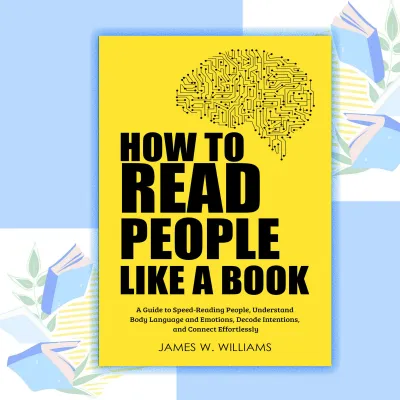

Prices are valid at publication and may change. Please refer to the product page for the latest price.
It is also essential to match the book’s focus with your primary daily context. A professional negotiator or sales executive will require a very different set of tools than someone looking to improve their empathy and emotional intelligence within family dynamics. For professional settings, books that emphasize baseline establishment, stress indicators, and conversational control are highly beneficial. For personal relationships, literature that explores attachment styles, emotional intelligence, and active listening will yield much more meaningful results.
Before purchasing any self-help book, take a close look at the author’s background and the foundation of their work. Authors who have backgrounds in academic psychology, federal law enforcement, or behavioral research tend to offer more reliable, evidence-based frameworks. Be cautious of books that rely solely on personal anecdotes or make sweeping, universal claims about human behavior without citing peer-reviewed studies. A credible book will always acknowledge the limitations of its methods and remind you that human behavior is deeply influenced by context, culture, and individual differences.
Essential Book Categories for Reading People and Body Language
To build a comprehensive understanding of human behavior, it is helpful to view the subject through three distinct lenses. Rather than relying on a single methodology, the most effective readers of behavior combine nonverbal communication, psychological profiling, and behavioral observation. By understanding how these three pillars intersect, you can develop a more holistic and accurate approach to analyzing the people you encounter every day.

Decoding Nonverbal Cues and Body Language
Books dedicated to nonverbal communication focus on the physical signals that people send, often unconsciously. These guides teach you how to observe posture, hand gestures, facial expressions, eye contact, and spatial distance. A high-quality book in this category will emphasize the concept of establishing a baseline—understanding how a person behaves under normal, relaxed conditions—before attempting to interpret specific movements.
One of the most critical lessons in nonverbal analysis is the importance of cluster analysis. Reliable books will warn you against interpreting a single gesture, such as crossed arms, as an absolute sign of defensiveness or discomfort. In a heavily air-conditioned office, crossed arms might simply mean someone is cold. Instead, you must learn to look for groups of matching cues, such as crossed arms combined with a backward lean and a tightened jaw, to draw more accurate conclusions.
When shopping for books in this category, look for editions that feature clear visual aids. High-resolution photographs, detailed line drawings, or anatomical diagrams are incredibly helpful for understanding the subtle muscle movements associated with micro-expressions. Without these visual references, trying to learn body language through text alone can be highly challenging and may lead to misinterpretations in real-world practice.
Understanding Psychological Profiling and Personality Traits
While body language books help you read immediate physical reactions, psychological profiling literature helps you understand the long-term internal frameworks that drive those reactions. These books explore established personality models, such as the Big Five personality traits, the Myers-Briggs Type Indicator, or the Enneagram. By learning these frameworks, you can categorize behavioral tendencies and better predict how different personality types might react to stress, conflict, or collaboration.
It is important to distinguish between clinical diagnostic manuals and accessible self-help profiling guides. Clinical resources are designed for licensed professionals to diagnose mental health conditions, whereas self-help profiling books are meant to help laypeople understand general behavioral patterns and communication preferences. Your focus should remain on the latter, using these frameworks as tools for empathy and improved communication rather than diagnostic instruments.
A major warning when reading profiling literature is to avoid using these tools to make absolute, rigid judgments about others. No individual fits perfectly into a single psychological box, and human personality is dynamic. Use profiling books to understand general tendencies and communication styles, keeping in mind that environmental factors, personal history, and cultural context play massive roles in how those traits manifest in daily life.
Observing Behavioral Patterns and Social Dynamics
This category of literature moves beyond individual gestures and personality traits to look at how people interact within groups and over extended periods. Books on behavioral observation analyze conversational patterns, linguistic choices, deception indicators, and social hierarchies. They teach you how to listen not just to what people say, but how they say it, including changes in pitch, speech rate, and word choice.
Unlike immediate body language cues, behavioral observation requires longitudinal tracking. This means observing a person’s habits, decision-making patterns, and social interactions over weeks or months rather than making snap judgments based on a single meeting. Books in this genre help you identify behavioral trends, allowing you to predict future actions based on past consistency rather than temporary emotional states.
Reading this type of literature also requires a strong understanding of ethical boundaries. It can be tempting to constantly analyze your friends, family members, or colleagues, but doing so without their consent can lead to severe social friction and a breakdown of trust. The best books on social dynamics emphasize using these skills discreetly to foster smoother communication, resolve conflicts, and build healthier relationships, rather than trying to manipulate or constantly audit the people around you.
What to Check Before Buying Self-Help Books in the Philippines
When you are ready to purchase books on analyzing people, navigating the local retail landscape requires some careful checking. Whether you are browsing physical shelves in major bookstores or searching through online marketplaces, verifying the specific details of the book is crucial to ensuring you get a high-quality, legitimate copy that meets your learning needs.
First, always check for the latest revised editions of the book you are interested in. The fields of psychology and behavioral science are constantly evolving, with new research frequently updating or even debunking older theories. An older edition of a body language book might rely on outdated assumptions about lie detection or micro-expressions that have since been disproven. Opting for the most recent revision ensures you are studying the most accurate and scientifically validated information available.
Second, pay close attention to language options and translation quality. While the vast majority of self-help books on this topic are written in English—which is widely read and understood across the Philippines—some international titles may have local translations. If you prefer reading in a local language, or if you are purchasing a translated version of a foreign-language psychology book, try to read a sample chapter first. Poor translations can obscure subtle psychological concepts or misinterpret technical terms, making the material much harder to apply.
Third, if you are purchasing from online marketplaces or second-hand bookstores, verify the physical condition and authenticity of the book. The local market has seen a rise in low-quality, unauthorized reprints that often feature blurry text, missing pages, or poorly printed diagrams. Since books on body language rely heavily on visual illustrations and photographs to explain micro-expressions, a low-resolution reprint can render these crucial visual aids completely useless. Always check seller reviews, ask for actual photos of the book’s pages, and confirm the total page count against official publisher listings before finalizing your purchase.
Finally, compare different formats based on how you plan to study. If you are focusing on conceptual psychology or behavioral patterns, an e-book or even an audiobook can be highly convenient for commuting or listening during your daily routine. However, if you are studying physical body language and micro-expressions, a high-quality physical paperback or hardback is often the superior choice. The ability to easily flip back and forth between text and detailed diagrams, make physical annotations, and view high-resolution printed images makes the learning process significantly more effective.
How to Practice and Apply People-Analysis Skills Safely
Acquiring theoretical knowledge from books is only the first step; the real challenge lies in practicing these skills in your daily life without causing discomfort or social friction. In the Philippines, where interpersonal harmony and saving face are highly valued, practicing behavioral analysis must be done with extreme discretion and respect.
Start practicing in low-stakes, public environments where you are not actively interacting with the subjects of your observation. Local coffee shops, shopping malls, or public transit stations are excellent places to quietly observe human behavior. Practice identifying baselines: look at how people walk, how they hold their phones, or how they interact with service staff. Try to identify clusters of behavior that indicate relaxation, hurry, or mild frustration, without making any assumptions about their personal lives or characters.
As you transition to practicing in your personal and professional circles, make it a habit to look for clusters of behavior rather than isolated cues. If a colleague in a meeting is tapping their foot, do not immediately assume they are impatient or angry with you. Look for other supporting cues, such as their facial expression, their vocal tone, and the overall context of the meeting. Always consider external factors first—perhaps the room is cold, or they simply had too much coffee before the session.
Be highly aware of your own cognitive biases, particularly the fundamental attribution error. This is the tendency to attribute other people’s actions to their character while attributing your own actions to external circumstances. For example, if someone cuts you off in traffic, it is easy to assume they are naturally rude, rather than considering they might be rushing to an emergency. Keeping this bias in check will prevent you from making unfair or inaccurate judgments about the people you analyze.
Ultimately, the most important skill in behavioral analysis is knowing when to stop analyzing and simply communicate directly. Reading body language and behavioral patterns can give you valuable clues, but it is not mind reading. If you sense that a friend or colleague is upset or holding back their thoughts, do not rely solely on your analysis to solve the issue. Use your observations as a cue to ask open-ended, supportive questions and listen to their verbal responses with genuine empathy. Direct, honest communication remains the most reliable way to build trust and resolve misunderstandings.
Frequently Asked Questions (FAQ)
Can reading body language books guarantee I will spot a lie?
No book can guarantee absolute accuracy in lie detection. While popular media often portrays body language analysis as a foolproof way to spot deception, scientific research shows that there is no single, universal cue that definitively indicates lying. Books on this topic teach you how to identify stress indicators, cognitive load, and deviations from a person’s established baseline behavior. These signals suggest discomfort or anxiety, but they do not prove dishonesty. Relying on isolated cues to accuse someone of lying carries a high risk of false positives, making direct communication and factual verification far more reliable than behavioral analysis alone.
Are e-books as effective as physical books for learning body language?
The effectiveness of the format depends heavily on the book’s content. For books that focus on conceptual psychology, behavioral patterns, or social dynamics, e-books are highly effective and convenient. However, for books that focus on body language and micro-expressions, physical books are generally superior. E-readers can sometimes struggle with displaying high-resolution photographs or detailed anatomical diagrams, and zooming in on small screens can disrupt your reading flow. If you do choose an e-book format for a visual guide, ensure you are using a device with a high-resolution color screen to properly observe the subtle facial muscle movements illustrated in the text.
Community discussion
Share your experience or ask a question. Comments are reviewed before publication.