
Navigating a career in the modern Philippine business landscape requires more than just technical competence. As professionals face evolving hybrid work models, rapid digital transformation, and the unique cultural dynamics of the local workplace, continuous self-improvement becomes a necessity. To achieve sustainable career growth, developing a robust personal toolkit through targeted reading is one of the most effective strategies available.
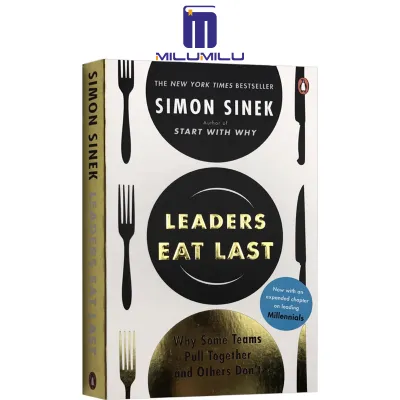
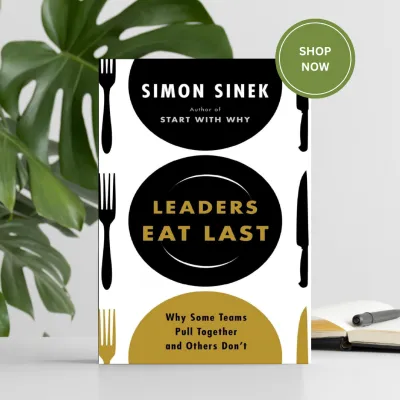
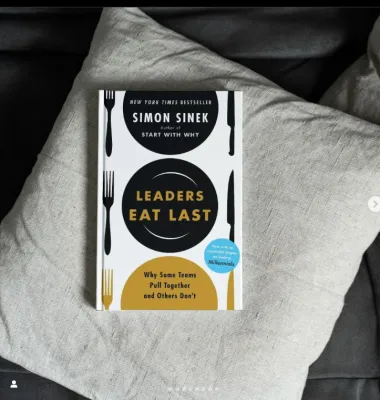
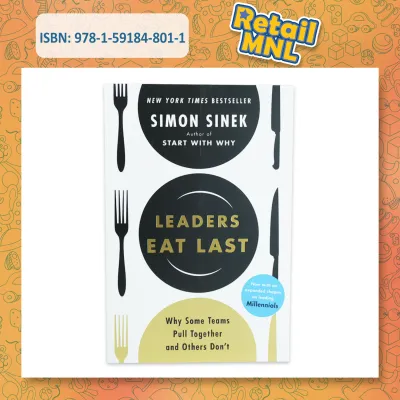
For Filipino professionals, the ideal reading list balances internal mindset shifts with actionable leadership strategies. Foundational texts like Simon Sinek’s Leaders Eat Last book provide critical frameworks for building trust and psychological safety, which are essential for navigating both corporate hierarchies and entrepreneurial ventures. By pairing global leadership philosophies with practical personal development guides, professionals can cultivate the resilience, adaptability, and emotional intelligence needed to thrive.
How to Select Books That Fit Your Career Stage and Local Context
Choosing the right professional literature requires a clear understanding of your current career stage and immediate growth objectives. A common pitfall is selecting a book based solely on its bestseller status without assessing whether its core lessons address your daily challenges. For individual contributors, freelancers, and early-career professionals, the primary focus should be on personal productivity, habit formation, and cognitive resilience. At this stage, books that offer tactical frameworks for time management and self-discipline provide the highest immediate return on investment.
Products mentioned in this guide
Prices are valid at publication and may change. Please refer to the product page for the latest price.
Conversely, as you transition into management, team leadership, or executive roles, your reading focus must shift from individual execution to organizational dynamics. At this level, the most valuable books are those that dissect empathy, team cohesion, psychological safety, and cultural development. The challenge for a manager is not how to work harder, but how to create an environment where others can perform at their best.
Furthermore, Filipino professionals must evaluate global business concepts through the lens of local cultural values. Western leadership models often assume a highly individualistic, low-context communication style. In contrast, the Philippine workplace is deeply relational, characterized by high-context communication and foundational values like pakikisama (camaraderie) and bayanihan (communal unity). A leadership strategy that ignores these cultural nuances may be perceived as overly aggressive or transactional. The goal is to find books whose principles can be adapted to respect local hierarchies while still promoting accountability and innovation.
Finally, always verify the publication date and edition of any business book before purchasing. The rapid shift toward hybrid and remote work environments has rendered some older case studies obsolete. Look for updated editions that address digital collaboration, virtual team management, and modern corporate challenges to ensure the insights remain actionable in today’s market.
Essential Leadership and Self-Help Books for Professional Growth
The following curated selection represents foundational and contemporary texts that address both internal mindset shifts and external leadership behaviors. These books offer structured frameworks that have helped professionals worldwide navigate career transitions, manage complex teams, and establish highly productive daily routines.

Leaders Eat Last by Simon Sinek
Simon Sinek’s Leaders Eat Last explores the biological and psychological underpinnings of high-performing teams, centered on what Sinek calls the “Circle of Safety.” The core premise is that a leader’s primary responsibility is to shield their team from external threats—such as market volatility, organizational instability, or hyper-competition—by fostering an internal environment of absolute trust and security. Sinek argues that when employees feel safe within their organization, they naturally pool their resources, collaborate effectively, and dedicate their energy to advancing the company’s mission rather than self-preservation.
This philosophy resonates deeply with Filipino professionals, who naturally value close-knit, supportive work environments. In the Philippines, the traditional corporate culture often leans hierarchical, which can sometimes breed anxiety or a reluctance to speak up. By applying the “Circle of Safety,” local managers can transform their teams, aligning Sinek’s concepts with the spirit of bayanihan. When team members know their leader genuinely cares for their well-being, pakikisama evolves from mere social politeness into deep, cooperative synergy.
- Ideal Reader: This book is highly recommended for mid-level to senior managers, team leads, project coordinators, and business founders who want to improve employee retention, boost team morale, and transition away from transactional management styles.
- Limitations: Sinek relies heavily on military history, evolutionary biology, and large-scale corporate case studies. These examples can feel distant or difficult to scale down for professionals working in small-to-medium enterprises (SMEs), local startups, or highly fluid freelance environments.
- What to Verify Before Buying: Ensure you are purchasing the expanded edition, which includes additional case studies and a practical guide on leading in a multi-generational workplace. Check the publisher details to verify that the edition matches your preferred reading format, as page layouts and font sizes can vary significantly between US and UK printings.
Atomic Habits by James Clear
James Clear’s Atomic Habits shifts the focus of personal development from ambitious goal-setting to the compounding power of tiny, daily behaviors. Clear argues that we do not rise to the level of our goals; we fall to the level of our systems. By implementing concepts such as habit stacking, environmental design, and identity-based habits, individuals can make small, 1% improvements that accumulate into massive professional breakthroughs over time.
For Filipino professionals, this system-based approach is incredibly practical. Navigating daily challenges in the Philippines—such as long, exhausting commutes in metropolitan areas, managing heavy workloads, or adapting to hybrid work schedules—requires a high level of personal structure. Setting up small, friction-free habits can help remote workers maintain clear boundaries between personal life and work, while helping office-bound professionals optimize their energy levels throughout a demanding day.
- Ideal Reader: This book is essential for individual contributors, remote freelancers, creative professionals, and newly promoted managers who need highly actionable, step-by-step frameworks for time management, personal productivity, and breaking self-limiting routines.
- Limitations: Atomic Habits is highly tactical and strictly individual-focused. It does not address systemic workplace issues, toxic corporate cultures, or the complex interpersonal dynamics involved in leading large, diverse teams.
- What to Verify Before Buying: Because of its massive popularity, counterfeit copies of this book are common. Verify that you are purchasing an authorized printing by checking the paper quality, printing alignment, and the publisher's official holographic stickers if available.
Dare to Lead by Brené Brown
In Dare to Lead, Brené Brown presents a research-backed framework for courageous leadership, defining a leader as anyone who takes responsibility for finding the potential in people and processes. The book outlines four teachable skill sets that require vulnerability, trust-building, and operationalizing core values. Brown challenges the concept of “armored leadership”—which relies on perfectionism, control, and compliance—and advocates for “daring leadership,” which embraces vulnerability, curiosity, and tough but necessary conversations.
Implementing these concepts in the Philippine workplace requires careful cultural navigation. The fear of losing face, or hiya, often prevents local professionals from giving direct, constructive feedback or admitting mistakes openly. High-context communication styles can lead to passive-aggressive behaviors or unresolved conflicts. Brown’s work provides a vocabulary for addressing these issues gently, showing how leaders can foster psychological safety so that team members feel safe to voice creative ideas or point out operational flaws without the fear of social exclusion.
- Ideal Reader: This text is ideal for human resource professionals, organizational development specialists, and executives who are actively working to build resilient, innovative, and highly collaborative team cultures.
- Limitations: The deeply emotional, introspective work required by Brown’s framework can be exceptionally difficult to implement in highly traditional, rigid, or strictly hierarchical corporate structures where top-down buy-in is entirely absent.
- What to Verify Before Buying: Check whether your copy includes the supplementary workbook references or access to online assessment tools designed to help you measure your team's leadership courage.
Mindset: The New Psychology of Success by Carol S. Dweck
Carol S. Dweck’s Mindset introduces the foundational psychological concept of the “fixed mindset” versus the “growth mindset.” Individuals with a fixed mindset believe that their intelligence, talents, and abilities are static traits that cannot be changed, leading them to avoid challenges and fear failure. Conversely, those with a growth mindset view challenges as opportunities to learn, believing that dedication, hard work, and feedback can develop their capabilities over time.
This framework is highly relevant for Filipino professionals navigating a rapidly evolving economic landscape. With digital transformation, the rise of artificial intelligence, and shifting global market demands, upskilling has become a continuous requirement. A growth mindset enables professionals to view industry disruptions not as threats to their career stability, but as invitations to acquire new skills, pivot roles, and overcome the imposter syndrome that often accompanies rapid career advancement.
- Ideal Reader: This book is highly beneficial for professionals at any career stage, particularly those experiencing career plateaus, burnout, or transitioning into entirely new industries or technical roles.
- Limitations: The concept of the growth mindset is frequently oversimplified in corporate training programs, sometimes leading to a "false growth mindset" where effort is praised without focusing on actual learning, strategy, or outcomes.
- What to Verify Before Buying: Ensure you purchase the updated edition, which features a substantial new chapter by Dweck addressing the "false growth mindset" and clarifying how to apply the principles correctly within organizational settings.
How to Source Authentic Editions and Formats in the Philippines
Acquiring legitimate, high-quality copies of these essential books requires careful sourcing, as counterfeit books are highly prevalent on unauthorized online marketplaces. To guarantee you are purchasing authentic, complete editions, always buy from established, authorized local retailers. Major physical bookstores like Fully Booked and National Book Store, along with their official online storefronts on major ecommerce platforms, are the safest options. Purchasing from unauthorized third-party sellers often results in poorly bound copies with missing pages, illegible print, and low-grade paper that degrades quickly.
Before completing a purchase, take the time to verify specific product details. Check the International Standard Book Number (ISBN), the publication year, and the specific edition listed by the seller. Publishers frequently update business books with new introductions, updated case studies, or revised frameworks. Do not rely solely on the cover art displayed in online listings, as cover designs can vary by region (such as US versus UK editions) and do not guarantee the internal content is the latest version.
When deciding between physical, e-book, and audiobook formats, consider both your lifestyle and technical requirements. Physical books are excellent for deep study, highlighting, and marginalia, but they require physical space and care. Digital formats offer unparalleled portability and searchability. If you choose e-books or audiobooks, verify device compatibility and file formats (such as DRM-free EPUBs versus proprietary formats like Kindle or Audible) before purchasing. Additionally, check for regional restrictions on global digital platforms, as certain titles or audiobook narrations may not be licensed for download in the Philippines.
For those who prefer physical books, preserving your collection in the humid Philippine climate requires active maintenance. High humidity levels can easily lead to foxing (brown spots on pages), warping, and mold growth. Store your books in well-ventilated rooms, ideally away from damp exterior walls and direct sunlight, which can fade covers and dry out binding glue. Utilizing silica gel packets on your bookshelves or investing in a small dehumidifier for your study area can significantly extend the lifespan of your personal library.
Frequently Asked Questions (FAQ)
Are audiobooks and e-books as effective as physical copies for deep learning?
The effectiveness of a book format depends entirely on your learning style and how you engage with the content. Audiobooks are highly convenient for maximizing unproductive time, such as during long daily commutes or while performing routine household tasks, but they can lead to passive listening. To retain complex frameworks, you may need to pair audiobooks with active note-taking or digital bookmarking. E-books offer excellent searchability and portability, allowing you to carry an entire library on a single device, though they lack the tactile feedback that some readers find helpful for memory retention. When purchasing digital formats, always verify that you are buying the unabridged version to ensure you do not miss critical chapters, charts, or appendices.
How can I adapt Western leadership frameworks to traditional Philippine corporate cultures?
Adapting global leadership concepts to a traditional Philippine corporate culture requires a gradual, culturally sensitive approach rather than a rigid, overnight implementation. Start by identifying small, low-risk areas where you can introduce change. For example, instead of demanding radical transparency in large meetings—which can trigger hiya (shame) and cause team members to shut down—introduce private, structured feedback loops during one-on-one sessions. Frame new processes around the concept of bayanihan (collective cooperation) and pakikisama (mutual respect), emphasizing how a supportive work environment benefits the entire team’s harmony and output. By respecting existing organizational hierarchies while gently demonstrating the value of modern practices, you can build trust and secure the necessary buy-in for broader cultural shifts.
Community discussion
Share your experience or ask a question. Comments are reviewed before publication.