
Finding the right college textbooks in the Philippines requires understanding the distinct roles of commercial academic publishers and prestigious university presses. While international editions are common in STEM fields, local publishers provide the essential context, regulatory frameworks, and localized research necessary for humanities, social sciences, professional licensure, and national history courses. Identifying the correct editions ensures academic success and compliance with course requirements. Navigating this landscape effectively means knowing where to look, how to verify your syllabus, and how to distinguish authentic academic materials from low-quality counterfeits.
How to Identify Required Textbooks for Your Courses
Before spending your budget on any academic materials, always cross-reference your official course syllabus. Professors typically distribute this document during the first week of classes, detailing which readings are mandatory and which are merely recommended or supplementary. Relying solely on preliminary booklists posted online or verbal advice from older students can lead to purchasing books that are no longer used in the current curriculum.
Make it a habit to record the exact International Standard Book Number (ISBN), publication year, and edition number. In the Philippines, local adaptations of international science or business texts are frequently updated to align with local curricula, meaning a minor difference in edition can result in mismatched chapters or missing exercises. A textbook updated for the current year might include revised local case studies or updated tax tables that are completely absent from previous prints.
Products mentioned in this guide
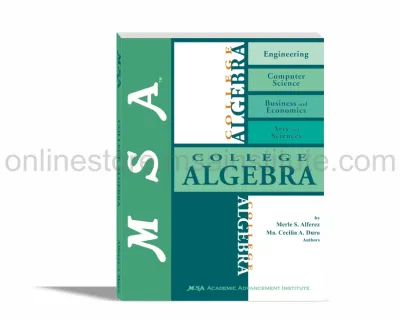
59 Lazada user ratings
Clear explanations and examples, Well-organized and structured, Useful for arts and sciences students, Great resource for college students, …Read full reviewShow less
Clear explanations and examples, Well-organized and structured, Useful for arts and sciences students, Great resource for college students, Comprehensive and easy to understand,
Great resource for college students, A must-have for business and economics students, Comprehensive and easy to understand,
its well packaged. in good condition. no issue to the book and its pages. responsive din si seller. thank you. stay safe
May Key to correction ito, hindi lang sa libro nakalagay pero may sagot silang ibibigay sayo gamit ang email.
i don't like the book... I LOVE IT! sana ma help ako nito na mag improve math ko! 😭
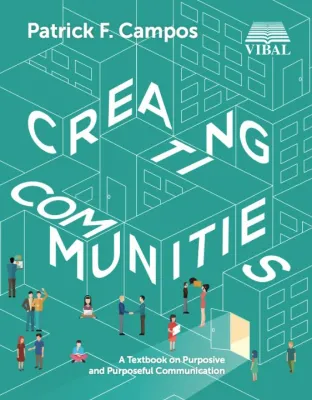
1 Lazada user ratings
The content goes beyond basic grammar and rhetoric to include a wide range of essential 21st-century communication skills, such as: Academic…Read full reviewShow less
The content goes beyond basic grammar and rhetoric to include a wide range of essential 21st-century communication skills, such as: Academic Research and Writing: Guiding students through structured essay writing and bibliography preparation. Public Speaking: Addressing the principles of effective presentation. Professional Communication: Offering practical guidance on preparing resumes, business letters, proposals, and reports. Cross-Cultural and Ethical Communication: Emphasizing relational and ethical considerations when communicating across different groups.
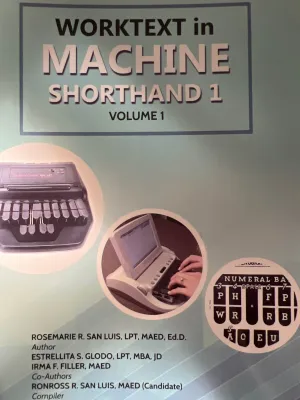
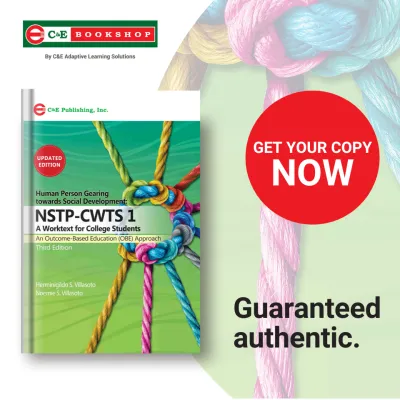
Prices are valid at publication and may change. Please refer to the product page for the latest price.
Avoid the temptation to purchase books prematurely during the enrollment period. Waiting until the first week of classes allows you to confirm with your instructor whether a physical copy is strictly required, if a digital alternative is acceptable, or if the reading list has been updated at the last minute. This waiting period also gives you time to coordinate with classmates for potential group discounts or book-sharing arrangements.
Major Philippine Academic Publishers and Their Core Subjects
The academic publishing landscape in the Philippines is broadly divided into commercial educational giants and specialized university presses. While commercial brands focus heavily on standardized curricula and professional board exam preparation, university presses serve as the primary source for deep research, local literature, and critical social analyses. Understanding this division helps you anticipate which publishers will dominate your semester reading list based on your major.

Commercial Academic Publishers
Commercial publishers like Rex Book Store and C&E Publishing are staples of the Philippine higher education system. These institutions specialize in producing textbooks tailored for professional courses, including nursing, engineering, accountancy, law, and teacher education. Their publications are designed to guide students through dense technical concepts while keeping practical applications in mind.
Their textbooks are specifically structured to align with the syllabi of Philippine professional licensure examinations. For instance, an accounting or engineering textbook from a local commercial publisher will incorporate local tax laws, building codes, and regulatory standards that international volumes completely omit. This alignment makes them indispensable tools not just for passing semester exams, but also for long-term board exam preparation.
When purchasing these commercial editions, always verify if your course requires supplementary digital access codes or specific local case studies. Many modern textbooks bundle online learning portals or interactive quizzes that professors use for grading, making a brand-new copy or a verified digital license necessary for full participation. Buying a used book without checking this requirement might force you to purchase an expensive standalone access code later.
University Presses
For courses in the humanities, social sciences, and Philippine studies, university presses are the primary authorities. Institutions such as the University of the Philippines (UP) Press, the Ateneo de Manila University Press, and the UST Publishing House publish peer-reviewed research, local literature, history, and sociology. These presses prioritize academic rigor and cultural preservation over mass-market commercial appeal.
These presses focus on preserving and analyzing the unique cultural, historical, and social landscape of the Philippines. Textbooks and readers from these publishers are essential for general education courses like Philippine History, Contemporary World, and Philippine Literature, where localized context is indispensable. They provide students with critical perspectives on local governance, indigenous cultures, and regional development.
Professors frequently mandate specific titles from university presses because they offer critical perspectives on local issues. These texts encourage students to engage with domestic realities, utilizing research methodologies and case studies developed by local scholars specifically for the Philippine setting. Reading these works helps develop the analytical skills required to address complex societal challenges within the country.
Where to Buy Authentic College Textbooks in the Philippines
Purchasing authentic textbooks is crucial for both academic integrity and physical durability. The most reliable sources are official campus bookstores and the physical or online storefronts operated directly by the publishers themselves, which often offer student discounts upon presentation of a valid school ID. Buying directly from the source guarantees that you receive the correct, complete edition of the text.
If you choose to shop on general ecommerce platforms or online marketplaces, exercise extreme caution. Only purchase from official mall stores or authorized distributors, and carefully read seller reviews to ensure you are not buying unauthorized reprints or counterfeit copies. Many unauthorized sellers use misleading product titles or low-quality stock images to hide the fact that they are selling pirated materials.
Pirated textbooks are highly prevalent online, but they carry significant physical and textual risks. Counterfeit books often feature poor binding that falls apart quickly in high tropical humidity, blurred or smudged text that causes eye strain, and critical errors such as missing pages, misaligned diagrams, or omitted chapters. These physical defects can severely disrupt your study schedule and make the book impossible to resell later.
Inspecting product photos and descriptions can help you identify these fakes. Authentic books typically feature crisp printing, high-quality paper stock, and official publisher holograms or security stickers on the cover, whereas pirated versions often use cheap newsprint and show signs of manual scanning. Investing in an authentic copy ensures that your study materials remain intact throughout the semester and beyond.
Strategies for Managing Textbook Costs and Alternatives
College textbooks can represent a significant financial burden, but several legitimate strategies can help you manage these expenses. Sourcing second-hand books from upperclassmen, student council book sales, or dedicated campus social media groups is an excellent way to find authentic copies at a fraction of the retail price. Many students are eager to sell their previous semester’s books to help fund their upcoming course requirements.
Before buying, check your university library’s reserve section. Most academic libraries keep several copies of required textbooks on hand for short-term physical borrowing or provide access to digital lending platforms and open educational resources (OER) that cover the same syllabus topics. Utilizing these library resources can save you thousands of ₱ over the course of your college career.
For heavy reference books that are only used occasionally, consider forming a study group to share the cost and access with trusted peers. Alternatively, look into legal digital editions or e-textbooks offered directly by publishers, which are often more affordable than printed volumes and eliminate the need to carry heavy books to class. Digital editions also offer convenient search functions that can streamline your study sessions.
Always ensure that any digital alternative you use complies with copyright laws and is officially permitted by your instructor. Engaging with legal channels not only supports the local authors and academic researchers who write these books but also guarantees that your study materials are complete and accurate. Avoiding pirated digital files protects your devices from malware and ensures a distraction-free learning experience.
Frequently Asked Questions (FAQ)
Can I use an older edition of a required textbook?
Whether you can use an older edition depends heavily on the subject matter and your professor’s syllabus. In rapidly changing fields like law, taxation, and medicine, older editions may contain outdated regulations or obsolete clinical guidelines that could negatively affect your grades or exam preparation. Even in more stable subjects, older editions often feature different page numbering, revised chapter questions, or missing supplementary readings. Always consult your professor and obtain explicit written permission before relying on an older version of a textbook.
How do I spot pirated textbooks sold online?
Pirated textbooks on online marketplaces are usually marked by unusually low prices that seem too good to be true. Sellers of counterfeit books often use stock photos instead of actual product pictures, or their photos may reveal thin, translucent paper where the text from the reverse side bleeds through. Additionally, check for the presence of official publisher security features, such as holographic stickers or unique scratch-off access codes. Using pirated texts carries academic risks, as missing pages or printing errors can cause you to miss critical study material or submit incorrect assignments.
Community discussion
Share your experience or ask a question. Comments are reviewed before publication.