
Deciding between the English and Tagalog editions of The Purpose Driven Life by Rick Warren depends on how you prefer to engage with personal growth and spiritual reflection. While the core message of this 40-day spiritual journey remains unchanged across both versions, the language you choose acts as the primary lens for your daily contemplation. For readers who naturally think, study, and pray in English, the original text provides direct access to the author’s exact vocabulary, theological nuances, and stylistic choices. Conversely, for those who find that emotional and spiritual concepts resonate more deeply when expressed in their native tongue, the Tagalog translation offers a highly personal, accessible, and culturally familiar reading experience.
Selecting the right edition is not merely a matter of translation accuracy; it is about minimizing cognitive barriers during your quiet time. A devotional book is designed for daily introspection, meaning that any friction in understanding the text can distract from the overall experience. By evaluating your reading habits, your language of internal monologue, and your specific study goals, you can select the version that best facilitates a meaningful and uninterrupted 40-day journey.
Core Differences in Reading Experience
The original English text of The Purpose Driven Life utilizes a direct, conversational, and structured approach to theology. Rick Warren’s writing style is characterized by clear, active verbs and straightforward modern English, making the original edition highly accessible to global readers. The theological phrasing in English often relies on specific wordplay, alliteration, and modern idioms that align closely with contemporary Western Christian literature. For readers accustomed to academic or professional English, this version offers a clean, structured layout where theological terms are presented in their original context, allowing for direct cross-referencing with standard English Bible translations.
Products mentioned in this guide





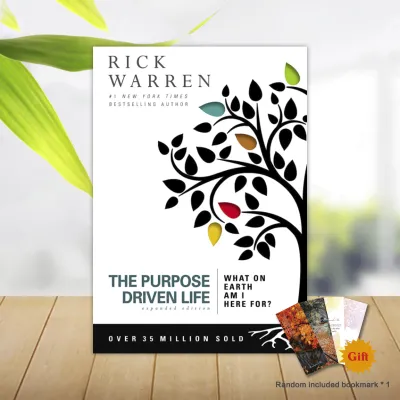
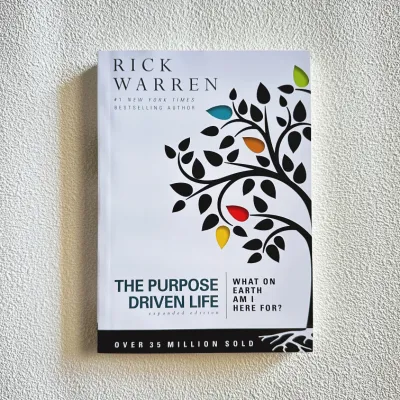
Prices are valid at publication and may change. Please refer to the product page for the latest price.
In contrast, the Tagalog translation adapts these concepts to fit the linguistic and cultural nuances of local readers. Translating spiritual literature requires more than a word-for-word substitution; it involves finding cultural equivalents that carry the same emotional weight. The Tagalog version often employs warmer, more relational terms to describe spiritual concepts, which can make the text feel more intimate and less academic. This cultural adaptation helps bridge the gap between abstract theological ideas and the lived realities of daily life, transforming the reading experience from an intellectual exercise into a deeply personal conversation.
Cognitive load plays a significant role in how we absorb daily devotional content. Reading a book in a second language, even for highly fluent bilingual individuals, requires a higher level of mental processing than reading in one’s primary language. When reading the English version, your brain may spend extra energy decoding complex sentence structures or unfamiliar idioms, which can subtly detract from the meditative state required for spiritual reflection. Reading the Tagalog version can significantly reduce this cognitive load, allowing you to focus your mental energy entirely on the message and its application to your life rather than the mechanics of the language itself.
This difference in cognitive processing becomes particularly apparent during the daily reflection and journaling segments. Each chapter of the book concludes with a specific prompt, a point to ponder, and a verse to remember. If you choose the English edition, your written reflections and internal monologue will likely follow an English-oriented structure, which is excellent for those who prefer to journal in English. However, if your deepest emotions, prayers, and personal struggles are naturally articulated in Tagalog, using the Tagalog edition ensures that the daily prompts align seamlessly with your internal voice, making your journaling sessions more fluid, honest, and profound.
Evaluating Your Language Comfort and Reflection Goals
To determine which edition is best suited for your spiritual journey, start by identifying the primary language of your internal monologue. When you pray, reflect on your day, or talk to yourself, which language do you naturally use? If your internal thoughts are predominantly in Tagalog, reading a Tagalog devotional can create a more direct connection to your heart, bypassing the translation step that occurs in your mind when reading English. If you work, study, and think primarily in English, the English edition will likely feel more natural and align better with your daily cognitive habits.

Before making a final purchase, it is highly beneficial to evaluate sample pages or excerpts from both editions. Many physical bookstores and authorized online retailers provide preview pages or digital samples. Reading a page or two of the Tagalog translation allows you to assess the tone, vocabulary, and flow of the text. Some readers find that certain Tagalog translations of spiritual books can feel overly formal or archaic, while others find them perfectly modern and conversational. Checking a sample beforehand ensures that the translation style matches your personal reading preferences and does not feel jarring during your daily study.
For bilingual readers who find value in both languages, a hybrid or bilingual reading strategy can be highly effective. You might choose to purchase the English edition as your primary reading text but keep a Tagalog Bible or translation nearby to clarify complex passages. Alternatively, you can read the main chapters in the Tagalog edition to capture the emotional depth of the message, while keeping your journal and notes in English if you find writing in English more efficient. This flexible approach allows you to leverage the strengths of both languages, maximizing both your intellectual comprehension and your emotional engagement with the material.
Your long-term spiritual growth objectives should also guide your choice. If your goal is to build a stronger theological vocabulary in English or to prepare for leadership roles in an English-speaking church community, the English edition is the logical choice. However, if your primary objective is personal healing, emotional restoration, or developing a more intimate prayer life, the Tagalog edition can break down intellectual barriers and allow the message to penetrate more deeply into your personal reflections.
Edition Verification and Purchasing Considerations
When purchasing The Purpose Driven Life, it is crucial to verify the physical and digital specifications of the book to ensure you are receiving a complete, authorized edition. Over the years, various editions, study guides, and condensed versions have been published. To avoid accidentally purchasing an unauthorized summary or an incomplete study guide, always check the publisher imprint, the publication year, and the unique International Standard Book Number (ISBN). Authorized translations are typically published by recognized local Christian publishers under license from the original publisher, ensuring that the translation is faithful, complete, and officially approved.
Physical characteristics and material quality can vary significantly between the English and Tagalog editions, which is an important consideration given the local climate. In tropical environments with high humidity, the type of paper used in a book affects its durability. Many local editions of translated books are printed on lightweight newsprint or local cream paper to keep the book affordable and accessible. While these editions are cost-effective, they may be more susceptible to yellowing and moisture damage over time if not stored in a dry, cool place. Imported English editions often feature heavier wood-free paper or acid-free cream paper, which may offer better long-term durability but typically comes at a higher retail price.
The price and availability of these editions also differ across local physical bookstores and authorized online malls. The Tagalog translation is often priced more affordably, typically ranging from ₱250 to ₱450, making it highly accessible for local readers and church groups purchasing in bulk. Imported English editions, especially hardcover or special anniversary versions, generally command higher prices, often ranging from ₱600 to ₱1,200 or more depending on the binding and format. Additionally, print runs for translated editions can fluctuate, meaning that the Tagalog version may occasionally go out of stock in physical stores, requiring you to search authorized online marketplaces or order directly from local Christian publishers.
Before finalizing your purchase, consider how you plan to read the book. If you prefer digital reading on an e-reader or tablet, verify the file format and regional availability of the digital edition. Some translated editions may have limited digital distribution compared to the widely available English e-book. If you prefer a physical copy, inspect the binding and print size, as smaller, budget-friendly print runs of both English and Tagalog editions may feature smaller fonts that can cause eye strain during extended reading sessions.
How to Decide: A Practical Selection Framework
To help you make your final decision, consider this practical selection framework based on your specific reading environment and personal preferences.
Choose the English version if you:
- Prefer to read the author's original, unaltered phrasing and vocabulary.
- Conduct your daily professional, academic, and personal reading primarily in English.
- Plan to participate in an English-speaking small group or church study where members reference the English text.
- Want access to a wider variety of physical formats, such as deluxe hardcovers, large-print editions, or specific anniversary releases.
Choose the Tagalog version if you:
- Seek a more intimate, emotionally resonant, and culturally familiar reading experience.
- Find that spiritual concepts and prayers are more meaningful when processed in your native language.
- Want to minimize cognitive fatigue during your daily quiet time and devotional reading.
- Are purchasing the book on a budget or looking to buy multiple copies for a local study group.
Neither version may fit your needs if you are looking for an academic, highly technical theological textbook. The Purpose Driven Life is designed as a practical, daily devotional guide rather than a scholarly treatise, regardless of the language edition you select.
Additionally, always verify group compatibility before purchasing. If you are buying this book to participate in a specific church campaign or small group study, consult with your group leader first. The accompanying study guides, video curriculum, and sermon series may be synchronized with one specific language edition, and having a different version could make it challenging to follow along with group discussions or shared reading schedules.
Frequently Asked Questions (FAQ)
Is the Tagalog translation an abridged version of the original book?
No, the authorized Tagalog translation of The Purpose Driven Life is not an abridged version. It is a complete translation that preserves the entire 40-day structure, including all original chapters, daily readings, and reflection prompts. However, because translation can alter word counts and sentence structures, the page numbers and physical layout will differ from the English edition. When purchasing, always check the table of contents and the publisher’s details to ensure you are buying the complete book rather than a condensed study guide, a daily calendar, or an unauthorized summary.
Can I use the Tagalog version for an English-speaking church study group?
While it is possible to use the Tagalog version in an English-speaking study group because the core spiritual principles and daily topics are identical, it may present some practical challenges. The specific wording of chapter titles, scripture translations, and daily reflection questions will differ between the two editions. This can lead to minor confusion during group discussions when members reference specific phrases, quotes, or page numbers. If you choose to use the Tagalog version in an English-speaking group, you may need to spend extra time locating the corresponding passages and translating your personal notes during group sharing sessions.

Community discussion
Share your experience or ask a question. Comments are reviewed before publication.