
Choosing your first drum kit is an exciting milestone, but it quickly brings you face-to-face with a classic musician’s dilemma: should you start with electric drums or a traditional acoustic kit? While acoustic drums offer the raw, physical power of acoustic percussion, electric drums provide unmatched volume control and digital convenience. The right choice for a beginner does not depend on which instrument is objectively superior, but on how well each option fits your physical living space, your budget, and your personal learning goals. By evaluating your daily environment and musical aspirations, you can select a starter kit that keeps you motivated to practice every day.
Quick Diagnostic: Which Drum Kit Fits Your Current Situation?
Before diving into technical specifications, this quick self-assessment can help you identify which path aligns with your immediate constraints.
Electric Drums are ideal if you:
Products mentioned in this guide
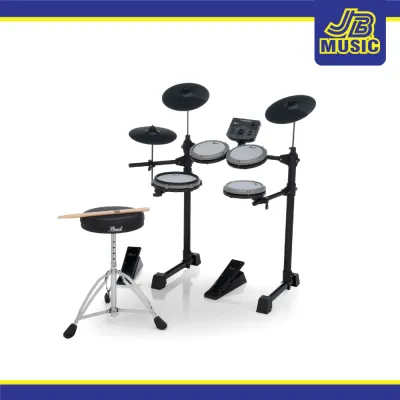
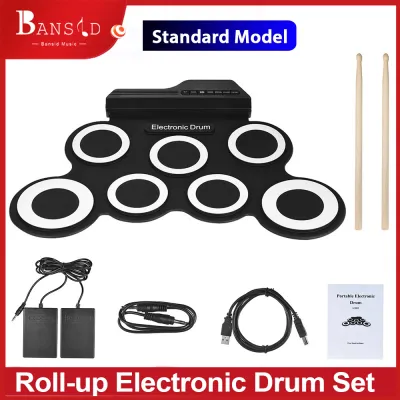
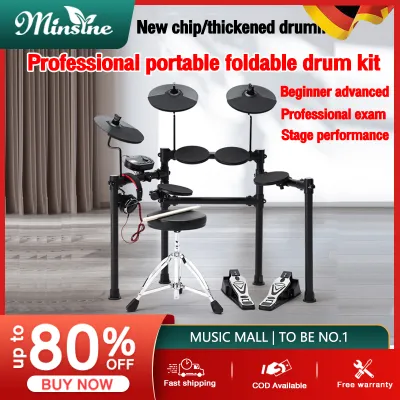
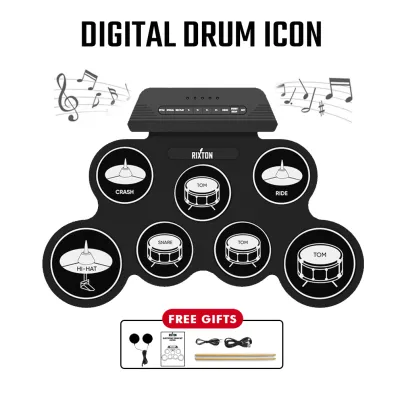
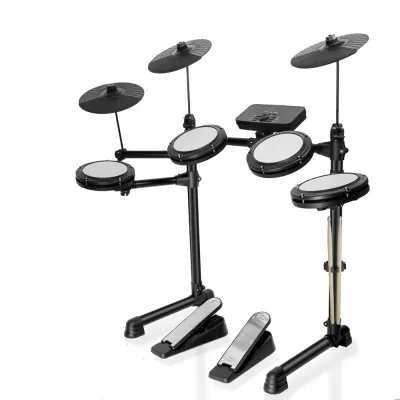

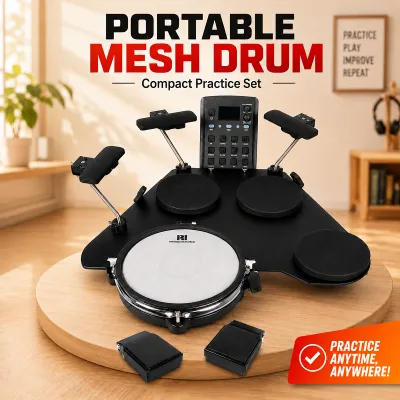
Prices are valid at publication and may change. Please refer to the product page for the latest price.
- Live in an apartment or condo with strict noise limits.
- Have limited floor space and need a compact setup.
- Want to practice silently late at night using headphones.
- Are interested in direct digital recording or electronic and pop genres.
- Value built-in training tools and play-along coaching features.
Acoustic Drums are ideal if you:
- Have a dedicated, sound-tolerant practice space like a garage.
- Prioritize authentic stick rebound and traditional playing techniques.
- Plan to play in a traditional live band or church setup without sound systems.
- Want to learn the subtle nuances of acoustic cymbal play from day one.
- Do not want to deal with power cables or digital menus.
Evaluate Your Space, Neighbors, and Noise Tolerance
Acoustic drums are inherently loud, often producing sound levels exceeding 100 decibels. In a typical residential neighborhood in the Philippines, where houses are built close together and concrete hollow block walls are standard, this volume easily penetrates shared walls. Properly soundproofing a standard room to contain an acoustic kit requires professional construction, such as building a double-walled room, which is often financially impractical for beginners.

Electric drums offer a highly practical alternative by replacing acoustic shells with electronic pads, allowing you to route the sound directly to headphones. Mesh heads are significantly quieter than older rubber pads, producing only a soft tapping sound when struck. However, electric kits are not completely silent; striking the plastic cymbals and pads still creates an acoustic click audible in adjacent rooms.
The most overlooked challenge in shared living spaces, particularly in multi-story townhouses or high-rise condominiums, is structure-borne noise. When you press down on the kick drum pedal, the physical impact transfers low-frequency vibrations directly into the floor. In concrete slab buildings, these vibrations travel downward through structural pillars, manifesting as a loud, rhythmic thumping noise in the unit below.
To mitigate this, you can build a DIY tennis ball riser—using two sheets of thick plywood sandwiching halved tennis balls—or use specialized noise-isolation mats. In highly humid tropical climates, ensure any wood used is sealed to prevent warping. Realistically assess your household’s tolerance for residual thumping before choosing.
Calculate the Real Cost: Base Price vs. Hidden Expenses
When comparing the financial entry point, looking solely at the price tag of the base kit can be highly misleading. An entry-level electric drum kit in the Philippines typically ranges from ₱15,000 to ₱35,000, while a basic acoustic drum kit can cost anywhere from ₱12,000 to ₱30,000. However, both options come with distinct hidden expenses that you must factor into your total budget.
An electric kit’s base package usually excludes essential accessories. You must budget for a sturdy drum throne (₱1,500 to ₱4,000) and high-quality closed-back headphones (₱2,500 to ₱7,000). Many budget kits use plastic switch pedals; upgrading to a physical kick pad and a proper bass drum pedal adds ₱3,500 to ₱8,000. Playing out loud requires a dedicated drum amplifier (₱8,000 to ₱20,000). Also, ensure the power adapter is rated for the local 220V/60Hz standard.
Acoustic kits also have hidden costs. Bundled starter cymbals are often thin brass that bends easily; upgrading to durable bronze cymbals (B8 or B20 alloy) costs ₱10,000 to ₱25,000. Stock drum heads wear out quickly, requiring replacements (₱1,200 to ₱2,500 each). You will also need a tuning key, dampening gels, and high-fidelity hearing protection (₱1,000 to ₱3,000) to prevent long-term hearing damage.
To get an accurate picture of your total investment, it is highly recommended to visit established local music retailers in the Philippines to compare physical bundles, check local warranty coverage, and test different models in person. Relying solely on online marketplaces can expose you to grey-market imports that lack authorized local repair support if a trigger or module fails.
Align Your Choice with Your Musical Goals and Genre
Your choice of instrument should also be guided by the style of music you want to play and how you plan to practice. Acoustic drums remain the gold standard for genres that rely heavily on physical dynamics, subtle tonal variations, and traditional acoustic techniques. In jazz, blues, classic rock, and orchestral music, the way you strike a cymbal or play a delicate ghost note on the snare drum drastically alters the texture of the sound. Real cymbals offer complex harmonic overtones that build up as you play, and techniques like using brushes on a coated snare head simply cannot be replicated convincingly on standard electronic pads.
Conversely, electric drums offer massive advantages for modern pop, hip-hop, electronic dance music (EDM), and modern metal. Because these genres often utilize highly produced, quantized, or synthesized drum sounds, playing them on an electronic kit feels incredibly natural. With a single button press on your sound module, you can transition from a tight funk kit to a massive arena rock setup or a classic electronic drum machine. This sonic versatility keeps daily practice engaging and inspiring for beginners who want to play along with their favorite modern tracks.
For those interested in music production and recording, electric drums are exceptionally convenient. Instead of purchasing an array of expensive microphones, audio interfaces, and soundproofing materials to record an acoustic kit, you can simply connect your electric drum module directly to a computer via a USB or MIDI cable. This allows you to trigger high-end drum library software in your Digital Audio Workstation (DAW) with zero acoustic noise, yielding professional-grade drum tracks in a home studio environment.
Furthermore, electric drum modules are packed with dedicated learning tools designed to accelerate a beginner’s progress. Most modern modules feature built-in metronomes with adjustable time signatures, coaching programs that grade your timing accuracy, and pre-loaded play-along tracks across various genres. Many also include auxiliary inputs or Bluetooth connectivity, allowing you to stream backing tracks or instructional videos directly from your smartphone into your headphones alongside your drum sounds.
Compare Physical Feel, Dynamics, and Skill Transfer on Electric Drums
The physical sensation of striking a drum—often referred to as stick response or rebound—is a critical factor in developing proper technique. Acoustic drums utilize tensioned mylar heads that provide a natural, progressive rebound; the stick bounces back with a feel that changes depending on where you strike the head and how tightly the drum is tuned. Real brass or bronze cymbals also have a distinct physical give when struck. In contrast, entry-level electric kits often feature rubber pads, which have a hard, unforgiving surface that can cause wrist fatigue during long practice sessions. Higher-end electric kits use mesh heads, which offer a much more realistic feel and can be tensioned with a standard drum key, though they can sometimes feel slightly more springy than a real acoustic drum.
Dynamic control—the ability to play seamlessly from a whisper-quiet ghost note to a roaring accent—is naturally developed on an acoustic kit because the instrument responds directly to the physical force of your strike. On electric drums, this dynamic range is simulated by digital sensors and velocity curves. In budget electronic kits, this can lead to a phenomenon known as ‘machine-gunning,’ where rapid consecutive hits sound identical and artificial because the module is simply repeating the same audio sample at different volumes. To minimize this feel gap, beginners looking at electric drums should prioritize kits that offer dual-zone pads (allowing you to play different sounds on the head and the rim) and continuous-control hi-hat pedals that accurately detect the transition between open and closed positions.
Fortunately, the fundamental skills of drumming transfer remarkably well between both formats. The muscle memory required for limb independence, rhythmic timing, hand coordination, and basic rudiments like single-stroke rolls and paradiddles is identical whether you are practicing on mesh pads or real drum heads. If you start on an electric kit, you will easily be able to play the same rhythms on an acoustic kit, though you should expect a brief adjustment period to adapt to the acoustic kit’s massive physical volume, wider physical layout, and the extra physical effort required to draw a full, resonant tone from real cymbals.
Final Decision: Matching the Kit to Your Daily Reality
Ultimately, choosing between electric and acoustic drums comes down to a realistic assessment of your daily living conditions and your personal goals. If you live in an apartment, condominium, or a densely populated neighborhood where noise will cause friction with family or neighbors, electric drums are the clear and practical choice. They allow you to log hours of productive practice at any time of day or night without disruption, while offering powerful digital tools to speed up your learning curve. On the other hand, if you have a dedicated garage, a detached house, or a highly tolerant household, and your primary goal is to play in a traditional live band or master the delicate physical nuances of acoustic percussion, investing in an acoustic drum kit will give you the most authentic starting experience.
As a beginner, it is always wiser to invest in a high-quality, reliable entry-level kit in the category that matches your physical space than to force the ‘preferred’ category under poor conditions. Buying a cheap, frustratingly unresponsive acoustic kit that you can never play at full volume will quickly kill your enthusiasm. Similarly, buying an ultra-cheap electric kit with stiff rubber pads and a laggy sound module can lead to poor technique and physical discomfort.
If you find yourself torn between both worlds, consider a hybrid approach. You can purchase a standard acoustic drum kit and outfit it with specialized mesh practice heads and low-volume perforated metal cymbals. This setup preserves the authentic physical layout, shell sizes, and hardware feel of an acoustic kit while reducing the acoustic volume by up to 80 percent, offering an excellent middle ground for players who want the best of both worlds.
Frequently Asked Questions (FAQ)
Can I learn on electric drums and switch to acoustic later?
Yes, absolutely. The core mechanics of drumming—including hand-to-foot coordination, rhythmic patterns, and stick rudiments—are identical on both instruments. When you eventually make the transition to an acoustic kit, you will only need a short adjustment period to get used to the physical layout, the stronger rebound of real cymbals, and the necessity of managing your physical volume through touch and dynamics.
Do I need an amplifier for electric drums?
No, an amplifier is not strictly necessary for personal practice. A high-quality pair of closed-back headphones is entirely sufficient and is actually preferred for quiet, focused learning. However, if you want to play without headphones, perform for an audience, or jam alongside other musicians playing unamplified instruments like acoustic guitars, you will need to invest in a dedicated electronic drum amplifier or a portable PA system.
Are acoustic drums too loud for a typical apartment or condo?
Yes, standard acoustic drums are far too loud for a typical apartment or condominium. Producing sound levels that easily exceed 100 decibels, they will quickly penetrate standard concrete walls and floors, leading to noise complaints. For high-density housing environments, electric drums or an acoustic kit heavily modified with mesh heads and low-volume cymbals are the only practical options.
Community discussion
Share your experience or ask a question. Comments are reviewed before publication.