
Quick Answer: Which Instrument Fits Your Needs?
Choosing between an electric keyboard and a digital piano comes down to your personal musical goals, budget, and living space. While both are electronic instruments with black and white keys, they serve entirely different types of musicians.
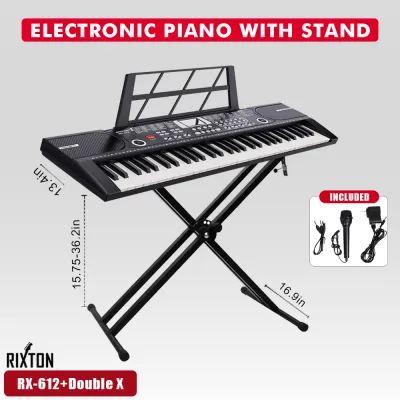
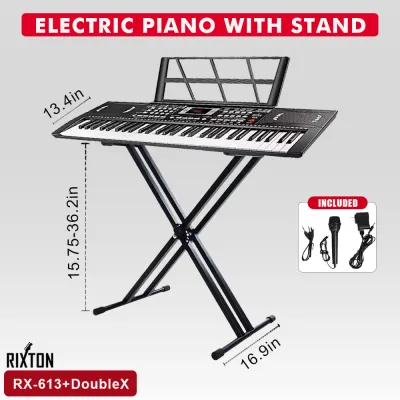
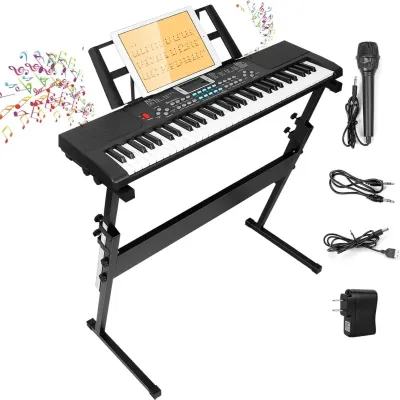
An electric keyboard is typically a lightweight, highly portable instrument with 61 keys (five octaves) designed for versatility. It features hundreds of different instrument sounds, built-in rhythm accompaniments, and digital effects. It is ideal for casual hobbyists, music producers, and those who want to experiment with different genres without a massive upfront investment.
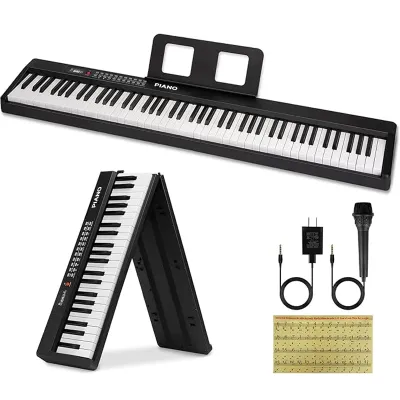
A digital piano is designed to replicate the exact feel, touch, and sound of a traditional acoustic piano. It features a full set of 88 keys with weighted action, simulating the physical hammers of an acoustic instrument. If your primary goal is to learn classical piano, develop proper finger strength, or play expressive solo pieces, a digital piano is the correct choice.
Products mentioned in this guide
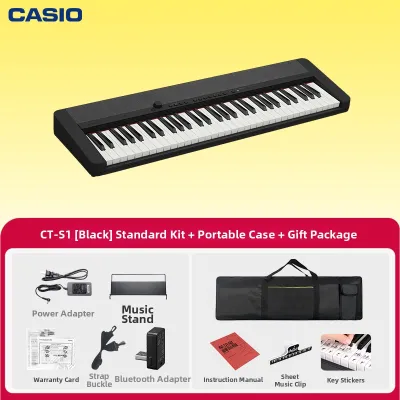
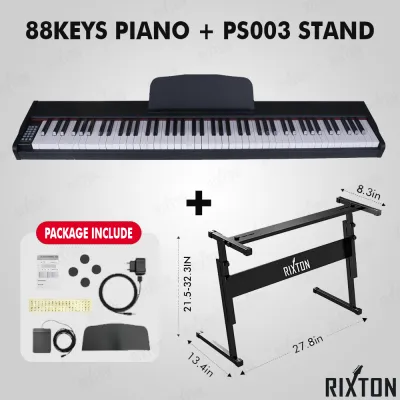
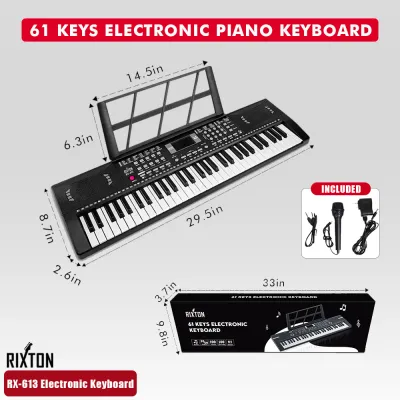
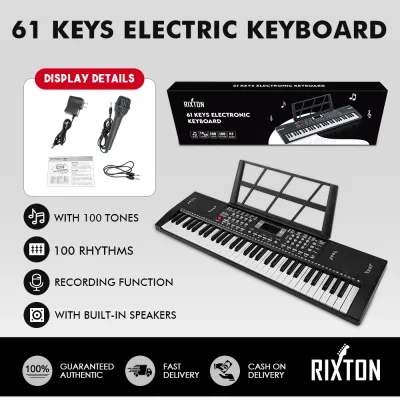
Prices are valid at publication and may change. Please refer to the product page for the latest price.
Core Differences in Design, Feel, and Sound
Understanding the physical and mechanical differences between these two instruments is essential before making a purchase. The way the keys move under your fingers and the way the internal computer generates sound will directly impact your playing experience.

Key Count and Range
The most obvious visual difference is the length of the keyboard. A standard digital piano features 88 keys, which is the exact layout of an acoustic grand piano. This extensive range allows you to play any piece of music ever written, from deep bass notes to the highest treble registers.
In contrast, most electric keyboards feature 61 keys, though some intermediate models offer 76 keys. While 61 keys are more than enough for playing modern pop songs, lead synth lines, and basic chord progressions, you will quickly run out of room when attempting classical compositions or complex jazz arrangements that require wide, two-handed spans.
Key Action and Touch Sensitivity
Key action refers to the mechanical resistance felt when pressing a key down. This is where the two instruments diverge most significantly:
- Synth Action (Electric Keyboards): These keys are unweighted and rely on simple plastic springs to return the key to its resting position. They feel very light, springy, and offer little to no resistance. This action is excellent for playing fast synthesizer leads or organ parts, but it does not allow for expressive classical playing.
- Weighted Hammer Action (Digital Pianos): These instruments use mechanical weights and pivots to simulate the physical hammers of an acoustic piano. Many models feature "graded" hammer action, meaning the keys in the lower register feel heavier to press than the keys in the higher register, exactly like a real piano. This resistance is crucial for building the finger muscle memory and hand strength required to play on acoustic instruments.
- Touch Sensitivity: While almost all digital pianos have highly sensitive velocity sensors to detect how hard or soft you strike a key, entry-level electric keyboards may lack this feature entirely. Without touch sensitivity, the instrument will play at the exact same volume regardless of how gently or forcefully you press the keys, eliminating any room for musical expression.
Sound Engines and Tonal Philosophy
The internal sound engines of these instruments are tuned for different purposes. Electric keyboards prioritize variety. They function as arranger stations, packed with hundreds of sounds ranging from trumpets, drums, and guitars to futuristic synthesizer pads. They also include automatic accompaniment styles that generate a full backing band based on the chords you play with your left hand.
Digital pianos focus on depth and realism. Instead of offering thousands of average-quality sounds, they dedicate their processing power to reproducing a highly detailed, multi-layered stereo sample of a world-class concert grand piano. These engines capture subtle acoustic nuances, such as key-off resonance, string resonance, and the physical sound of the damper pedal lifting.
| Feature | Electric Keyboard | Digital Piano |
|---|---|---|
| Key Count | Typically 61 keys (sometimes 76) | Standard 88 keys |
| Key Action | Unweighted or semi-weighted (spring-loaded) | Fully weighted (graded hammer action) |
| Primary Sound Focus | Multi-timbral variety (hundreds of voices) | High-fidelity acoustic piano sampling |
| Portability | Highly portable (typically 3 to 7 kg) | Stationary or semi-portable (11 to 80+ kg) |
| Pedal Support | Simple sustain pedal jack (on/off switch) | Full three-pedal unit support (continuous half-pedaling) |
Aligning Your Choice With Your Playing Goals
Your long-term musical aspirations should dictate your purchase. Buying the wrong instrument can hinder your progress or lead to frustration as your skills advance.
For Classical Training and Piano Technique
If your goal is to study classical music, take formal piano lessons, or play traditional repertoire, a digital piano is an absolute necessity. Classical piano pedagogy relies heavily on dynamics and touch control. You must learn how to control the volume and tone of individual notes within a chord, a technique that is impossible to practice on the unweighted keys of a basic electric keyboard.
Furthermore, classical pieces frequently utilize the sustain pedal to blend notes together. Digital pianos support advanced pedal techniques, such as half-pedaling, which allows you to partially damp the strings for a cleaner, more controlled sound. A basic electric keyboard usually only supports a simple on/off sustain switch, which can make classical pieces sound muddy and indistinct.
For Music Production, Pop, and Versatility
If you want to write your own songs, produce electronic music, or play in a modern pop band, an electric keyboard offers far more practical utility. Most modern keyboards feature robust MIDI connectivity via USB, allowing you to plug directly into a computer, tablet, or smartphone. This transforms your keyboard into a powerful MIDI controller for digital audio workstations (DAWs) like GarageBand, Reaper, or Ableton Live.
Additionally, the built-in drum machines, arpeggiators, and multi-track recording functions found on arranger keyboards allow a single player to create complex, multi-layered arrangements on the fly. If your interest lies in sound design, synth-pop, or casual playing with a built-in virtual band, the diverse sound library of an electric keyboard will keep you engaged far longer than a dedicated piano sound.
Space, Portability, and Living Constraints
Practical environmental factors are just as important as musical ones, especially when living in high-density urban areas like Metro Manila, Cebu, or Davao, where apartment and condominium living is common.
Footprint and Weight
A console-style digital piano is designed as a semi-permanent piece of furniture. It features a heavy wooden cabinet, integrated pedals, and a substantial physical footprint, often measuring around 130 to 140 centimeters in width and weighing anywhere from 30 to over 80 kilograms. Moving one requires multiple people and dedicated transport.
An electric keyboard, on the other hand, is incredibly compact and lightweight, usually weighing between 3 and 7 kilograms. It can easily be set up on a folding X-stand, placed on a dining table, and stored away in a closet or under a bed when not in use. If you rent your home, move frequently, or have limited floor space, a portable keyboard is highly convenient.
Noise Control and Neighbor Etiquette
While both instruments feature headphone jacks for silent practice, there is a hidden noise factor that many buyers overlook: mechanical key noise.
The weighted hammer action of a digital piano requires physical parts to strike internal stoppers to simulate the weight of a piano key. This mechanical movement creates a dull, low-frequency thumping sound with every keystroke. In typical Philippine concrete or wood-frame condominium buildings, this vibration can travel directly through the floorboards, disturbing neighbors downstairs even if you are wearing headphones. Unweighted electric keyboards have much lighter plastic keys, producing almost no mechanical noise when played.
Budget and Hidden Costs in the Philippines
When budgeting for your instrument, it is important to look beyond the initial price tag of the keyboard itself. The total cost of ownership often includes several essential accessories.
Entry-Level and Mid-Range Budget Tiers
In the Philippine market, electric keyboards represent a much lower barrier to entry. A reliable, brand-name entry-level electric keyboard with touch-sensitive keys generally ranges from ₱5,000 to ₱15,000. These instruments are highly affordable options for parents buying a first instrument for a child or for casual hobbyists.
Digital pianos require a more significant financial commitment. A basic, portable 88-key weighted digital piano typically starts around ₱20,000 to ₱45,000. Mid-range console models with high-quality wooden cabinets and advanced sound engines can easily range from ₱50,000 to over ₱120,000.
Accessory Costs for Portable Instruments
If you choose a portable electric keyboard or a slab-style portable digital piano, you will likely need to purchase accessories separately. Be sure to factor these estimated costs into your budget:
- Keyboard Stand: A sturdy double-braced X-stand or Z-stand is necessary to keep the instrument stable. Expect to spend ₱1,500 to ₱3,500.
- Sustain Pedal: Many entry-level keyboards do not include a pedal, or they include a cheap plastic button switch. A high-quality, piano-style sustain pedal costs between ₱800 and ₱2,500.
- Padded Bench: Proper playing posture is critical to avoid wrist strain. A height-adjustable keyboard bench costs around ₱1,000 to ₱3,000.
- Dust Cover and Gig Bag: To protect the sensitive electronic contacts from tropical dust and humidity, a good dust cover or padded carrying bag is highly recommended, costing ₱1,000 to ₱4,000.
By contrast, console-style digital pianos are usually sold as complete packages that include the wooden stand, a matching bench, and an integrated three-pedal board, meaning there are fewer hidden costs to worry about.
Long-Term Value and Resale
If you are buying an instrument for a student, consider the resale value. High-quality digital pianos from established, reputable manufacturers tend to hold their value exceptionally well in the secondary market in the Philippines. If a student outgrows the instrument or decides to stop playing, you can often recoup a significant portion of your investment by selling it used. Cheap, unbranded electric keyboards deprecate much faster and can be difficult to resell.
The Final Decision Framework
To make your final choice, evaluate your situation against these clear, condition-based guidelines.
Choose a Digital Piano if:
- Your primary goal is to study classical piano, take formal lessons, or play expressive solo piano music.
- You want to develop proper hand strength, finger independence, and correct pedal techniques that transfer directly to an acoustic piano.
- You have a dedicated, permanent space in your home for a larger, heavier instrument.
- You have the budget to invest in a high-quality, long-term instrument.
Choose an Electric Keyboard if:
- You are a beginner or casual hobbyist who wants to explore music without a large financial commitment.
- You have limited living space and need an instrument that can be easily stored away or moved around.
- You are interested in modern music production, songwriting, electronic music, or using diverse instrument sounds and backing tracks.
- You need a lightweight, portable instrument for gigs, band rehearsals, or church services.
Verify Before Committing
Before making your final purchase, it is highly recommended to visit a local music showroom in major Philippine shopping malls. Sit down and physically press the keys of both an electric keyboard and a digital piano. Even if you do not know how to play yet, the physical difference in key resistance and build quality will be instantly apparent.
Additionally, if you are importing an instrument or buying from non-authorized online sellers, always verify the voltage compatibility. The Philippines standard electrical grid runs on 220V at 60Hz. Some instruments imported from Japan or the United States are rated for 110V and will require a step-down transformer to prevent permanent electrical damage to the internal motherboard.
Frequently Asked Questions (FAQ)
Can I learn classical piano on a 61-key electric keyboard?
You can learn the absolute basics of music theory, note reading, and simple single-hand melodies on a 61-key electric keyboard. However, within a few months of formal classical training, you will hit a physical limit. Classical repertoire quickly introduces pieces that require a wider octave range and highly nuanced dynamics. Without weighted keys and a full 88-key layout, you will not be able to develop the finger strength or expressive control required for classical piano.
Do I need an external amplifier for a digital piano?
No, almost all home digital pianos and portable keyboards come equipped with built-in stereo amplifiers and speakers that are perfectly calibrated for home practice. You only need an external amplifier or active PA speaker if you plan to perform in large venues, play with a loud live band, or use the instrument in a spacious church hall. For home use, the built-in speakers or a good pair of studio headphones will provide more than enough volume.
Community discussion
Share your experience or ask a question. Comments are reviewed before publication.