
If you are a beginner guitarist looking to expand your sonic palette, you have likely scrolled through countless pedalboard setups online and wondered which effects are actually essential. The octave pedal is a popular contender, famous for turning a thin guitar signal into a massive wall of sound or a convincing bass line. However, before you spend your hard-earned pesos on a dedicated stompbox, it is crucial to assess whether this effect aligns with your current skill level, musical style, and existing equipment. While an octave pedal is a powerful creative tool, it is not a mandatory purchase for every player, and buying one too early can sometimes hinder your foundational progress.
Understanding How an Octave Pedal Changes Your Guitar Tone
To make an informed decision, you must first understand what an octave pedal actually does to your guitar’s signal. In simple terms, this pedal is a pitch shifter that detects the pitch of the notes you play and generates a synthesized duplicate signal shifted exactly one or more octaves below or above the original note. By blending this synthesized signal with your dry guitar tone, you can create a dual-voiced effect that sounds like two instruments playing in perfect unison.
The way the pedal tracks your playing depends heavily on whether it uses analog or digital circuitry. Analog octave pedals (often associated with classic vintage designs) are typically monophonic, meaning they can only track one note at a time. If you try to play a chord through an analog octave pedal, the tracking circuit will glitch, sputter, and produce a chaotic, distorted mess. Digital octave pedals, on the other hand, utilize digital signal processing (DSP) to offer polyphonic tracking. This allows the pedal to track entire chords cleanly, though digital processing can sometimes introduce a tiny, near-imperceptible amount of latency (delay) between your pick strike and the generated octave sound.
Products mentioned in this guide
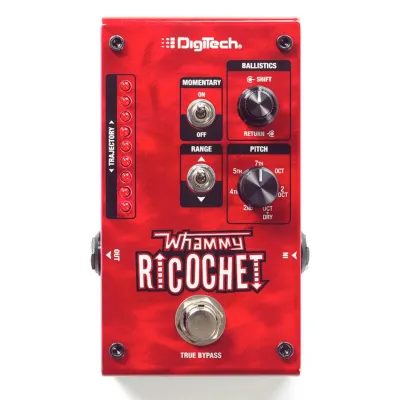
![[lashu42] TALENTOCTAVE Electric Guitar Single Effect Pedal 2 Low 1 High Octave Guitar Effect Pedal Guitar Accessories](https://img.lazcdn.com/g/p/210f639a7c06f7b773505e403f4ea277.jpg_400x400q80.jpg_.webp)
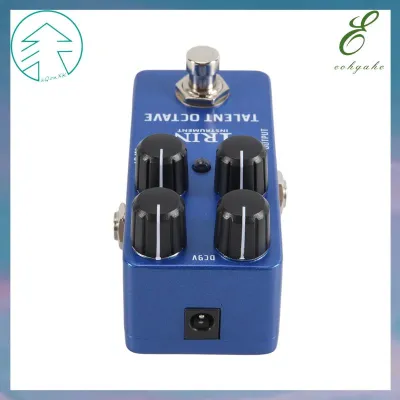
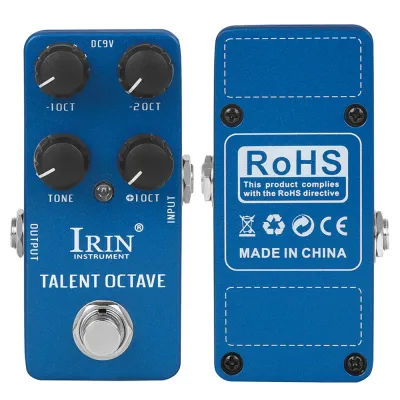
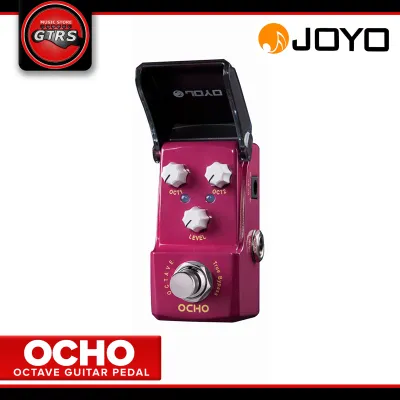
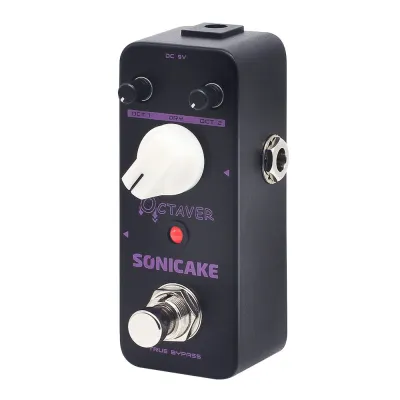
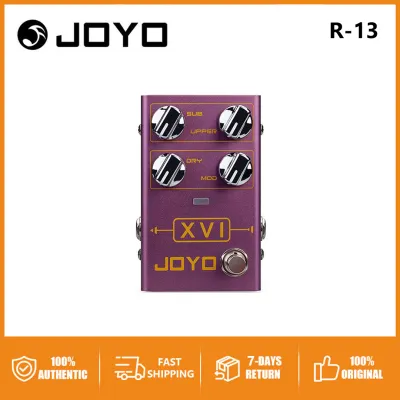
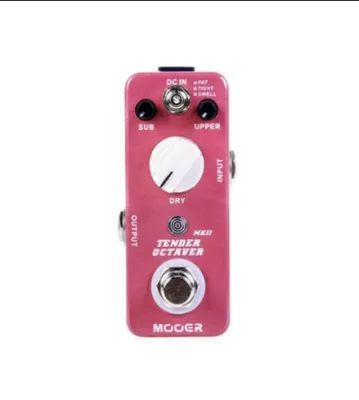
Prices are valid at publication and may change. Please refer to the product page for the latest price.
A common misconception among beginner guitarists is that an octave pedal can instantly turn their six-string guitar into a flawless replacement for a real bass guitar in a band setting. While it can fill out the low frequencies during a solo performance, it does not perfectly replicate the natural dynamics, string tension, and physical presence of a true bass guitar. Furthermore, an octave pedal will not mask poor fretting technique; in fact, because it adds extra harmonic layers, any sloppy fretting, accidental string noise, or improper muting will be doubled and amplified, making your playing sound muddier than before.
Signs Your Musical Goals Actually Require an Octave Pedal
Deciding to purchase an octave pedal should depend largely on the specific musical genres you want to play and the performance scenarios you find yourself in. Certain musical styles rely heavily on the unique textures that only a pitch-shifting effect can provide. If your musical goals involve these specific sounds, adding an octave pedal to your signal chain may be a highly justifiable step.

Genre Alignment
If you are drawn to genres like funk, indie rock, shoegaze, modern worship, or math rock, an octave pedal is a staple of these modern guitar styles. In funk music, a monophonic octave-down effect paired with an envelope filter creates a classic, rubbery synth-bass sound that is perfect for single-note riffs. For shoegaze and modern worship, combining an octave-up effect with heavy reverb and delay allows you to create lush, ambient, organ-like pads and swells that fill up the sonic space behind a vocalist.
Tonal Objectives
You might also want to achieve specific tonal goals that traditional tone controls cannot replicate. For instance, if you want to add massive, sub-harmonic weight to your heavy rock riffs without detuning your guitar to drop-tunings, an octave-down pedal is the ideal solution. It allows you to maintain standard tuning tension while delivering a crushing, dual-voiced low-end punch. Alternatively, if you want to emulate the sound of a 12-string guitar or create shimmering, high-pitched leads, an octave-up setting can provide that bright, chime-like quality.
Playing Context
Your physical playing environment also plays a major role in this decision. If you are a solo performer playing acoustic or electric gigs in local cafes, or if you are part of a guitar-and-drums duo where there is no dedicated bass player, an octave pedal becomes a highly practical utility. By routing your octave-down signal to a separate bass amplifier or directly to the venue’s PA system, you can single-handedly provide the low-end foundation that keeps your live performances sounding full and professional.
Clear Signs You Should Wait Before Buying an Octave Pedal
While the allure of a new effect pedal is strong, there are several practical reasons why a beginner guitarist should hold off on purchasing an octave pedal. Investing in gear before your playing technique and support equipment are ready can lead to frustration and a waste of money.
Foundational Technique
The most critical factor to consider is your current level of physical technique. If you are still struggling with clean chord transitions, maintaining steady timing, or muting unwanted string noise, adding an octave pedal will only complicate your learning process. Octave-down effects are incredibly sensitive to input dynamics and tracking clarity. If your fingers accidentally graze adjacent strings, or if your fretting hand buzzes against a fret wire, the pedal’s tracking engine will try to pitch-shift those accidental noises. This results in a chaotic, glitchy, and unpleasant rumble that can make your practice sessions highly discouraging.
Gear Limitations
Another major hurdle for beginners is the physical limitation of entry-level practice gear. Many beginners start their musical journey practicing in small bedrooms or apartments using compact, low-wattage amplifiers (such as 10-watt or 15-watt solid-state practice amps). These small amplifiers usually feature 6-inch or 8-inch speakers that are physically incapable of reproducing the deep, sub-bass frequencies generated by an octave-down pedal. If you run a heavy sub-octave signal into a tiny practice speaker, the sound will likely come out as a muddy, buzzy distortion. In worse cases, pushing high-amplitude low frequencies through a small speaker cone at high volumes can cause physical damage to the speaker itself; always consult your amplifier’s manual for safe operating limits.
Musical Mismatch
Finally, consider your primary musical repertoire. If your daily practice consists of traditional acoustic-style fingerpicking, classic blues, or vintage classic rock, an octave pedal is largely unnecessary. These genres rely heavily on the natural, dynamic, and woody tone of your guitar and amplifier. Introducing a digital pitch-shifter to these styles can strip away the organic dynamics and subtle nuances of your touch, making your guitar sound overly processed and synthetic when a pure, clean, or naturally overdriven tone is what the music actually demands.
How to Test if an Octave Pedal Fits Your Current Gear
If you are still highly interested in getting an octave pedal, you should perform a few simple compatibility checks to ensure your current setup can handle the effect. Testing your gear beforehand will save you from potential technical issues and help you understand how the pedal behaves in a real-world signal chain.
Signal Chain Placement
An octave pedal relies on receiving a clean, unaltered signal from your guitar to track the pitch accurately. The general rule of thumb is to place the octave pedal first in your physical signal chain, directly after your guitar and before any distortion, overdrive, fuzz, or modulation pedals. If you place a distortion pedal before the octave pedal, the added harmonics and clipping will confuse the pedal’s tracking engine, resulting in severe tracking errors and glitchy dropouts. Ensure your patch cables and input jacks are clean and free of oxidation—a common issue in the humid climate of the Philippines—to prevent signal degradation.
The Tracking Test
If you have the opportunity to test an octave pedal at a local music store or borrow one from a friend, perform a basic tracking test. Play single notes slowly on your lower strings, specifically the low E and A strings. Observe how quickly the pedal tracks your note. Is there a noticeable delay between your pick strike and the octave sound? Next, play a fast run or a chromatic scale down the neck. Watch for any “glitching” or sudden dropouts where the pedal fails to register the note. This test will help you determine whether the pedal’s tracking speed matches your natural playing tempo.
Amplifier and Interface Check
Before finalizing a purchase, check the specifications of your playback system. If you plan to practice silently, verify that your studio headphones or audio interface monitors have a frequency response that extends down to at least 40 Hz to accurately monitor sub-octave tones. If you are using a physical guitar amplifier, ensure it has a larger speaker cabinet (ideally a 10-inch or 12-inch speaker) or a dedicated line-out that allows you to send the low-end signal to a PA system or a bass amplifier, protecting your primary guitar speaker from excessive low-end strain.
Free and Low-Cost Alternatives to a Dedicated Octave Pedal
If you love the sound of an octave effect but realize you are not quite ready to purchase a dedicated, standalone hardware pedal, there are several highly effective, low-cost alternatives that you can explore to satisfy your curiosity.
Multi-Effects Processors
Many beginner guitarists start with a digital multi-effects processor. If you already own one of these units, check its internal effects library. Most modern multi-FX processors include built-in pitch-shifter, pitch-harmonic, or octave blocks. While these digital models might not have the boutique character of a standalone pedal, they provide an excellent, cost-free way to experiment with octave-up and octave-down sounds in your bedroom practice.
Software and DAW Plugins
If you record your guitar directly into a computer using an audio interface, you do not need physical hardware to get octave tones. Most digital audio workstations (DAWs) come with stock pitch-shifting plugins. There are also numerous free, high-quality third-party plugins available online that can pitch-shift your recorded guitar tracks in real time. This allows you to experiment with the effect during your recording and mixing process without spending a single peso.
Technique and Setup Adjustments
You can also employ physical adjustments to naturally thicken your guitar’s tone. Switching to a heavier string gauge (such as moving from .009s to .010s or .011s) can add natural low-end warmth and resonance to your instrument. Additionally, adjusting your pickup height or simply switching to your guitar’s neck pickup while rolling down the tone knob slightly will emphasize the warm, bassy frequencies of your guitar, giving you a rounder, thicker sound without the need for electronic processing.
Frequently Asked Questions (FAQ)
Can I use an octave pedal with an acoustic guitar?
Yes, you can use an octave pedal with an acoustic guitar, but it presents unique tracking challenges. Acoustic guitars equipped with standard piezo undersaddle pickups or highly resonant bodies can produce complex acoustic frequencies that confuse the pedal’s tracking engine. To get the best results, ensure you have a strong, clean signal. Using an acoustic guitar with a built-in active preamp or a magnetic soundhole pickup will provide a more stable, focused signal that allows the octave pedal to track your notes cleanly without unwanted digital artifacts.
Does an octave pedal work well with high-gain distortion?
An octave pedal can work exceptionally well with high-gain distortion, but its success depends entirely on placement. If you place the octave pedal after a heavy distortion or fuzz pedal, the highly compressed and harmonically complex signal will cause severe tracking issues and sound incredibly muddy. To achieve a tight, aggressive tone, always place the octave pedal before your distortion pedal. This allows the octave pedal to track your clean guitar signal perfectly first, before sending the combined, double-voiced signal into your distortion pedal to be saturated and shaped.
Community discussion
Share your experience or ask a question. Comments are reviewed before publication.