
Starting your guitar journey is an exciting milestone, but it quickly introduces you to a dizzying array of gear choices. Among the modern accessories gaining popularity is the wireless guitar system, with brands like NUX offering compact, plug-and-play transmitters and receivers. For a beginner, the short answer is that a wireless system is a convenient luxury rather than an absolute necessity. A traditional instrument cable remains the most reliable, cost-effective, and straightforward way to connect your guitar to an amplifier. While the freedom of moving around without a physical cord is appealing, your primary focus during the early stages of learning should be on building finger strength, mastering basic chords, and developing consistent practice habits.
Assess Your Practice Environment and Mobility Needs
To determine if a wireless system is worth the investment, take a close look at where you actually practice. Most beginners spend their first few months sitting down in a bedroom or dedicated study space. In these stationary environments, you are rarely more than a meter or two away from your amplifier. A standard three-meter instrument cable provides more than enough slack for you to sit comfortably on a chair or bed while practicing your scales.
However, physical hazards can quickly complicate a wired setup, especially in compact living spaces. If your practice area is shared with family members, roommates, or active pets, a trailing cable draped across the floor becomes a tripping hazard. In tropical climates like the Philippines, where electric fans or portable air conditioners are constantly running, managing cords alongside power strips can lead to a cluttered and potentially unsafe floor space. If you find yourself constantly untangling cords or worrying about someone pulling your amplifier off a table, a wireless system offers a clean solution.
Products mentioned in this guide
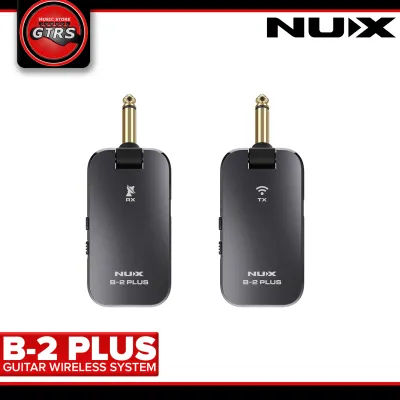
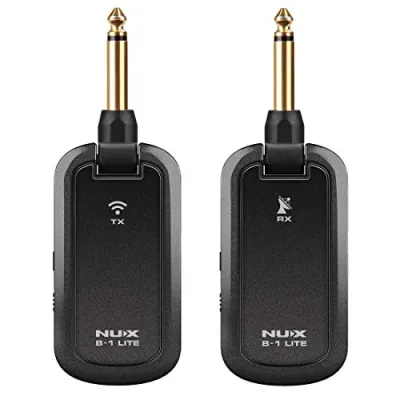
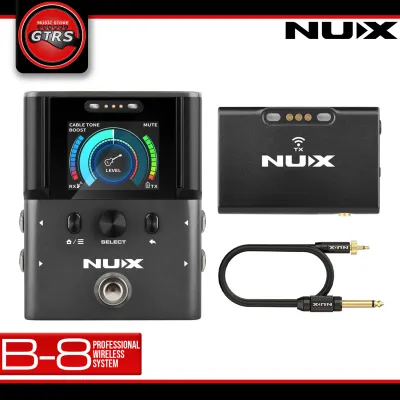
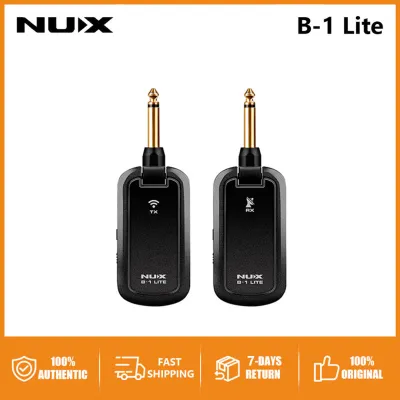
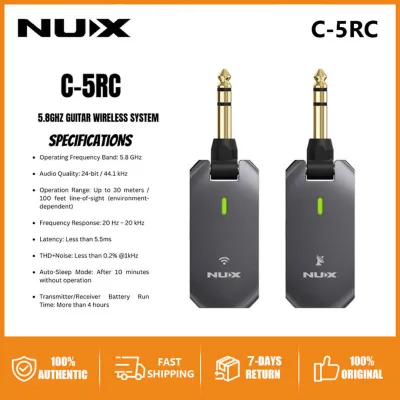
Prices are valid at publication and may change. Please refer to the product page for the latest price.
Your performance style and immediate musical goals also play a significant role in this decision. If you are strictly practicing sitting down, the mobility of a wireless system goes unused. On the other hand, if you are already joining a local church ministry, rehearsing with a school band, or jamming in tight garage spaces, stage real estate is often limited. Small, crowded stages are notorious for cable tangles, and tripping over a cord mid-song can damage your guitar’s output jack or the amplifier’s input. If your learning path involves early public performances or active rehearsals where you need to stand and move, the utility of going wireless increases.
Budget Allocation: Where Should a Beginner Invest First?
When you are starting out, every peso in your gear budget should be directed where it will have the greatest impact on your playing experience. The core elements of your sound are your fingers, your guitar, and your amplifier. Investing in a high-quality instrument that stays in tune and an amplifier that produces inspiring tones will do far more to keep you motivated than any accessory. If you have extra funds, prioritizing a professional guitar setup to adjust the string action, or purchasing a reliable clip-on tuner, is generally a wiser use of resources.

The financial comparison between a traditional cable and a wireless system is stark. A durable, shielded instrument cable from a reputable brand typically costs between ₱300 and ₱1,000 in local music stores. This modest investment can easily last for years with proper coiling and care. In contrast, a reliable entry-level digital wireless system, such as those offered by NUX, generally requires an investment of ₱2,500 to ₱6,000 or more. For a beginner, this price difference represents money that could be better spent upgrading to a higher-tier practice amplifier or purchasing a versatile multi-effects pedal.
An upgrade to a wireless system makes the most financial sense once you have established a consistent practice routine and secured your core gear. If you are still playing on a highly restrictive budget, forcing a wireless system into your initial purchase often means compromising on the quality of the guitar or amplifier itself. Wait until you are confident in your commitment to the instrument and have identified a specific limitation in your wired setup before allocating several thousand pesos to a wireless accessory.
Weighing the Trade-offs: Wireless Freedom vs. Cable Reliability
Transitioning from a standard cable to a wireless system introduces a new set of practical responsibilities that can affect your daily practice. The most immediate change is the need to manage battery life. Traditional instrument cables are completely passive; they require no power and are always ready to play. Wireless transmitters and receivers rely on internal rechargeable lithium-ion batteries. This means you must establish a routine of charging both units after your practice sessions to ensure they do not cut out unexpectedly during your next session or rehearsal.
Signal interference is another critical factor to consider, particularly in modern households. Most entry-level wireless guitar systems operate on the 2.4 GHz radio frequency band. This is the exact same frequency used by home Wi-Fi routers, Bluetooth speakers, baby monitors, and microwave ovens. In a crowded residential area or an apartment building, the 2.4 GHz band can become highly congested. This congestion can lead to occasional signal dropouts, static, or momentary losses of connection, which can be incredibly frustrating when you are trying to maintain focus during a practice session.
Finally, you must evaluate the technical specifications of any wireless system regarding latency and audio transparency. Latency is the tiny delay between the moment you strike a guitar string and the moment you hear the sound emerge from your amplifier. While high-quality digital systems keep this delay to a few milliseconds—virtually imperceptible to the human ear—cheaper or unbranded systems can suffer from noticeable lag that disrupts your sense of timing. Additionally, some wireless systems can slightly compress or color your guitar’s natural tone. Checking the manufacturer’s specifications for frequency response and dynamic range is essential to ensure the system preserves your instrument’s true sound.
How to Evaluate Entry-Level Wireless Systems Like NUX
If you decide that a wireless system is the right choice for your setup, you must carefully evaluate the physical and technical specifications of the unit before purchasing. Start by verifying the plug orientation and physical clearance of the transmitter. Guitars feature various jack designs, such as the recessed, angled jack plate of a Stratocaster, the face-mounted jack of a SG-style guitar, or the edge-mounted jack of a Les Paul. Ensure the wireless transmitter has a swiveling or flexible plug design that can insert fully and sit flush against your guitar’s body without putting stress on the jack or obstructing your controls.
Next, check the product labels and specifications for pickup compatibility. Most entry-level wireless systems are designed primarily for passive pickups, which are standard on the vast majority of beginner electric guitars. If your guitar uses active pickups—which require an internal 9-volt battery to power active electronics—some wireless transmitters may produce a high-pitched whine or fail to function correctly due to impedance mismatches or electrical ground configurations. Always verify that the wireless system explicitly supports the specific pickup type installed in your instrument.
Lastly, review the manufacturer’s stated operating range and frequency band to match your intended environment. For home practice, a modest range of 15 to 20 meters is more than sufficient. However, if you plan to use the system in larger venues or outdoor settings, look for systems that offer a wider operating range and multiple selectable channels. Having the ability to switch channels allows you to find a clear frequency if you encounter local interference, ensuring a stable and uninterrupted connection wherever you choose to play.
Frequently Asked Questions (FAQ)
Do wireless systems work with acoustic-electric guitars?
Yes, wireless systems can work with acoustic-electric guitars, but you must verify the guitar’s preamp output type and jack configuration first. Many acoustic-electric guitars feature active onboard preamps that require a battery, which can sometimes cause compatibility issues or noise interference with certain wireless transmitters. Additionally, check the physical clearance around the endpin jack of your acoustic guitar, as some bulky transmitter designs may not fit securely if the strap button or body shape interferes with the plug.
Will a wireless system affect my guitar's tone?
Modern digital wireless systems generally offer excellent audio transparency, but they can still subtly affect your tone compared to a high-quality cable. Digital systems convert your analog guitar signal into a digital format, transmit it, and convert it back to analog at the receiver. To ensure minimal coloration of your sound, look for systems with a wide frequency response (typically 20 Hz to 20 kHz) and high-resolution digital transmission (such as 24-bit/44.1 kHz).
Can I use multiple wireless systems on the same stage?
You can use multiple wireless systems simultaneously, provided you manage the frequency channels carefully. If multiple band members use wireless systems on the same frequency band without coordination, their signals will interfere, causing dropouts or cross-talk. To avoid this, select wireless systems that offer multiple switchable channels or automatic channel-pairing features, allowing each player to lock onto a unique, interference-free frequency.
Community discussion
Share your experience or ask a question. Comments are reviewed before publication.