
Deciding whether to add a drum ring to your setup depends on your practice space and musical style. A drum ring—often called an O-ring—is a flat plastic ring that sits on the outer edge of your drumhead. If your snare or toms produce a harsh, high-pitched ring that lingers too long, a drum ring is a highly effective, budget-friendly solution to focus your tone. However, if your drums are out of tune or have worn-out heads, a ring will only mask the problem rather than solve it.
In the Philippines, environmental factors play a large role in how your drums sound. High tropical humidity can cause wood shells to expand and contract, impacting head tension and tuning stability. Furthermore, many local drummers practice in small, concrete-walled rooms or residential garages where sound bounces aggressively off untreated surfaces. In these highly reflective environments, natural overtones can quickly become overwhelming, making a dampening tool like a drum ring a practical necessity to keep your practice sessions clean.
Signs Your Drum Kit Needs Overtone Control
Identifying whether your drum kit requires overtone control starts with listening closely to how the sound behaves after you strike a drum. If you notice a prolonged, high-frequency ring that outlasts the initial punch of the stick, your drumhead is producing excessive overtones. When playing alone, this ring might just seem annoying, but when performing with a band, it can muddy the entire mix. The extra resonance competes with the frequencies of bass guitars and keyboards, making your overall band sound cluttered.
Products mentioned in this guide
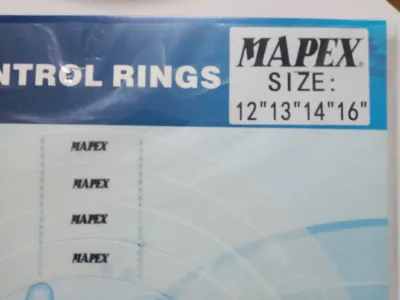

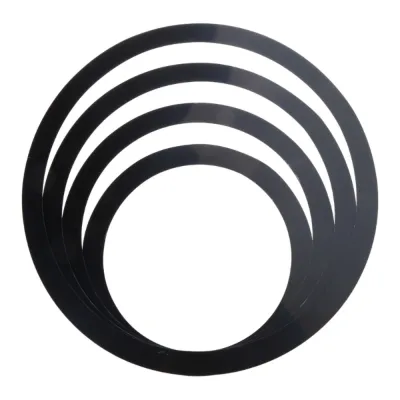
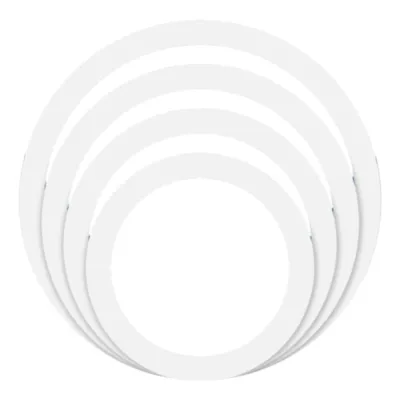

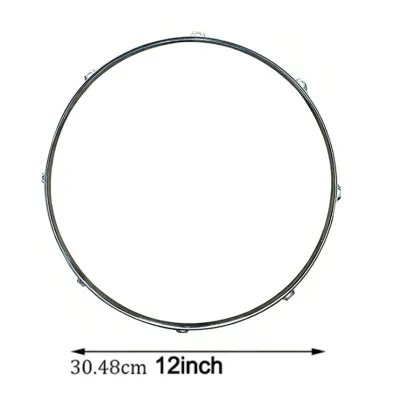
Prices are valid at publication and may change. Please refer to the product page for the latest price.
Environmental factors also dictate your need for dampening. If you live in a dense neighborhood or a subdivision where houses are built close together, the high-pitched ring of a snare drum can easily penetrate walls and lead to noise complaints. Small, untreated practice spaces with bare concrete walls amplify these harsh frequencies, causing ear fatigue during long practice sessions. Using a dampening tool helps control the volume and projection of these piercing high frequencies, making your kit sound more controlled in tight spaces.
Your musical genre is another critical factor. Modern pop, rock, and metal typically demand a dry, punchy drum sound with a quick decay. If you are trying to replicate the tight snare cracks heard on modern recordings, natural overtones will get in the way. Conversely, if you play jazz or traditional acoustic styles, a more open, resonant sound with natural sustain is often preferred. Evaluating your genre helps you determine if those ringing frequencies are a nuisance or a desirable characteristic.
How a Drum Ring Changes Your Sound
To understand if a drum ring is right for you, it helps to look at the physics of how it alters your drumhead’s vibration. When you strike a drum, the center produces the fundamental pitch, while the outer edges vibrate at higher frequencies, creating overtones. A drum ring works by adding flat, lightweight mass directly to the outer perimeter of the batter head. This contact dampens the edge vibrations, absorbing the high-frequency overtones and significantly shortening the drum’s sustain.

The resulting tonal shift is immediate. By eliminating the ringing edge frequencies, the drum ring coaxes a focused, “dry” sound from your drum, emphasizing the deep, fundamental pitch of the shell. Your snare drum will deliver a satisfying, concentrated crack, and your toms will sound deeper and more punchy. This makes it much easier to achieve a clean mix when recording with microphones, as there are fewer wild frequencies for the mics to capture.
However, it is crucial to recognize the limitations of this accessory. A drum ring is a dampening tool, not a corrective cure-all. It cannot fix a drum that is poorly tuned, nor can it restore life to a worn-out, dented drumhead that has lost its structural integrity. If your drumhead is old and stretched out, placing a ring on top will only result in a dead, thuddy sound devoid of any tone. Before relying on a ring, you must first ensure your drumheads are in good condition and properly tuned.
Drum Rings vs. Alternative Dampening Methods
When looking to control overtones, you have several options, each offering a different level of control, convenience, and acoustic response. Drum rings are highly favored for their simplicity and consistency. Because they sit loosely on the outer edge of the drumhead, they provide uniform, full-perimeter dampening. They require no adhesives, making them incredibly easy to throw on for a dry song and remove for an open, resonant ballad. They are also highly durable and unaffected by temperature changes.
Dampening gels, which are small, reusable adhesive pads, offer a more customizable approach. You can place them anywhere on the drumhead to target specific overtones. However, in hot and humid tropical climates, some budget-grade gels can become overly soft, melt, or leave a sticky, hard-to-clean residue on your drumheads. They also tend to collect dust and wood shavings from your drumsticks, which reduces their stickiness over time and requires regular washing.
Internal muffling systems, such as built-in felt dampers, provide a clean, uncluttered exterior look. While excellent for a permanent solution, they require physical installation inside the drum shell, making them less convenient to adjust on the fly during a live gig compared to external rings.
For emergency situations, temporary fixes like painter’s tape or a folded tissue taped to the head are highly practical. While tape is cheap and readily available, it often leaves a sticky adhesive residue that can ruin the coating on your drumheads. Temporary fixes are best reserved for quick sound checks or as a trial run before investing in dedicated, clean dampening gear like a proper drum ring.
Step-by-Step Self-Assessment: Should You Buy One?
Before buying new accessories, follow this step-by-step self-assessment to determine if a drum ring is right for your setup.
First, clear your drumhead of existing dampening materials and properly tune both the top and bottom heads. Ensure the tension is even at every tension rod. Once tuned, use your smartphone to record a short audio clip of you playing a simple groove. Listen back using headphones rather than your phone’s built-in speaker to get an accurate representation of the frequencies.
Second, analyze the recorded sound against your musical goals. If you play fast rock fills, does the ring of the toms bleed together, creating a muddy sound? If the natural resonance fits your style, you may not need dampening. If the ring is harsh and distracting, you need overtone control.
Third, test a temporary dampening method to preview the effect. Lay a light piece of paper over the edge of the drumhead while playing. If this instantly gives you the focused, punchy sound you desire, investing in a professional drum ring is highly recommended. If it makes the drum sound too dead, you might be better off using adjustable gels or refining your tuning.
Frequently Asked Questions (FAQ)
Can I use a drum ring on both the top and bottom heads?
Drum rings are designed to be used almost exclusively on the batter (top) head, which is the surface you strike. Placing a ring on the resonant (bottom) head is highly impractical because gravity will cause the ring to fall off. Even if secured, dampening both heads usually chokes the drum completely, resulting in a flat, cardboard-like sound. This extreme level of dampening is rarely desirable, except in highly specific studio recording situations where absolute isolation is required.
Do drum rings fit all drum sizes?
Yes, drum rings are manufactured to match standard drum diameters, typically ranging from 10 inches to 16 inches. When purchasing a drum ring, you must measure the actual diameter of your drumhead, not the outer metal hoop or the wooden shell. A 14-inch snare drum will require a 14-inch drum ring to sit perfectly flat along the edge of the head. Using an incorrectly sized ring will cause it to warp or slide around, rendering it ineffective.
Will a drum ring damage my drum heads?
No, standard drum rings made of thin plastic or silicone will not damage or tear your drumheads. They sit loosely on the surface and do not apply any destructive pressure. However, over time, dust, wood shavings, and moisture can trap themselves underneath the ring. It is a good practice to periodically remove the rings, wipe down your drumheads with a dry microfiber cloth, and clean the rings to prevent minor surface scratches or dirt buildup.
Community discussion
Share your experience or ask a question. Comments are reviewed before publication.