
No, you do not need silicone finger protectors to learn the guitar or ukulele. While these soft caps offer immediate relief from the inevitable soreness of pressing down on strings, they ultimately hinder your playing technique, delay the development of natural calluses, and make clean chord transitions much harder to achieve. For the vast majority of beginners, pushing through the initial discomfort is a far more effective path to musical proficiency.
Many aspiring musicians search for solutions like finger silicon caps to bypass the uncomfortable first few weeks of practice. However, using these accessories as a permanent learning aid introduces technical obstacles that can stunt your progress. In tropical, humid climates like the Philippines, wearing airtight silicone caps also traps sweat, which softens the skin and makes the fingertips even more vulnerable to tearing once the protectors are removed.
Understanding how these accessories affect your physical connection to the instrument will help you make an informed decision. By exploring the mechanics of finger pain, the drawbacks of artificial barriers, and the physiological process of building calluses, you can establish a comfortable and sustainable practice routine.
Products mentioned in this guide
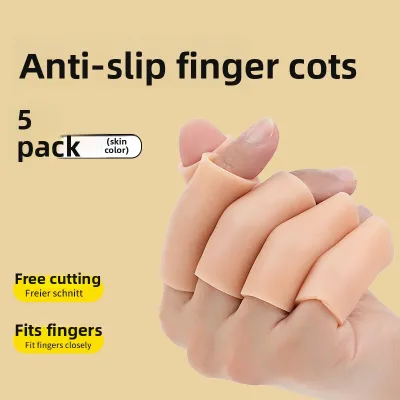

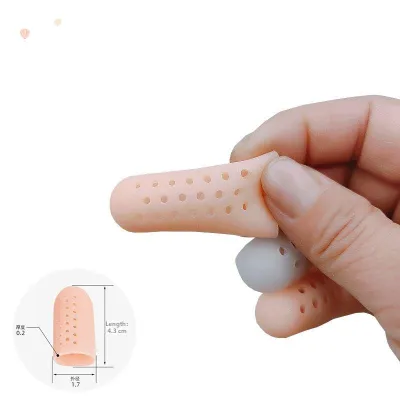
Prices are valid at publication and may change. Please refer to the product page for the latest price.
Understanding Beginner Finger Pain
Fingertip soreness is an unavoidable part of starting any stringed instrument. When you first begin playing the guitar or ukulele, you are pressing soft, unconditioned skin against thin, high-tension strings. On an acoustic guitar, these strings are often made of steel, which exerts concentrated pressure on a very small surface area of your fingertips. Even the softer nylon strings of a classical guitar or ukulele require a level of localized pressure that your hands are simply not accustomed to.
It is important to differentiate between normal skin tenderness and pain that signals a potential injury. Normal beginner discomfort manifests as a dull ache, light throbbing, or localized sensitivity on the surface of your fingertips. You might also experience mild muscle fatigue in your hand and forearm as you learn to hold chords. This tenderness is a natural physiological reaction to friction and pressure, serving as the necessary trigger for your body to adapt.
Conversely, sharp, shooting pain, joint aches, or persistent numbness are warning signs that should not be ignored. Sharp pain often indicates that you are pressing down with excessive force, holding the neck with a tense grip, or positioning your wrist at an unnatural angle. If you experience joint pain, stop playing immediately and evaluate your hand posture. Adjusting your thumb placement on the back of the neck can often relieve tension and prevent strain.
Every experienced guitarist and ukulele player has gone through this initial phase of discomfort. It is a universal rite of passage rather than a sign that your fingers are too weak or unsuited for the instrument. Recognizing that this tenderness is temporary can help you resist the urge to buy quick-fix accessories that might ultimately slow down your learning journey.
How "Finger Silicon" Protectors Affect Your Playing Experience
Silicone finger caps, often searched for online as finger silicon protectors, are small, flexible sleeves designed to fit over your fingertips. On the positive side, they provide an immediate, painless barrier between your skin and the instrument’s strings. This allows absolute beginners to practice for longer intervals during their very first week without experiencing the burning sensation that typically limits early sessions. For those with extremely sensitive skin, they offer a way to explore the instrument without immediate physical distress.

Despite this temporary comfort, the technical drawbacks of using silicone protectors are substantial. The most significant issue is the complete loss of tactile feedback. Playing a stringed instrument relies heavily on muscle memory and the physical sensation of the string beneath your skin. When you wear a thick layer of silicone, you cannot feel the precise location of the string, making it incredibly difficult to know if your finger is centered properly on the fret.
Furthermore, the physical bulk of these protectors severely compromises your accuracy. Silicone caps widen the profile of your fingertips, making it nearly impossible to press a single string without accidentally muting or buzzing adjacent strings. This extra width makes clean chord transitions clumsy and frustrating. Instead of learning to arch your fingers cleanly, you may develop poor hand habits to compensate for the artificial bulk.
These protectors also restrict your ability to execute essential playing techniques. Techniques like sliding up and down the fretboard, bending strings, executing hammer-ons and pull-offs, or adding vibrato require a smooth glide and a firm, direct grip. The high-friction surface of silicone tends to grab the wood of the fretboard, causing your fingers to stick, stutter, or pull the protectors clean off your hands during active play.
Ultimately, while silicone caps solve the immediate problem of fingertip pain, they introduce a host of physical and technical hurdles. The time spent struggling against the bulk and friction of these accessories often exceeds the time it would take to simply let your fingers adapt naturally. For most players, they function more as a barrier to progress than a helpful tool.
Why Building Natural Calluses Is the Better Long-Term Strategy
Building natural calluses is the most effective long-term solution for comfortable, precise playing. From a biological standpoint, callus formation is a process called hyperkeratosis. When your skin is subjected to repeated friction and pressure, the body responds by accelerating cell division in the epidermis. This creates a thickened, protective layer of dead skin cells rich in keratin, effectively armor-plating your fingertips against the pressure of the strings.
Natural calluses offer several distinct advantages over any artificial barrier. Once developed, they provide permanent pain reduction while preserving your tactile sensitivity. You will still be able to feel the strings and the fretboard, but the pressure will no longer cause discomfort. Because calluses are firm and compact, they allow for precise intonation, clean note articulation, and a bright, authentic tone that silicone caps inevitably muffle.
Developing these protective layers requires a consistent, moderate approach rather than marathon practice sessions. For most beginners, solid calluses will form within two to four weeks of regular daily practice. Practicing for 10 to 15 minutes every single day is far more effective than practicing for two hours once a week. Short, frequent sessions stimulate the skin to toughen up without causing the deep tissue damage that leads to painful blistering.
Proper callus maintenance is crucial, especially in warm, humid environments. In the Philippines, high humidity and frequent handwashing can soften your calluses, making them prone to peeling. Avoid playing immediately after taking a bath, washing dishes, or swimming, as wet calluses are highly susceptible to tearing. If your calluses begin to flake or peel, resist the urge to pick, bite, or shave them off. Peeling away a callus resets your progress, exposes raw, sensitive skin, and forces you to start the toughening process all over again.
When Silicone Protectors Might Actually Make Sense
While they are generally not recommended for standard practice, there are specific, limited scenarios where silicone protectors can serve as a practical, temporary tool. If you have developed a painful blister, a deep cut, or a torn callus, using a protector can allow you to continue practicing light exercises without exposing the open wound to dirt or further friction. In this context, they act as a temporary medical shield while your skin heals.
For individuals with specific medical conditions, silicone protectors can make playing accessible when it would otherwise be impossible. Those suffering from severe eczema, contact dermatitis, psoriasis, or peripheral neuropathy may find the direct pressure of metal strings unbearable or medically risky. For these players, silicone caps function as an essential assistive device, allowing them to enjoy the therapeutic benefits of making music without compromising their skin health.
Finally, they can serve as a brief psychological bridge for absolute beginners who are on the verge of quitting due to low pain tolerance. If the initial discomfort is so discouraging that you are ready to pack the instrument away permanently, using silicone caps for the first few days can help you memorize basic chord shapes and build initial enthusiasm. However, this should always be paired with a clear plan to phase them out within a week to ten days as your fingers gradually adjust.
Practical Alternatives to Ease Finger Pain Without Protectors
If you want to avoid the drawbacks of silicone protectors but still need relief, adjusting your instrument’s setup is the most effective step you can take. Many entry-level guitars suffer from high “action,” which is the distance between the strings and the fretboard. When the action is too high, you must press down with extreme force to fret a note cleanly. Taking your instrument to a local luthier for a professional setup—which involves adjusting the truss rod, nut slots, and saddle height—usually costs only a few hundred pesos and can make your instrument significantly easier to play.
Your choice of strings also plays a massive role in how much pressure your fingers must endure. If you are learning acoustic guitar, consider switching to a lighter string gauge, such as “extra light” .010 or .009 sets, which require much less tension to tune to pitch. You can also try silk-and-steel strings, which feature a softer, more flexible core. For ukulele players, upgrading to high-quality fluorocarbon or low-tension nylon strings can provide a much gentler feel under the fingers than cheap, stiff factory strings.
Modifying your daily practice habits can dramatically reduce physical strain. Instead of sitting down for a single, grueling 45-minute session, split your practice into three 10-minute sessions spread throughout the day. This approach gives your fingertips ample time to cool down and recover between sessions, preventing the severe inflammation and blistering that often derails beginners. Always wash and thoroughly dry your hands before playing to remove oils that can degrade strings and soften your skin.
Lastly, pay close attention to your fretting technique. Many beginners make the mistake of pressing down in the exact middle of the space between two frets. This position requires maximum physical force to prevent the string from buzzing. Instead, aim to place your fretting finger just behind the metal fret wire. Because the fret wire acts as the natural pivot point, pressing right next to it requires only a fraction of the force to produce a clean, clear note.
Frequently Asked Questions (FAQ)
How long does it take to build natural calluses for guitar or ukulele?
For most players, it takes between two to four weeks of consistent daily practice to develop a functional set of calluses. The key to this timeline is consistency rather than duration. Practicing for 10 to 15 minutes every day signals your body to build protective layers, whereas irregular, lengthy sessions are more likely to cause blisters that delay the toughening process. Ukulele players may find their calluses take slightly longer to become highly noticeable because nylon strings exert less intense friction than steel strings.
Can I use liquid bandage or superglue instead of silicone protectors?
Liquid bandages or specialized finger glues can serve as a helpful, ultra-thin protective barrier for cracked skin or torn calluses. Unlike bulky silicone caps, liquid coatings preserve your natural finger profile and maintain a high level of tactile feedback, allowing you to play with proper technique. However, these solutions should only be used as a short-term emergency fix to protect damaged skin. Relying on them permanently will still slow down the natural thickening of your skin, so it is best to use them sparingly while your fingertips heal.
Community discussion
Share your experience or ask a question. Comments are reviewed before publication.