
A guitar jack cable is the critical link between your instrument and your amplifier or effects chain. While it may seem like a simple accessory, specifications like length, shielding, and connector type directly influence signal integrity, noise levels, and physical usability. Understanding these core parameters helps you choose a cable that preserves your tone and withstands your specific playing environment without paying for unnecessary features.
Selecting the right cable requires balancing physical durability with electrical performance. In tropical environments with high humidity, factors like connector plating and housing construction become even more critical to prevent corrosion and signal degradation over time. By decoding these technical specifications, you can make an informed decision that keeps your rig quiet, reliable, and sounding its best.
How Cable Length Affects Your Signal and Stage Setup
Every guitar jack cable possesses an inherent electrical property known as capacitance. Because electric guitars use high-impedance passive pickups, the cable acts as a subtle capacitor that filters out high frequencies as the signal travels. The longer the cable, the higher the cumulative capacitance, which eventually causes a noticeable high-frequency roll-off that makes your guitar sound dull, muddy, and lacking in detail.
Products mentioned in this guide
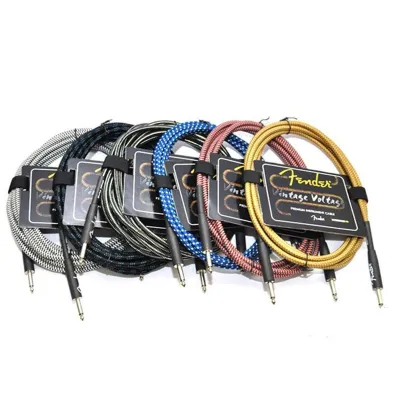
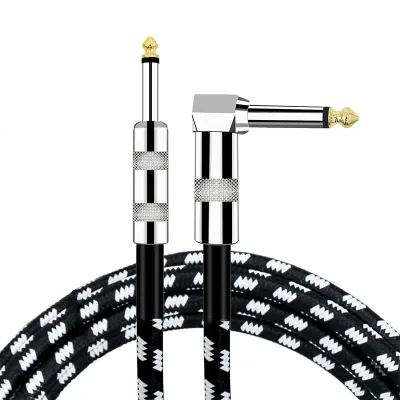
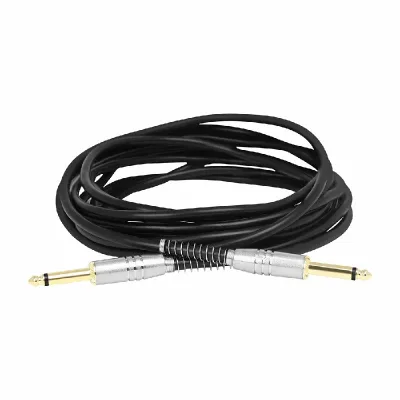
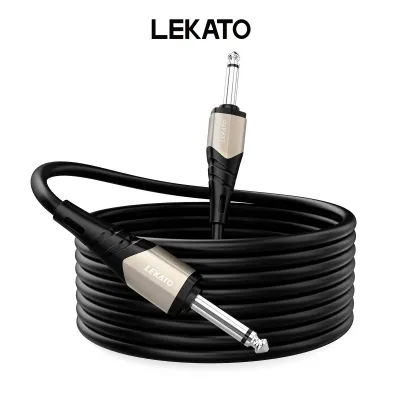
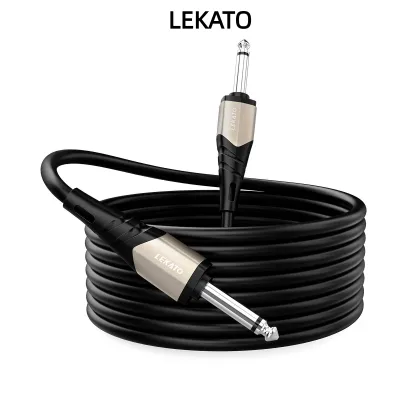
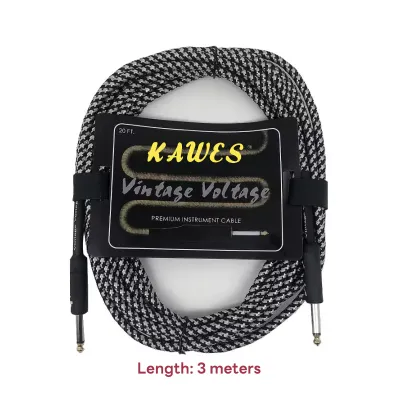
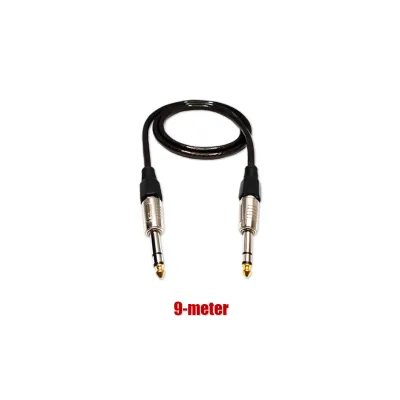
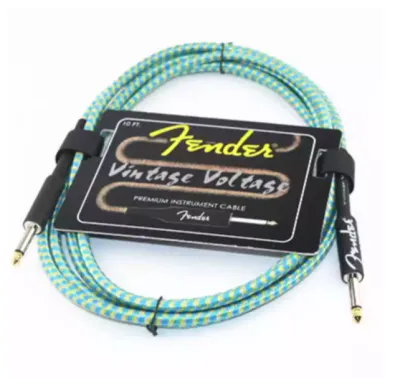
Prices are valid at publication and may change. Please refer to the product page for the latest price.
To preserve your natural tone, match your cable length to your actual physical setup rather than buying the longest option available. For home practice, small studio spaces, or bedroom setups, a cable measuring 3 meters (approximately 10 feet) offers an ideal balance of movement and signal clarity. If you perform on larger stages and need to move around, a 6-meter (20-foot) cable is generally the practical limit for passive instruments before high-frequency loss becomes apparent.
For pedalboards, keep the connections between individual pedals as short as possible using dedicated patch cables, which typically range from 15 to 30 centimeters. Minimizing excess slack across your entire signal chain reduces cumulative capacitance and keeps your performance area free of tripping hazards. If your setup absolutely requires runs longer than 6 meters, consider placing a buffer pedal or an active pedal early in your chain to preserve signal strength.
Decoding Shielding: How to Keep Noise Out of Your Signal
An instrument cable carries a weak, unamplified signal that is highly susceptible to external electromagnetic interference (EMI) and radio frequency interference (RFI). Shielding is the outer barrier wrapped around the inner copper conductor designed to intercept this noise and divert it to the ground. Without adequate shielding, your amplifier will reproduce unwanted hums, buzzes, and local radio signals alongside your guitar playing.

Manufacturers use three primary methods to shield instrument cables, each offering distinct trade-offs:
- Braided Shielding: This design weaves copper wire strands into a mesh around the conductor. It provides exceptional coverage (typically 90% to 95%) and superior physical durability, making it highly resistant to impact and repeated pulling. However, braided cables are stiffer, heavier, and generally sit at a higher price point.
- Spiral Shielding: This construction wraps flat copper strands in a single direction around the core. It offers excellent flexibility and is easy to coil, making it a popular choice for active stage performers. While highly effective, the spiral wrap can stretch or gap slightly when bent sharply, temporarily reducing its noise-rejection capabilities.
- Foil Shielding: This method uses thin aluminum foil backed by a drain wire to achieve 100% coverage against high-frequency interference. While highly effective at blocking noise, foil is brittle and prone to tearing under repeated flexing. Consequently, foil shielding is best reserved for permanent studio installations or patch cables that remain stationary.
When shopping, check the product specifications or internal construction diagrams to verify the shielding type. For live performances near stage lighting, power supplies, or wireless systems, prioritizing braided or high-coverage spiral shielding will help maintain a clean, hum-free signal.
Choosing the Right Connectors: Straight vs. Angled Plugs
The connectors at either end of your guitar jack cable dictate how securely the cable plugs into your gear and how well it resists physical wear. Choosing between straight and angled (right-angle) plugs depends entirely on the physical layout of your instrument’s input jack and your pedalboard configuration.
Straight plugs are the standard choice for recessed, surface-mounted jacks, such as those found on Stratocaster-style guitars, where an angled plug cannot seat fully into the cavity. Conversely, angled plugs are ideal for side-mounted jacks, flush face-mounted jacks, and pedalboard inputs. An angled plug sits flush against the guitar body, reducing the leverage of accidental tugs and minimizing the risk of damaging the instrument’s wood or the internal jack assembly.
Beyond plug geometry, pay close attention to the connector housing and strain relief. High-quality connectors feature heavy-duty metal housings and flexible rubber strain relief boots that prevent the cable from bending sharply at the solder joint. In humid tropical climates, cheap metal alloys can oxidize rapidly, leading to crackling sounds and intermittent signal loss. Look for nickel-plated or gold-plated connectors, as these materials offer superior resistance to corrosion and maintain a reliable electrical connection over years of use.
Before finalizing your purchase, measure the depth and clearance of your guitar’s input jack. Some deep-set or recessed jacks have narrow entryways that prevent oversized connector housings from inserting completely, which can cause grounding issues or complete signal failure.
Building Your Shortlist: Matching Specs to Your Rig
To find the ideal guitar jack cable, evaluate your entire rig as a complete system. If you play through a high-gain amplifier setup or use a complex chain of multiple effects pedals, your system is naturally more sensitive to noise. In these scenarios, investing in a cable with low capacitance and robust braided shielding is essential to prevent compounding hum and preserving your high-end clarity.
Verify your physical space constraints and equipment layout before committing to specific cable dimensions. A cable that is too short limits your movement and puts constant tension on your guitar’s input jack, while a cable that is too long degrades your tone and clutters your playing area. Match the plug angles to your specific guitar models to ensure a secure, low-profile fit.
Finally, balance your budget against practical durability rather than falling for marketing hype. While premium cables offer excellent construction, reliable soldering, and often lifetime warranties, avoid paying excessive prices for exotic materials that promise unmeasurable audio improvements. Focus on verifiable specifications like shielding coverage, capacitance ratings, and strain relief quality to secure a dependable cable that will perform consistently in any environment.
Frequently Asked Questions (FAQ)
Does a more expensive guitar jack cable always sound better?
No, there is a clear law of diminishing returns when it comes to cable pricing. Once a cable meets industry-standard specifications for low capacitance and adequate shielding, spending more will not yield a noticeable improvement in sound quality. Higher-priced cables generally command a premium for superior physical durability, robust connector soldering, gold plating for corrosion resistance, and comprehensive manufacturer warranties rather than any magical sonic superiority.
Can I use a speaker cable instead of a guitar instrument cable?
No, you should never swap these two cable types. Speaker cables are unshielded and designed to carry high-voltage, high-current signals from an amplifier to a speaker cabinet. If you use an unshielded speaker cable to connect your guitar to an amp, the cable will act as an antenna, introducing severe hum, buzz, and radio interference. Conversely, using a thin instrument cable to connect an amplifier head to a speaker cabinet can cause the cable to overheat, potentially melting the insulation and damaging your amplifier’s output transformer.
Community discussion
Share your experience or ask a question. Comments are reviewed before publication.