
A 5GHz wireless guitar transmitter operates on the 5 Gigahertz radio frequency band to send your instrument’s audio signal from the guitar to your amplifier or pedalboard without a physical cable. This frequency acts as the carrier wave for your digital audio data, helping to bypass the heavily congested 2.4GHz spectrum commonly crowded by home routers and smart devices. However, “5GHz” is simply the highway your signal travels on; it does not automatically dictate the final audio fidelity, processing speed, or overall sound quality of your instrument. The actual performance, reliability, and tone preservation of your wireless setup depend heavily on the manufacturer’s internal digital-to-analog converters, antenna engineering, and specific chipset implementation.
Wireless audio systems convert the analog voltage from your guitar pickups into digital packets, transmit them over the air, and convert them back to analog at the receiver. Choosing a frequency band is primarily about managing the physical environment. In tropical climates like the Philippines, where concrete walls and high humidity can affect signal propagation, understanding how these high-frequency waves behave is essential for maintaining a stable connection during rehearsals or live gigs.
How 5GHz Impacts Latency, Range, and Interference
When evaluating any wireless guitar system, three core performance metrics dictate whether the device will feel natural to play: latency, transmission range, and resistance to signal interference. The physical properties of the 5GHz band directly influence how these factors play out on stage, in a humid rehearsal studio, or during a home recording session. Understanding these dynamics allows musicians to look past marketing claims and make informed decisions based on their specific playing environments.
Products mentioned in this guide
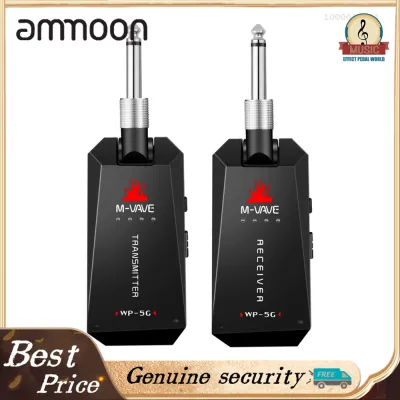
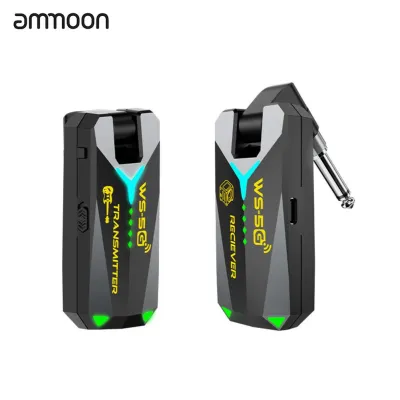
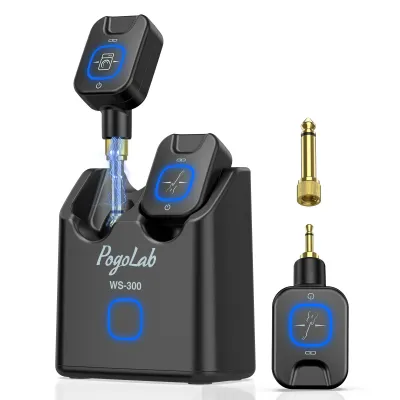
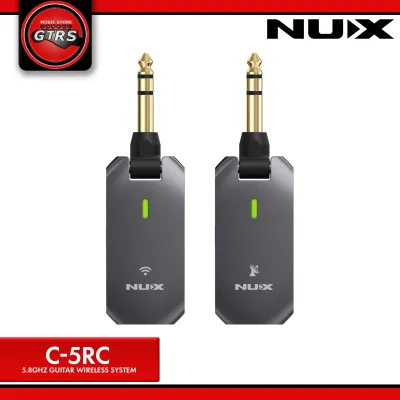
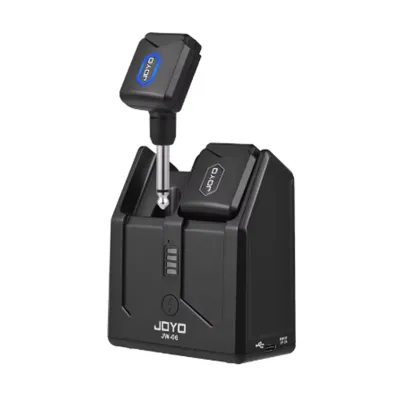
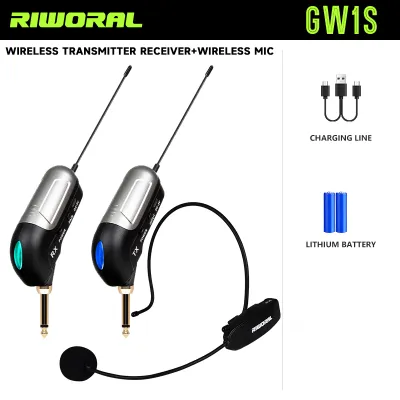
Prices are valid at publication and may change. Please refer to the product page for the latest price.
Latency and Audio Response
Latency refers to the tiny delay between the moment you strike a guitar string and the moment you hear the sound emerge from your amplifier. Measured in milliseconds, even a slight delay can disrupt a guitarist’s timing, making the instrument feel sluggish or disconnected from their fingers. While many players assume that a higher carrier frequency like 5GHz inherently reduces this delay, latency is actually determined by the speed of the analog-to-digital and digital-to-analog conversion processes inside the transmitter and receiver.
The 5GHz carrier wave simply transports the digitized data packets; it is the internal processing chipset that does the heavy lifting. To ensure a seamless playing experience, you should check the manufacturer’s technical specifications for the stated latency rating—ideally looking for systems that specify low single-digit millisecond latency under real-world testing conditions.
Transmission Range and Line of Sight
The physics of radio waves dictate that higher frequencies have shorter wavelengths, which directly impacts how far the signal can travel and what obstacles it can penetrate. Because 5GHz signals have shorter wavelengths than lower frequency bands, they struggle more when passing through solid objects like concrete walls, wooden stages, or even human bodies.
This physical limitation means that maintaining a clear, unobstructed line of sight between your guitar transmitter and the receiver is crucial for preventing dropouts. When browsing product specifications, pay close attention to the stated operational range, keeping in mind that maximum distances are typically measured in ideal, open-air environments. In a crowded venue or a home setup with physical barriers, the reliable operating distance will naturally be shorter than the maximum laboratory rating.
Interference and Crowded Environments
One of the primary advantages of moving to the 5GHz band is escaping the crowded airwaves of the standard 2.4GHz spectrum, which is heavily populated by Wi-Fi routers, Bluetooth accessories, and household appliances. This congestion often leads to signal dropouts and audio crackling during live performances.
While the 5GHz band offers a much wider space with more available channels, it is not entirely immune to interference, as modern dual-band Wi-Fi routers and local networks also utilize this frequency. The likelihood of experiencing interference in a specific venue depends on the local network density and how close you are to active wireless routers. To safeguard your performance, look for wireless systems that feature automatic frequency scanning or dynamic channel hopping, which allow the device to detect and switch to the clearest available channel without interrupting your audio.
Comparing 5GHz with Standard 2.4GHz and UHF Options
Choosing the right wireless system requires weighing 5GHz against other common options like 2.4GHz and Ultra High Frequency (UHF) bands. The standard 2.4GHz systems are highly compatible and widely available, but they frequently suffer from signal dropouts in areas with heavy Wi-Fi traffic. On the other hand, UHF systems operate on much lower frequencies, offering excellent range and wall penetration, though they often require larger antennas and may be subject to local government licensing regulations depending on the specific frequency blocks used.

| Frequency Band | Typical Environment | Local Device Density | Physical Stage Layout | Key Trade-off |
|---|---|---|---|---|
| 5GHz | Home studios, modern venues | Moderate (some dual-band Wi-Fi) | Requires clear line of sight | Shorter range, less crowded spectrum |
| 2.4GHz | Small rehearsal spaces, home | High (smartphones, standard Wi-Fi) | Moderate tolerance to obstacles | Highly prone to local Wi-Fi interference |
| UHF | Large professional stages, outdoor festivals | Low (specialized wireless gear) | High tolerance to physical barriers | Larger hardware, potential licensing checks |
This comparison highlights that no single frequency band is universally superior for every playing scenario. A guitarist performing in a modern, tech-heavy indoor venue might find the clear channels of a 5GHz system indispensable, while a musician playing on a sprawling outdoor stage with physical barriers might benefit more from the robust penetration of a UHF system. Assessing your typical performance environment and the density of local wireless devices is key to selecting the system that will keep your signal stable.
What to Check Before Buying a 5GHz Wireless Guitar System
Before purchasing a 5GHz wireless guitar system, several practical factors must be verified to ensure the device integrates smoothly with your gear and operating environment. First, check the input impedance compatibility of the transmitter, especially if you alternate between guitars with active and passive pickups. Active pickups, which require an internal battery, sometimes output a signal level or have physical jack configurations that can cause compatibility issues or unwanted noise with certain wireless transmitters.
Second, evaluate the battery specifications, focusing on the battery type, estimated continuous playtime, and charging methods. Systems with built-in rechargeable lithium batteries are highly convenient, but you must ensure the rated battery life comfortably exceeds the duration of your longest rehearsals or live sets.
Third, confirm that the specific 5GHz frequency channels used by the device comply with local telecommunications regulations in your region to ensure legal operation.
Finally, when comparing options on an online marketplace, look at systems within your budget in ₱, but prioritize technical specifications over the lowest price tag. Carefully review the seller’s return policy and warranty terms. Because wireless performance is highly dependent on your unique physical environment, having a reliable return window allows you to test the system for latency, signal dropouts, and interference in your actual practice space before making a permanent commitment.
Frequently Asked Questions (FAQ)
Do I need a special amplifier for a 5GHz guitar transmitter?
No, you do not need a special or digital amplifier to use a 5GHz wireless guitar system. The wireless receiver, which sits on top of your amplifier or on your pedalboard, receives the digital signal over the air and converts it back into a standard analog audio signal. This analog signal is then sent directly into your amplifier’s input jack using a standard patch cable, meaning the system works seamlessly with any traditional tube, solid-state, or modeling amplifier.
Will a 5GHz transmitter drain my guitar's battery faster?
No, a 5GHz wireless transmitter will not drain your guitar’s battery. The transmitter is a self-powered device that runs on its own internal rechargeable or replaceable battery. If your guitar features active pickups that require a 9V battery, those pickups will continue to draw power from the guitar’s internal battery at their normal rate, completely independent of the wireless frequency or system you choose to use.
Community discussion
Share your experience or ask a question. Comments are reviewed before publication.