
Choosing your first Blackstar amplifier is an exciting milestone, but the wide array of available models can feel overwhelming to a beginner. The right choice depends entirely on your immediate practice environment, your musical goals, and how you prefer to interact with technology. Beginners generally choose between three distinct architectural paths: highly versatile digital modeling amps that offer a wide array of built-in effects, traditional tube amplifiers that provide organic dynamic response, or ultra-portable desktop units designed for low-volume convenience.
Matching the amplifier’s core technology to your daily playing space and budget ensures you stay motivated to practice. Instead of searching for a single universal winner, focus on finding the series that matches your daily routine and learning style. By understanding how different designs handle volume, tone shaping, and connectivity, you can confidently select an amplifier that will support your musical journey for years to come.
Key Factors for Beginner Guitarists
Before looking at specific models, it is helpful to understand the technical specifications that will impact your daily practice. The way an amplifier manages volume, shapes your tone, and connects to other devices determines how practical it will be in your home.
Products mentioned in this guide
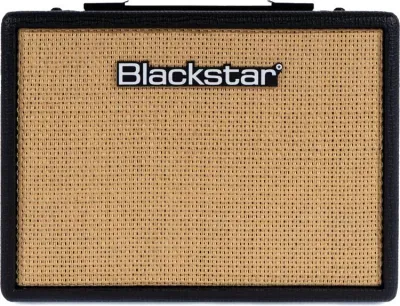

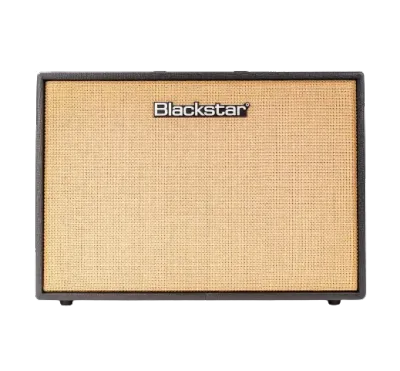
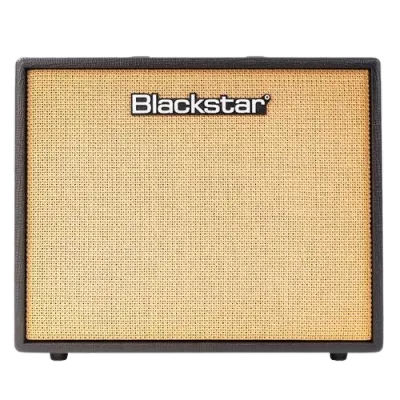
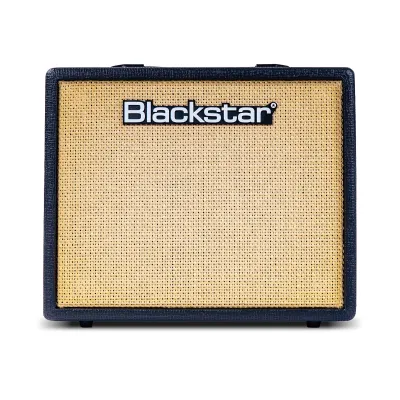
Prices are valid at publication and may change. Please refer to the product page for the latest price.
Wattage and Volume Management Wattage ratings do not translate directly to volume in a simple linear fashion. A 10-watt tube amplifier can easily fill a small hall and might be far too loud for a quiet bedroom, whereas a 10-watt digital modeling amplifier is designed to deliver rich tones at much lower, neighbor-friendly volumes. Beginners should look for amplifiers with built-in power attenuation or power scaling features. These controls allow you to reduce the output wattage to a fraction of a watt, giving you full, saturated tones without disturbing the rest of your household.
Tone Shaping and Onboard Effects As a beginner, you are still discovering your personal playing style and tonal preferences. An amplifier with versatile tone-shaping controls, such as Blackstar’s patented Infinite Shape Feature (ISF), allows you to sweep between tight, focused American-style tones and warm, woody British-style voicings. Onboard digital effects like reverb, delay, chorus, and flanger are also highly beneficial. They allow you to experiment with different sounds and textures without the immediate need to purchase expensive external effect pedals.
Connectivity and Silent Practice Modern practice amplifiers offer a variety of inputs and outputs that make learning much easier. A dedicated headphone output is essential for late-night practice sessions, allowing you to play silently without losing the spatial feel of a real speaker cabinet. An auxiliary input (Aux In) lets you plug in your smartphone or tablet to play along with backing tracks or instructional videos. Additionally, a USB port allows the amplifier to function as a direct audio interface, letting you record your playing directly into a computer or customize your tones using editing software.
Budget Allocation and Accessories When setting your budget in Philippine Pesos (₱), remember to account for essential accessories alongside the amplifier itself. It is wise to reserve a portion of your funds for a high-quality instrument cable to prevent unwanted hum and static. You will also need a reliable guitar tuner, a comfortable strap, a selection of picks in various thicknesses, and a sturdy guitar stand. Keeping your guitar on a stand rather than packed away in a gig bag makes it much easier to pick up and practice whenever you have a spare moment.
Comparing Blackstar Series for Beginners
To find the right match, it helps to compare the primary product lines based on their tone generation methods, physical footprint, and intended use. Blackstar designs distinct series to cater to different player profiles, from tech-savvy bedroom players to purists who want classic analog warmth. Rather than searching for a single universal winner, focus on finding the series that aligns with your daily routine and learning style. Always verify the exact specifications and generation of the model you are looking at, as features can vary between product iterations.

Digital Modeling and Versatility Series
Digital modeling amplifiers are excellent for beginners who want to explore a vast landscape of guitar tones without investing in a massive pedalboard. These units use digital signal processing to emulate various classic amplifier styles, from clean acoustic tones to high-gain metal distortion.
Key Characteristics of Digital Modeling
- Tonal Variety: Access to multiple distinct amplifier voices and built-in modulation, delay, and reverb effects.
- Software Integration: Deep editing capabilities via desktop or mobile companion apps, allowing you to download artist presets and fine-tune your EQ.
- Built-In Tuner: Many modeling amps include a convenient onboard tuner, reducing the amount of gear you need to carry.
While the sheer volume of options is incredibly fun, it can sometimes lead to “option paralysis,” where a beginner spends more time tweaking settings than actually practicing. If you prefer a simple, plug-and-play experience, you may find the deep menus slightly distracting. Before purchasing, check the manufacturer’s official website to confirm that the companion editing software is fully compatible with your computer’s operating system or your mobile device.
Traditional Tube Amplifier Series
For players who prioritize organic touch sensitivity and classic analog warmth, traditional tube (or valve) amplifiers remain a highly compelling option. These amplifiers use physical vacuum tubes to amplify the guitar signal, creating a natural compression and harmonic richness that responds dynamically to how hard you strike the strings.
Key Characteristics of Tube Amplifiers
- Dynamic Response: The amplifier reacts instantly to the nuances of your picking hand, helping you develop excellent touch control.
- Simple Controls: Most tube amps feature straightforward, analog control panels without complex digital menus or screens.
- Natural Overdrive: Achieving classic rock crunch by naturally pushing the tubes into saturation at manageable volumes.
However, tube amps require a bit more care and understanding than digital units. They have a brief warm-up period before they produce sound, run warm during operation, and are physically heavier due to the large transformers inside. They also require periodic maintenance, as vacuum tubes eventually wear out and need replacement. If you choose this path, it is highly recommended to verify the availability of replacement tubes and authorized service centers in your local area to ensure long-term support.
Ultra-Portable and Desktop Practice Series
If space is highly limited or you need an amplifier that can easily travel with you, ultra-portable desktop amplifiers offer an excellent compromise. These compact units are designed specifically for low-volume bedroom practice, often fitting easily on a desk, bookshelf, or bedside table.
Key Characteristics of Desktop Amplifiers
- Compact Footprint: Extremely lightweight and small enough to sit next to your computer monitor.
- Battery Power: Many models can run on standard AA batteries or rechargeable power packs, making them highly portable.
- Bluetooth Streaming: Double as high-quality portable speakers for streaming music or playing along with backing tracks wirelessly.
Keep in mind that the small physical footprint means smaller speakers, which naturally limits the low-end bass response and makes them unsuitable for playing alongside loud acoustic drums. They are strictly designed for personal practice rather than live performances or band rehearsals. Always check the official product specifications to verify whether the power adapter is included in the box or if it must be purchased separately.
Matching the Amp to Your Practice Environment
Your living situation and daily routine play a massive role in determining which amplifier will serve you best. A model that sounds incredible in a spacious music store might feel impractical once you bring it home to a small room or a shared apartment.
Bedroom and Apartment Setups In high-density living situations, controlling volume is the key to maintaining good relationships with family members and neighbors. High humidity and warm tropical temperatures in the Philippines might also mean you practice in air-conditioned rooms where space is at a premium. For these environments, prioritize amplifiers that feature high-quality headphone outputs with cabinet emulation, which simulates the sound of a full speaker cabinet through your headphones. Power reduction switches that let you drop the amplifier’s output to a fraction of a watt are also incredibly useful for getting rich, overdriven tones at whisper-soft volumes.
Shared Living Spaces If your practice area is a shared living room or a small study, consider the physical footprint and aesthetic design of the amplifier. A bulky, industrial-looking stage amp might clutter the room, whereas a sleek, compact desktop unit blends seamlessly into modern home decor. Lightweight designs are also much easier to pack away into a closet or under a bed when not in use, protecting the sensitive electronics from dust and ambient humidity.
Future-Proofing for Jam Sessions If your goal is to join a band or jam with friends in the near future, you will need an amplifier that can project over other instruments. While a 3-watt desktop amp is perfect for solo practice, it will quickly be drowned out by an acoustic drum kit or a bass guitar. If you anticipate playing in a rehearsal space, look for a versatile modeling or tube amplifier with higher wattage (typically 20 to 40 watts for digital, or 5 to 15 watts for tube) that features a line-out or a speaker-emulated output for connecting directly to a larger PA system.
Pre-Purchase Checklist and Verification
Before finalizing your purchase, it is essential to run through a practical checklist to ensure you are getting a genuine, fully functional product that is safe to use in your home.
- Verify Authorized Dealers: Always purchase from authorized local distributors or official brand stores on reputable online marketplaces. This ensures you receive a genuine product and access to a valid local warranty, which is crucial for resolving any manufacturing defects.
- Check Voltage Compatibility: In the Philippines, the standard electrical supply is 220V/230V at 60Hz. If you are ordering an amplifier from an international online music store, double-check the product specifications to ensure the power transformer or adapter is rated for 220V/230V. Connecting a 110V unit directly to a local outlet will cause severe, irreversible electrical damage to the amplifier.
- Inspect Physical Condition and Accessories: Upon unboxing, carefully inspect the amplifier's exterior for any tears in the outer covering (tolex), dents in the grille cloth, or loose control knobs. Verify that all promised accessories, such as the power cable, power adapter, USB cable, or footswitch, are present in the packaging.
- Perform an Immediate Functional Test: Plug in your guitar and test every input, knob, and switch during your retailer's return window. Turn the volume and EQ knobs slowly to listen for any scratchy static sounds, which can indicate dirty potentiometers. If you bought a tube amp, listen closely for excessive background hum, high-pitched squealing (microphonics), or physical rattles from the speaker cabinet when playing specific notes.
Frequently Asked Questions (FAQ)
Do I need to buy external pedals if I choose a digital Blackstar amp?
No, you generally do not need to purchase external pedals right away if you choose a digital modeling Blackstar amplifier. These models come equipped with a wide range of built-in digital effects, including overdrive, distortion, chorus, flanger, delay, and reverb. This built-in suite is more than sufficient for beginners to explore different musical genres, learn how various effects alter their tone, and enjoy daily practice. As your playing skills progress and your tonal preferences become more specific, you can easily integrate external pedals through the main front input or an effects loop if the model supports it.
Can I use a Blackstar tube amp for silent night practice?
Yes, you can use certain Blackstar tube amplifiers for silent night practice, but you must verify the specific model’s features beforehand. Look for models that include a dedicated headphone output or an emulated line out. It is critical to check the product manual to ensure that plugging in headphones automatically mutes the internal speaker, or that the amplifier features a built-in load box that allows safe operation without the speaker active. Additionally, check if the headphone output features cabinet emulation, which ensures the tone in your headphones sounds like a real speaker cabinet rather than a harsh, direct signal.
What should I check if buying a used Blackstar amplifier?
When purchasing a second-hand Blackstar amplifier, a thorough physical and functional inspection is vital. Examine the cabinet for structural damage, loose input jacks, or worn-out control knobs that spin freely without stopping. Turn on the amplifier and listen for excessive background hiss, loud pops, or crackling sounds when you adjust the volume and tone controls. If you are inspecting a used tube amplifier, look at the back of the unit to ensure the vacuum tubes glow with a warm, consistent orange light; a dull red glow or a cloudy white appearance inside the glass indicates the tubes need immediate replacement.
Community discussion
Share your experience or ask a question. Comments are reviewed before publication.