
Selecting a Tagalog Bible for daily Catholic prayer and reflection requires looking beyond general popularity. The ideal choice depends on verifying official Church approval, understanding the translation philosophy, and matching the physical features to your personal spiritual routine. Rather than searching for a single universal edition, this guide helps you evaluate the available options to find the version that best supports your daily faith journey.
For many readers, the search begins with finding a text that feels both reverent and easy to comprehend. A translation that is too archaic can make daily reflection feel like a chore, while one that is too casual might lose the sacred tone appropriate for prayer. By focusing on key ecclesiastical markers, translation styles, and physical durability, you can select a companion that will enrich your spiritual life for years to come.
Key Criteria for Choosing a Catholic Tagalog Bible
When shopping for a Tagalog Bible, the first step is to ensure that the edition is officially recognized by the Catholic Church. This is not merely a matter of tradition; it guarantees that the translation is doctrinally sound and complete. The most reliable way to verify this is by looking for official ecclesiastical approval marks, specifically the Nihil Obstat and the Imprimatur. The Nihil Obstat indicates that a designated Church censor has reviewed the text and found no obstacles to Catholic faith or morals. Following this, the Imprimatur is the official endorsement by a bishop, granting permission for the Bible to be printed and distributed. These marks are typically found on the copyright page, and their presence ensures you are reading a text aligned with Catholic teachings.
Products mentioned in this guide
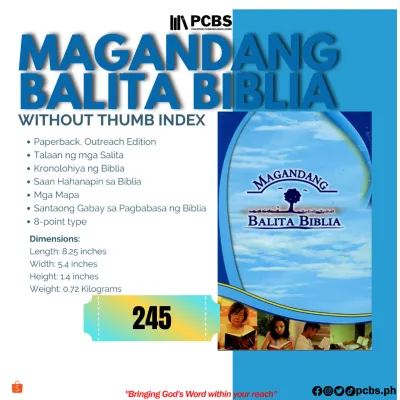
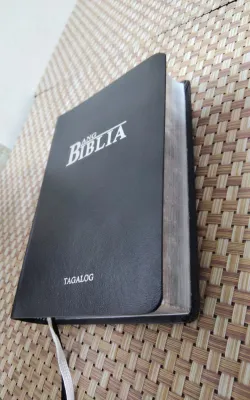
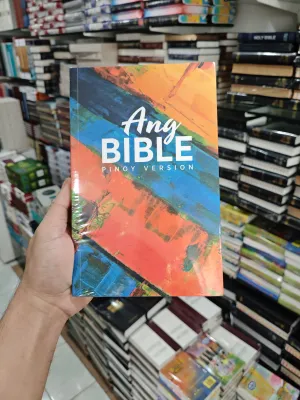
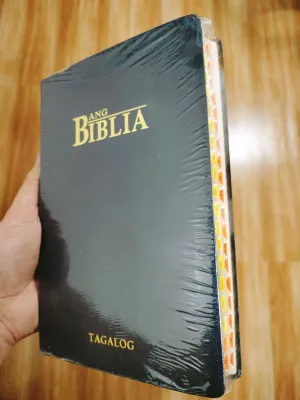
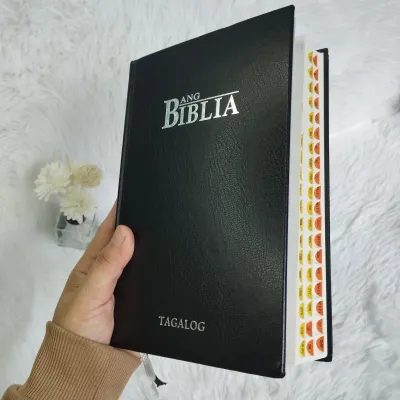
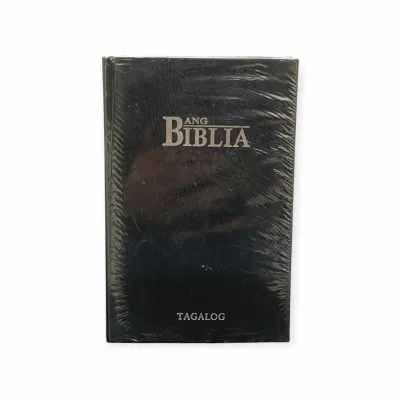
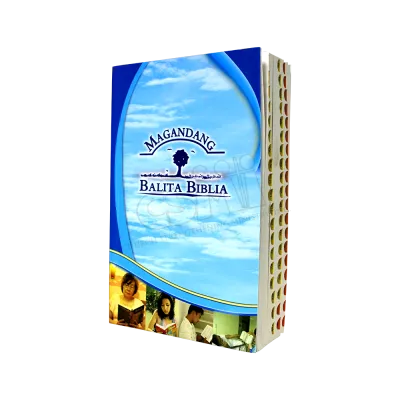
Prices are valid at publication and may change. Please refer to the product page for the latest price.
Another defining feature of a Catholic Bible is the inclusion of the Deuterocanonical books. These seven books—Tobit, Judith, Wisdom, Sirach, Baruch, and 1 and 2 Maccabees, along with specific additions to Esther and Daniel—are part of the Catholic biblical canon but are omitted from Protestant editions. If you accidentally purchase a Protestant Tagalog Bible, you will find these books missing, which can disrupt your ability to follow daily Catholic reading plans or liturgical guides. Ensuring these books are present, either integrated into the Old Testament or clearly marked, is essential for a complete Catholic devotional experience.
Beyond the biblical text itself, study aids play a vital role in daily reflection. Catholic Bibles are characterized by their inclusion of doctrinal footnotes, cross-references, and introductory essays. These tools are not merely academic; they provide the historical and theological context necessary to understand difficult passages. Footnotes help clarify complex cultural practices of the ancient world and explain how specific verses have been interpreted through Church tradition. Cross-references allow you to connect Old Testament prophecies with their fulfillment in the New Testament, deepening your overall understanding during prayer.
Finally, introductory essays at the beginning of each book offer a brief overview of the author, the historical setting, and the primary themes. Reading these short introductions before diving into a new book can significantly enhance your daily meditation. They help you approach the text with the right mindset, transforming a simple reading session into a more profound encounter with the Word of God.
Comparing Translation Styles for Spiritual Reading
The translation philosophy of a Tagalog Bible greatly influences how you experience the text during prayer. One major approach is formal equivalence, often referred to as a word-for-word translation. This method prioritizes preserving the original sentence structures, idioms, and vocabulary of the ancient Hebrew, Aramaic, and Greek texts as closely as possible. In Tagalog, this often results in a highly formal, classical style of language. While this can be incredibly beautiful and reverent, it may also require a slower reading pace and more effort to comprehend, especially for those not accustomed to traditional Tagalog grammar.

Formal translations are exceptionally well-suited for analytical study and slow, meditative prayer practices like lectio divina. Because the translation stays close to the original phrasing, it allows you to ponder the exact choice of words and structural nuances. If your daily prayer routine involves spending a long time on a single paragraph or verse, a formal equivalence translation provides a rich, stable foundation for deep contemplation.
In contrast, dynamic equivalence, or thought-for-thought translation, focuses on conveying the meaning of the original text in natural, contemporary language. Instead of translating word-for-word, translators express the original thoughts using modern Tagalog phrasing and idioms. This approach prioritizes readability and immediate comprehension, making the text flow smoothly and naturally.
For daily devotionals, continuous reading, or family prayer sessions, a dynamic translation is often highly practical. It allows you to grasp the narrative and spiritual message quickly without getting distracted by archaic vocabulary. This style is particularly beneficial for younger readers, families praying together, or anyone who prefers a conversational tone that mirrors modern spoken Tagalog. It makes the scriptures feel immediate, accessible, and directly applicable to daily life.
Some editions offer liturgical and devotional adaptations, which are specifically optimized for prayer and worship. These versions strike a balance between formal reverence and modern readability, often aligning closely with the Tagalog texts used in the local Catholic liturgy. Reading a translation that uses the same phrasing you hear during Sunday Mass can create a powerful connection between your personal prayer life and the communal worship of the Church, reinforcing the homily and the liturgical seasons.
Matching Bible Features to Your Daily Prayer Routine
The physical characteristics of your Bible can significantly impact your daily reading habits. Typography and layout are critical factors to consider, especially if you pray during the early morning or late evening. Small, tightly packed fonts can quickly cause eye strain, distracting you from your meditation. Look for editions that offer clear, readable font sizes and adequate line spacing. Double-column formats are traditional and help keep the book compact, but some readers prefer single-column layouts, which read more like a modern novel and can feel less intimidating.
Devotional add-ons are another valuable feature to look for when selecting a Bible. Many Catholic editions include integrated daily reading plans, lectionary indexes, or prayer appendices. A lectionary index is particularly helpful, as it guides you to the specific scripture readings assigned for each day’s Mass. Having a section dedicated to traditional Catholic prayers, such as the Rosary, the Way of the Cross, or basic morning and evening prayers, turns your Bible into a comprehensive spiritual manual that supports your entire devotional routine.
Portability and durability are also essential considerations, depending on where you prefer to pray. If you have a dedicated home altar, a larger, heavier hardcover Bible with premium binding and ribbon markers is an excellent choice. These editions are built to last and serve as a beautiful centerpiece for family prayer. However, if you prefer to read during your daily commute on public transportation or while traveling, a compact, lightweight paperback or flexible synthetic leather cover is much more practical.
In the tropical climate of the Philippines, high humidity and heat can take a toll on books. Cheaply glued bindings can dry out and crack, causing pages to fall out over time. To ensure your Bible lasts for years, look for editions with sewn bindings (often called Smyth-sewn), which allow the book to lie flat when open and offer superior durability. Additionally, pay attention to paper opacity; very thin paper can suffer from “ghosting,” where the text on the reverse side bleeds through, making it difficult to read under bright light. Investing in a Bible with slightly thicker, high-opacity paper can greatly improve your reading comfort.
What to Check Before Buying Your Tagalog Bible
Before making a purchase, especially when browsing online marketplaces or local bookstores, it is crucial to scrutinize the product details. Many digital storefronts list Bibles under generic titles like “Tagalog Bible” without clearly indicating the denomination or translation style. Carefully read the publisher information and product description to confirm that the edition is explicitly Catholic. Look for keywords like “Catholic Edition,” “with Deuterocanonicals,” or the names of recognized Catholic publishers to avoid accidentally purchasing a Protestant translation that lacks the full canon of books.
Language modernity is another important factor to verify. Tagalog has undergone significant shifts over the decades. Some older translations use highly classical, formal Tagalog that features complex grammatical structures and vocabulary rarely used today. While these versions are poetic, they can be challenging for daily, rapid reading. If you prefer a more intuitive reading experience, look for translations published in recent decades that utilize contemporary, standard Tagalog. Checking sample pages or reading customer reviews can give you a good sense of the language style before you buy.
When purchasing from online platforms, you cannot physically inspect the book’s quality, making customer feedback invaluable. Look for reviews that specifically mention the physical construction of the Bible. Pay attention to comments regarding paper thickness, print clarity, and binding strength. Some budget-friendly editions, while affordable, may use very thin paper that tears easily or has significant text bleed-through.
Finally, always check the seller’s return policy. Even with careful research, you might receive a copy with printing defects, such as misaligned pages, smudged ink, or a damaged cover. A reliable return or exchange policy ensures that you can swap a defective copy for a pristine one. Whether you are choosing a budget-friendly paperback priced around ₱300 or a premium synthetic leather edition closer to ₱1,500, taking the time to verify these details ensures that your investment will serve as a durable, reliable companion for your daily spiritual journey.
Frequently Asked Questions (FAQ)
Do I need a specific Tagalog Bible for Catholic Mass readings?
While a personal Tagalog Bible is excellent for daily reflection, personal study, and preparing for Mass, the official readings proclaimed during the liturgy are taken from the approved Lectionary or Missal. These liturgical books are translated and compiled specifically for public proclamation in the church. Consequently, the phrasing in your personal Bible may differ slightly from the text read aloud by the lector at Mass, though the core spiritual message remains identical.
How can I verify if a Tagalog Bible is officially Catholic?
To confirm that a Tagalog Bible is officially Catholic, first check the copyright page for the Imprimatur and Nihil Obstat declarations, which indicate official Church approval. Next, look for the official seal or endorsement of the Catholic Bishops’ Conference of the Philippines (CBCP) or a local diocese. Finally, check the table of contents to ensure it contains the full 73-book Catholic canon, including the seven Deuterocanonical books.
Community discussion
Share your experience or ask a question. Comments are reviewed before publication.