
Selecting the right mathematics books for your child in the Philippines requires balancing national educational standards with your child’s unique learning pace. To make an effective choice, you must ensure the material aligns with the Department of Education (DepEd) K-12 curriculum while matching your child’s current cognitive development. The ideal book should bridge the gap between classroom lessons and independent home study, providing clear explanations, relevant local examples, and sufficient practice problems to build confidence.
In a tropical climate where study environments can range from air-conditioned classrooms to humid home study spaces under a ceiling fan, physical durability and clear layout are just as important as content. Whether you are preparing for the upcoming school year during the rainy season or looking for supplementary workbooks to prevent learning loss during summer break, taking a systematic approach to book selection will save you time, money, and academic frustration. By evaluating curriculum alignment, book formats, grade-specific milestones, and physical production quality, you can secure a resource that truly supports your child’s mathematical journey.
Understanding the DepEd K-12 Mathematics Curriculum
The foundation of any local educational resource is its alignment with the national curriculum. The Department of Education utilizes a spiral progression approach for teaching mathematics across all grade levels. Under this system, key mathematical domains—such as algebra, geometry, patterns, statistics, and probability—are not taught in isolation during single academic years. Instead, these concepts are introduced early at a basic level and revisited with increasing complexity and depth as the student progresses through each grade. When selecting mathematics books, you must look for materials that respect this spiral structure, ensuring that the transition from previous years feels like a natural step forward rather than an overwhelming leap.
Products mentioned in this guide
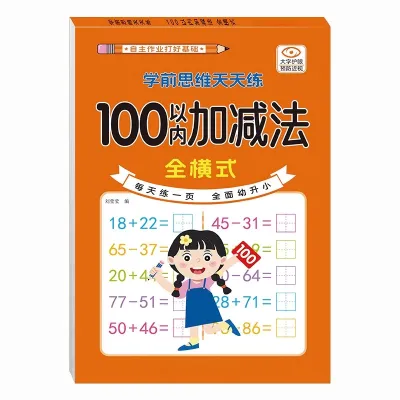
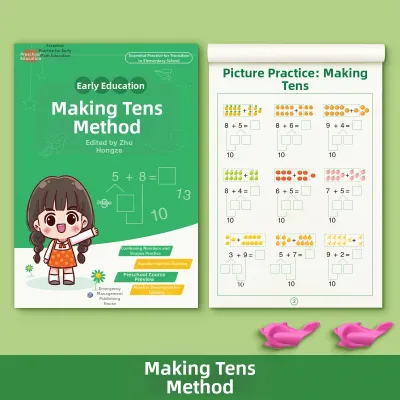
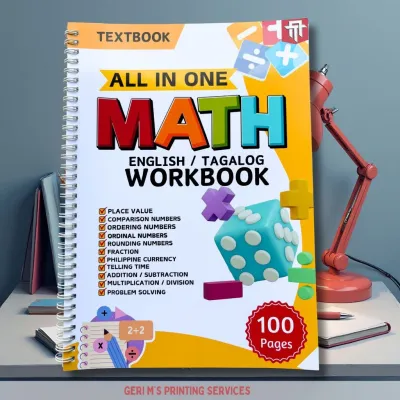
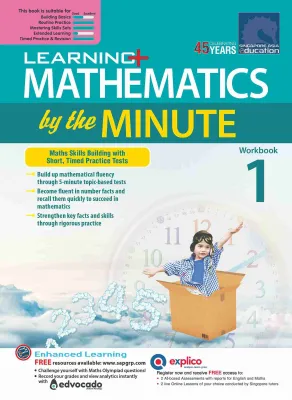
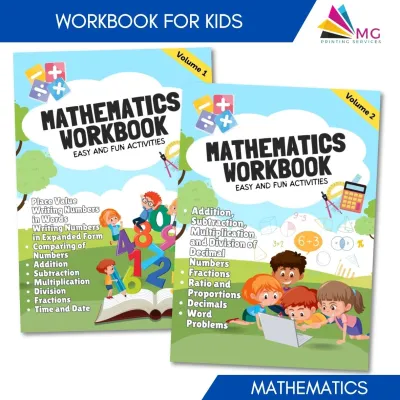
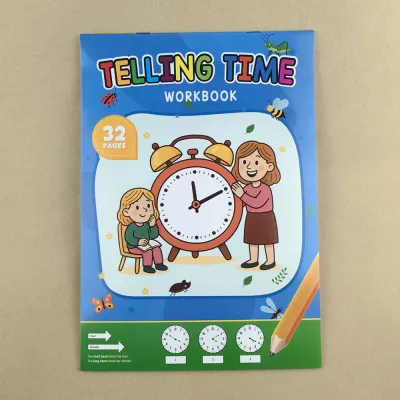
Prices are valid at publication and may change. Please refer to the product page for the latest price.
To verify if a book matches this curriculum structure, you should check for alignment with the Most Essential Learning Competencies (MELCs). The MELCs serve as the primary guide for what students must master in each grading period. Reputable educational publishers in the Philippines usually print a curriculum map or a formal declaration of DepEd alignment on the introductory pages of their textbooks. If a book does not explicitly state its alignment with these competencies, you can cross-reference its table of contents with the official curriculum guides published on the DepEd portal. This step is particularly crucial if you are considering supplementary materials that may have been designed for different educational systems.
It is also important to distinguish between core textbooks and supplementary practice materials. Core textbooks are comprehensive instructional guides designed to introduce new concepts, explain mathematical theories, and provide illustrative examples. These are typically mandated for classroom use and follow a highly structured pedagogical path. Supplementary materials, such as workbooks and skill-builders, focus primarily on repetitive practice, drills, and alternative problem-solving methods. Understanding this distinction allows you to identify whether your child needs a book that teaches the concepts from scratch or one that simply provides extra exercises to reinforce what was already taught in school.
Matching Book Types to Your Child's Learning Needs
Every child processes mathematical concepts differently, meaning a book that works perfectly for one student might frustrate another. Textbooks, workbooks, and reference guides serve distinct educational purposes and offer varying levels of instructional depth. Textbooks are theory-heavy, offering detailed explanations, historical context, and step-by-step proofs of mathematical rules. Workbooks, on the other hand, prioritize active engagement, featuring fill-in-the-blank exercises, graphing grids, and word problems with dedicated spaces for writing solutions. Reference guides act as quick-access tools, compiling formulas, definitions, and key theorems into concise summaries without extensive practice sets.
When choosing a book, you must also evaluate whether it is designed for independent self-study or requires active facilitation by a teacher or parent. Self-study books feature conversational language, intuitive visual aids, and fully worked-out examples that guide the reader through the logic of each step. These are excellent for students who prefer to learn at their own pace or need to catch up on missed lessons. Conversely, classroom-oriented textbooks often rely on a teacher to explain the underlying concepts, leaving the student with brief definitions and complex exercises that can be difficult to solve without external guidance. If you plan to use the book for home-based learning, prioritize titles that offer robust explanatory text.
A critical feature to look for in any home-learning mathematics book is a comprehensive answer key and solution guide. Many basic workbooks only provide a list of final numerical answers at the back, which does little to help a student who has made a calculation error midway through a problem. High-quality reference materials and workbooks often include step-by-step solution guides, either printed in a separate section or accessible via authorized digital portals. These guides allow you to trace your child’s work, identify exactly where a logical or arithmetic error occurred, and correct the misunderstanding before it becomes a habit.
Selecting Mathematics Books by Grade Level
As children grow, the cognitive demands of their mathematics curriculum shift dramatically from concrete, visual manipulation to highly abstract reasoning. In the early years, the focus is on developing a strong sense of numbers and basic operations, which gradually transitions into spatial reasoning, algebraic thinking, and specialized mathematical disciplines. When selecting a book, you must ensure that its pacing, tone, and presentation style match the cognitive development associated with your child’s specific educational stage.
Matching the book’s pacing with your child’s current academic strand and grade requirements prevents cognitive overload. A book that introduces abstract formulas too early can damage a child’s confidence, while a book that remains too basic can lead to boredom and disengagement. By understanding the primary milestones of each educational stage, you can select a book that provides the right level of challenge.
Elementary (Kindergarten to Grade 6)
During the elementary years, the primary goal of mathematics education is to build a rock-solid foundation in basic numeracy. For kindergarten to early grade schoolers, you should prioritize books that emphasize basic arithmetic operations, fractions, decimals, and introductory measurement. Visual learning aids are absolutely essential at this stage. Look for books that incorporate clear diagrams, bar models, and illustrations of physical manipulatives like base-ten blocks, fraction circles, and geometric shapes. These visual representations help young minds transition from concrete objects to abstract numbers.
The language used in elementary math books must be age-appropriate, clear, and engaging. Word problems should feature relatable local scenarios, such as calculating change when buying fruits at a local market, sharing native delicacies among siblings, or determining travel times on public transportation. Using familiar cultural contexts helps children realize that mathematics is a practical tool used in daily life, rather than just an abstract school subject. Avoid books that use overly complex vocabulary or foreign cultural references that might confuse a young reader who is already trying to decode the mathematical logic of the problem.
Finally, ensure that the content aligns strictly with foundational DepEd milestones without introducing premature algebraic concepts. While some advanced curricula introduce variables and complex equations early, the local curriculum focuses on mastering arithmetic, ratio, and basic geometry first. Pushing a child into abstract algebra before they have fully grasped fractions and decimals can lead to math anxiety. Look for books that offer plenty of practice in mental math and estimation, as these skills are critical for developing intuitive number sense.
Junior High School (Grades 7 to 10)
The transition to Junior High School marks a significant cognitive shift as students move away from arithmetic and enter the realm of abstract mathematical reasoning. Books for Grades 7 through 10 must focus heavily on algebra, geometry, statistics, and introductory trigonometry. At this stage, the material should provide clear, rigorous explanations of mathematical theorems, algebraic rules, and geometric proofs. Look for books that do not just ask students to memorize formulas, but instead explain the logic behind how those formulas are derived.
Real-world application problems become increasingly important during these years. The exercises should challenge students to apply algebraic equations to solve practical problems, such as calculating interest rates, analyzing statistical data from local surveys, or using geometric principles in basic construction scenarios. These problems foster critical thinking and logical reasoning, helping students understand the utility of advanced mathematics in various professional fields. The book should also include multi-step problems that require students to combine different mathematical concepts to find a solution.
When evaluating a Junior High School textbook, pay close attention to the progression of difficulty within each chapter. A well-structured chapter should begin with simple diagnostic exercises to review prerequisite knowledge, move on to guided practice with step-by-step solutions, and conclude with challenging, non-routine problems. This gradual increase in difficulty ensures a smooth transition between grade levels and prevents students from becoming discouraged by sudden spikes in complexity.
Senior High School (Grades 11 to 12)
Senior High School mathematics is highly specialized and tailored to prepare students for university-level education and specific career paths. At this level, you must choose books based on your child’s academic strand, such as Science, Technology, Engineering, and Mathematics (STEM), Accountancy, Business, and Management (ABM), or Humanities and Social Sciences (HUMSS). The mathematical requirements vary significantly between these tracks. For instance, while all students must take General Mathematics and Statistics and Probability, STEM students require specialized textbooks covering Pre-Calculus and Basic Calculus.
Verify that the book you select aligns perfectly with the rigorous demands of your child’s specific strand. A STEM-focused calculus book must offer deep theoretical explanations, rigorous proofs, and highly technical problem sets. Conversely, a business math book for the ABM strand should emphasize financial mathematics, interest calculations, annuities, and basic accounting applications. Choosing a book that is too general may leave a STEM student unprepared for engineering calculus, while a highly theoretical book might overwhelm a student in a non-STEM track who needs practical, application-based math.
Additionally, ensure the book provides adequate complex problem-solving practice to help students prepare for competitive college entrance examinations. The college admission tests of major universities in the Philippines are known for their challenging mathematics sections, which test speed, accuracy, and conceptual depth. Look for Senior High School books that include review chapters, practice tests, and test-taking strategies specifically designed to mimic the format and difficulty of these entrance exams.
Key Features to Check Before Buying
Before finalizing your purchase, you should perform a physical and structural quality check on the book to ensure it is a worthwhile investment. First, verify the publication year and edition of the book. Educational standards and curriculum guidelines are periodically updated to reflect global trends and national policy changes. An outdated edition might use old terminology, omit critical topics currently required by DepEd, or feature outdated problem-solving methodologies. Checking the copyright page will tell you if the book is a recent printing that incorporates the latest curriculum revisions.
Physical durability is another crucial factor, especially in the tropical climate of the Philippines, where high humidity and seasonal rains can take a toll on paper products. Check the quality of the paper; thin, low-grade newsprint tends to absorb moisture quickly, causing pages to warp, yellow, or tear easily. Look for books printed on high-quality wood-free paper with sturdy, flexible binding that can withstand daily use in a backpack. Furthermore, inspect the print clarity. Mathematical symbols, subscripts, exponents, and geometric diagrams must be sharp and legible; blurry printing can easily lead to misreading a formula, resulting in unnecessary confusion during study sessions.
Finally, review the book’s organizational features, such as the index, glossary, and chapter summaries. A well-designed mathematics book should serve as an efficient reference tool. A comprehensive index allows your child to quickly locate specific topics, while a clear glossary provides instant definitions of mathematical terms and symbols. Chapter summaries that compile key formulas and theorems at the end of each unit are incredibly helpful for quick review sessions before exams. If a book lacks these basic navigational aids, it will be much harder for your child to use it for independent study and quick reference.
Where to Buy and Verify Authenticity
Sourcing your child’s mathematics books from authorized and reputable channels is the best way to ensure you receive accurate, high-quality educational materials. Official school bookstores and authorized educational publishers are the most reliable sources, as they work directly with curriculum developers to distribute approved editions. If you prefer shopping online, look for the official flagship stores of established local publishers and major book retailers on reputable ecommerce platforms. Purchasing from these verified storefronts guarantees that the content is complete, accurate, and fully compliant with national standards.
Be vigilant against the red flags of pirated or counterfeit textbooks, which are common in unauthorized physical markets and unverified online listings. Counterfeit books are often produced using cheap scanning methods, resulting in blurry text, smudged ink, and distorted geometric figures. More critically, pirated editions frequently suffer from missing pages, collating errors, or scrambled answer keys, which can severely disrupt your child’s learning process. If a deal seems too good to be true, or if the seller’s listing lacks publisher verification, it is safer to avoid the purchase and buy from an authorized source.
Lastly, always check the return and exchange policies of the retailer before making a purchase. It is not uncommon to accidentally buy the wrong grade level, an incompatible edition, or a book for the wrong academic strand. Reputable bookstores and official online sellers typically offer a clear window for returns or exchanges, provided the book remains in pristine, unused condition. Keep your official receipt and avoid writing your child’s name on the cover or inside pages until you have fully verified that the book is the exact edition and title required for their school year.
Frequently Asked Questions (FAQ)
Can I use international math books for the DepEd curriculum?
Yes, you can use international mathematics books, but they should serve as supplementary resources rather than primary textbooks. Foreign textbooks, particularly those from Singapore or the United States, are excellent for providing advanced practice, alternative problem-solving methodologies, and challenging word problems. However, they may not align perfectly with the specific sequence of the DepEd spiral progression curriculum. Additionally, international books often use foreign currencies, measurement systems, and cultural contexts in their word problems, which may require you to help your child translate those scenarios into familiar local equivalents.
How do I know if a math workbook includes the correct answer key?
To verify if a math workbook includes an accurate answer key, start by checking the book’s description or table of contents to see if the key is printed at the back, sold as a separate booklet, or hosted on the publisher’s official digital portal. Before purchasing, you can cross-reference a few sample problems from the middle of the book with the provided answers. If the steps are missing and only final numbers are shown, check if the publisher offers a separate teacher’s guide or solution manual. Purchasing from established educational publishers minimizes the risk of typographical errors in the answer key.
Should I buy a new edition if we already have the previous year's book?
You do not always need to buy a new edition if the changes between printings are purely cosmetic, such as updated cover designs or minor layout adjustments. However, if DepEd has implemented a major curriculum overhaul or if the publisher has restructured the chapter sequence to better align with the MELCs, investing in the new edition is highly recommended. You can determine the extent of the changes by comparing the table of contents of both editions or checking the publisher’s official website for errata sheets and curriculum alignment notes. If the core mathematical concepts and exercise sets remain identical, the older book is usually sufficient for supplementary practice.
Community discussion
Share your experience or ask a question. Comments are reviewed before publication.