
Upgrading to a locking tuner is one of the most effective ways to secure tuning stability and streamline string changes, but finding the right set requires matching your specific guitar type, headstock dimensions, and playing demands. In the humid tropical climate of the Philippines, where rapid temperature shifts from air-conditioned rooms to outdoor venues can cause wood to expand and contract, high-quality hardware becomes even more critical. To make a successful upgrade, you must verify physical compatibility—such as peg hole diameters and mounting screw alignments—rather than relying on a one-size-fits-all approach. This guide outlines how to measure your instrument, select the correct tuner design for electric, acoustic, or bass guitars, and verify your purchase through local channels.
Understanding the Benefits of Locking Tuners
Locking tuners simplify the restringing process by mechanically clamping the string inside the post. Instead of wrapping the string multiple times around the post, you pull it taut, lock the mechanism, snip the excess, and tune to pitch. This eliminates the traditional slack that must settle before a guitar holds its tuning.
For players who use tremolo systems or perform aggressive string bending, these tuners provide a significant upgrade in stability. Traditional wraps can slip or stretch under tension, leading to flat notes during a performance. By securing the string at a single point of contact, the locking mechanism minimizes this movement.
Products mentioned in this guide

![[Ueb Flagship Mall]6Pcs Guitar Locking Tuners Reusable Black Locking Tuners Sealed Machine Heads Tuners for Acoustic Or Electric Guitar](https://img.lazcdn.com/g/p/00b44655f2e496d64eda1a6c50b8a7df.jpg_400x400q80.jpg_.webp)
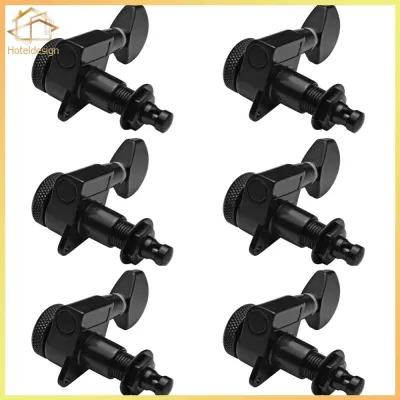

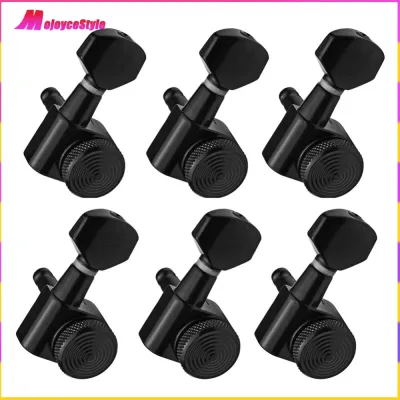
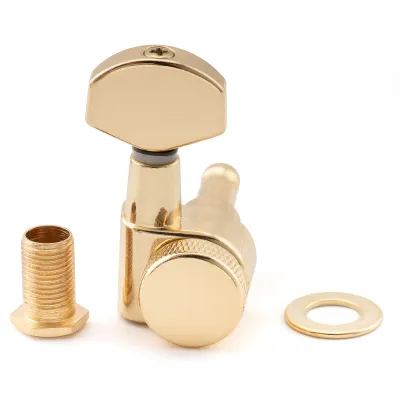
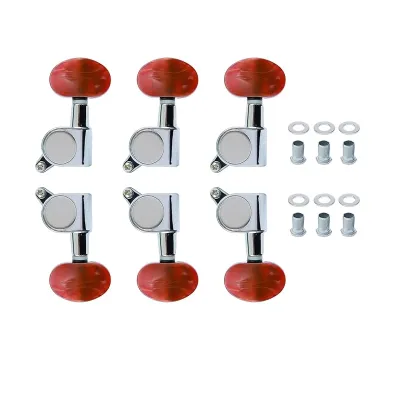
Prices are valid at publication and may change. Please refer to the product page for the latest price.
Additionally, reducing the number of wraps around the post directly addresses pitch drift. When strings are wound multiple times, friction between the wraps can trap tension, which then releases unexpectedly while playing. A locked post ensures that the string tension remains uniform from the bridge to the peg.
How to Measure and Verify Headstock Compatibility
Before purchasing any hardware, you must measure the existing peg holes on your headstock. Modern guitars typically feature 10mm (approximately 13/32 inch) holes, which accommodate modern sealed tuners. Vintage-style instruments often use smaller 8.5mm (approximately 11/32 inch) holes designed for press-in bushings. Installing modern locking tuners in vintage holes requires careful reaming, while putting vintage-style tuners in modern holes requires conversion bushings.

Mounting screw alignment is another critical factor that determines whether an upgrade is a direct drop-in or requires drilling. Examine the back of your headstock to identify the location of the small retaining screws. Common configurations include a single screw at a 45-degree or 90-degree angle, or dual-pin systems that use small locating pins hidden beneath the tuner body instead of external screws. Matching these configurations prevents the need to drill new holes into your guitar’s wood.
You must also verify the thickness and taper of your headstock. Standard locking tuners require a minimum headstock thickness to allow the threaded bushing to grip the post securely. If your headstock is exceptionally thick or thin, the locking pin inside the post may not align correctly with the string entry hole, or the bushing may bottom out before clamping down. Measuring these dimensions with a digital caliper ensures a flush, stable fit.
Matching Locking Tuners to Your Guitar Type
Tuning hardware is highly specialized, meaning a set designed for a sleek electric guitar will not function correctly on a classical acoustic or a heavy-tension bass. Each instrument class imposes distinct physical demands on the gear train, post height, and overall weight distribution. Selecting the wrong category of hardware can compromise your instrument’s balance, tone, and structural integrity.
Electric Guitars
Electric guitars often feature either inline (six-in-a-line) or symmetrical (three-on-a-side) headstock configurations. For inline headstocks, choosing between staggered and non-staggered post heights is essential. Staggered posts gradually decrease in height from the nut to the furthest tuner, which naturally increases the string break angle over the nut. This design often allows you to eliminate string trees entirely, reducing friction points that cause tuning instability.
Tuner weight is a critical consideration for lightweight or offset electric guitar bodies. Upgrading from standard vintage-style tuners to heavy, zinc-alloy locking tuners can significantly alter the balance of your instrument. This added weight at the headstock can cause neck dive, where the neck pulls downward when playing with a strap, causing physical fatigue during long sets.
For players utilizing floating tremolo systems, the internal tolerances of the tuner are paramount. The gears must operate smoothly without backlash—the tiny amount of play or wiggle when you reverse the turning direction. High-quality locking tuners maintain precise gear mesh, ensuring that when the tremolo bar is released, the strings return exactly to their pitch center.
Acoustic Guitars
Acoustic guitars rely heavily on the natural resonance of their wood, making the weight of your hardware a primary concern. Adding excessive mass to an acoustic headstock can dampen the vibrations of the neck, subtly altering the sustain and projection of the instrument. Opting for lightweight aluminum or open-gear locking designs helps preserve the acoustic’s natural voice while providing modern tuning security.
Aesthetic integration is also highly valued on acoustic instruments. Standard chrome or black hardware can look out of place on a traditional acoustic guitar with wood binding and warm finishes. Look for locking tuners that offer classic button styles, such as butterbean, pearloid, or tortoiseshell, and finishes like brushed gold or aged nickel to complement the instrument’s visual character.
Furthermore, you must distinguish between standard steel-string headstocks and slotted headstocks. Slotted headstocks, common on classical and some vintage acoustic guitars, require horizontal posts with specific spacing and roller diameters. Standard vertical-post locking tuners cannot be mounted on a slotted headstock, so you must verify the post orientation before making a purchase.
Bass Guitars
Bass guitars operate under immense tension and require heavy-duty hardware to manage thick, steel-core strings. Standard guitar tuners cannot handle the physical torque or the physical diameter of bass strings. Bass-specific locking tuners feature much larger string holes and reinforced mounting plates designed to withstand the constant pull of low-frequency setups.
A higher gear ratio is highly beneficial for bass players seeking precise intonation. Because bass strings are thick, a tiny turn of the peg can result in a significant pitch change. Ratios such as 20:1 or higher allow for micro-adjustments, making it much easier to lock in perfect tuning on the low B or E strings without constantly overshooting the target pitch.
You must also ensure there is adequate clearance on the headstock for the larger tuner bodies and paddles. Bass tuners require more physical space to prevent the paddles from colliding with one another during adjustment. Measure the center-to-center distance between your existing tuner holes to confirm that the larger locking replacements will have room to rotate freely.
Evaluating Gear Ratios and Locking Mechanisms
The gear ratio determines how many times you must turn the tuning button for the string post to complete one full rotation. For example, an 18:1 ratio means eighteen turns of the button equal one turn of the post. Higher ratios offer finer control over your tuning, which is particularly helpful for drop-tunings or precise studio work, while lower ratios allow for faster initial winding.
Locking mechanisms generally fall into three categories: rear thumbwheel, top-locking internal pin, and cam-style systems. Rear thumbwheel designs use a wheel on the back of the tuner to manually tighten an internal pin against the string. Top-locking systems use a screw on top of the post, while cam-style systems lock automatically as tension is applied to the string. Rear thumbwheels are highly popular for their tool-free operation and ease of use.
You must also choose between sealed and open-gear designs. Sealed tuners house the gears in a permanently lubricated, cast casing, protecting them from dust, sweat, and the high humidity common in the Philippines. Open-gear designs expose the gear teeth, offering a classic vintage look but requiring periodic cleaning and lubrication to prevent wear and binding over time.
Buying Locally: What to Verify Before Checkout
When purchasing locking tuners in the Philippines, verifying the authenticity of the hardware is your first priority. Counterfeit guitar parts are common on unregulated online marketplaces. To ensure you are receiving genuine steel and precise gear tolerances, purchase directly from authorized local distributors or reputable music stores with physical branches in major cities.
Carefully review the retailer’s return and exchange policies before finalizing your order. Many shops will not accept returns on hardware once it has been unpacked, test-fitted, or if the mounting screws have been inserted. Because even a fraction of a millimeter can prevent a proper fit, double-check all your physical measurements before opening the manufacturer’s packaging.
Compare the total cost in Philippine Pesos (₱) across different local platforms, keeping an eye on shipping fees and potential customs duties. While importing specialized tuner sets from overseas might seem appealing, local music stores often provide better value when you factor in local warranty support and immediate shipping. A typical high-quality set of locking tuners can range from ₱3,000 to over ₱8,000, so securing a local return path is highly recommended.
Frequently Asked Questions (FAQ)
Do locking tuners improve intonation?
No, locking tuners do not directly improve or alter your guitar’s intonation. Intonation—how in-tune the guitar plays across the entire fretboard—is determined by the saddle position at the bridge, the height of the nut slots, and the relief of the neck. Locking tuners only ensure that the string does not slip at the headstock, maintaining the pitch of the open string.
Can I install locking tuners myself without a luthier?
Yes, if the new tuners are a direct drop-in replacement with matching peg hole diameters and screw hole alignments, you can easily install them using basic hand tools like a small screwdriver and a socket wrench. However, if the upgrade requires widening the peg holes or drilling new mounting holes, it is best to consult a professional luthier to avoid cracking the headstock wood or finish.
Do I need to wind the string around the post with locking tuners?
No, you should not wind the string around the post when using locking tuners. The correct method is to thread the string through the post hole, pull it completely taut with your hand, tighten the locking mechanism securely, and then tune up to pitch. This process typically results in less than half a turn of the post, which minimizes string slack and maximizes tuning stability.
Community discussion
Share your experience or ask a question. Comments are reviewed before publication.