
Starting a career in the Philippines brings the exciting milestone of earning a salary, but it also introduces the complex responsibility of income tax compliance. For young professionals, finding the right income taxation book is the most reliable way to demystify payslips, understand withholding taxes, and learn how to file annual returns correctly. The ideal book for a beginner is one that translates dense legal codes into practical, step-by-step instructions, specifically focusing on compensation income and local tax regulations. By selecting a guide that aligns with current Bureau of Internal Revenue (BIR) rules, first-time taxpayers can confidently manage their financial obligations, avoid costly penalties, and make informed decisions about their deductions and benefits.
Why First-Time Filers Need a Beginner-Friendly Tax Guide
Transitioning from a university student or an entry-level job seeker to a fully registered taxpayer in the Philippines is often a confusing process. Academic programs rarely prepare graduates for the practical realities of reading a payslip, where various deductions in ₱ are subtracted automatically. Without a clear guide, understanding why your take-home pay differs from your gross salary can feel like solving an unnecessary puzzle. A beginner-friendly tax guide bridges this gap by explaining these concepts in plain language, helping you understand your rights and duties as an employee.
The complexity of local tax administration adds another layer of difficulty for young professionals. Navigating different tax forms, understanding the distinction between substituted filing and manual filing, and keeping track of deadlines require structured knowledge. While many employees assume their employers handle everything, certain situations—such as changing employers within a single calendar year or earning mixed income from a side hustle—require individuals to file their own tax returns. Relying on fragmented online articles or social media advice often leads to confusion, as these sources may lack context, mix up foreign tax laws with local ones, or fail to explain the step-by-step mechanics of compliance.
Products mentioned in this guide
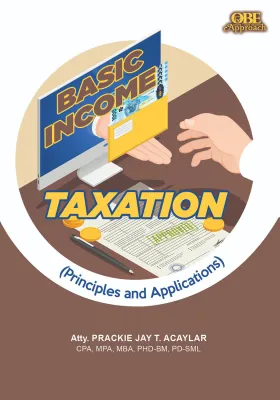
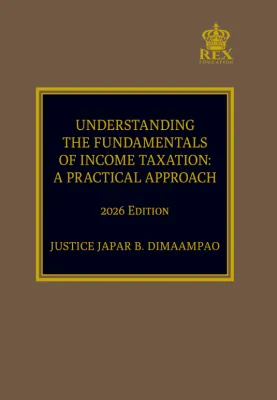
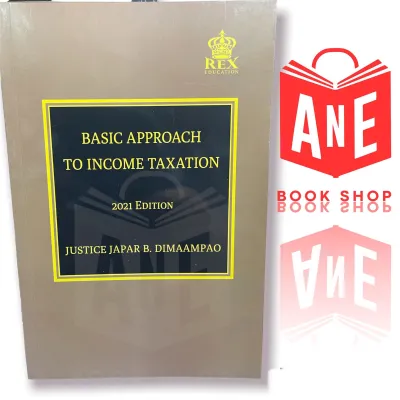
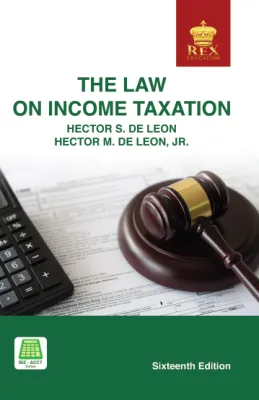
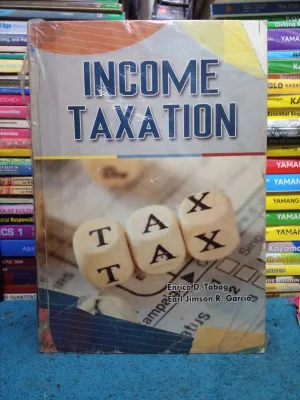
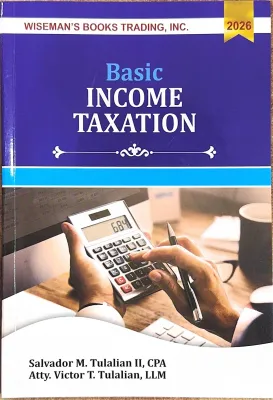
Prices are valid at publication and may change. Please refer to the product page for the latest price.
Furthermore, using outdated or non-localized resources poses significant financial and legal risks. Philippine tax laws undergo periodic reforms that alter tax brackets, deduction limits, and filing procedures. Reading a book written for a foreign market or using an outdated local textbook can lead to incorrect calculations, missed exemptions, or non-compliance with current BIR guidelines. A dedicated, locally published income taxation book ensures that the information you absorb is directly applicable to your situation, protecting you from administrative errors and helping you maximize your hard-earned income.
Core Criteria for Evaluating Income Taxation Books
Selecting an effective income taxation book requires looking beyond an appealing cover or a generic title. Because tax laws are dynamic, the first and most critical criterion to evaluate is the publication year and the specific edition of the book. A reliable guide must reflect the most recent tax reforms implemented in the Philippines, such as the adjustments to individual income tax brackets and updated rules on tax-exempt benefits. Before making a purchase, check the copyright page to ensure the content aligns with the current regulatory environment, as using a book published prior to major legislative updates will result in learning obsolete tax rates.

The credentials of the author serve as another vital benchmark for quality and accuracy. Look for books written by certified public accountants (CPAs), tax attorneys, or established finance educators who have active experience in Philippine tax practice or academia. Authors with professional backgrounds in local taxation are better equipped to explain not just the letter of the law, but also how the BIR interprets and applies these rules in real-world scenarios. Their professional reputation ensures that the explanations, advice, and computational models provided in the book are legally sound and practically viable.
Additionally, you must verify that the book’s target audience matches your specific profile as a taxpayer. Many taxation books sold in local bookstores are designed as comprehensive academic textbooks for accounting majors or law students, filled with dense legal citations and corporate tax theories. As a young professional starting your career, you should prioritize books that explicitly cater to individual taxpayers, compensation income earners, or sole proprietors. These books focus on topics that directly affect you, such as de minimis benefits, the taxability of 13th-month pay, and standard deductions, rather than complex corporate restructuring or international tax treaties.
Finally, look for books that emphasize practical application through concrete examples and visual aids. A high-quality tax guide does not merely list rules; it provides sample payslips, step-by-step computation tables, and filled-out mock-ups of essential BIR forms. Seeing how numbers flow from a monthly payslip into an annual tax return in ₱ makes abstract concepts tangible. These practical tools allow you to practice calculating your own taxable income, verifying the accuracy of your employer’s withholding taxes, and preparing your filings with confidence.
Matching Book Types to Your Learning Style and Goals
Not all readers approach financial literacy in the same way, and tax books are structured differently to accommodate various learning preferences. To get the most value out of your purchase, it is helpful to match the book’s format and depth of content with your personal study habits and immediate career goals.
Comprehensive Textbooks vs. Practical Quick Guides
Academic textbooks offer an exhaustive, highly structured look at the entire tax system of the Philippines. These volumes are excellent if you want to build a deep, theoretical understanding of tax law, perhaps because you plan to start a business, transition into freelance consulting, or pursue professional certifications in finance. However, these textbooks are often dense, expensive, and require a significant commitment of time and mental energy to digest. They cover broad areas of taxation, including estate tax, donor’s tax, and value-added tax, which may not be immediately relevant to an employee earning a basic salary.
In contrast, practical quick guides and self-help finance books focus strictly on actionable information for everyday workers. These guides cut through the academic jargon to explain exactly what you need to do to remain compliant and manage your personal finances. They are designed for quick reading, featuring bullet points, summary boxes, and simplified checklists. If your primary goal is to understand your monthly tax deductions, learn how to file a basic return, and ensure you are receiving your correct tax-exempt benefits, a practical quick guide is the more efficient and user-friendly choice.
Print Editions vs. Digital and Interactive Formats
Choosing between a physical print book and a digital edition depends largely on how you plan to study and reference the material. Physical books are highly advantageous for technical subjects like taxation, where you may need to flip back and forth between explanation pages, computation tables, and sample forms. A print edition allows you to easily highlight key passages, write margin notes, and keep the book open on your desk as a physical reference while you calculate your taxes on a computer. This format also eliminates screen fatigue, making long reading sessions more comfortable.
On the other hand, digital formats such as e-books or interactive PDF modules offer unmatched portability and convenience. A digital tax guide can be stored on your smartphone, tablet, or laptop, allowing you to read during your daily commute or reference a concept quickly while at work. Digital books also feature search functions that let you find specific terms, such as “withholding tax” or “de minimis,” in a matter of seconds. If you choose a digital format, always verify device compatibility and check if the publisher provides interactive elements, such as clickable links to official BIR forms or downloadable Excel templates for tax computation.
How to Verify Content Accuracy and Completeness Before Buying
Before spending your money on an income taxation book, performing a thorough pre-purchase check is essential to ensure you are getting an accurate and complete resource. Start by conducting a rigorous version and edition check. Look at the book’s preface, introduction, or back cover for explicit mentions of recent tax laws and BIR revenue regulations. If a book does not clearly state that it has been updated to reflect the latest individual income tax schedules implemented in the Philippines, it is highly likely that the calculations and tax brackets inside are obsolete, which could lead to errors if applied to your current income.
Next, take advantage of content previews, whether you are shopping in a physical bookstore or browsing an online catalog. Examine the table of contents and the index to confirm that the book covers the specific topics relevant to your career stage. A comprehensive beginner’s guide should include dedicated sections on compensation income, the distinction between gross and taxable income, withholding taxes, and the step-by-step process for filing annual income tax returns. If the table of contents focuses almost entirely on corporate taxation, value-added tax, or business licensing, the book will not serve your immediate needs as an employee.
Pay close attention to the language and terminology used throughout the book. The material should be written in clear, accessible English, which is the standard language for official tax forms and legal documents in the Philippines. Some local authors also use a conversational blend of English and Tagalog to explain complex concepts more naturally. Ensure that the writing style matches your comprehension level and that the book consistently uses standard local tax terms—such as “substituted filing,” “withholding agent,” and “taxable compensation”—so you can easily relate the book’s content to your actual employment documents.
Finally, always verify the authorization and source of the book. Purchasing from reputable publishers or authorized distributors guarantees that you receive a complete, high-quality product. Check that the book contains all its pages, that the print is clear and legible, and that any promised supplementary materials, such as digital access codes or downloadable templates, are valid and included. Buying legitimate copies also ensures that you are supporting the authors and publishers who put in the effort to simplify these complex topics for the public.
Sourcing Authentic Books and Avoiding Pirated Copies
Finding authentic personal finance and taxation books in the Philippines requires shopping through legitimate retail and distribution channels. Established national bookstore chains and university bookshops are the most reliable physical venues for purchasing these materials. These retailers source their inventory directly from reputable local publishers and academic presses, ensuring that the copies on the shelves are genuine, complete, and printed with high-quality ink and paper. Visiting a physical store also gives you the opportunity to browse the pages and assess the book’s layout before making a final decision.
If you prefer the convenience of online shopping, make sure to purchase from official publisher websites or authorized flagship stores on major ecommerce platforms. Many prominent local publishers and educational distributors maintain verified online storefronts where they sell their complete catalogs of tax and accounting books. When shopping on online marketplaces, look for verification badges, high seller ratings, and positive customer reviews that specifically mention the authenticity and packaging of the book. Purchasing from these official channels guarantees that you are getting the correct, unaltered edition of the text.
Be highly vigilant against the red flags of pirated books, which are common on unauthorized online listings and informal street markets. Pirated copies are often sold at unusually low prices that seem too good to be true compared to standard retail rates. These counterfeit books typically suffer from poor print quality, including blurry text, smudged ink, uneven margins, and thin, low-grade paper that makes reading difficult. In worse cases, pirated editions may have missing chapters, scrambled pages, or outdated content disguised under a reprinted modern cover. Avoiding these unauthorized copies protects you from learning from incomplete or inaccurate information and supports the local publishing industry.
Frequently Asked Questions (FAQ)
Do I need a new book every year to file my taxes correctly?
You do not necessarily need to purchase a new income taxation book every single year, as the fundamental principles of taxation, accounting, and filing procedures remain relatively stable over time. However, you must upgrade your book or seek supplementary updates whenever major tax reforms are passed by the legislature or when the BIR issues significant new revenue regulations that alter tax rates, brackets, or exemptions. For minor annual changes, you can supplement your existing book by reading official updates directly from the BIR website or consulting verified advisories from reputable local accounting firms.
Can I use a general personal finance book instead of a dedicated taxation book?
While general personal finance books are excellent resources for learning about budgeting, saving, investing, and building wealth, they are rarely sufficient for managing your tax compliance. Personal finance books usually cover taxation only at a very high level, offering general advice on tax efficiency without explaining the specific mechanics of local tax laws. A dedicated income taxation book is necessary because it provides the technical depth, precise formulas, and step-by-step instructions required to calculate your taxable income in ₱, understand your payslip deductions, and accurately complete local tax forms.
Community discussion
Share your experience or ask a question. Comments are reviewed before publication.