
To choose the right guitar nut file set, you must match the file thicknesses directly to your instrument’s specific string gauges and ensure the file edge profile matches your string type. A file that is too narrow will pinch the string, causing tuning instability, while a file that is too wide will allow the string to vibrate side-to-side, resulting in unwanted buzzing and loss of sustain. By selecting a set that matches your guitar type—whether electric, acoustic, or classical—and verifying the exact measurements of your preferred string set, you can achieve a professional setup that enhances playability and tone.
Quick Selection Guide for Guitar Nut File Sets
Choosing the right guitar nut file set requires a clear understanding of your instrument’s specifications and your personal setup goals. The market offers a wide variety of file configurations, ranging from budget-friendly multi-tools to professional-grade individual files. To make an informed decision, you must first identify the primary guitar type you intend to service, as each instrument category demands a specific range of file thicknesses.
For electric guitars, standard file sets are designed to accommodate light to medium string gauges. A typical electric set will include files ranging from .009 to .042 inches or .010 to .046 inches. These files are relatively thin and require a delicate touch during use, as the thinnest files can easily bend or break if excessive downward pressure is applied. Electric guitar setups often require highly precise slot depths to ensure low action and comfortable playability across the entire fretboard.
Products mentioned in this guide
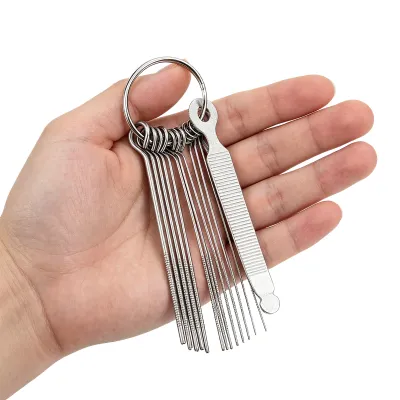
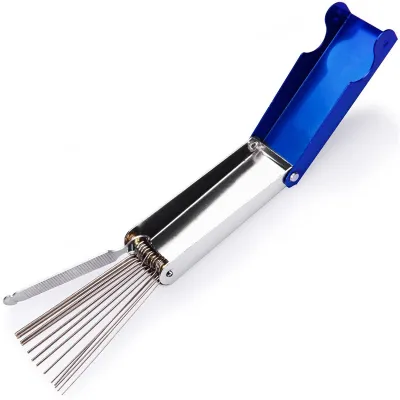

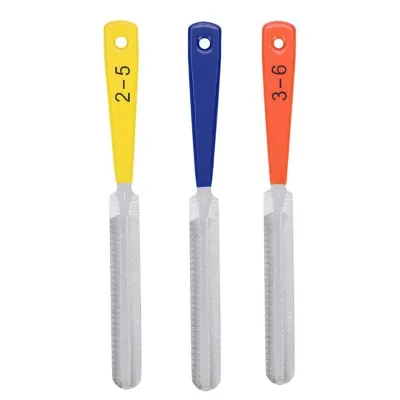
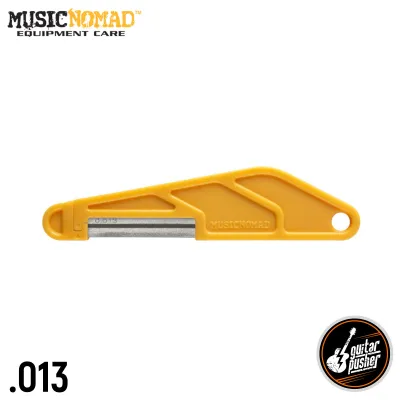
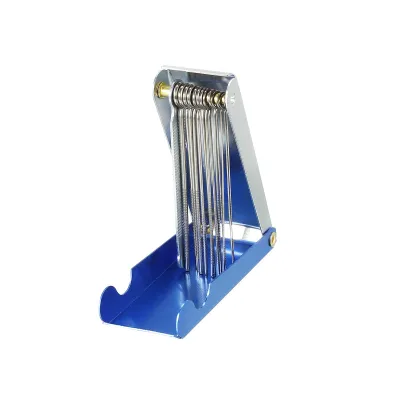

Prices are valid at publication and may change. Please refer to the product page for the latest price.
Acoustic guitars, by contrast, utilize heavier string gauges to drive the soundboard and produce adequate volume. Standard acoustic file sets generally cover gauges from .011 to .052 inches or .012 to .053 inches. Because acoustic strings are under higher tension, the files must be robust enough to cut through hard nut materials like bone or high-density synthetic composites. The files in these sets are slightly thicker and stiffer than their electric counterparts, offering greater stability during the cutting process.
Classical guitars present a completely different set of requirements due to their use of nylon strings. Nylon strings are significantly thicker than steel strings, with typical gauges ranging from .028 to .043 inches. Classical guitar nuts are also frequently made of softer materials, such as plastic or urea, which can tear or splinter if cut with aggressive steel files. A dedicated classical nut file set will feature wider, smoother-cutting files designed specifically to handle these larger diameters and softer materials without causing damage.
If you also maintain bass guitars, you will need to consider specialized heavy-gauge files. Standard guitar file sets cannot accommodate the massive diameters of bass strings, which typically range from .045 to .105 inches or more. Attempting to use standard guitar files to slot a bass nut will result in narrow, improperly shaped slots that cause severe string binding and tuning issues. Dedicated bass file sets are essential for achieving a proper setup on these low-end instruments.
Matching Nut Files to Your Guitar Type
The physical characteristics of your guitar dictate the specific slotting requirements that your nut files must meet. Different instruments utilize distinct bridge designs, nut materials, and string spacings, all of which influence how the nut slots should be cut. Understanding these variables is crucial for selecting a file set that will deliver a professional-quality setup.

In the tropical climate of the Philippines, high humidity levels can cause wooden necks to shift, making precise nut slotting even more critical for maintaining consistent action and tuning stability. Electric guitars feature narrower string spacing and lower action than acoustic or classical guitars. The nut materials used on electric instruments are highly diverse, ranging from traditional bone and synthetic self-lubricating polymers to brass or roller nuts. Because electric players frequently perform wide string bends and use tremolo systems, minimizing friction in the nut slots is paramount. The files used for electric guitars must create perfectly smooth, polished slots that allow the strings to glide freely without catching or binding.
Acoustic guitars operate under significantly higher string tension, which exerts substantial downward pressure on the nut. This high tension means that the contact point between the string and the nut material must be perfectly rounded to facilitate optimal vibrational transfer. If the bottom of the slot is flat or V-shaped, the thick bronze or brass wound strings will not seat properly, leading to a dull, deadened tone and premature string wear. Acoustic nut files must be selected to match these thicker core and wrap wires precisely, ensuring a perfect round-bottom profile.
Classical guitars, with their wide, flat fretboards and nylon strings, require a different approach. Nylon strings are highly elastic and have a much larger diameter than steel strings of comparable pitch. The nut slots must be wide enough to accommodate this thickness without pinching, which would cause the string to stick during tuning. Furthermore, classical guitar nuts are often made of softer materials that can be easily over-filed. Using a file that cuts too aggressively can quickly ruin a classical nut blank, so a light touch and specialized wide-gauge files are essential.
Before purchasing any nut file set, it is highly recommended to check your instrument’s manufacturer specifications for nut width, string spacing, and factory string gauges. Measuring your current setup with a digital caliper provides the most accurate data. This step ensures that the file set you select contains the exact sizes needed for your specific instrument, preventing the frustration of owning a set that lacks a file for your thickest or thinnest string. Taking the time to verify these measurements beforehand will save you time and money in the long run.
Understanding String Gauge and File Sizing
The relationship between string diameter and file thickness is the most critical factor in determining the success of your nut slotting project. Using the wrong size file can lead to a host of playability issues, including string binding, buzzing, and tuning instability. To achieve a professional result, you must understand how to match your files to your preferred string gauges.
The standard luthier rule of thumb is to match the file size as closely as possible to the string gauge, or to select a file that is slightly larger—typically .001 to .003 inches wider than the string itself. This small margin of safety ensures that the string can move freely through the slot without being pinched by the side walls. For example, if you are using a .010-inch high E string, a .010-inch or .011-inch file is ideal. This small clearance prevents the string from sticking during tuning or bending while keeping it securely aligned.
Using a file that is too small for your string gauge introduces immediate performance issues. When a thick string is forced into a narrow slot, it wedges tightly against the sides of the nut. This binding prevents the string from sliding freely through the nut when you tune or bend a note. As a result, tension builds up behind the nut, leading to sudden “pinging” sounds as the string slips abruptly, causing the instrument to go out of tune. This is a common issue on electric guitars with tremolo systems, where smooth string travel is vital.
Conversely, using a file that is too large for the string gauge creates a different set of problems. If the slot is significantly wider than the string, the string will have room to vibrate side-to-side within the slot. This lateral movement causes a distinct, metallic buzzing sound, often mistaken for fret buzz, and severely dampens the string’s sustain. Additionally, an oversized slot can alter the string spacing, causing the strings to sit unevenly across the fretboard and negatively impacting the overall playability of the instrument.
To avoid these issues, you must carefully read your string gauge packaging and map the measurements to your file sizes. String packages list gauges in thousandths of an inch (such as .009, .011, .016, .024, .032, .042) or in millimeters (such as 0.23mm, 0.28mm, 0.41mm, 0.61mm, 0.81mm, 1.07mm). When purchasing a nut file set, verify whether the manufacturer uses imperial or metric measurements. Keep a conversion chart handy or use a digital caliper that switches between units to ensure you are selecting the correct file for each slot.
Evaluating File Set Configurations and Build Quality
When shopping for nut files, you will encounter two primary configurations: double-edged and single-edged files. Double-edged files feature a different cutting thickness on each side of the blade, effectively giving you two files in one tool. This design is highly efficient, reduces the number of physical tools you need to store, and is often more cost-effective. Single-edged files, on the other hand, feature a single cutting thickness per tool and are often mounted in dedicated handles. While they require purchasing more individual tools to cover a full range of gauges, they offer precise control and eliminate the risk of accidentally using the wrong side of a double-edged file.
The edge shape of the file is one of the most critical factors influencing the final quality of the nut slot. High-quality nut files feature a U-shaped, round-bottom cutting profile that perfectly matches the round cross-section of a guitar string. This round bottom ensures maximum contact between the string and the nut material, optimizing vibrational transfer and sustain. In contrast, cheaper, non-specialized files often have a V-shaped or flat profile. A V-shaped slot pinches the string at the bottom, causing severe binding, while a flat-bottomed slot allows the round string to roll side-to-side, causing buzzing and tuning instability.
Handle ergonomics and blade length also play a significant role in the ease of use and safety of the filing process. Filing a nut requires a high degree of control and a very light touch. Files with comfortable, non-slip handles allow you to apply consistent, even pressure without hand fatigue. The blade length must be sufficient to clear the headstock and tuning pegs, especially when working on the outer strings of wide acoustic or classical guitar necks. A blade that is too short can force your hand too close to the instrument, increasing the risk of accidentally scratching the headstock finish.
Material durability is another key consideration, as nut materials can be surprisingly abrasive. High-carbon steel and diamond-coated files offer superior durability and maintain their sharpness far longer than standard steel files. When evaluating a file set, inspect the tooth pattern for consistency and sharpness. Clean, evenly spaced teeth cut smoothly without grabbing or tearing the nut material, resulting in a polished slot that requires minimal aftercare. Investing in high-quality materials ensures that your files will remain precise over years of occasional setups and maintenance.
Essential Accessories for Safe Nut Slotting
Filing a guitar nut is a delicate process that requires precise measurements to avoid cutting too deep. Essential accessories include feeler gauges or a dedicated nut slotting depth gauge. These tools allow you to measure the exact clearance between the bottom of the string and the top of the first fret. A common method is to press the string down at the third fret and measure the gap at the first fret; this gap is typically incredibly small, often between .010 and .020 inches depending on the guitar type. Without these precise measuring tools, you are flying blind and risk ruining the nut.
Lubrication is another critical aspect of both the filing process and ongoing maintenance. Applying a small amount of graphite (from a soft pencil) or a specialized guitar nut lubricant to the slots reduces friction significantly. During the filing process, temporarily lubricating the slot allows you to test the string’s movement and tuning stability accurately before making final adjustments. Once the slots are finalized, regular lubrication during string changes ensures smooth tuning and prevents the strings from binding over time.
Protecting the surrounding areas of your guitar is vital to prevent costly cosmetic damage. Before you begin filing, apply several layers of high-quality masking tape to the headstock directly behind the nut and to the fretboard directly in front of it. This creates a protective barrier against accidental slips of the file. For added safety, you can use metal fingerboard guards or custom-cut plastic shields to cover the delicate finish of the headstock, ensuring that any stray file strokes hit the protective barrier rather than your instrument’s wood or lacquer.
Knowing when to stop is the most important skill in nut slotting. If you cut a slot too deep, the string will buzz against the first fret when played open, requiring a temporary fix or a complete nut replacement. If you find that the action is still too high but you are approaching the limit of your comfort level, or if the nut material begins to chip or crack, stop immediately. Consulting a professional luthier in your local area is always the safest course of action when a setup task exceeds your current tools or experience level.
Frequently Asked Questions (FAQ)
Can I use standard metal files instead of specialized nut files?
Standard metal files from a hardware store are not suitable for slotting a guitar nut. These general-purpose files lack the precise, rounded edge profiles required to match the round shape of guitar strings, often leaving flat or V-shaped slots that cause severe string binding and buzzing. Additionally, standard files are typically too thick to cut the narrow slots required for the high E, B, and G strings on electric and acoustic guitars. Attempting to use them increases the risk of slipping, which can permanently damage the nut blank or scratch the headstock finish.
How do I clean and maintain my nut files?
To maintain the cutting efficiency and lifespan of your nut files, you must clean them regularly to remove accumulated dust. After filing materials like bone, plastic, or brass, use a specialized file card or a stiff-bristled brush to clear the debris from the teeth. Avoid using metal wire brushes on delicate or diamond-coated files, as this can dull the cutting edges. Store your files in a dry, low-humidity environment—ideally in individual protective sleeves or a dedicated tool roll—to prevent rust, corrosion, and the files from rubbing against each other and dulling their edges.
What should I do if I file a nut slot too deep?
If you accidentally file a nut slot too deep, the string will buzz against the first fret when played open. A common temporary fix is to fill the slot with a mixture of fine bone dust and cyanoacrylate (super glue), allowing it to cure completely before re-filing the slot to the correct depth. However, this method is a temporary patch and may not provide the same structural integrity or tone transfer as solid material. If multiple slots are cut too deep, or if the temporary fix fails to hold, the most stable and professional solution is to replace the entire nut with a new blank.
Community discussion
Share your experience or ask a question. Comments are reviewed before publication.