
To find the right edition of the complete book of enoch for your personal study, you must look beyond the cover design and focus on the translation source, the depth of the explanatory notes, and how well the book’s physical format matches your study environment. Because this ancient text has a complex history, different editions serve vastly different purposes—ranging from academic research to devotional reading. Selecting the wrong version can leave you struggling with archaic language or missing the vital historical context needed to understand these apocalyptic writings.
By evaluating the translation history, study features, and physical durability of available volumes, you can make an informed purchase that will serve your learning goals for years to come. This guide breaks down the essential factors to consider before investing in a copy for your personal library.
Understanding the Main Translations Available
When shopping for this ancient text, the first major decision is choosing between the primary translation styles available on the market. The most common version you will encounter is the classic early 20th-century translation by R.H. Charles, first published in 1912. Because this translation is in the public domain, it is widely reprinted by various publishers and is often the most affordable option. However, it uses archaic, King James-style English, featuring words like “thee,” “thou,” and complex sentence structures that can make an already difficult text even harder to comprehend during casual reading.
Products mentioned in this guide


Prices are valid at publication and may change. Please refer to the product page for the latest price.
In contrast, modern scholarly translations offer updated language and incorporate contemporary linguistic research. Translators working in the late 20th and early 21st centuries have access to a broader range of manuscript discoveries, allowing them to clarify passages that were previously obscure or poorly understood. These modern versions use clear, contemporary English, making them highly recommended for readers who want to focus on the narrative and theological themes without getting tripped up by outdated phrasing.
It is also crucial to understand the manuscript sources behind your chosen edition. The text we know today as 1 Enoch survives in its entirety only in Ge’ez, an ancient Ethiopic language. However, fragments of the text have also been recovered in Greek and, notably, in Aramaic among the Dead Sea Scrolls. High-quality study editions will clearly state whether they are translated directly from the Ethiopic manuscripts or if they integrate these Greek and Aramaic fragments to correct or fill in gaps in the text. Understanding these source differences helps you evaluate the accuracy and scholarly depth of the edition you are reading.
Key Features to Look for in a Study Edition
Because the symbolic language of apocalyptic literature can be incredibly dense, a bare-bones text without any explanatory material is rarely sufficient for deep study. A high-quality study edition should feature robust scholarly footnotes, cross-references, and historical introductions. These tools help explain complex symbols, such as the symbolic animals used to represent historical figures in the “Animal Apocalypse” section, and provide the necessary historical context of the Second Temple period.

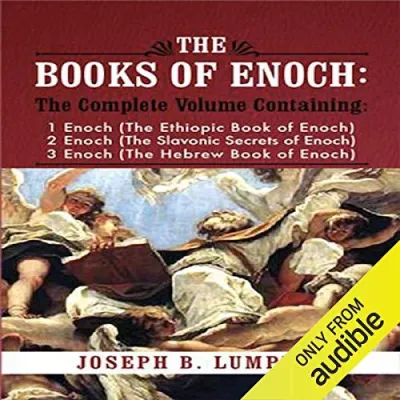
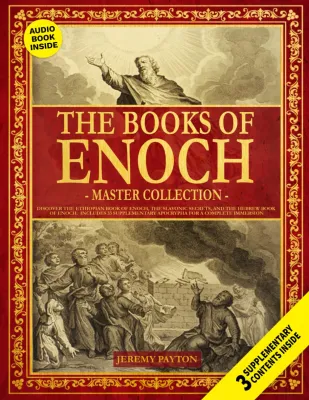
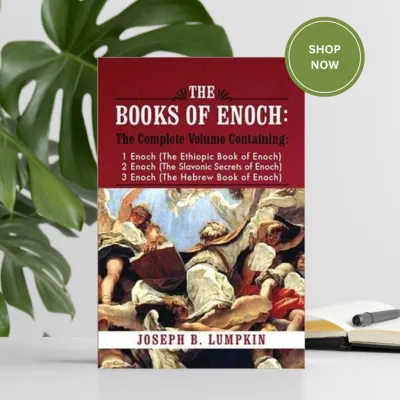
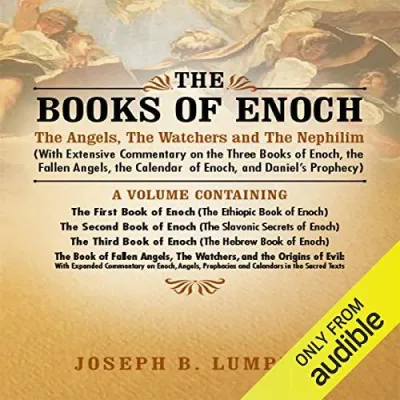
Another important consideration is whether the volume includes related pseudepigraphal texts. While “the complete book of enoch” technically refers to 1 Enoch (the Ethiopic Book of Enoch), some publishers bundle it with 2 Enoch (the Slavonic Secrets of Enoch) and 3 Enoch (the Hebrew Book of Enoch), or even other related texts like the Book of Jubilees. If you are looking for a comprehensive library of Enochic literature, a compilation volume is highly convenient. However, if you want to focus deeply on the primary text, a dedicated edition of 1 Enoch with extensive commentary is often more valuable than a thick compilation that lacks detailed notes.
Finally, pay close attention to the formatting choices of the edition. Look for books that feature standardized verse numbering systems, which allow you to easily compare passages across different translations or look up references found in external commentaries. Clear paragraph breaks, subheadings for different sections, and a comprehensive index of names, places, and themes will significantly improve your study efficiency and prevent you from getting lost in long blocks of uninterrupted text.
Matching the Edition to Your Study Goals
Your primary motivation for reading the text should dictate the specific edition you choose. If your goal is devotional or spiritual reading, you will benefit most from an edition that prioritizes accessible language and thematic study guides. Some editions are designed specifically for reflection, offering modern English translations paired with practical, faith-based commentary that helps you apply the themes of righteousness, judgment, and divine order to your daily life.
For those pursuing historical or academic research, a critical edition is indispensable. These publications, often from established academic presses, include a comprehensive critical apparatus. This means the pages will feature detailed notes on manuscript variants, explaining where the Ethiopic, Greek, and Aramaic texts differ and why the translator chose a specific rendering. While these editions are generally more expensive, they provide the rigorous academic foundation necessary for serious theological study.
If you are engaging in comparative scripture study, look for an edition that integrates seamlessly with standard biblical referencing systems. Because the New Testament contains direct quotes and numerous thematic parallels to Enochic literature, having an edition with clear marginal cross-references to the Hebrew Bible and the New Testament is incredibly helpful. This allows you to trace the development of concepts like the “Son of Man,” the final judgment, and the fate of the fallen angels across different sacred texts.
What to Verify Before You Buy
Before finalizing your purchase, there are several practical specifications you must verify to ensure you receive a complete and durable book. First, check the table of contents to confirm that the edition contains all five distinct sections of 1 Enoch:
- The Book of the Watchers (Chapters 1–36)
- The Book of Parables (Chapters 37–71)
- The Astronomical Book (Chapters 72–82)
- The Book of Dream Visions (Chapters 83–90)
- The Epistle of Enoch (Chapters 91–108)
Avoid editions that are heavily abridged, summarized, or marketed as “retold” versions, as these often omit the complex cosmological and theological passages that are essential for a complete understanding of the work.
Next, research the publisher and the translator’s background. Look for translations completed by recognized scholars in Semitic languages, biblical studies, or ancient history. This transparency ensures that the translation is based on rigorous linguistic analysis rather than personal or theological bias. Be cautious of self-published editions on online marketplaces that do not clearly credit a qualified translator or explain their translation methodology.
Finally, consider the physical production quality of the book, especially keeping in mind the tropical climate of the Philippines. High humidity can cause cheap paperback bindings to warp, glue to fail, and thin paper to absorb moisture and cockle over time. If you plan to use the book for long-term study, look for hardcover editions with Smyth-sewn bindings, which lie flat during reading and hold up far better under humid conditions. Opt for acid-free paper with high opacity to prevent ink bleed-through if you like to use highlighters or write notes in the margins, and ensure the font size is large enough to read comfortably during extended study sessions.
Frequently Asked Questions (FAQ)
Is the Book of Enoch included in standard Bibles?
No, the Book of Enoch is not included in the standard biblical canons used by most Protestant, Catholic, or Eastern Orthodox churches. During the early centuries of the Christian church, the text was widely read but was ultimately excluded from the official biblical canons. The sole exception is the Ethiopian Orthodox Tewahedo Church, which considers 1 Enoch (referred to as Mets’hafe Henok) to be canonical scripture and preserves it as an integral part of their Old Testament.
Do I need to read 2 Enoch and 3 Enoch for a complete study?
No, you do not need to read them to understand the primary text. While they share the name of the biblical patriarch, 2 Enoch (the Slavonic Enoch) and 3 Enoch (the Hebrew Enoch) are entirely separate works written centuries later in different languages and cultural contexts. 1 Enoch is the foundational text that influenced early Jewish and Christian theology. Reading 2 and 3 Enoch can be fascinating for historical curiosity, but they are not sequels and are not necessary for a standard study of the primary Book of Enoch.
Are free online versions sufficient for serious study?
While free online versions are highly convenient and cost-effective for quick reference, they are generally insufficient for serious study. Most free digital versions use the public domain 1912 translation by R.H. Charles, which lacks modern language updates and contemporary manuscript corrections. Furthermore, online versions rarely include the extensive footnotes, cross-references, and introductory essays that are vital for navigating the text’s complex historical and symbolic landscape.
Community discussion
Share your experience or ask a question. Comments are reviewed before publication.