
Starting your drumming journey as an adult is an incredibly rewarding pursuit that builds coordination, relieves stress, and unlocks a lifetime of musical enjoyment. Unlike children, adult beginners bring focused discipline, analytical listening, and a clear sense of their musical goals to the instrument. However, choosing your first drum set requires careful consideration of your living environment, physical comfort, and budget. Finding a kit that fits your space and body size ensures that your practice sessions remain comfortable, productive, and engaging.
In the Philippines, aspiring drummers must navigate specific local factors, such as high-density housing, tropical humidity, and varying retail options. Whether you opt for a traditional acoustic setup or a modern electronic kit, understanding the key differences in design, ergonomics, and hardware quality will help you make a confident investment. By focusing on durable components and proper setup techniques, you can establish a solid foundation for your musical journey.
Acoustic vs. Electronic: Choosing the Right Drumset for Adults
Deciding between an acoustic and an electronic drum set is the first and most critical decision you will make. This choice is largely dictated by your living situation and noise tolerance. Acoustic drums are naturally loud, often exceeding 110 decibels, which can easily disturb family members and neighbors. If you live in a condominium, townhouse, or a closely packed residential subdivision in the Philippines, an electronic drum set is often the most practical choice. Electronic kits allow you to plug in headphones, reducing the external sound to the quiet, rhythmic tapping of rubber or mesh pads.
Products mentioned in this guide
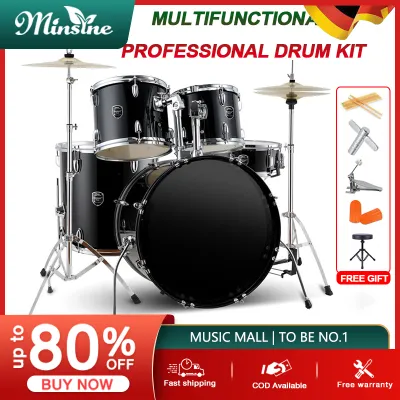
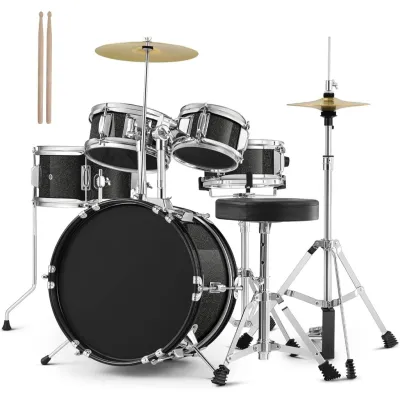
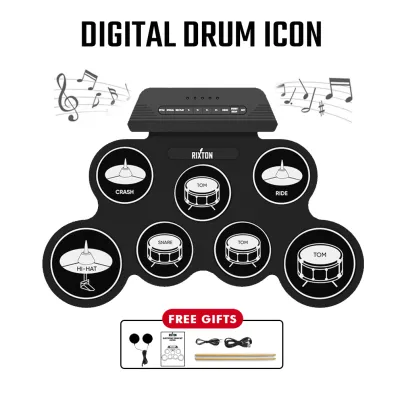
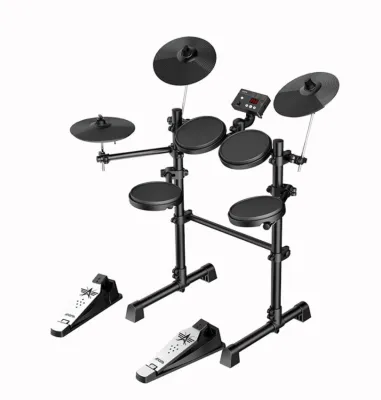

Prices are valid at publication and may change. Please refer to the product page for the latest price.
Space requirements also differ significantly between the two formats. Acoustic drum sets require a dedicated, semi-permanent area in your home, as they are heavy and time-consuming to disassemble. Electronic drum sets, on the other hand, feature compact, lightweight frames. Many electronic models are designed with foldable racks, allowing you to pack the kit away into a closet or corner when it is not in use, making them ideal for smaller bedrooms or shared living spaces.
Another key factor is the physical feel and response of the playing surfaces, which directly impacts how you develop your stick technique. Traditional acoustic drums use mylar heads that offer natural rebound, vibration, and acoustic feedback, helping you learn how to control your dynamics and strike angles. If you choose an electronic kit, look for models equipped with mesh heads rather than hard rubber pads. Mesh heads are made of woven fabric that can be tensioned with a standard drum key, closely mimicking the rebound of an acoustic drum while remaining exceptionally quiet.
Finally, consider the learning tools integrated into each system. Electronic drum modules, often called the “brain” of the kit, come packed with built-in metronomes, coaching programs, and pre-recorded play-along tracks. Many modules also feature auxiliary inputs or wireless connectivity, allowing you to stream lesson videos or favorite songs directly into your headphones. While acoustic kits lack these digital features, they teach you the raw mechanics of sound projection and tuning, which are essential skills for performing with a live band.
Sizing and Ergonomics: Ensuring a Comfortable Fit for Adult Players
Adult players have different physical requirements than children, making proper kit sizing and ergonomics essential for preventing injury. Some beginners make the mistake of purchasing junior drum kits due to their lower price points or smaller footprints. Junior kits feature scaled-down shells and low-profile hardware that force adults into a cramped, hunched posture. Over time, playing on an undersized kit can lead to chronic lower back pain, neck strain, and wrist fatigue.

To ensure a comfortable fit, look for standard adult shell configurations. A typical adult setup includes a 20-inch or 22-inch bass drum, which naturally positions the rack toms at an accessible height and angle. The snare drum should ideally be 14 inches in diameter, providing ample space for comfortable hand placement and proper rimshot execution. Standard-sized kits allow your arms and legs to move through their natural ranges of motion, promoting relaxed and efficient playing habits.
Adjustable hardware is the foundation of good drumming ergonomics. Your drum throne, or seat, is the most important component of your setup. It must feature a sturdy, adjustable locking collar that allows you to set the seat height so your thighs rest slightly downward from parallel to the floor. This position relieves pressure on your lower back and allows your feet to move freely on the pedals. Snare stands and cymbal boom arms must also offer flexible tilting mechanisms so you can position your playing surfaces without overreaching.
Bass drum depth and pedal placement also play a significant role in your overall posture. A deeper bass drum pushes your rack toms further away, which may require you to adjust your seating position. Ensure that your bass drum pedal tension can be adjusted easily. Calibrating the pedal spring tension to match your leg strength prevents ankle strain and allows you to develop a consistent, relaxed bass drum technique.
Evaluating Entry-Level Hardware and Cymbal Quality
When purchasing an entry-level drum set, the quality of the bundled hardware and cymbals is just as important as the drums themselves. Many beginner packages include lightweight, single-braced stands that can wobble or slide during energetic practice sessions. For adult players, who naturally strike with more force than children, double-braced legs on cymbal, snare, and hi-hat stands are highly recommended. Double-braced hardware provides the weight and stability needed to keep your kit secure.
Inspect the adjustment joints and clamping mechanisms on the stands before buying. High-quality hardware features robust metal castings and smooth wing nuts that tighten securely without stripping the threads. Look for stands equipped with memory locks, which are metal collars that clamp onto the tubes. Memory locks preserve your height and angle settings, preventing the stands from slowly slipping down during long practice sessions and making reassembly much faster.
Cymbals included in budget-friendly beginner packages are typically made of brass. While brass cymbals are durable and cost-effective, they tend to produce a harsh, clangy sound with very little sustain or dynamic range. As your ears develop, you may find these cymbals unsatisfying to play. Upgrading to bronze cymbals, such as those made from B8 or B20 alloys, will instantly improve the musicality of your kit, offering warmer tones and better responsiveness to different striking strengths.
When planning your budget, decide whether a complete “all-in-one” package or a separate “shell pack” is the better path. Complete packages, which include drums, hardware, cymbals, and a throne, are highly convenient and typically range from ₱15,000 to ₱35,000. However, if you have a larger budget, purchasing a high-quality shell pack (just the wooden drum shells) and selecting your hardware and cymbals separately allows you to customize your setup and avoids the need for early upgrades, saving you money in the long run.
Pre-Purchase Checklist: Verifying Condition, Warranty, and Local Support
Before finalizing your purchase, it is essential to perform a thorough inspection of the equipment to ensure long-term reliability. If you are buying an acoustic drum set, inspect the bearing edges of the wooden shells. The bearing edge is the top and bottom rim of the shell where the drumhead makes contact. These edges must be perfectly smooth, flat, and free of dents or splinters; any imperfections will make the drum difficult or impossible to tune. Additionally, check that the metal hoops are perfectly round and not warped.
For electronic drum sets, test the responsiveness of every trigger pad. Strike the pads at various volume levels to ensure the module accurately registers soft taps and heavy hits alike. Pay close attention to the hi-hat controller pedal, verifying that it transitions smoothly between open, half-open, and closed sounds. Test all the physical ports on the drum module, especially the headphone jack and auxiliary input, to ensure there are no loose connections or static interference.
Given the tropical climate of the Philippines, high humidity can affect both wood and electronic components over time. It is highly recommended to purchase your kit from an authorized local dealer or official brand store that offers a clear warranty. A local warranty ensures that you can easily access replacement parts, trigger sensors, or tension rods if any components fail. Avoid purchasing from unverified online sellers who do not offer local customer support.
Finally, remember to factor in the hidden costs of essential accessories. Most drum packages do not include drumsticks, hearing protection, or a drum rug. High-fidelity earplugs are non-negotiable for acoustic drumming to protect your hearing from permanent damage. A non-slip drum rug is also essential for both acoustic and electronic kits; without it, your bass drum and pedals will slide forward on tiled or polished wooden floors with every kick, disrupting your posture and scratching your flooring.
Frequently Asked Questions (FAQ)
Is it too late for an adult to start learning the drums?
It is never too late to start learning the drums. While children may pick up physical movements quickly, adults possess superior cognitive skills, self-discipline, and analytical abilities that make the learning process highly efficient. With consistent, focused practice, adults can successfully develop the muscle memory, coordination, and rhythm required to play their favorite songs and perform confidently.
How much space do I need to set up a standard 5-piece drum kit?
A standard 5-piece acoustic or electronic drum kit typically requires a dedicated floor space of approximately 1.5 meters by 1.5 meters (about 5 feet by 5 feet). This footprint accommodates the drums, cymbals, pedals, and your drum throne, while leaving enough clearance around the sides for comfortable elbow movement and stick travel.
Should I buy a new or used drum set for my first purchase?
Buying a new drum set is generally recommended for beginners because it guarantees that all components are complete, undamaged, and covered by a manufacturer’s warranty. While buying a used kit can save you money, it requires a careful inspection to identify hidden issues such as warped wooden shells, stripped hardware threads, or faulty electronic triggers that could be costly to repair.
Community discussion
Share your experience or ask a question. Comments are reviewed before publication.