
Developing a consistent habit of daily scripture reading is one of the most transformative steps a young person can take in their spiritual journey. However, walking into a bookstore or browsing online to find the perfect youth Bible can quickly become overwhelming. With dozens of translations, varying physical formats, and distinct denominational differences, making the right choice requires a clear understanding of what makes a Bible suitable for daily Catholic devotions.
For young readers in the Philippines, this decision involves balancing theological accuracy with practical usability. A youth Bible needs to be engaging enough to compete with daily digital distractions, clear enough to comprehend without advanced theological training, and durable enough to withstand the high humidity and daily wear of a tropical climate. By focusing on key features, translation styles, and authentic Catholic editions, you can find a lifelong companion for your spiritual growth.
Understanding Catholic Youth Bible Editions
To choose the right Bible, you must first understand what distinguishes a Catholic edition from other versions available on the market. The most critical difference lies in the canon of Scripture. Catholic Bibles contain 73 books, whereas standard Protestant Bibles contain 66. The seven additional books—Tobit, Judith, 1 and 2 Maccabees, Wisdom, Sirach, and Baruch, along with portions of Esther and Daniel—are known as the Deuterocanonical books. A Bible designed for Catholic youth must include these books integrated into their traditional historical order, rather than omitted or placed in a separate appendix.
Products mentioned in this guide
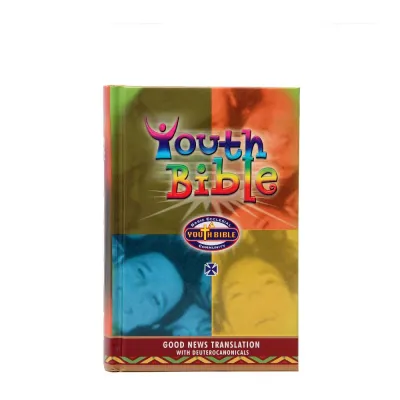
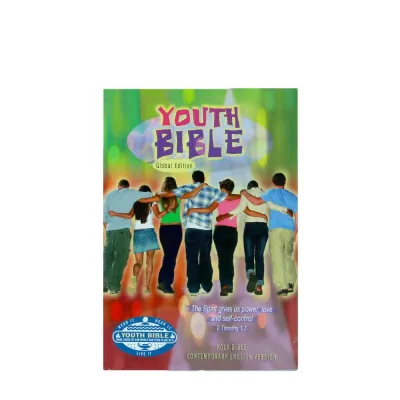
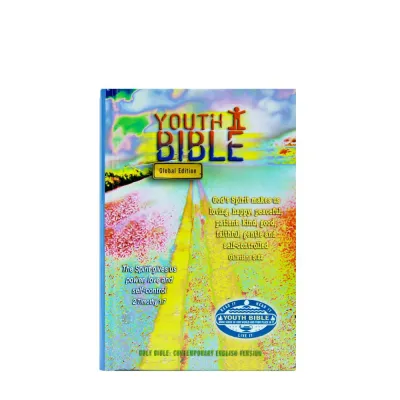
Prices are valid at publication and may change. Please refer to the product page for the latest price.
Beyond the list of books, authentic Catholic editions carry official ecclesiastical approvals. When inspecting a Bible, look at the copyright page for the terms Imprimatur (Latin for “let it be printed”) and Nihil Obstat (meaning “nothing stands in the way”). These declarations guarantee that the translation and accompanying commentary have been reviewed by Catholic authorities and found free of doctrinal or moral error. Reading a Bible with these approvals ensures that the reflections and study notes align with Catholic teachings and tradition.
Youth-oriented editions are specifically designed to bridge the gap between ancient texts and modern daily life. Unlike standard pew Bibles, which present only the biblical text and basic footnotes, youth Bibles are packed with supplementary features. These typically include thematic study notes that address contemporary issues, daily reflections written in an approachable tone, character profiles, and interactive margins for journaling or sketching. These tools do not alter the sacred text; rather, they provide the cultural and historical context necessary for teenagers and young adults to understand how God’s word applies to their lives today.
Key Features to Evaluate for Daily Spiritual Reading
Selecting a Bible for daily use requires a careful evaluation of the translation style. Biblical translations generally fall along a spectrum from formal equivalence to dynamic equivalence. Formal equivalence, or “word-for-word” translation, prioritizes literal accuracy and matches the original Greek and Hebrew structures as closely as possible. Translations like the Revised Standard Version Second Catholic Edition (RSV-2CE) or the English Standard Version Catholic Edition (ESV-CE) follow this philosophy. They are excellent for deep study and memorization, though their sentence structures can occasionally feel formal or archaic to younger readers.

On the other end of the spectrum is dynamic equivalence, or “thought-for-thought” translation. This approach prioritizes readability and modern expression, translating the meaning of original sentences into contemporary English. The Good News Translation Catholic Edition (GNT-CE) and the Contemporary English Version (CEV) are prime examples. These translations are highly accessible, making them ideal for younger teenagers, beginners, or those who find dense language a barrier to daily reading.
For a balanced middle ground, many educators and youth ministers recommend mediating translations like the New American Bible Revised Edition (NABRE) or the New Revised Standard Version Catholic Edition (NRSV-CE). The NABRE is particularly significant because its translation of the New Testament is widely used in Catholic liturgy in many English-speaking regions, helping readers connect their personal daily reading with what they hear during Sunday Mass.
| Translation Type | Common Catholic Examples | Primary Advantage | Best Suited For |
|---|---|---|---|
| Formal Equivalence (Word-for-Word) | RSV-2CE, ESV-CE | High literal accuracy, preserves original literary structures | Deep study, theological analysis, and scripture memorization |
| Mediating Equivalence (Balanced) | NABRE, NRSV-CE | Balances literal accuracy with modern, readable English | Daily devotions, school study, and liturgical familiarity |
| Dynamic Equivalence (Thought-for-Thought) | GNT-CE, CEV | Highly accessible language, easy to read quickly | Younger teens, beginners, and casual devotional reading |
Physical attributes are equally critical when choosing a Bible for daily handling, especially in the Philippines. The local climate presents unique challenges; high humidity and seasonal rains can easily damage delicate paper and cheap bindings. When evaluating physical builds, consider the following factors:
- Binding Durability: Look for Bibles with Smyth-sewn bindings rather than glued bindings. Sewn pages lie flat when the Bible is opened, preventing the spine from cracking and ensuring pages do not fall out after months of daily use.
- Paper Opacity and Quality: Bible paper is notoriously thin to keep the book portable, but very thin paper can suffer from "ghosting," where text from the reverse side shines through and distracts the reader. Look for editions that use slightly thicker, high-opacity paper.
- Cover Materials: Hardcover editions offer the best protection for Bibles kept on a desk or bedside table. For those carrying their Bible to school, youth group, or parish meetings, a flexible synthetic leather cover (often marketed as leatherette or TruTone) offers a lightweight, water-resistant alternative that handles humidity better than genuine leather or standard paperback covers.
- Font Size: Daily reading should not strain the eyes. Ensure the font size is at least 8-point, though 9-point or larger is highly recommended for comfortable reading under various lighting conditions.
Finally, evaluate the supplementary materials included in the edition. A high-quality youth Bible should feature a well-organized reading plan, such as a 365-day guide, to help readers build consistency. Useful additions also include full-color maps to visualize biblical geography, a comprehensive subject index to look up specific topics like anxiety, friendship, or forgiveness, and a glossary of theological terms to explain complex concepts without requiring external research.
Building Your Shortlist: Matching Editions to Reading Goals
To narrow down your choices, you must match the Bible’s features to the reader’s primary spiritual goals. If the main objective is devotional reading and personal prayer, prioritize editions that emphasize reflection and personal application. Look for Bibles with wide, lined margins that encourage journaling, highlighting, and writing down personal prayers. Devotional youth Bibles often feature daily reading plans that break the text into manageable portions, accompanied by short, practical reflections that help the reader connect the scripture passage to their daily struggles and decisions.
If the goal is academic preparation, school theology classes, or deep apologetics study, shift your focus toward editions with robust study tools. These Bibles should feature extensive footnotes, cross-references that link Old and New Testament passages, and detailed historical introductions to each book of the Bible. A study-focused youth Bible will help the reader understand the historical, cultural, and literary contexts of the scriptures, equipping them to explain and defend their faith with confidence.
Before making a final purchase, use this step-by-step verification checklist to ensure the edition meets all your requirements:
- Verify the Canon: Open the table of contents and confirm the presence of the seven Deuterocanonical books (such as Tobit, Judith, and Maccabees) integrated within the Old Testament.
- Check for Ecclesiastical Approval: Turn to the copyright page and locate the Imprimatur and Nihil Obstat declarations, along with the name of the bishop who granted them.
- Confirm the Translation: Identify the translation abbreviation (e.g., NABRE, RSV-2CE, GNT-CE) on the cover or title page to ensure it matches the reader's comprehension level and study goals.
- Test the Readability: Read a few passages from different sections (such as a psalm, a gospel passage, and an epistle) to ensure the language flows naturally and is easy to understand.
- Inspect the Physical Build: Open the Bible to the middle pages to see if it lies flat. Check the paper thickness and ensure the font size is comfortable for daily reading.
Purchasing and Verifying Authenticity in the Philippines
Finding an authentic Catholic youth Bible in the Philippines requires shopping through reliable, authorized channels. Established physical Catholic bookstores are the safest option. Chains such as Paulines Bookstore, St. Pauls, Word & Life Center, and the Catholic Book Center are run by religious congregations or authorized Catholic organizations. These shops curate their inventory carefully, ensuring that every Bible on their shelves is a genuine Catholic edition. Many of these physical stores also operate official online storefronts on major e-commerce platforms, making it easier to purchase authentic editions from provinces outside Metro Manila.
When shopping online, verifying authenticity is crucial due to the prevalence of unauthorized reprints and counterfeit editions. Always check the seller’s profile to confirm they are an official parish shop, a diocesan bookstore, or an authorized distributor of Catholic publishers like Claretian Publications, St. Pauls Philippines, or Ignatius Press. Authentic publishers print clear licensing, copyright, and contact information on the first few pages of the book. If an online listing lacks detailed photos of the copyright page or the table of contents, ask the seller to provide them before finalizing your order.
Be alert to common red flags that indicate a counterfeit or incorrect edition. A major warning sign is a suspiciously low price. While authentic, locally printed paperback Bibles can be very affordable, high-quality imported study Bibles bound in synthetic leather typically cost between ₱1,000 and ₱3,000. If you see a “premium leather study Bible” listed for ₱150 to ₱300, it is highly likely a low-quality counterfeit print with poor binding, missing pages, or blurry text. Additionally, watch out for Bibles marketed as “Catholic” that actually use Protestant translations without the Deuterocanonical books, or those that lack the Imprimatur on the copyright page. Investing in a genuine edition from an authorized seller guarantees a complete, durable, and doctrinally sound text for your daily spiritual journey.
Frequently Asked Questions (FAQ)
Do Catholic youth Bibles include all 73 books?
Yes, authentic Catholic youth Bibles include all 73 books of the Catholic biblical canon. This includes the 46 books of the Old Testament (which contain the seven Deuterocanonical books: Tobit, Judith, 1 and 2 Maccabees, Wisdom, Sirach, and Baruch, plus additions to Esther and Daniel) and the 27 books of the New Testament. Standard Protestant Bibles omit these seven books, leaving them with only 66 books. To ensure you are purchasing a complete Catholic edition, always check the table of contents before buying to verify that books like Tobit and Maccabees are present and integrated into the Old Testament.
Which translation is easiest for teenagers to understand?
For younger teenagers or those new to daily scripture reading, dynamic translations like the Good News Translation Catholic Edition (GNT-CE) or the Contemporary English Version (CEV) are generally the easiest to understand. These translations use modern, straightforward language and avoid complex sentence structures. For older teenagers, college students, or those looking for a balance between readability and literal accuracy, the New Revised Standard Version Catholic Edition (NRSV-CE) or the New American Bible Revised Edition (NABRE) are excellent choices. It is highly recommended to read a sample chapter online first to see which translation style resonates best with the reader’s comprehension level.
How can I protect a daily-use Bible from wear and tear?
Protecting a daily-use Bible in a tropical climate like the Philippines requires active care to prevent damage from humidity, dust, and frequent handling. Always store your Bible in a zippered Bible cover or a dedicated protective sleeve when carrying it in a bag; this shields the delicate pages from bending and keeps out moisture. Avoid leaving your Bible in direct sunlight, humid rooms, or inside a hot car, as extreme heat and moisture can warp the cover and cause the pages to stick together. To absorb excess humidity, place a small packet of silica gel inside your Bible case. Finally, use flat ribbon bookmarks or paper bookmarks instead of folding page corners, and avoid stuffing thick items like holy cards, pamphlets, or heavy pens inside the Bible, as this can strain and eventually break the spine’s binding.
Community discussion
Share your experience or ask a question. Comments are reviewed before publication.