
Choosing the right edition of the Book of Enoch for personal study requires a clear understanding of your academic or spiritual goals, the specific text you wish to read, and the translation methodology employed by the editor. Because this ancient work is not a single, uniform manuscript but a collection of writings preserved across different languages and centuries, the edition you select will heavily influence your comprehension. A well-chosen volume provides historical context, clear translation notes, and reliable cross-references, whereas a poorly edited or sensationalized version can obscure the text’s original meaning and historical significance.
For readers in the Philippines, where interest in biblical history, theology, and ancient literature is vibrant, navigating the vast array of available editions can be challenging. Whether you are browsing local bookstores or evaluating digital editions on online marketplaces, understanding the structural and textual differences between editions is the first step toward a successful study experience. By focusing on verifiable translation sources, scholarly commentary, and physical or digital durability, you can find an edition that serves as a reliable companion for your intellectual or spiritual journey.
Understanding the Enochic Texts: Which Book Do You Need?
Before purchasing any volume, it is essential to recognize that “the Book of Enoch” can refer to three entirely distinct ancient texts, each originating from a different historical period and community. The most famous and widely studied of these is 1 Enoch, also known as the Ethiopic Apocalypse. Written originally in Semitic languages (Aramaic and Hebrew) during the Second Temple period, it survived in its entirety only in Ge’ez, the classical liturgical language of the Ethiopian church. If your goal is to study the text that influenced early Christian writers and is quoted in the New Testament, 1 Enoch is the specific book you need.
Products mentioned in this guide

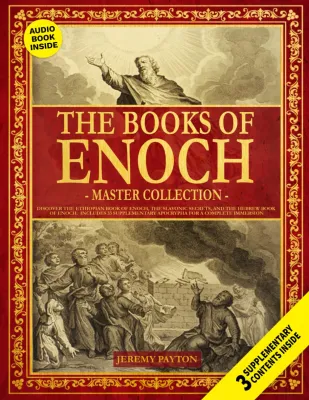
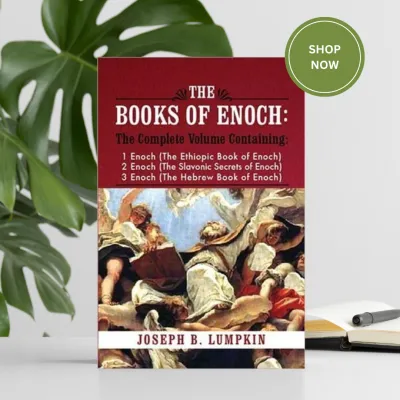
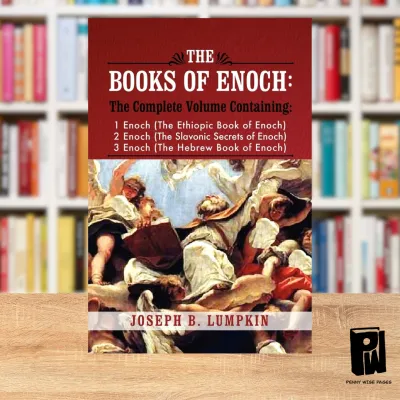

Prices are valid at publication and may change. Please refer to the product page for the latest price.
In contrast, 2 Enoch, often called the Slavonic Apocalypse or the Book of the Secrets of Enoch, is a separate work that has survived only in Old Church Slavonic. This text offers a different theological perspective, focusing on Enoch’s journey through the heavens and containing unique cosmological revelations. Meanwhile, 3 Enoch, or the Hebrew Apocalypse, is a much later rabbinic work written in Hebrew, detailing the elevation of Enoch to the archangel Metatron. While both 2 and 3 Enoch are valuable for specialized historical research, they are distinct compositions and should not be confused with the primary text of 1 Enoch.
The discovery of the Dead Sea Scrolls in the mid-20th century added another layer of complexity to Enochic studies. Archaeologists recovered several Aramaic fragments of 1 Enoch among the Qumran manuscripts, confirming the ancient Semitic origins of the text and providing a critical point of comparison for the complete Ethiopic version. When selecting an edition of 1 Enoch, look for translations that explicitly discuss how these Aramaic fragments, along with surviving Greek translations of specific chapters, have been used to refine and correct the complete Ethiopic text. For general personal study, prioritizing a comprehensive edition of 1 Enoch that integrates these manuscript discoveries will provide a historically accurate and complete reading experience.
Choosing a Translation Style for Your Study Goals
Once you have confirmed that you are purchasing 1 Enoch, the next major decision is selecting a translation style that aligns with your reading comprehension and study objectives. Translators generally operate under one of two primary philosophies: formal equivalence or dynamic equivalence. Formal equivalence, often described as a literal or word-for-word translation, prioritizes preserving the exact structure, vocabulary, and syntax of the source language as closely as possible. This approach is highly valuable for academic study, as it allows you to see the precise phrasing of the ancient text, though it can sometimes result in stiff, difficult-to-read English prose.

Dynamic equivalence, on the other hand, focuses on a thought-for-thought translation. The goal of this style is to convey the overall meaning and emotional impact of the original text in natural, modern English. While dynamic translations are much easier to read and flow more smoothly, they rely heavily on the translator’s interpretation of what the ancient author meant, which can occasionally obscure subtle linguistic nuances. For personal study, many readers find that a moderately formal translation strikes a practical balance, offering academic reliability without sacrificing readability.
The source texts used by the translator also significantly affect the final work. Some older translations rely solely on a single Ethiopic manuscript, which may contain copying errors introduced over centuries of transmission. Modern scholarly translations, however, are eclectic, meaning the translator has compared multiple Ethiopic manuscripts alongside Greek fragments and the Aramaic Dead Sea Scrolls to reconstruct the most reliable text possible. When evaluating an edition, check the introduction or preface to see if the translator explains their source methodology and how they resolved discrepancies between different ancient manuscripts.
Finally, pay close attention to the publication date and the scholarly reception of the translation. Biblical and pseudepigraphal scholarship has advanced dramatically over the past several decades, particularly as researchers continue to analyze the Dead Sea Scrolls. An older translation from the 19th or early 20th century may be widely available and inexpensive, but it may also rely on outdated theories or incomplete manuscript evidence. Choosing a modern translation published by a reputable academic press ensures that your study is grounded in contemporary historical and linguistic consensus.
Evaluating Annotations and Commentary for Depth
The Book of Enoch is filled with complex symbolism, ancient cosmological models, and historical references that can be baffling to a modern reader without proper guidance. Therefore, the quality and depth of the annotations and commentary included in your chosen edition are just as important as the translation itself. When evaluating an edition, determine whether the commentary is historical-critical or devotional in nature. Historical-critical commentary focuses on the historical context of Second Temple Judaism, linguistic analysis, and the literary development of the text, helping you understand what the book meant to its original audience.
Devotional or theological study guides, by contrast, focus on the spiritual application of the text for modern readers. While these guides can be personally enriching, they may bypass the historical and cultural complexities that are crucial for a deep understanding of the text. For a comprehensive personal study, look for editions that prioritize historical-critical annotations, as they provide the objective framework needed to interpret the book’s highly symbolic visions, such as the Book of the Watchers or the Animal Apocalypse.
A high-quality study edition should also feature extensive cross-references. The Book of Enoch shares deep thematic, linguistic, and theological connections with canonical biblical books like Genesis, Daniel, Revelation, and the Epistle of Jude, as well as other non-canonical writings of the Second Temple period. Annotations that point out these connections allow you to see how the ideas in Enoch influenced, and were influenced by, the broader religious landscape of the ancient Near East. Without these cross-references, it is easy to miss the rich intertextual dialogue occurring within the pages of the book.
Be cautious of editions that feature highly speculative, esoteric, or sensationalized interpretations. Because of its mysterious themes, the Book of Enoch frequently attracts fringe theories that lack rigorous historical or linguistic backing. Avoid editions where the commentary attempts to link the text to modern conspiracy theories, unexplained phenomena, or highly subjective spiritual predictions. A reliable study edition will always ground its commentary in verifiable historical evidence, archaeological discoveries, and peer-reviewed academic research.
Building Your Shortlist: Matching Editions to Your Level
To narrow down your choices, it is helpful to categorize potential editions based on your current level of knowledge and the intensity of your study goals. If you are a beginner who is new to ancient apocalyptic literature, your priority should be readability and basic comprehension. Look for editions that offer a smooth, modern translation, a clear and accessible introduction to the historical background of the text, and clean formatting that separates the prose from the poetry. For this level, minimal but clear footnotes explaining unfamiliar terms or historical figures are usually sufficient to keep you from feeling overwhelmed.
Intermediate readers, who may already have some familiarity with biblical history or theology, should seek out editions that offer a deeper dive into the historical context. At this level, you should look for translations that include comparative notes highlighting the differences between the Ethiopic, Greek, and Aramaic versions of the text. Reliable cross-references to canonical scriptures and other pseudepigraphal works are essential for intermediate study, as they help you map the theological developments of the Second Temple period.
Advanced students and researchers will require a critical edition of the text. These volumes feature a comprehensive critical apparatus, which provides detailed footnotes on every variant reading found across the surviving manuscripts. Advanced editions also include extensive notes on original languages, detailed bibliographies for further research, and in-depth essays on the composition, redaction history, and theological themes of each section of the book. While these academic volumes are often more expensive and dense, they are indispensable for anyone conducting rigorous, independent research.
Regardless of your study level, compile a checklist of structural features to look for when comparing editions. A high-quality study edition should include a detailed index, a glossary of key terms and historical figures, and maps of the ancient world to help you visualize the geographical references in the text. Before making a purchase, always verify the specific features of the edition by reading the publisher’s detailed description or checking scholarly reviews, as cover designs and online titles can sometimes be misleading about the actual contents of the book.
Final Checks Before Purchasing an Edition
Before finalizing your purchase, there are several practical checks you should perform to ensure you are getting a complete and high-quality edition. First, verify that the volume contains all 108 chapters of 1 Enoch. Some budget editions or summaries only include the famous “Book of the Watchers” (chapters 1 to 36) while omitting the rest of the text, such as the Book of Parables or the Astronomical Book. Ensuring the text is complete is vital for a holistic understanding of the work’s theological and literary structure.
Second, consider the physical or digital format of the book in relation to your study environment. If you prefer physical books and live in a tropical climate like the Philippines, high humidity can cause cheap paperbacks with low-quality glue bindings to warp, yellow, or fall apart over time. In such environments, investing in a sturdy hardcover edition with acid-free paper and sewn binding, or opting for a high-quality digital edition, can ensure your study materials remain intact for years. For digital editions, verify that the file format is compatible with your e-reader and that the digital table of contents and index are fully functional and easy to navigate.
Finally, review the credentials of the translator and the reputation of the publisher. Look for editions translated or edited by established scholars who hold advanced degrees in fields such as Second Temple Judaism, ancient Near Eastern studies, Semitic languages, or biblical theology. Academic publishers, university presses, and established religious publishing houses are generally reliable sources, as their publications undergo rigorous peer-review processes. Taking the time to verify these details before you buy will protect you from poorly formatted, incomplete, or unscholarly editions, ensuring your personal study of the Book of Enoch is both intellectually rigorous and deeply rewarding.
Frequently Asked Questions (FAQ)
Is the Book of Enoch considered canonical?
The canonical status of the Book of Enoch varies significantly across different Christian traditions. It is accepted as fully canonical by the Ethiopian Orthodox Tewahedo Church and the Eritrean Orthodox Tewahedo Church, which have preserved the complete text in Ge’ez for centuries. In these traditions, the book is integrated into the Old Testament canon and is highly regarded for its theological and prophetic insights.
For the vast majority of other Christian denominations, including Roman Catholicism, Eastern Orthodoxy, and Protestantism, as well as for Rabbinic Judaism, the Book of Enoch is considered non-canonical. Instead, it is classified as pseudepigrapha—ancient writings attributed to historical figures but not included in the official biblical canon. Despite its non-canonical status in these traditions, scholars and readers widely recognize the book as an invaluable historical and literary document that sheds light on the religious beliefs, messianic expectations, and apocalyptic themes of the Second Temple period.
Do I need to know ancient languages to study it?
You do not need to know ancient languages like Ge’ez, Greek, Aramaic, or Hebrew to engage in a meaningful study of the Book of Enoch. High-quality, modern English translations prepared by qualified scholars are entirely sufficient for personal, historical, and theological analysis. These translations are designed to bridge the linguistic gap, providing clear English text while using footnotes to explain complex idioms or wordplay from the original languages.
However, if you wish to explore the linguistic nuances of the text without formal language training, look for study editions that include original language glossaries, transliterations, or comparative tables. Some advanced editions provide side-by-side comparisons of the English translation with the surviving Greek or Aramaic fragments, allowing you to examine how specific words and phrases are translated. Utilizing these tools can deepen your appreciation for the text’s original literary context without requiring years of language study.

Community discussion
Share your experience or ask a question. Comments are reviewed before publication.