
Finding the right Bible chart and timeline for Catholic Bible study in the Philippines requires balancing theological accuracy with practical usability. A proper Catholic timeline must align with the 73-book biblical canon, highlighting salvation history and the liturgical seasons. Because the local tropical climate brings high humidity, selecting the right physical format—or opting for a digital alternative—is just as important as verifying the doctrinal content. Whether you are setting up a personal prayer corner, leading a parish study group, or teaching catechism, choosing a study aid that is both durable and doctrinally sound will enrich your spiritual journey.
Visual aids serve as a roadmap for scripture reading, helping you contextualize historical events, prophets, and covenants. However, not all timelines available in local stores or online marketplaces are designed with Catholic theology in mind. By understanding the key differences in formats, verifying essential ecclesiastical approvals, and choosing materials suited to the local environment, you can find a resource that deepens your understanding of God’s word while standing the test of time.
Understanding Bible Chart and Timeline Formats
Selecting the ideal format depends heavily on where and how you plan to conduct your scripture study. Bible charts and timelines generally fall into three main categories, each serving a distinct purpose for individual reflection, family devotion, or parish-wide education.
Products mentioned in this guide
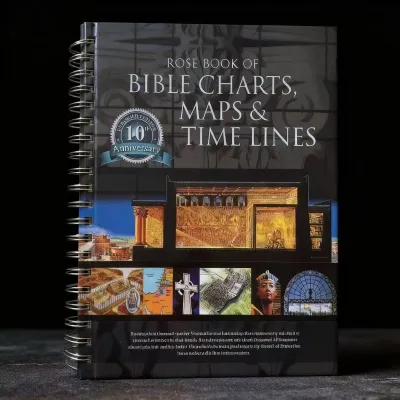

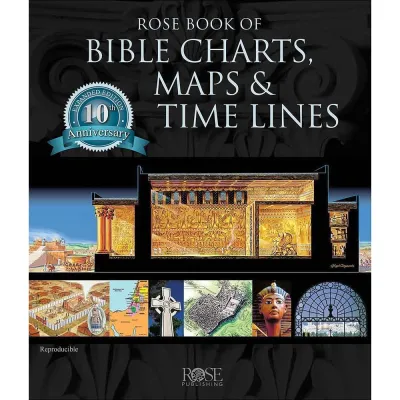
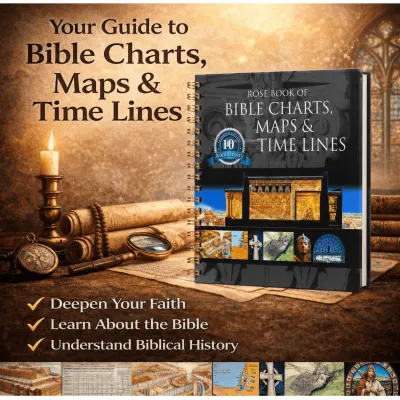
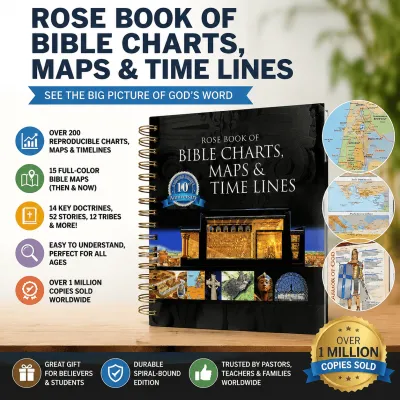
Prices are valid at publication and may change. Please refer to the product page for the latest price.
Wall charts and posters are excellent for visual learners who benefit from a constant, macro-level view of biblical history. These large-format resources are designed to be mounted in a dedicated study space, a home altar area, or a parish classroom. By displaying the entire narrative of salvation history in one continuous line, wall charts help you easily trace the genealogy of Jesus Christ, the succession of kings, and the timing of major prophets. This permanent visual presence reinforces learning every time you walk into the room, making it easier to memorize the sequence of biblical events.
Fold-out inserts and booklets offer a highly portable alternative for those who prefer to study on the go. These compact guides are typically designed to fold down to the size of a standard Bible, allowing them to fit neatly inside your Bible cover or study journal. They are particularly useful for parish Bible sharing groups, block rosary meetings, or weekly catechism classes where carrying a large poster is impractical. Despite their smaller size, high-quality fold-out charts often pack a significant amount of information, including historical maps, covenant summaries, and quick-reference tables that you can consult during Mass or personal prayer.
Digital and printable options provide maximum flexibility for modern readers who prefer using tablets, e-readers, or smartphones. Digital timelines allow you to zoom in on intricate details, search for specific historical figures, and access hyperlinked cross-references instantly. For catechists and ministry leaders, digital formats are incredibly valuable because they can be projected onto large screens during parish seminars or shared digitally with study participants. Printable PDF versions also give you the freedom to print only the sections you need, allowing you to replace worn-out pages easily without purchasing an entirely new set.
Essential Criteria for Catholic-Approved Study Aids
When purchasing a Bible timeline, the most critical step is verifying its theological alignment with Catholic teachings. Because many widely available study aids are produced by non-Catholic publishers, they may omit key historical periods, books of scripture, or theological concepts that are central to the Catholic faith.

The first and most reliable way to ensure doctrinal accuracy is to check for the Imprimatur and Nihil Obstat. The Nihil Obstat is an official declaration by a diocesan censor that a book or study aid contains nothing contrary to Catholic faith or morals, while the Imprimatur is the bishop’s formal permission to publish the work. These markings are usually found on the copyright page or the back cover of the chart. Using a timeline with these ecclesiastical approvals guarantees that the historical interpretations, covenant explanations, and theological summaries align perfectly with the Magisterium of the Church.
Another essential criterion is verifying the inclusion of the Deuterocanonical books in the Old Testament timeline. Catholic Bibles contain 46 Old Testament books, which include Tobit, Judith, 1 and 2 Maccabees, Wisdom, Sirach, Baruch, and specific portions of Esther and Daniel. Many generic or Protestant timelines follow a 39-book Old Testament canon and completely omit these books and the historical periods they represent. A complete Catholic timeline must include these periods, especially the Maccabean revolt, which provides crucial historical and theological context for the period immediately preceding the birth of Christ. Without these books, your understanding of Jewish history and the development of doctrines like purgatory and prayers for the dead will have significant gaps.
Furthermore, a Catholic-approved study aid should reflect the liturgical seasons, feast days, and sacramental history of the Church. Catholic scripture study is never isolated from the liturgical life of the parish. The best timelines do not merely treat the Bible as a historical textbook; they actively connect biblical events to the sacraments and the liturgical calendar. For instance, a Catholic timeline might highlight how the Passover prefigures the Holy Sacrifice of the Mass, or how the crossing of the Red Sea prefigures the Sacrament of Baptism. This liturgical integration helps you see how the history of salvation continues to be made present in the sacraments you receive today.
Matching Formats to Your Study Goals and Space
Once you have verified the theological accuracy of a timeline, you must consider the practical aspects of how the product will fit into your daily life and home environment. Choosing a tool that matches your physical space and local climate ensures that your investment remains useful for years to come.
Evaluating your available space is the first practical step. If you live in a compact home or share a room, a massive wall chart may not be feasible. In such cases, desktop easel charts or multi-page booklets are much more practical, as they can be folded flat and stored in a drawer or on a bookshelf when your study session is over. On the other hand, if you are setting up a dedicated study room or a parish library, a large, permanently mounted wall chart serves as an excellent focal point that invites continuous learning and discussion among family members or parish visitors.
In the tropical climate of the Philippines, durability and paper quality are major considerations. High humidity levels can quickly degrade cheap paper, causing it to warp, yellow, or become susceptible to mold and silverfish. When shopping for physical charts, look for products printed on heavy cardstock or those that feature a protective matte or glossy lamination. Laminated charts are highly resistant to moisture, spills, and the natural oils from your hands, making them far more durable for frequent handling during group studies. If you purchase a non-laminated paper chart, consider having it professionally laminated locally to extend its lifespan.
Readability and design are also crucial, especially if the timeline will be used by different generations. Children in catechism classes require bright, engaging color-coding and simplified layouts that do not overwhelm them with text. Conversely, older adults or those with visual impairments will benefit from larger font sizes, high-contrast text, and clear, uncluttered layouts. A well-designed timeline uses color-coding not just for aesthetic appeal, but to distinguish between different historical eras, such as the Patriarchs, the Exile, and the Early Church, allowing readers of all ages to orient themselves at a glance.
Sourcing and Verifying Products in the Philippines
Finding authentic Catholic Bible charts and timelines in the Philippines requires a bit of deliberate searching, as secular or non-Catholic religious materials often dominate mainstream retail spaces. Knowing where to look and how to evaluate products will save you time and ensure you purchase a high-quality, doctrinally sound resource.
Your first stop should be established Catholic bookstores, parish gift shops, and authorized religious distributors. Major Catholic publishing houses and diocesan centers across the country often stock approved study guides, pamphlets, and timelines. Visiting these physical stores allows you to handle the products directly, check the paper quality, and verify the presence of the Imprimatur before making a purchase. Additionally, store staff or parish priests can often recommend specific materials that align with the curriculum used in local Bible study programs.
If you prefer the convenience of online shopping, you can find a variety of options on major online marketplaces and ecommerce platforms. However, shopping online requires extra vigilance. Many sellers offer imported study aids that may not be Catholic-approved. To protect yourself from purchasing incorrect materials, always read the product descriptions carefully and look for close-up photos of the table of contents or copyright page. Do not hesitate to message the seller directly to ask if the timeline includes the Deuterocanonical books or carries ecclesiastical approval. Reading customer reviews can also provide valuable insights into the physical quality of the print and how well it survives shipping.
Budgeting is another practical consideration, as prices can vary widely depending on the format and origin of the product. Locally printed, basic laminated timeline sheets or booklets are highly affordable, often priced between ₱150 and ₱400, making them accessible for parish groups on a budget. Imported, comprehensive study kits that include large wall charts, student workbooks, and guidebooks can cost upwards of ₱1,500 to ₱3,000. When ordering imported items online, be sure to factor in international shipping fees and potential customs duties, and weigh whether a more affordable local alternative can meet your study needs just as effectively.
Frequently Asked Questions (FAQ)
Do Catholic Bible timelines include the Deuterocanonical books?
Yes, authentic Catholic Bible timelines explicitly include the Deuterocanonical books, as they are an integral part of the 73-book Catholic biblical canon. When shopping for a timeline, you should carefully check the product description or index for books such as Tobit, Judith, 1 and 2 Maccabees, Wisdom, Sirach, and Baruch. If these books are missing, or if the timeline jumps directly from the return from exile to the New Testament without addressing the intertestamental period from a Catholic perspective, it is likely a Protestant or secular timeline. Verifying the inclusion of these books ensures you have a complete overview of salvation history.
How can I protect paper Bible charts from humidity and wear?
To protect paper Bible charts from the high humidity and moisture typical of the Philippine climate, lamination is the most effective solution. You can take paper charts to local copy centers to have them hot-laminated, which seals the edges and prevents moisture from penetrating the paper. For fold-out charts or booklets that cannot be easily laminated, storing them in airtight plastic sleeves or zip-top bags with a few packets of silica gel will help absorb excess moisture. Additionally, keep your study materials stored in a cool, dry place away from direct sunlight, which can fade the ink and weaken the paper fibers over time.
Are digital Bible timelines as effective as physical charts for group study?
Digital Bible timelines are highly effective for group study because they can be easily projected onto screens or shared via video conferencing tools, making them ideal for parish seminars and catechism classes. They allow the facilitator to zoom in on specific details and navigate historical periods dynamically. However, physical charts still hold a distinct advantage for personal reflection and small-group discussions. The tactile nature of a physical chart provides a distraction-free experience, allowing participants to gather around a table, point to different sections, and engage in deep study without the screen fatigue associated with digital devices.

Community discussion
Share your experience or ask a question. Comments are reviewed before publication.