
Establishing a consistent daily devotional routine is a deeply personal and spiritually rewarding practice. For Filipino Catholics, reading the Word of God in their native tongue provides a unique level of intimacy, clarity, and connection. However, choosing the right tagalog bible for daily devotional reading requires more than simply picking the first translation off the shelf. The ideal choice involves evaluating translation styles, ensuring proper ecclesiastical approval, and selecting a physical format that can withstand frequent handling in a tropical climate.
Selecting a devotional Bible is a long-term investment in your spiritual life. The right edition should speak clearly to your heart during quiet moments of prayer while remaining fully faithful to the teachings and liturgical traditions of the Church. By understanding the key differences in translations, formats, and verification steps, you can confidently select a Bible that will serve as a reliable companion on your daily spiritual journey.
What Defines a Catholic Bible for Daily Devotion?
A Catholic Bible is distinguished by specific markers of authority, completeness, and pastoral intent that set it apart from other Christian editions. The most critical indicators of an authentic Catholic Bible are the formal declarations known as the Nihil Obstat and the Imprimatur. Typically printed on the copyright page, these Latin terms carry significant meaning. The Nihil Obstat (meaning “nothing hinders”) is a declaration by an official diocesan censor that the translation contains nothing contrary to Catholic faith or morals. The Imprimatur (meaning “let it be printed”) is the official authorization granted by a bishop, permitting the book’s publication and distribution within the Church.
Products mentioned in this guide
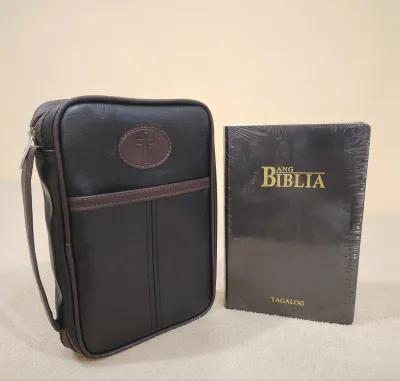
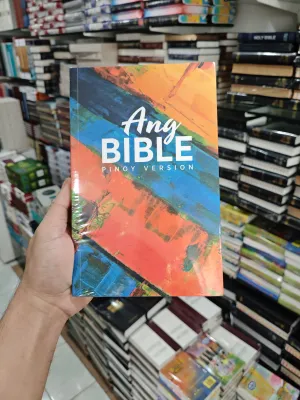
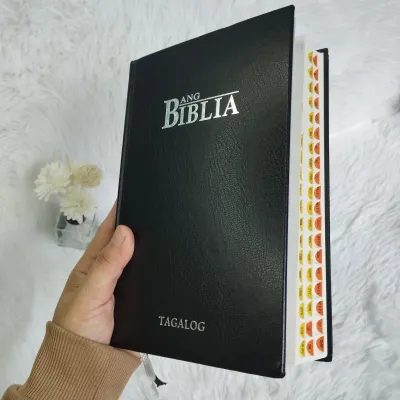
Prices are valid at publication and may change. Please refer to the product page for the latest price.
In the Philippines, the Catholic Bishops’ Conference of the Philippines (CBCP) or recognized ecclesiastical authorities oversee the approval of Tagalog translations. These bodies ensure that the local language used accurately reflects the theological depth of the original texts while remaining pastoral and accessible to the faithful. Reading an approved translation ensures that your personal reflections align with the universal Church’s teachings and the readings proclaimed during the liturgy.
Another defining characteristic of a Catholic Bible is canonical completeness. A Catholic Bible contains 73 books in total, comprising 46 books in the Old Testament and 27 books in the New Testament. This includes the seven Deuterocanonical books: Tobit, Judith, 1 Maccabees, 2 Maccabees, Wisdom of Solomon, Sirach (Ecclesiasticus), and Baruch, along with historical additions to the books of Esther and Daniel. These books are integrated directly into the Old Testament sequence, reflecting the ancient Septuagint canon used by the early Church and Apostles, rather than being omitted or placed in a separate appendix.
Standard reading Bibles focus purely on presenting the biblical text, whereas Bibles designed for daily devotion often incorporate structured reading guides, liturgical calendars, or guided reflection prompts. These additions help readers navigate the scriptures systematically, making it easier to integrate the Word of God into daily spiritual exercises, such as Lectio Divina or morning meditations.
Key Features to Look for in a Tagalog Bible for Devotional Use
Translation Readability and Tone
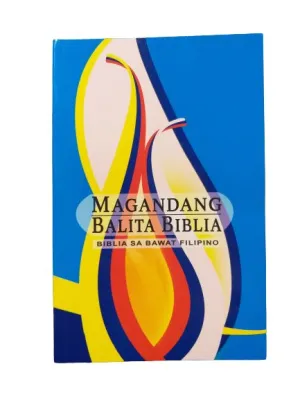
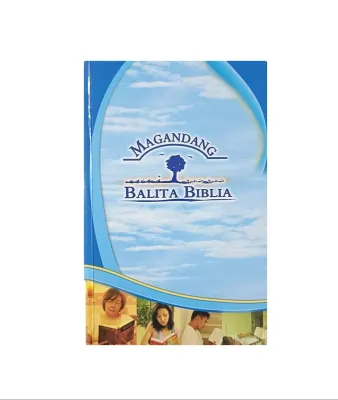
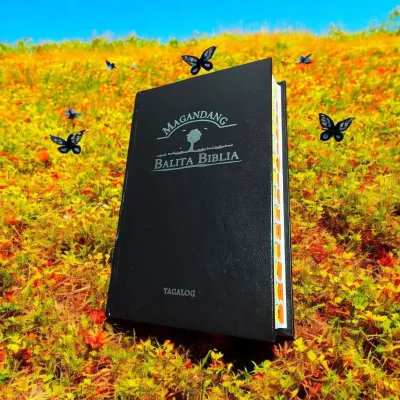
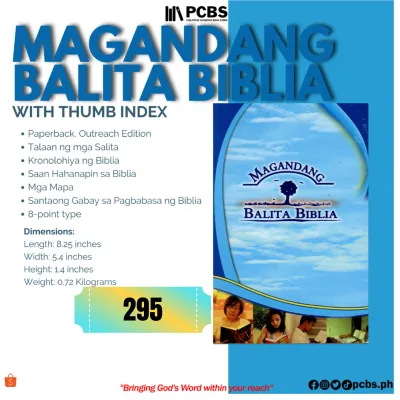
Evaluating a translation requires balancing formal accuracy with accessible, meditative language. The two most prominent Tagalog Catholic translations available are the Magandang Balita Biblia (MBB) and the Ang Biblia ng Sambayanang Pilipino (BSP). The MBB, published by the Philippine Bible Society, employs a dynamic equivalence approach, translating thought-for-thought rather than word-for-word. This results in a highly contemporary, natural Tagalog flow that is easy to comprehend during early morning or late-night reflections, making it excellent for readers of all ages.

In contrast, the BSP, published by Claretian Communications, is a pastoral translation that balances formal accuracy with clear, prayerful language. It preserves a slightly more formal, reverent tone that closely mirrors the liturgical Tagalog used in Sunday Masses across the Philippines. For many readers, this familiarity helps bridge the gap between personal private prayer and parish worship, making the BSP an exceptional choice for deep, meditative study.
Layout and Typography
Daily devotional reading requires a layout that minimizes eye strain and promotes focus. Look for editions with a minimum font size of 9 points, as smaller print can quickly cause fatigue during extended reading sessions. Adequate line spacing and clear, unobtrusive verse numbering are also essential for tracking passages smoothly during prayer and reflection.
Red-letter editions, which print the direct words of Jesus Christ in red ink, can be highly beneficial for readers who wish to focus their daily meditation on the Gospels. However, when evaluating typography, it is equally important to check the paper quality. Ensure the pages are thick enough to prevent “ghosting”—the distracting phenomenon where text from the reverse side of the page bleeds through and interferes with readability.
Binding and Cover Materials
The tropical climate of the Philippines, characterized by high relative humidity and temperature fluctuations, presents unique challenges for book preservation. Cheap adhesive bindings (perfect bindings) often dry out, crack, and lose pages over time when subjected to daily use. Prioritize Smyth-sewn bindings, where the pages are sewn together in signatures. This construction allows the Bible to lay completely flat on a table or lap, enhancing the reading experience and preventing the spine from breaking under stress.
Cover materials also play a major role in durability. High-quality polyurethane (PU) leatherette offers a flexible, comfortable grip and is highly popular, though it can peel or degrade in extremely humid environments over several years. Hardcover editions provide the greatest structural protection for the pages, while premium genuine leather covers offer the longest durability and wear-resistant qualities, though they represent a higher initial financial investment.
Reference Tools
Even during purely devotional reading, reference tools can significantly enrich your spiritual practice. Cross-references, located either in the margins or at the bottom of the page, allow you to trace theological themes across the Old and New Testaments. A basic concordance or thematic index helps locate specific passages related to emotions, virtues, or liturgical seasons, making it easier to align your daily reading with your immediate personal spiritual needs.
Recommended Tagalog Catholic Bible Formats for Daily Use
Standard Text Editions
Standard text editions present the scriptures with minimal commentary, footnotes, or annotations. These editions are typically lightweight, highly portable, and ideal for readers who prefer an uninterrupted flow of text. Standard editions are perfect for those who keep a separate journal to write down their reflections, as they focus entirely on the sacred text itself. These are typically the most affordable options, generally priced between ₱300 and ₱700, making them highly accessible for daily personal use.
Study and Reference Bibles
For readers who want to deepen their theological understanding alongside their daily prayer, study Bibles are indispensable. The Biblia ng Sambayanang Pilipino is a prime example, containing extensive pastoral commentary, historical introductions to each book, and detailed footnotes that explain cultural and linguistic contexts. While these tools provide rich material for daily meditation, study Bibles are significantly bulkier and heavier, making them better suited for a permanent place on a desk or home altar rather than daily travel. These editions generally range from ₱800 to ₱1,800.
Devotional and Journaling Bibles
These specialized editions are designed to foster active, creative engagement with the text. Journaling Bibles feature wide, lined margins (often 1.5 to 2 inches wide) that allow readers to write down prayers, personal insights, or sermon notes directly next to the scripture passages. Some devotional editions also include built-in daily reflections, written by local priests or lay theologians, which provide practical, culturally relevant applications of the daily readings for Filipino families.
Large Print and Compact Editions
Accessibility and portability are key considerations when establishing a daily reading habit. Large print editions, featuring font sizes of 11 points or larger, are highly recommended for older readers or those with visual impairments, ensuring that physical discomfort does not hinder spiritual practice. Conversely, compact or “thinline” editions are designed for maximum portability. These are ideal for professionals and students who wish to carry their Bible in a bag and read during their daily commute on the MRT, LRT, or buses across Metro Manila.
How to Verify Catholic Approval and Avoid Mislabeled Editions
Step-by-Step Verification Guide
To ensure you are purchasing a complete and approved Catholic edition, follow these practical verification steps:
- Inspect the Copyright Page: Open the Bible and locate the copyright page at the very beginning of the volume. Look specifically for the formal declarations Nihil Obstat and Imprimatur. Both declarations should list the names of the ecclesiastical authorities (such as a diocesan censor and a bishop) and the dates they were granted.
- Verify the Table of Contents: Open the Table of Contents and confirm that the Bible contains 73 books in total. Specifically, check for the inclusion of the seven Deuterocanonical books: Tobit, Judith, 1 Maccabees, 2 Maccabees, Wisdom, Sirach, and Baruch. If the table of contents lists only 66 books, or if these seven books are entirely missing, the volume is a Protestant edition.
- Identify the Publisher: Authentic Tagalog Catholic Bibles are published by recognized religious houses and Catholic organizations in the Philippines. Look for reputable publishers such as Claretian Communications Foundation, Inc., St. Pauls (Society of St. Paul), Paulines Publishing House (Daughters of St. Paul), and Word & Life Publications.
- Avoid Unverified Online Listings: Exercise caution when shopping on general online marketplaces. Many third-party sellers list Protestant Tagalog Bibles using misleading keywords like "Catholic Bible" or "Ecumenical Bible" to attract buyers. To avoid purchasing a mislabeled edition, always buy directly from the official flagship stores of established Catholic publishers, recognized religious bookstores, or physical diocesan bookshops.
Practical Care Tips for Your Daily Devotional Bible
Protecting Against Humidity and Sunlight
In the tropical climate of the Philippines, high relative humidity can lead to mold growth, page yellowing, and cover deterioration. Store your Bible in a well-ventilated, dry area away from direct sunlight. Avoid keeping it in airtight plastic covers or tightly sealed bags, as these can trap ambient moisture and accelerate the growth of mildew. If you store your Bible in a drawer or on a shelf, placing a few silica gel packets nearby can help absorb excess moisture.
Safe Cleaning Methods
When cleaning your Bible, use a dry, soft microfiber cloth to gently dust the cover and the edges of the pages. Never use water, wet wipes, or chemical cleaning agents, as moisture can easily warp the thin paper and dissolve the water-soluble adhesives used in the binding. If the cover is made of genuine leather, you may occasionally apply a tiny amount of specialized leather conditioner, but test it on a small, hidden area first.
Proper Marker Usage
To preserve the structural integrity of the spine, use built-in ribbon markers or thin, acid-free paper bookmarks to keep your place. Avoid folding the corners of the pages (dog-earing) or placing thick objects like heavy holy cards, metal clips, or pens inside the Bible. These objects place excessive leverage on the binding when the book is closed, which can cause the pages to separate from the spine over time.
Frequently Asked Questions (FAQ)
Do Tagalog Catholic Bibles include the Deuterocanonical books?
Yes, authentic Tagalog Catholic Bibles always include the Deuterocanonical books, bringing the total count to 73 books. These books—Tobit, Judith, Wisdom, Sirach, Baruch, and 1 and 2 Maccabees—are an integral part of the Catholic biblical canon. They are read during Catholic liturgical celebrations and provide essential historical and theological context for daily devotional reflection.
Can I use a Protestant Tagalog Bible for Catholic devotion?
While Protestant Tagalog Bibles contain the same New Testament, they omit the seven Deuterocanonical books of the Old Testament, resulting in a 66-book canon. Additionally, Protestant translations lack the specific pastoral footnotes, theological commentary, and liturgical reading guides that align with Catholic Church teachings. To ensure your daily reflections remain fully aligned with Catholic doctrine and the liturgical calendar, it is highly recommended to use an approved Catholic edition.
Where is the safest place to buy an authentic Tagalog Catholic Bible?
The safest place to purchase an authentic Tagalog Catholic Bible is through physical Catholic bookstores operated by religious congregations, such as St. Pauls, Paulines, and Claretian bookshops, or directly from parish and diocesan centers. If shopping online, ensure you are purchasing from the verified flagship stores of these authorized publishers on major e-commerce platforms, rather than unverified third-party sellers.
Community discussion
Share your experience or ask a question. Comments are reviewed before publication.