
Developing a top 1% success mindset—often referred to as the one percent thinking—is not about chasing fleeting moments of inspiration or reading books merely to cross them off a list. For readers navigating a fast-paced professional landscape, true cognitive transformation requires moving past superficial motivational slogans and adopting structured, systemic mental frameworks. The right self-help books serve as blueprints for this shift, offering practical strategies to optimize daily habits, manage financial psychology, and build emotional resilience. By focusing on books that emphasize execution over passive consumption, you can systematically reprogram your approach to decision-making and long-term growth.
To truly benefit from this literature, you must approach reading as an active, experimental process. The goal is not to agree with every author, but to extract mental models that can be tested in your daily life, career, or business. When you align your reading choices with your current professional bottlenecks, a well-chosen book becomes a high-leverage tool that can save you years of trial and error.
Understanding the One Percent Thinking Framework
At its core, the one percent thinking framework represents a fundamental shift from reactive living to proactive design. Most people operate on short-term feedback loops, seeking immediate comfort and reacting to external circumstances as they arise. In contrast, those who cultivate an elite mindset focus on systemic, long-term cognitive patterns that compound over time. This approach recognizes that extraordinary success is rarely the result of a single, dramatic breakthrough; rather, it is the cumulative effect of small, disciplined choices made consistently over years.
Products mentioned in this guide
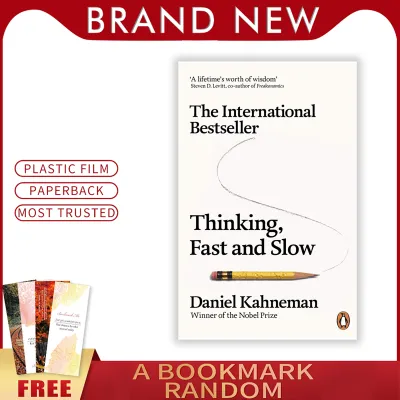
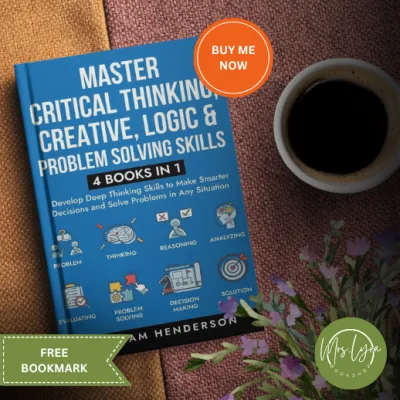
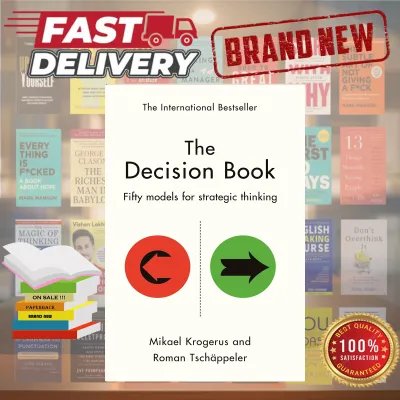
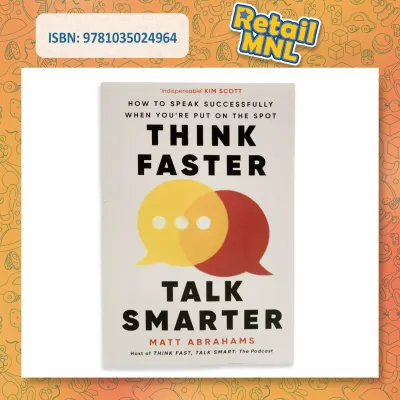
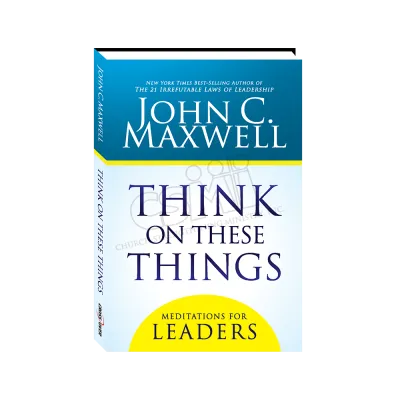
Prices are valid at publication and may change. Please refer to the product page for the latest price.
Distinguishing between temporary motivation and deep cognitive shifts is the first step in this journey. Motivational books often rely on emotional rhetoric to create a temporary high, which quickly dissipates when you encounter real-world friction. Systemic books, however, analyze the underlying structures of human behavior, decision-making, and productivity. They do not just tell you to work harder; they provide the cognitive tools necessary to restructure your environment, manage your energy, and optimize your focus.
Three core pillars define this high-performance mindset: long-term vision, delayed gratification, and continuous compounding. Long-term vision allows you to maintain direction despite short-term setbacks or market volatility. Delayed gratification ensures that you invest resources—such as time, energy, and capital—into assets that yield future returns rather than immediate pleasure. Continuous compounding applies not only to financial investments but also to knowledge, relationships, and skills, where a daily improvement of just one percent leads to exponential growth over time.
To navigate uncertainty, high performers rely heavily on mental models. These are simplified representations of how the world works, helping you cut through noise and make high-leverage decisions. By studying disciplines like systems thinking, inversion, and first-principles analysis, you can identify the leverage points in your career or business. Instead of solving symptoms, you learn to address root causes, allowing you to achieve disproportionate results with targeted effort.
How to Evaluate and Select Actionable Self-Help Books
With thousands of personal development titles published every year, filtering out low-value content is essential to protect your time and mental energy. The most reliable way to assess a book’s potential impact is to evaluate the author’s track record and professional background. Authors who have successfully built enterprises, conducted rigorous academic research, or coached elite performers bring a level of practical authority that purely theoretical writers lack. Look for books grounded in empirical evidence, cognitive science, or decades of direct industry experience rather than anecdotal success stories.

Another critical criterion is the presence of actionable frameworks, worksheets, or step-by-step systems. A high-quality self-help book should transition smoothly from theory to practice, offering concrete exercises that force you to apply the concepts to your own life. If a book leaves you feeling inspired but unsure of what specific action to take the next morning, it has failed to provide real utility. Look for chapters that end with implementation intentions, diagnostic questionnaires, or clear templates for tracking your progress.
Matching a book’s complexity to your current stage of personal development is equally important. If you are struggling with basic time management, diving into advanced corporate strategy or complex philosophical treatises may feel overwhelming and yield little practical benefit. Conversely, if you already have disciplined daily routines, reading basic habit-building guides will offer diminishing returns. Identify your primary bottleneck—whether it is financial literacy, emotional regulation, or strategic planning—and select a book specifically designed to address that gap.
Finally, consider the cultural and economic context in which the book was written. Many popular self-help titles originate in Western markets and assume access to specific financial systems, social safety nets, or corporate structures. As a reader, you must actively translate these concepts to fit your local environment. Evaluating books with a critical eye allows you to discard irrelevant assumptions while retaining the core psychological principles that remain universally applicable across different economies and cultures.
Core Categories for Building a High-Performance Mindset
To build a comprehensive success mindset, you must address multiple dimensions of your personal and professional life. Rather than reading randomly, categorizing your development goals helps you build a balanced library that targets specific cognitive and behavioral areas.
Habit Formation and Daily Systems
True progress is anchored in the invisible routines that dictate your daily life. When selecting books in this category, prioritize frameworks that detail the mechanics of behavioral change, such as the cue-routine-reward loop and identity-based habit shifts. Identity-based shifts are particularly powerful because they focus on who you wish to become rather than merely what you want to achieve. When your habits align with your self-image, maintaining discipline ceases to be a constant struggle of willpower and instead becomes a natural expression of your identity.
It is also vital to evaluate whether a book’s proposed daily systems are realistic and adaptable to a demanding professional schedule. For instance, a framework that requires four hours of uninterrupted morning solitude may be entirely impractical if you face long daily commutes in congested urban areas or balance irregular remote work hours. Look for systems that emphasize micro-habits, environmental design, and friction reduction. These practical approaches allow you to build consistency even when your external environment is chaotic or unpredictable.
Wealth Creation and Financial Psychology
Developing a top-tier mindset requires a radical shift in how you view and manage money. High-performance financial literature moves away from active earning as the sole path to security, focusing instead on strategic investing, asset building, and risk management. You should actively avoid books that promise rapid, effortless wealth through speculative schemes. Instead, seek out authors who analyze the psychological barriers to wealth, such as scarcity mindsets, lifestyle inflation, and emotional decision-making during market downturns.
When reading global financial literature, you must consciously adapt the principles to the local economic landscape of the Philippines. While specific investment vehicles mentioned in Western books—such as certain tax-advantaged accounts or foreign index funds—may not be directly accessible, the underlying concepts of compounding, diversification, and asset allocation remain identical. Look for ways to apply these principles using local instruments, such as Pag-IBIG MP2, local real estate, or domestic mutual funds, ensuring your financial strategy is both globally sound and locally executable.
Mental Resilience and Emotional Regulation
No amount of strategic planning or habit tracking can compensate for a fragile emotional foundation. To sustain high performance over decades, you must develop the capacity to handle intense pressure, adapt to rapid changes, and recover from inevitable failures. Look for books that draw on cognitive behavioral techniques, mindfulness, or ancient philosophies like Stoicism. These frameworks teach you to separate external events from your internal reactions, allowing you to maintain clarity and composure when high-stakes situations arise.
Practical exercises are the hallmark of a great resilience book. You should look for actionable methods to overcome common psychological hurdles like imposter syndrome, decision fatigue, and the fear of failure. Books that guide you through fear-setting exercises, cognitive reframing, or structured journaling help you build a resilient mind. This mental conditioning ensures that when you face professional setbacks, you view them as data points for improvement rather than indictments of your personal worth.
What to Verify Before Buying Books in the Philippines
Before investing your money and time into a new book, performing a few quality checks ensures you receive an authentic, high-quality product that fits your lifestyle. First, verify the specific edition, language, and translation quality of the book. If you are purchasing a translated work, research the translator’s reputation, as a poor translation can obscure complex concepts and ruin the reading experience. Additionally, check if the book is a revised or updated edition, as authors frequently update their frameworks to reflect new research, modern case studies, and changing global realities.
Next, carefully weigh the pros and cons of physical books, e-books, and audiobooks based on your daily routine and environment. Physical books are excellent for deep study, active annotation, and tactile learning, but they require physical storage space and are highly susceptible to damage from tropical humidity and mold. E-books offer unparalleled portability, instant delivery, and built-in search and highlighting tools, making them highly efficient for active study. Audiobooks are incredibly valuable for maximizing dead time, allowing you to absorb complex ideas during long commutes, workouts, or household chores.
Finally, exercise extreme caution when purchasing books from online marketplaces and e-commerce platforms in the Philippines. The local market is flooded with unauthorized, low-quality reprints and pirated copies that often feature missing pages, illegible text, and fragile binding that falls apart after a single reading. To avoid these issues, always check seller ratings, read customer reviews, and look for official store badges or authorized distributor labels. Investing a bit more, such as spending ₱600 on an authentic, high-quality edition rather than ₱150 on a poorly printed counterfeit, ensures a superior reading experience and directly supports the authors who create these valuable resources.
Frequently Asked Questions (FAQ)
How many self-help books should I read at the same time?
For most readers, the optimal approach is to focus on one or two books at a time, separating them by purpose and format. Reading too many books simultaneously often leads to cognitive overload, where concepts blur together and none are deeply integrated into your daily routine. A highly effective strategy is to pair one dense, analytical book that requires active note-taking with a lighter, narrative-driven book or audiobook that you can consume during passive hours.
Ultimately, the value of self-help literature lies in its implementation, not its consumption rate. If you finish a book but fail to apply a single concept to your life, your reading time has yielded zero practical return. Prioritize deep execution over rapid reading. Spend time summarizing key chapters, completing the included worksheets, and actively testing the author’s frameworks in your daily life before moving on to the next title.
Are audiobooks as effective as physical books for mindset shifts?
Audiobooks are highly effective for shifting your mindset, provided you match the format to the nature of the content. They are particularly powerful for narrative-driven books, biographies, and high-level philosophical concepts where the author’s tone and delivery can enhance emotional resonance and retention. Listening to an audiobook during your daily commute or exercise routine is an excellent way to feed your mind with constructive ideas during otherwise unproductive hours.
However, for highly technical books that feature complex diagrams, step-by-step frameworks, or detailed worksheets, physical books or e-books remain superior. These formats allow you to pause, highlight, flip back to previous sections, and write notes in the margins—actions that are essential for deep analytical reflection and long-term retention. For maximum impact, consider a hybrid approach: use audiobooks for broad inspiration and perspective shifts, and use physical or digital print for rigorous study and strategic planning.

Community discussion
Share your experience or ask a question. Comments are reviewed before publication.