
Managing taxes as a freelancer or gig worker in the Philippines presents unique hurdles, especially when your monthly income fluctuates. The most useful income tax books for independent professionals are those that clearly explain registration processes, break down simplified tax options like the 8% flat-rate system, and provide step-by-step filing instructions. Rather than relying on dense academic textbooks designed for corporate accountants, freelancers benefit most from practical, localized guides that address irregular cash flows and digital-era business expenses.
Identifying the Tax Challenges of Irregular Income
Before selecting a tax book, it is essential to understand the specific regulatory categories that apply to your work. Local tax regulations classify independent earners differently depending on their income sources. You may be registered as a purely self-employed professional, a sole proprietor, or a mixed-income earner if you maintain a traditional day job while freelancing on the side. A high-quality tax book must clearly distinguish these classifications, as they dictate which Bureau of Internal Revenue (BIR) forms you need to file and how your tax brackets are calculated.
Another critical concept for gig workers is the choice between different tax computation methods. Freelancers with gross sales or receipts below the VAT threshold of ₱3,000,000 can often opt for a simplified 8% flat income tax rate, which is computed on gross sales or receipts in excess of ₱250,000 for purely self-employed individuals. Alternatively, you can choose the graduated income tax rates, which require paying a percentage tax alongside income tax. Your chosen literature should explain how to calculate both options so you can determine which method minimizes your tax liability while matching your irregular cash flow.
Products mentioned in this guide
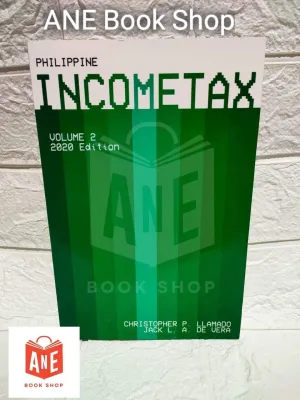
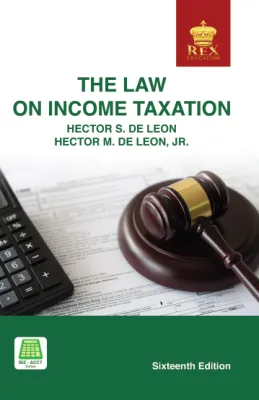
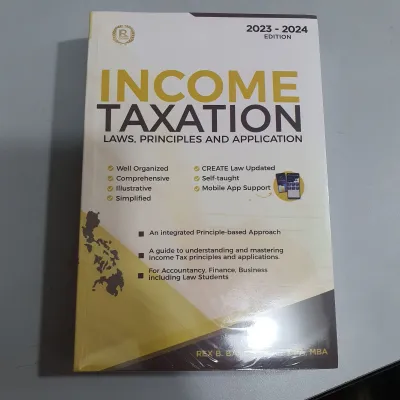
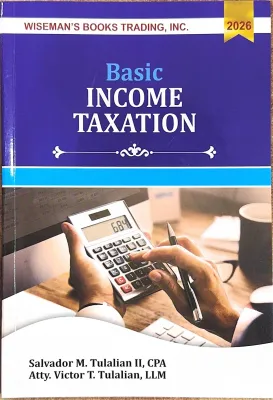
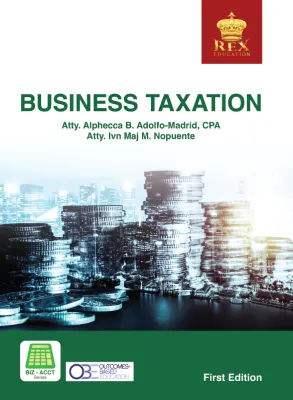
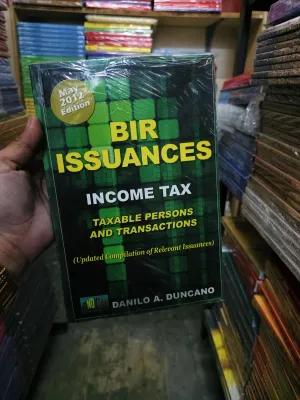
Prices are valid at publication and may change. Please refer to the product page for the latest price.
Finally, a useful guide must address allowable business deductions. If you choose the graduated income tax rates, you can deduct ordinary and necessary business expenses to lower your taxable income. For digital service providers, writers, and independent contractors, these deductions often include home office utilities, internet subscriptions, software licenses, and equipment depreciation. A practical book will outline the strict documentation requirements for these deductions, helping you decide if the hassle of tracking receipts is worth it compared to the hassle-free Optional Standard Deduction (OSD) method, which allows a flat 40% deduction without requiring proof of expenses.
Essential Criteria for Evaluating Freelancer Tax Books
When browsing for tax literature, the publication date and edition should be your first point of evaluation. Tax laws in the Philippines are subject to major legislative updates, such as the Tax Reform for Acceleration and Inclusion (TRAIN) Law and the Ease of Paying Taxes (EOPT) Act. A book published before these reforms will contain outdated tax tables, obsolete filing deadlines, and incorrect registration requirements. For instance, older books may still instruct you to pay an annual registration fee of ₱500, which has been officially abolished under recent regulations. Always check the copyright page to ensure the book aligns with the most recent revenue guidelines.

The presence of visual, step-by-step filing guides is another hallmark of a superior tax book. Reading about tax theory is rarely enough when you are faced with an online filing portal or a physical form. Look for books that include annotated screenshots or filled-out samples of essential forms, such as BIR Form 1701Q for quarterly filings, BIR Form 1701 for annual filings, and BIR Form 2551Q for percentage tax. These visual aids demystify the actual filing process and reduce the risk of making costly errors on your submissions.
Additionally, prioritize books that feature realistic case studies reflecting irregular income streams. Traditional accounting books often assume a steady monthly salary or a structured corporate payroll. As a freelancer, your income might be ₱100,000 in one month and ₱10,000 the next. A useful guide will provide practical examples of how to calculate quarterly estimated taxes under these fluctuating conditions, demonstrating how to carry over excess tax credits from previous quarters.
Lastly, verify the author’s professional credentials before making a purchase. The local tax landscape is complex, and relying on inaccurate advice can lead to heavy penalties, surcharges, and compromise fees. Look for authors who are licensed Certified Public Accountants (CPAs), tax attorneys, or recognized financial educators with a proven history of conducting seminars for the local freelance and creative communities.
Sourcing Reliable Finance and Tax Literature
Finding accurate tax books requires sourcing them from trustworthy channels. Local university presses and established financial education institutions are excellent starting points. Academic publishers often produce peer-reviewed guides on local business law and taxation that undergo rigorous editing for accuracy. These publications focus on educational clarity rather than sensationalized financial advice, making them highly reliable references.
When purchasing commercial tax books, stick to reputable physical retail chains or their official online storefronts. Avoid buying cheap, unauthorized digital copies or photocopied versions sold on online marketplaces. These pirated materials are not only illegal but also frequently suffer from formatting errors, missing pages, or outdated content that can easily mislead you. Investing in an official, authorized copy ensures you receive the complete, accurate text as intended by the author.
Do not overlook official government publications as free, foundational supplements to your library. The BIR website regularly publishes updated tax guides, tax calculators, and informational primers that explain new revenue regulations in plain language. While these official resources may lack the narrative context and practical business advice found in commercial books, they serve as the ultimate source of truth for verifying current rates, deadlines, and procedural changes.
Bridging the Gap Between Books and Current Regulations
Even the most comprehensive tax book cannot capture real-time administrative changes, making it vital to bridge the gap between printed literature and current regulations. Always cross-reference the instructions in your books with the latest Revenue Memorandum Circulars (RMC) and Revenue Regulations (RR) posted on the official BIR portal. This practice is especially important as the government transitions to digital filing systems, such as the Online Registration and Update System (ORUS) and updated versions of the eBIRForms offline package.
It is also crucial to recognize when your tax situation exceeds the scope of a general guide. While a book can help you manage basic registration, quarterly filings, and simple deductions, certain scenarios demand professional intervention. If you begin hiring employees, expanding into international markets with complex withholding taxes, or facing a BIR audit, you should consult a licensed CPA. A professional can provide tailored advice that protects your business from legal and financial liabilities.
Finally, remember that book knowledge is only as good as your personal record-keeping. To successfully apply the tax strategies and deductions you learn from literature, you must maintain organized books of accounts and retain all official receipts and invoices. Whether you use manual journals, loose-leaf ledgers, or digital accounting software, keeping precise, chronological records of your income and expenses is your best defense against compliance issues and the key to stress-free tax seasons.
Frequently Asked Questions (FAQ)
Do I need to buy a new tax book every year?
You do not necessarily need to purchase a new tax book every year, provided there have been no major legislative overhauls to the tax code. Foundational concepts, such as the difference between gross and net income or the basic mechanics of bookkeeping, remain constant over time. However, when significant tax reforms are passed, buying an updated edition is highly recommended to avoid relying on obsolete tax rates, forms, and deadlines. For minor annual adjustments, you can easily supplement your existing book by reading official digital updates and circulars published on the BIR website.
Are digital tax guides and e-books as reliable as printed versions?
Digital tax guides and e-books can be highly reliable and often have the distinct advantage of being updated much faster than traditional print runs. Publishers of digital guides can quickly push updates to correct minor errors or reflect sudden regulatory shifts without waiting for a new physical printing cycle. However, the reliability of any guide depends entirely on the authority of the publisher and the credentials of the author. Always verify that a digital guide comes from a reputable financial educator or licensed tax professional before relying on its advice for your filings.
Community discussion
Share your experience or ask a question. Comments are reviewed before publication.